

Posted by Sarah Collins
on September 14, 2026

You take a sip of cold water and feel a quick electric jolt near the gumline. Later, flossing leaves a faint pink tint in the sink. These moments can seem minor, but they point to two different concerns that often overlap: tooth sensitivity usually involves exposed dentin, while gum tenderness often involves irritated or inflamed tissue.
Dentin hypersensitivity is common worldwide, although estimates vary widely by study design. A systematic review found reported prevalence ranging from 1.3% to 92.1%, with a best estimate of 11.5% and an average of 33.5% across the included studies (systematic review of dentin hypersensitivity). That makes sensitive teeth far more than an occasional nuisance.
The right toothpaste may support comfort, but it can't diagnose a cavity, cracked tooth, damaged filling, or gum problem. The useful question is more specific: is the discomfort coming from inside the tooth, around the gumline, or both? Once you know that, ingredients become easier to understand. The two main strategies are remineralization, which supports the tooth's protective mineral layer, and anti-inflammatory or plaque-control action, which helps create a calmer environment around the gums.
When Your Teeth and Gums Ask for Gentler Care
Maya notices the problem during her morning routine. Cold water makes one side of her mouth wince, and her toothbrush seems to catch at the gumline. A few days later, she sees pink foam after brushing. She switches to a whitening toothpaste, presses harder because her teeth don't feel clean, and ends up with more discomfort.
That pattern is common because people often treat every sensation as one condition called “sensitive teeth.” Tooth sensitivity and gum tenderness aren't identical. A sharp, brief response to cold air or water often points toward exposed dentin, while soreness, bleeding, or tenderness during brushing can reflect plaque-related gum inflammation, recession, or mechanical irritation.
Why early signals deserve attention
The gumline is where several problems meet. Acidic foods and drinks can challenge enamel, forceful brushing can irritate soft tissue, and skipped professional cleanings can allow plaque to remain near the gums. If recession exposes a tooth root, the root surface has less natural protection than enamel, so ordinary triggers can feel sharper.
This doesn't mean every pink rinse signals a serious problem. It does mean repeated bleeding, swelling, worsening sensitivity, or pain concentrated in one tooth deserves a dental examination. Toothpaste can support daily care, but it won't correct decay, a fracture, a failing filling, or a deeper source of pain.
A useful distinction: Sensitivity asks for protection around exposed dentin. Tender gums ask for gentler cleaning and better plaque control. Many people need both.
People who already choose mild routines for reactive skin may find the same principle helpful in oral care. This gentle plant-based skincare guide offers useful context for thinking about irritation, ingredient simplicity, and barrier-friendly habits, even though teeth and skin require different products.
The rest of the decision comes down to mechanism. A formula should support the mineral structure around vulnerable tooth surfaces while avoiding unnecessary irritation at the gumline. It should also be paired with light pressure, consistent cleaning between teeth, and professional care when symptoms persist.
How Sensitive Teeth and Gums Actually Work
Think of dentin as a wall filled with microscopic open straws. When enamel wears thin or a gum recedes, those channels can become exposed. Cold water, cold air, sweet foods, or brushing pressure can move fluid through the channels and trigger a brief nerve response.
Gums behave differently. Irritated gum tissue is more like a scraped knee. It may feel sore when touched, bleed during cleaning, or react to plaque that sits along the gumline. A toothpaste for sensitive gums and tooth therefore needs to account for both the tooth surface and the surrounding tissue.
Two pathways behind the discomfort
Enamel wear or erosion can expose dentin beneath the harder outer surface. Acidic foods, drinks, aggressive brushing, and grinding can all contribute to a less protected surface. The sensation often appears as a quick response to cold, sweets, touch, or brushing.
Gum recession or inflammation can expose root surfaces and make the gumline tender. Plaque can irritate the tissue, while brushing too forcefully can add mechanical stress. In some people, the same exposed area produces both a gum complaint and a cold-triggered tooth response.
A product can target these pathways in different ways:
- Remineralization: Mineral-based ingredients support the tooth surface, much like filling small pits in a wall with spackle. They don't replace a dental restoration, but they can help reinforce vulnerable areas.
- Tubule blocking: Some ingredients create a barrier over exposed dentin channels. The goal is to limit the movement that carries an outside trigger inward.
- Nerve calming: Potassium salts work on nerve excitability, so the sensation may become less sharp even when the tubules aren't physically sealed.
- Plaque control: Antibacterial ingredients can reduce the plaque burden associated with gum inflammation, although the strongest therapeutic ingredients aren't always intended for indefinite daily use.
The key is matching the mechanism to the trigger. A toothpaste that calms nerve signals may help a cold “zing,” while a mineral or tubule-sealing approach may be more relevant when exposed dentin or erosion is part of the picture. Gum tenderness still requires gentle brushing and plaque removal, not just a different active ingredient.
The Ingredients That Do the Heavy Lifting
A sensitivity toothpaste can address different triggers, so the ingredient list matters more than the product's broad promise. A cold drink may set off an exposed nerve, while plaque at the gumline may make the surrounding tissue tender. The right formula connects the active ingredient to the symptom you notice.
What each ingredient is designed to do
Nano-hydroxyapatite is a finely sized form of mineral related to the natural mineral in teeth. Researchers study it for depositing around microscopic surface defects and exposed dentin channels, supporting the tooth surface as those vulnerable areas are exposed to daily triggers. A systematic review reported significant reductions in dentin hypersensitivity, including pooled estimates of 39.5% versus placebo and 23% versus fluoride (2023 systematic review of biomimetic hydroxyapatite).
Fluoride supports enamel mineral and cavity prevention. Stannous fluoride has another role: its tin-containing chemistry can reduce exposed dentin permeability and support plaque control. A 2017 meta-analysis found significant benefit versus placebo for stannous fluoride toothpaste, with an SMD of −1.37 and a 95% confidence interval of −2.30 to −0.44. The same analysis found significant benefit for potassium-containing toothpaste, with an SMD of −1.28 and a 95% confidence interval of −2.05 to −0.51 (systematic review and meta-analysis of desensitizing toothpastes). Stannous formulas can sometimes contribute to surface staining, which may affect whether they suit your routine.
Potassium nitrate works on the nerve side of sensitivity. It reduces nerve excitability in exposed dentin, more like turning down the volume of a sharp signal than covering the exposed area with a new mineral layer. That makes it a logical match for cold or touch-triggered “zingers,” although relief still depends on consistent use and the cause of exposure.
Chlorhexidine can reduce plaque and gingivitis, but it is generally used as a short-term therapeutic adjunct because staining can occur (clinical evidence on chlorhexidine toothpaste). Niacinamide, CoQ10, arginine, and gentle surfactants may also appear in gum-care formulas. Their value depends on the full formulation and the condition being addressed.
| Ingredient | Mechanism | Best for | Evidence note |
|---|---|---|---|
| Nano-hydroxyapatite | Supports mineral deposition and dentin-tubule coverage | Exposed dentin and enamel-focused sensitivity care | Clinical reviews and trials report reduced hypersensitivity (hydroxyapatite review) |
| Sodium fluoride | Supports enamel mineral and cavity prevention | General enamel protection | Widely established in preventive oral care |
| Stannous fluoride | Supports mineral protection and plaque control | Sensitivity with gumline plaque concerns | Significant benefit versus placebo in the cited meta-analysis |
| Potassium nitrate | Reduces nerve excitability | Cold or touch-triggered “zingers” | Significant benefit versus placebo in the cited meta-analysis |
| Chlorhexidine | Antibacterial plaque control | Short-term therapeutic gum support | Effective for plaque and gingivitis, with staining as a consideration |
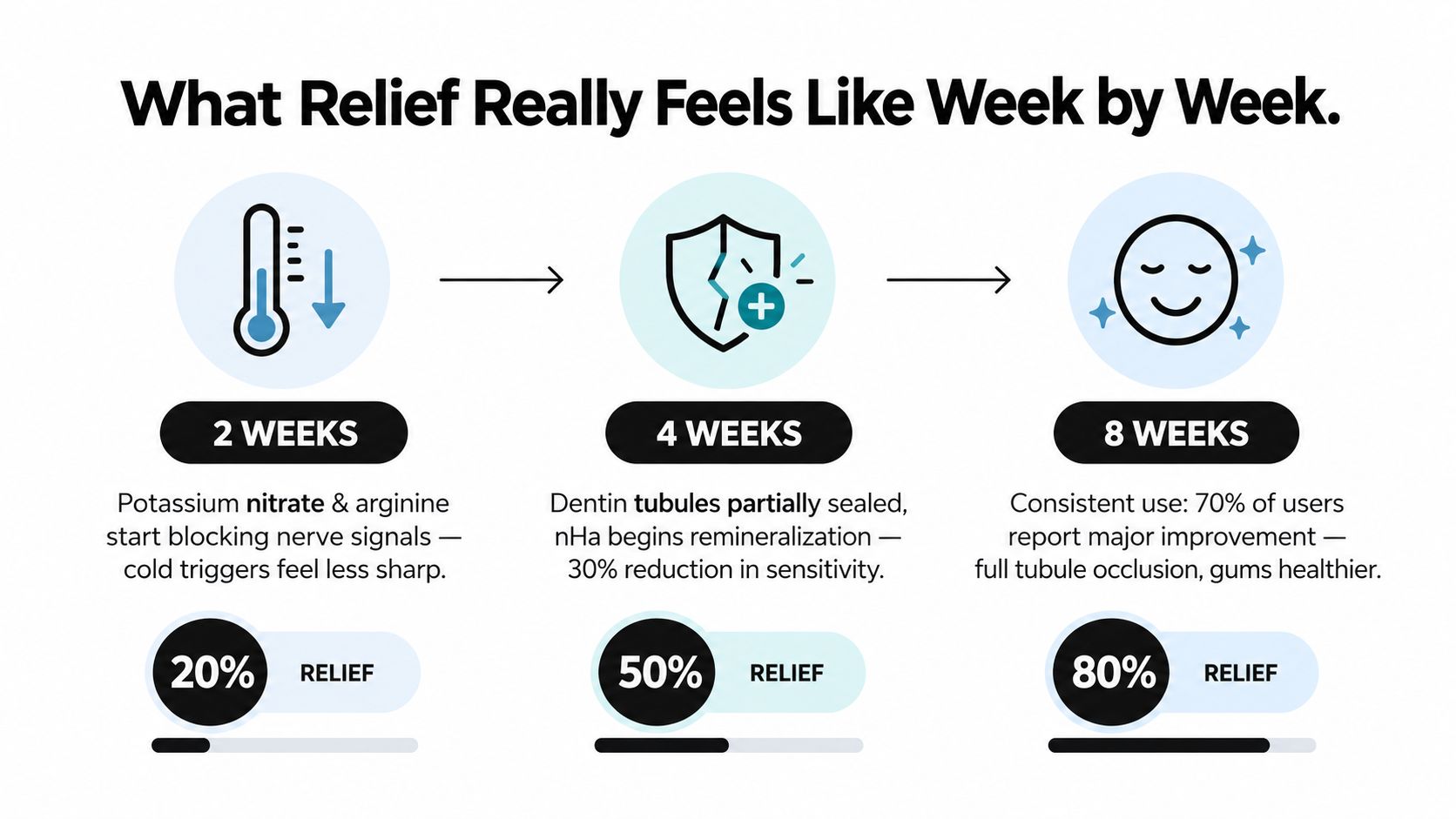
For a practical label guide, read this explanation of active ingredients in sensitive-teeth toothpaste. A formula may combine mineral support with nerve-calming or plaque-focused ingredients, but the match should follow your trigger. Expect the first changes to be gradual: nerve-focused relief may become noticeable by 2 weeks, mineral and tubule coverage may be clearer by 4 weeks, and 8 weeks gives a better sense of whether the formula is helping consistently.
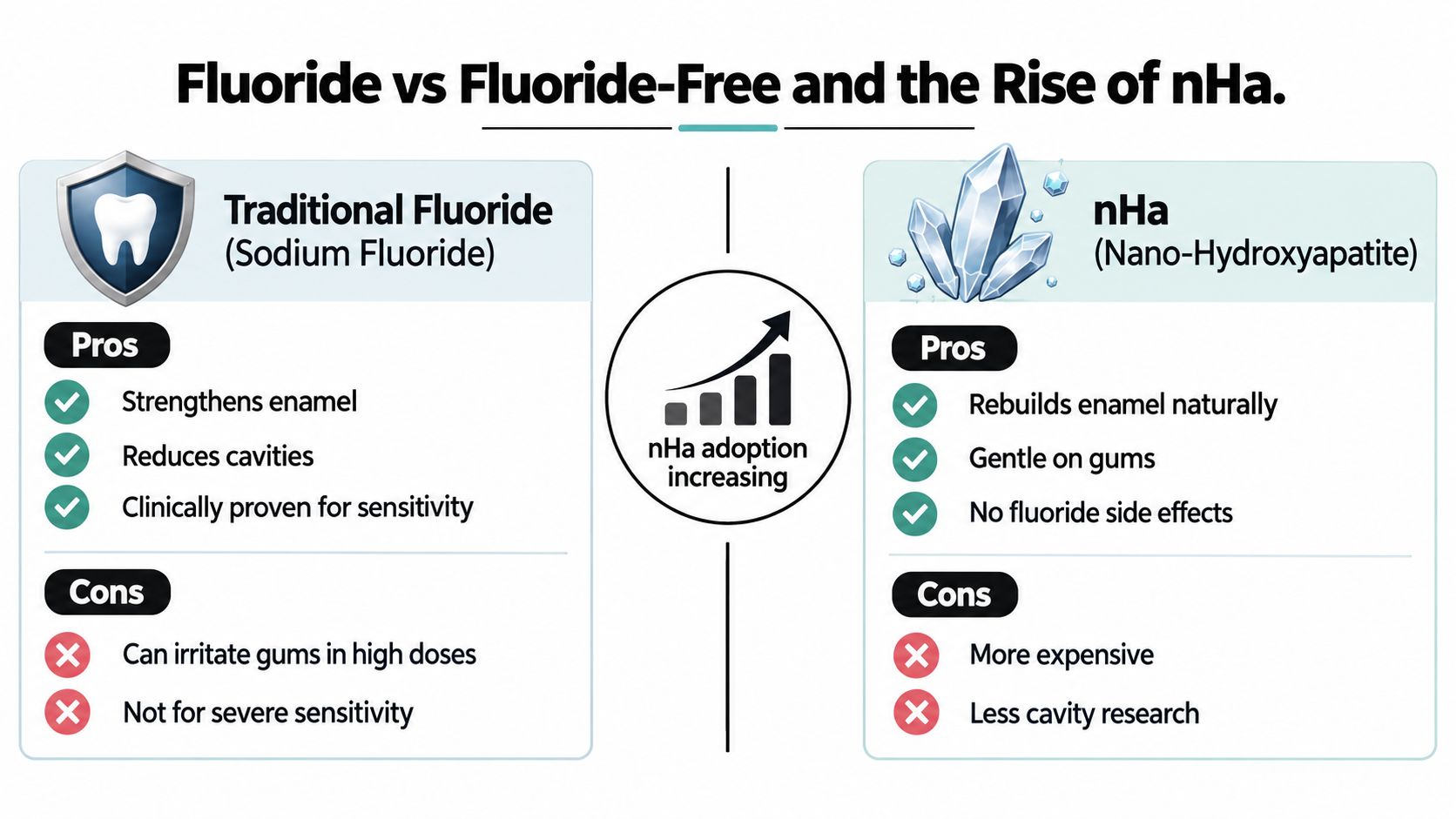
Fluoride vs Fluoride-Free and the Rise of nHa
Fluoride and nano-hydroxyapatite belong to the same broad conversation, but they don't work in exactly the same way. Fluoride supports the tooth's mineral balance and cavity defense. Nano-hydroxyapatite resembles tooth mineral and is studied for depositing around weakened areas and exposed dentin.
A balanced comparison
A conventional fluoride toothpaste may make sense for someone prioritizing established cavity protection, especially when a dentist has recommended fluoride because of personal dental history. Stannous fluoride may appeal to people who also want an ingredient with plaque-control and dentin-protection functions, although staining and taste can influence the experience.
A fluoride-free nano-hydroxyapatite formula may suit someone who prefers a biomimetic mineral approach, wants to avoid fluoride, or is looking for a mild-feeling option. A 2021 randomized trial evaluated nano-hydroxyapatite toothpaste through repeated air and cold stimulation at 2, 4, 6, and 8 weeks, showing that sensitivity can be measured over time rather than through a vague promise of comfort (nano-hydroxyapatite randomized trial).
The evidence isn't a simple winner-takes-all contest. One clinical trial comparing 10% and 15% nano-hydroxyapatite formulas with a commercial desensitizing control found that nano-hydroxyapatite used at least twice daily was as effective as the comparator, while the 15% formula performed better than the 10% formula for reducing sensitivity (nano-hydroxyapatite concentration trial). Formula quality, brushing habits, age, dental history, and cavity risk all matter.
Choose by dental context, not by label ideology. “Fluoride-free” doesn't automatically mean gentle, and “fluoride” doesn't automatically mean irritating. The rest of the formula and your daily technique count.
Special situations
Children, pregnant people, and adults avoiding fluoride may each have different reasons for choosing a formula. The safest choice depends on age, swallowing habits, cavity risk, and professional advice, so a dentist or pediatric dental professional should guide decisions for children and anyone with a high risk of decay.
For a side-by-side discussion of the mineral approaches, read this guide to fluoride and nano-hydroxyapatite. Your goal isn't to declare one ingredient universally superior. It's to select a product you can use consistently and appropriately.
Matching a Formula to Your Mouth and Your Life
A label becomes more useful when you connect it to your actual trigger. Start with the moment that bothers you most, then choose the mechanism that best fits it.
If cold is the main trigger
A potassium nitrate formula may suit someone who feels a quick nerve-like jolt from cold water or cold air. Nano-hydroxyapatite may appeal when exposed dentin or enamel wear also seems likely, because it takes a mineral-support and tubule-coverage approach.
If the gumline looks lower or feels exposed
Visible recession shifts attention toward root-surface protection and plaque control. Stannous fluoride may be an option for someone who wants sensitivity support alongside antibacterial action. A nano-hydroxyapatite formula may suit someone seeking a fluoride-free mineral approach, but persistent recession still needs professional assessment.
If you're choosing for a child
Look for an age-appropriate formula with a mild flavor, low abrasivity, and clear guidance for the child's stage of development. Children who swallow toothpaste or have a higher cavity risk need individualized advice rather than a one-size-fits-all answer.
If acids or dry mouth are part of the picture
People with erosion concerns generally benefit from a mineral-focused, low-abrasion routine. Those with dry mouth or bleeding gums may prefer an SLS-free formula and an ingredient aimed at plaque control, such as stannous fluoride or cetylpyridinium chloride, while a dental professional checks the reason for the symptoms.
A fluoride-free option such as Mouthology's toothpaste uses 10% nano-hydroxyapatite and is presented as a mineral-based choice for people seeking support for sensitivity and gum comfort. That makes it one possible fit for a fluoride-avoiding routine, not a universal recommendation.
Ask yourself: Which trigger do I want to change first, cold, brushing, sweet foods, acidic foods, or gum tenderness? If the answer isn't clear, or if one tooth hurts differently from the others, schedule an examination before switching repeatedly between products.
What Relief Really Feels Like Week by Week
Sensitivity toothpaste usually needs repeated contact, not one dramatic application. Relief depends on the active ingredient, the trigger, the condition of the tooth surface, and whether brushing pressure or acid exposure keeps irritating the area.
Around 2 weeks
With consistent use, nerve-calming ingredients may make cold or sweet triggers feel less sharp. The change reflects reduced nerve response, not necessarily a fully repaired surface. Gum tenderness may also ease when plaque removal becomes gentler and more thorough.
A formula can therefore help one trigger before another. Cold drinks, sweet foods, brushing, and cold air do not all challenge the tooth in the same way.
Around 4 weeks
By this point, mineral-focused ingredients have had more regular contact with vulnerable surfaces. You may notice less reaction when brushing or breathing in cold air, especially if the toothpaste is used consistently and the routine avoids aggressive pressure.
This checkpoint is useful for comparing the original trigger with your current response. If cold sensitivity improves but brushing still hurts, the formula may be helping only part of the problem, or the brushing technique may still be irritating the gumline.
Around 8 weeks
A longer trial gives a clearer view of the formula's overall effect. A systematic review and meta-analysis reported greater short-term sensitivity reduction with nano-hydroxyapatite at 2 weeks, while fluoride comparators performed better for cold-air sensitivity at 8 weeks (review of hydroxyapatite and fluoride for sensitive teeth). The practical lesson is simple: relief can depend on both the ingredient and the trigger.
Research on sensitive-tooth toothpaste has examined use over several weeks, and clinical evidence supports active desensitizing formulas containing potassium or stannous fluoride rather than assuming ordinary fluoride-only toothpaste will address every sensitivity complaint.
Do not judge a product after one brushing, but do not wait out worsening symptoms. Lingering pain, swelling, repeated bleeding, or pain during biting calls for professional evaluation.
Dentist Tips for Brushing Without the Burn
Gentle brushing isn't passive brushing. You still need to clean the gumline and between the teeth, but you don't need to scrub as if pressure creates better hygiene.
Use a soft-bristled brush, or choose an electric brush with a pressure sensor. Apply a pea-sized amount of toothpaste, angle the bristles toward the gumline, and cover the mouth for about two minutes. Keep the motion light and controlled, especially over exposed roots.
Small changes that protect comfort
- Brush twice daily: More forceful brushing isn't a substitute for consistent brushing.
- Delay brushing after acidic foods: Give the mouth time after an acidic meal or drink before brushing, rather than scrubbing immediately.
- Rinse thoughtfully: Spit after brushing and avoid washing away the toothpaste straight away if you want the active ingredients to remain in contact with the teeth.
- Clean between teeth gently: Use floss or interdental brushes without snapping them into the gums.
- Add tongue care carefully: A tongue scraper can freshen the mouth, but light pressure is enough.
Whitening and tartar-control formulas can feel harsher for some people, particularly when they contain more abrasive ingredients. Alternating between those products and a sensitivity formula may make it harder to tell whether your routine is helping.
For a practical technique refresher, follow this guide on how to brush sensitive teeth. If flossing repeatedly causes bleeding, don't abandon cleaning between the teeth. Ask a dental professional to check the tissue and demonstrate a technique that suits your mouth.
Your Simple Plan for a Calmer Smile
Start with the trigger rather than the packaging. A cold “zing” may suit potassium nitrate or a mineral approach such as nano-hydroxyapatite. Weakened enamel or exposed dentin may need remineralizing or tubule-supporting ingredients. Tender gums call for gentle plaque removal and a formula that does not leave tissue feeling irritated.
Keep the plan simple:
- Choose one appropriate formula. Match it to your main symptom instead of switching every few days.
- Change one technique habit. Use less pressure, a soft brush, or a more careful gumline angle.
- Keep the routine consistent. At 2 weeks, record early changes. By 4 weeks, compare the original triggers. Allow up to 8 weeks before judging the full effect of desensitizing care.
- Track the trigger. Note whether cold water, brushing, air, sweets, or gum tenderness improves first.
Relief can arrive in stages because some ingredients calm nerve responses while others gradually support enamel or block dentin tubules, the tiny channels that can carry irritation inward.
The tube matters, but technique and consistency matter just as much. Persistent bleeding, swelling, sharp pain, pain during biting, or discomfort that does not settle needs an examination rather than stronger toothpaste.
Choose the formula that fits your main trigger, make one gentle brushing adjustment today, and record changes at two weeks. Worsening pain, one-tooth pain, swelling, or ongoing bleeding calls for a dentist's assessment.
