

Posted by Sarah Collins
on August 06, 2026

You know the moment. You take a sip of cold water or brush in a hurry before work, and a sharp sting shoots through one tooth near the gumline. The rest of your mouth feels normal, so the discomfort seems random, but it usually isn't. Sensitive teeth are often your mouth's way of saying the surface is worn, the gumline is exposed, or the brushing routine is a little too rough for what your teeth need right now.
What Sensitive Teeth Are Actually Telling You
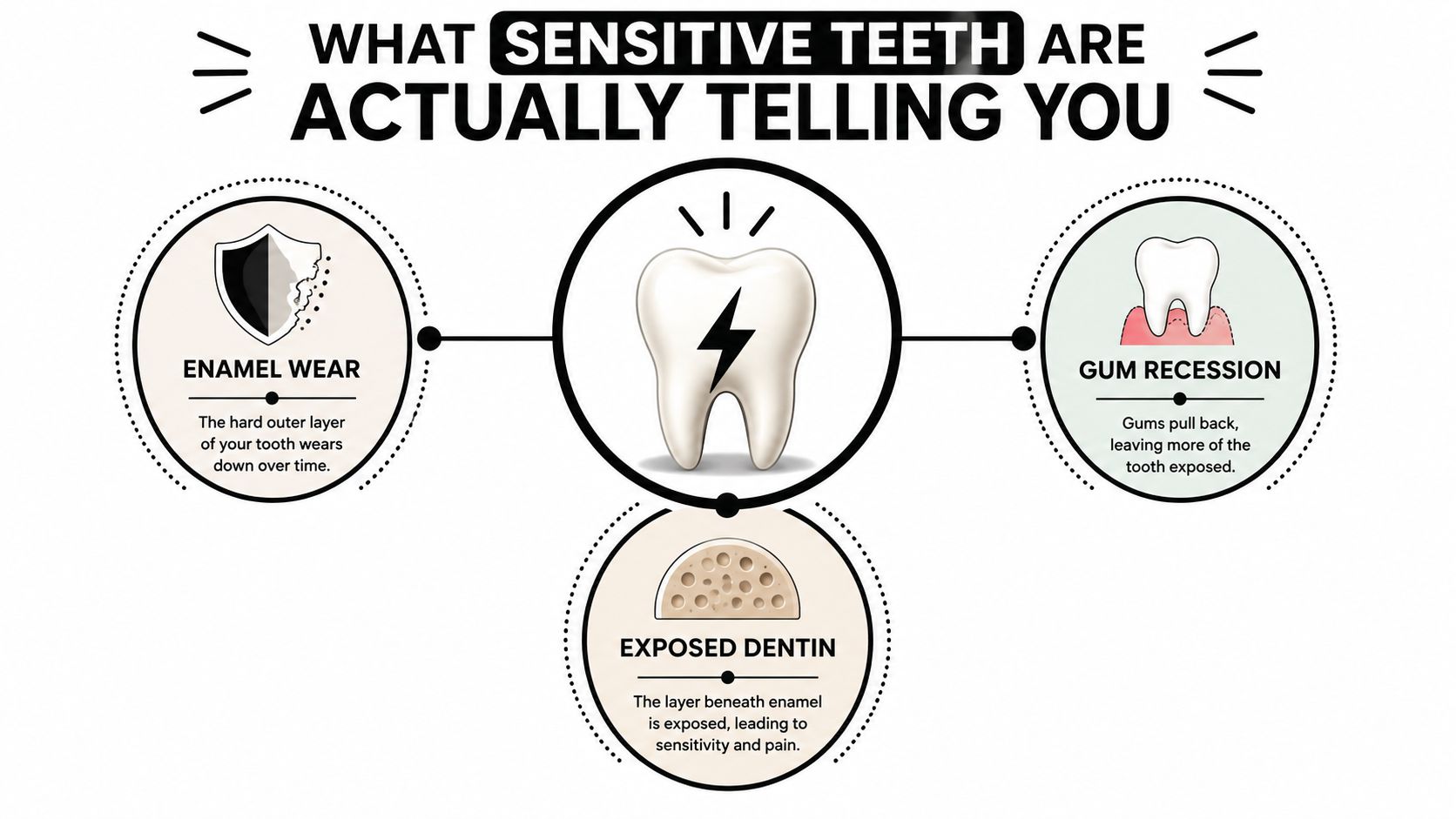
A sensitive tooth usually feels dramatic at the exact wrong time, during coffee, ice water, or the first pass of a toothbrush in the morning. That sharp twinge often starts where enamel is thinner or where the gumline has pulled back enough to expose dentin, the layer underneath enamel that carries sensation more easily. If the surface protection is reduced, hot, cold, sweet, or acidic foods can reach those sensitive pathways faster.
The everyday reasons it starts
A lot of people assume sensitivity means something is “wrong” in a dramatic sense, but the more common story is simpler. Aggressive brushing can wear enamel and irritate the gumline, and in a nationwide American Dental Association survey reported by Dental Tribune, 1 in 3 dentists said aggressive toothbrushing is the most common cause of sensitive teeth, while acidic foods and drinks were ranked as the No. 2 cause. If you've ever brushed harder after noticing a stain or a rough patch, you've probably felt how fast that habit can turn into tenderness.
That's why the most useful advice tends to be practical, not scary. A soft brush, a lighter grip, and a slower motion can matter more than trying to “scrub clean” a painful area. If you want a broader overview of the common triggers and what people usually miss, the guide on oral hygiene tips for sensitive teeth is a helpful companion, and the overview of what causes sensitive teeth puts the gumline piece into plain language.
Practical rule: if your teeth react most at the gumline, think less about force and more about coverage, angle, and timing.
What's happening under the enamel
Enamel is the hard outer shell, and dentin sits underneath it like a more porous middle layer. When enamel thins or gums recede, that layer becomes easier to trigger, which is why a sip of something cold can feel exaggerated in one spot and barely noticeable in another. Recent dental work, grinding, acidic drinks, and hard brushing can all add to that effect, but the sensation itself is usually the same, a short, bright jolt.
That's also why the brushing advice for sensitive teeth is so specific. The goal isn't to avoid cleaning, it's to clean in a way that doesn't keep scraping the same vulnerable area. When people understand that sensitive teeth are often exposed dentin plus an irritated gumline, the rest of the routine starts making sense instead of feeling like a set of random rules.
The Brushing Method That Actually Helps
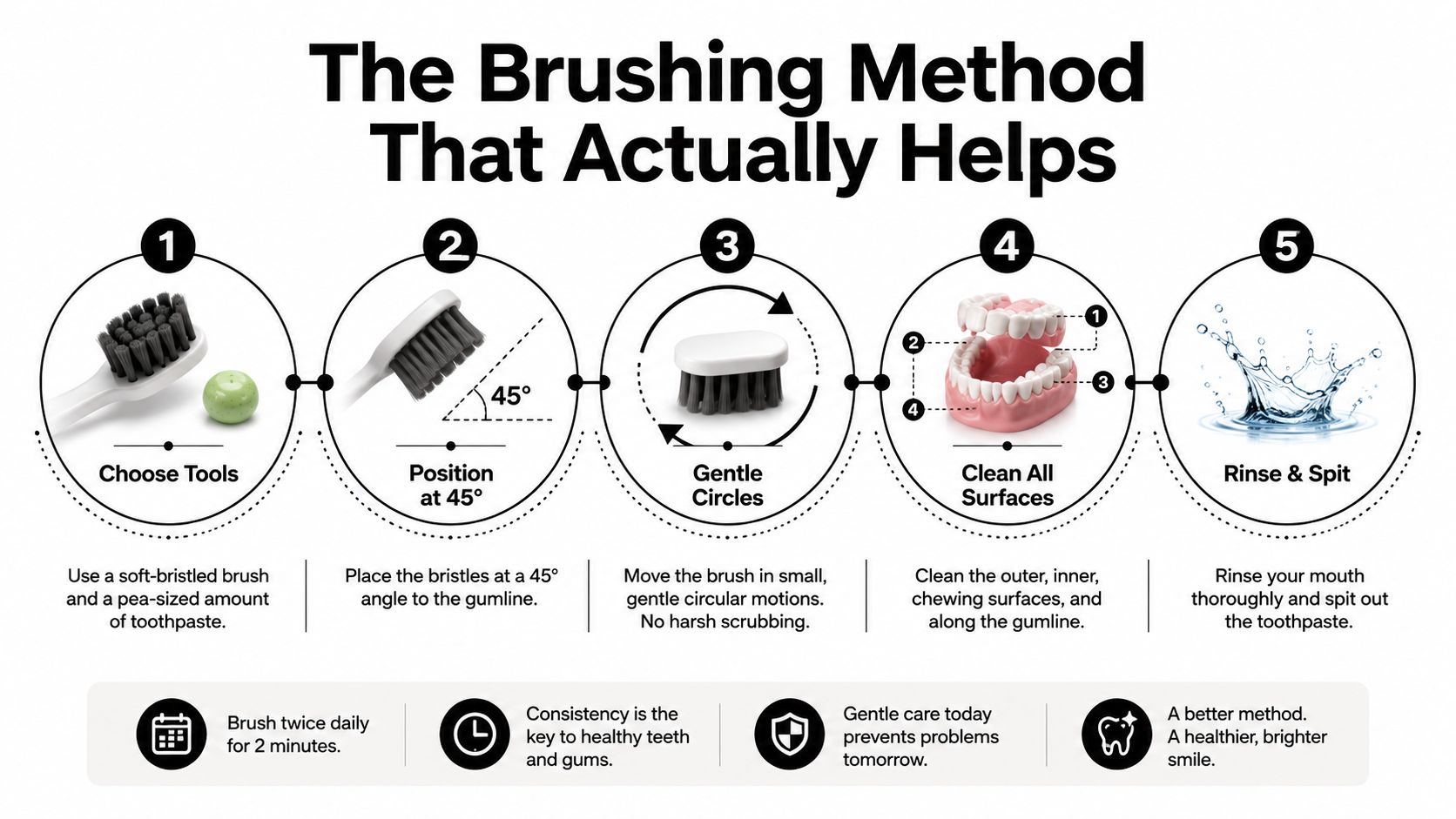
The safest brushing pattern for sensitive teeth is calmer than many expect. You're trying to clean the junction where tooth meets gum without pressing into it, so the brush should feel controlled, not forceful. A soft-bristled brush, a pea-sized amount of toothpaste, and light pressure are the base of the routine, not extras.
Start at the gumline, not on top of the tooth
The angle matters because the bristles need to touch the tooth–gum junction without digging into it. The American Dental Association's MouthHealthy guidance recommends placing the toothbrush at a 45-degree angle to the gums and brushing the outer, inner, and chewing surfaces (MouthHealthy brushing guidance). That angle helps the tips of the bristles reach the margin where plaque collects, which is where gentle cleaning does the most good.
A useful way to picture the motion is to clean 2 to 3 teeth at a time. Make a few short circular or gentle vibrating passes, then sweep the brush away from the gumline toward the chewing edge before moving on. Hard back-and-forth scrubbing tends to irritate the same spot over and over, while short controlled movements spread the pressure out.
Pressure check: if the bristles flatten hard, or your gums feel sore while you're brushing, the force is too high.
Keep the rhythm slow and even
A 2-minute total brushing time, split into about 30 seconds per quadrant, is a good pace for sensitive mouths. That gives you enough time to clean the gumline thoroughly without camping on one tender tooth too long. Start with the outer surfaces, then move to the inner surfaces, then the chewing surfaces, and finish with the tongue if that feels comfortable.
That sequence matters because people often rush the hardest-to-reach spots and press more firmly there. A few extra seconds with a lighter hand works better than a strong scrub that leaves the area sore. If you want a second walkthrough from a clinician's point of view, the Chattanooga dentist's brushing guide is useful for comparing technique details, especially if you're trying to clean carefully without overdoing it.
For electric brushing, the same principles still apply. The head should hover along the gumline, not grind into it, and a pressure sensor can help if you're used to overbrushing. If you're trying to match those motions more closely at home, how to use an electric toothbrush properly is a practical place to compare hand feel with brush movement.
What to Do Right After Acidic Foods or Drinks
The most overlooked part of brushing sensitive teeth is timing. After coffee, citrus, soda, sports drinks, wine, or reflux, the enamel surface is temporarily softened, so brushing too soon can add wear right when the tooth is least ready for it. The British Society of Periodontology advises people with sensitive teeth to wait at least 30 minutes after eating or drinking anything acidic before brushing (BSPerio leaflet).
While you wait, keep things simple. Rinse with water, let saliva do some of the work, and avoid aggressive scrubbing because the surface is more vulnerable in that window. If you want a practical enamel-focused overview alongside this routine, how to stop enamel erosion fits this timing problem well.
Acidic triggers and what to do before you brush again
| Trigger | Interim Step | Wait Before Brushing |
|---|---|---|
| Citrus fruit or juice | Rinse with water | At least 30 minutes |
| Coffee with a splash of acid, or a strong acidic drink | Sip water afterward | At least 30 minutes |
| Soda or sports drinks | Rinse, then let the mouth settle | At least 30 minutes |
| Wine | Rinse with water | At least 30 minutes |
| Reflux at night | Rinse gently if you can | At least 30 minutes |
| Vomiting | Rinse first, brush later | At least 30 minutes |
The pattern is more important than the exact trigger. Anything acidic can make the enamel surface feel more fragile, so waiting is a protection habit, not a delay for the sake of delay. If brushing is part of your morning routine, it can help to separate breakfast drinks from brushing by a little time instead of doing both back-to-back.
A lot of people only think about “gentle brushing,” but gentleness plus timing is the key pair. If the mouth has just been exposed to acid, the brush shouldn't be the next thing that touches it. That small pause can make a daily routine feel a lot less punishing.
Manual vs Electric Brushes and What to Look For in a Toothpaste
The brush itself matters, but not in a one-size-fits-all way. A soft manual brush gives you direct control, while an electric brush can help if you benefit from a timer or a pressure sensor, as long as the head is soft and the hand pressure stays light. A worn brush head is a hidden problem in either case because frayed bristles can feel rough on sensitive mouths.
Choosing the brush that fits your habit
A manual brush is often the easiest place to start if you like simple control and don't want extra moving parts. An electric brush can be helpful if you tend to rush, press hard, or miss the gumline, because the built-in motion does some of the work for you. The primary question isn't manual versus electric in the abstract, it's whether the tool helps you reduce pressure and keep the motion consistent.
For either style, look for soft or extra-soft bristles and, if possible, a smaller head that can get around the back teeth without bumping sore areas. If the bristles splay out early or feel scratchy, replace the head sooner rather than later. That small change is easy to ignore, but it can make sensitive brushing feel much less irritating.
Toothpaste ingredients people actually ask about
Toothpaste choices matter most when the issue is sensitivity, not just freshness. Ingredients like potassium nitrate and stannous fluoride are commonly used for nerve desensitization, while nano-hydroxyapatite is a fluoride-free mineral option that mirrors the natural mineral structure of teeth. Some people also do better with milder foaming agents because less foam can feel less “aggressive” on sore gum tissue.
If you prefer a fluoride-free routine, one option in this category is Mouthology's 10% nano-hydroxyapatite toothpaste, which is designed for everyday brushing support rather than a harsh-feeling clean. For readers dealing with tray-related tenderness, how to avoid pain from whitening trays is a useful reminder that the toothpaste you pair with a routine can influence comfort as much as the brush does.
Special Situations for Parents and Expecting Mothers
Sensitive teeth don't wait for a convenient season. In pregnancy, a simple morning brush can feel harder because nausea changes what flavors you can tolerate, and reflux can leave the mouth feeling sore before the day even starts. A softer brush, a light hand, and a toothpaste flavor that doesn't trigger gagging can make the routine feel possible instead of miserable.
A second-trimester routine often needs to be shorter, calmer, and done at the time of day when nausea is lowest. Some people do better brushing after a small snack rather than on a completely empty stomach, while others need to avoid strong mint because it feels too sharp. The point is to keep the habit going without forcing a flavor or texture that makes you skip it altogether.
With kids, the same gentleness helps in a different way. A teething toddler may resist brushing because the gums are already tender, so the job is less about winning a battle and more about making the contact feel safe. For children under three, a rice-grain smear of toothpaste is the usual starting point, and many caregivers find that milder flavors are easier to accept than strong mint.
Older kids who are learning to brush on their own usually need fewer lectures and more simple cues. “Soft brush, small circles, no scrubbing” is easier to remember than a long explanation, and a parent can finish the back teeth if the child's hand still misses those spots. If swallowing is a concern, the safest-feeling routines are the ones built around age-appropriate paste amounts and a calm pace, not perfection.
Family-friendly rule: if brushing causes gagging, tears, or resistance, change the flavor, shorten the session, and keep the pressure light before you change anything else.
Your Timeline for Improvement and When to See a Dentist
Sensitive teeth usually improve in small steps, not all at once. During the first 1 to 2 weeks, brushing often feels less shocking, but cold water, a stiff bristle, or a spot where the gumline has pulled back can still cause a quick sting. That early change matters. The mouth is becoming less reactive, even if it still has a few sharp moments.
By 4 weeks, the routine often feels easier to keep up with because the tooth surface and the gumline are getting less irritated each day. Clinical data from an eight-week study of a specialized sensitive-teeth toothbrush showed statistically significant improvement by 4 weeks, with tactile sensitivity improving by 5.49 units and thermal sensitivity decreasing by 0.77 units (PubMed study). By 8 weeks, the same study showed a larger shift, with tactile sensitivity improving by 13.78 units and thermal sensitivity decreasing by 1.85 units.
The same study also found that adding a massage step to brushing produced a mean sensitivity reduction of 70%, compared with 56% for brushing alone. That does not mean every mouth will respond the same way. It does show why a gentle routine needs time to work, instead of being changed every few days before the gums and exposed areas can settle.
A useful way to judge progress is by the pattern, not a single pain spike. If brushing feels less sharp, cold drinks cause shorter reactions, and you can keep the same technique without dreading it, the routine is likely moving in the right direction.
When to book a dental visit sooner
Some symptoms should not wait for the home routine to catch up:
- Pain that lingers more than a week after a dental procedure
- Pain that wakes you up at night
- Visible chips or cracks
- Sensitivity in only one tooth
- Any swelling
Those signs can point to something beyond everyday sensitivity, so a dentist should look at the tooth directly. If brushing still feels like a fight, keep the routine simple, soft brush, 45-degree angle, light pressure, no scrubbing after acids, and a toothpaste that matches your sensitivity level. If the pain pattern changes, sharpens, or starts to stay in one place, book the exam instead of trying to push through it.
If the sting is still making you brace before you start, keep one brush, one toothpaste, and one timing rule steady for a few weeks. A mouth that is getting better usually feels less reactive over time, even if it is not fully quiet yet. If the pain is one-sided, lingers after dental work, or comes with swelling, schedule a dentist visit and bring your brush with you so they can see exactly what you are using.
