

Posted by Sarah Collins
on September 22, 2026

You're standing in the bathroom after coffee, brushing your teeth, and still noticing a coating on your tongue. Your breath feels less fresh than it should, and your mouth has that lingering taste that toothpaste didn't quite remove. That's usually when the search begins: where can you get a tongue scraper, and which one won't end up forgotten in a drawer?
The answer is broader than many shoppers expect. Tongue scrapers are available through pharmacies, supermarkets, big-box retailers, brand websites, dental offices, and online marketplaces. The harder question isn't just where to buy one. It's choosing a scraper that feels comfortable, stays hygienic, and fits the routine you'll keep.
Why a Tongue Scraper Belongs in Your Routine
Brushing cleans the teeth and gumline, but the tongue has a different surface. Its tiny textured structures can hold food debris, shed cells, and bacterial buildup in places a toothbrush may glide over without lifting away very much. That coating often contributes to the dull taste and less-than-fresh feeling many people notice after sleeping or drinking coffee.
A scraper complements brushing rather than replacing it. You're not trying to scrub the tongue until it feels raw. You're using a broad edge to collect surface buildup and pull it forward, leaving the mouth feeling cleaner without aggressive pressure.
Practical rule: A scraper should feel like a light sweep across the tongue, not a workout for your hand.
For many people, the appeal is immediate. After a few gentle passes, the tongue can feel smoother, the lingering taste may be reduced, and the routine feels more complete. Those effects don't make scraping a substitute for brushing, cleaning between teeth, or dental care. They make it a small addition to the parts of the mouth that brushing alone doesn't address as directly.
The habit also works because it's simple. Keep the scraper beside your toothbrush, use it after brushing, rinse it, and put it somewhere clean to dry. A repeatable routine is more useful than a complicated tool that requires special preparation. If you're already exploring other ways to improve daily cleaning, Eric Wiitala DDS offers a helpful guide to alternatives to string floss that puts convenience and routine fit into perspective.
You can read a more detailed overview of the practice in Mouthology's guide to the benefits of tongue scraping. Once you know why the tool may be useful, the buying decision becomes more practical: how should it feel, how should it be cleaned, and will it hold up to everyday use?
The Three Materials Most Tongue Scrapers Are Made Of
Most tongue scrapers fall into three material families: copper, stainless steel, and plastic. Their differences show up in your hand, on the tongue, and at the sink. Marketing language can make them sound interchangeable, but daily use tells a more useful story.
Copper
Copper has a weighty, old-fashioned feel. It can flex slightly under pressure, which some users find more forgiving than a completely rigid tool. Over time, copper may develop a darker patina. That change doesn't automatically mean the scraper has failed, but it does mean you'll need to pay attention to cleaning and appearance.
A copper scraper suits someone who likes a lasting object and doesn't mind a more distinctive look. It's less anonymous than a disposable plastic strip, and it can become part of a deliberate morning routine. If you travel with it, use a ventilated case and dry it before storage.
Stainless steel
Stainless steel feels like a small kitchen utensil. It's cool, firm, and resistant to bending when you use light pressure. A well-finished steel edge can provide a consistent stroke, while the rigid construction makes it less likely to feel flimsy after repeated use.
This is often the practical choice for someone who wants durability and easy cleaning. Stainless steel is also a natural fit for a bathroom drawer or travel case, provided the scraper is rinsed and dried rather than sealed away while wet. Mouthology's brushed tongue scraper is one example of a steel-focused design to examine when comparing finish and handling.
Plastic
Plastic is light, flexible, and easy to replace. That can help a new user who's nervous about putting a rigid tool near the back of the tongue. The trade-off is that plastic edges and handles can feel less substantial, and some designs may become rough or bend out of shape with regular use.
Plastic can work well for travel, experimentation, or anyone who prefers a softer hand-feel. Inspect the edge frequently, because a warped or rough surface isn't something you should keep using.
| Material | Feel in Hand | Durability | Cleaning | Typical Price | Best For |
|---|---|---|---|---|---|
| Copper | Weighty, gently flexible | Long-lasting with care | Rinse, dry, and air-dry | Varies by retailer and design | Long-term users who like a traditional feel |
| Stainless steel | Cool, firm, utensil-like | Highly durable | Rinse, wash, and dry thoroughly | Varies by retailer and design | Daily routines, durability, and travel |
| Plastic | Light, flexible, lower commitment | More prone to wear | Wash with soap and dry fully | Often positioned as an economical option | Sensitive gag reflexes and trying scraping for the first time |
Material affects more than appearance. It influences grip, cleaning, storage, replacement, and whether the scraper still feels comfortable after the novelty wears off.
Where Most People Buy a Tongue Scraper Today
The easiest answer to where can you get a tongue scraper is almost anywhere people already buy everyday oral-care products. Walgreens lists multiple tongue-cleaner options, including its own two-pack stainless-steel cleaner at $6.19, Orabrush at $6.99, and G-U-M at $3.19, with shipping, same-day delivery, or in-store pickup depending on location. Walgreens' tongue-cleaner catalog shows how mainstream the category has become.
CVS also carries tongue scrapers and identifies online availability in its oral-care catalog. Its pharmacy-branded page includes a two-count tongue-cleaner option, so shoppers don't need to visit a specialty oral-care shop to find a basic tool. Walmart and Target likewise maintain dedicated tongue-scraper shopping pages with multiple listings, making them useful choices when you're already buying household supplies.
Online marketplaces
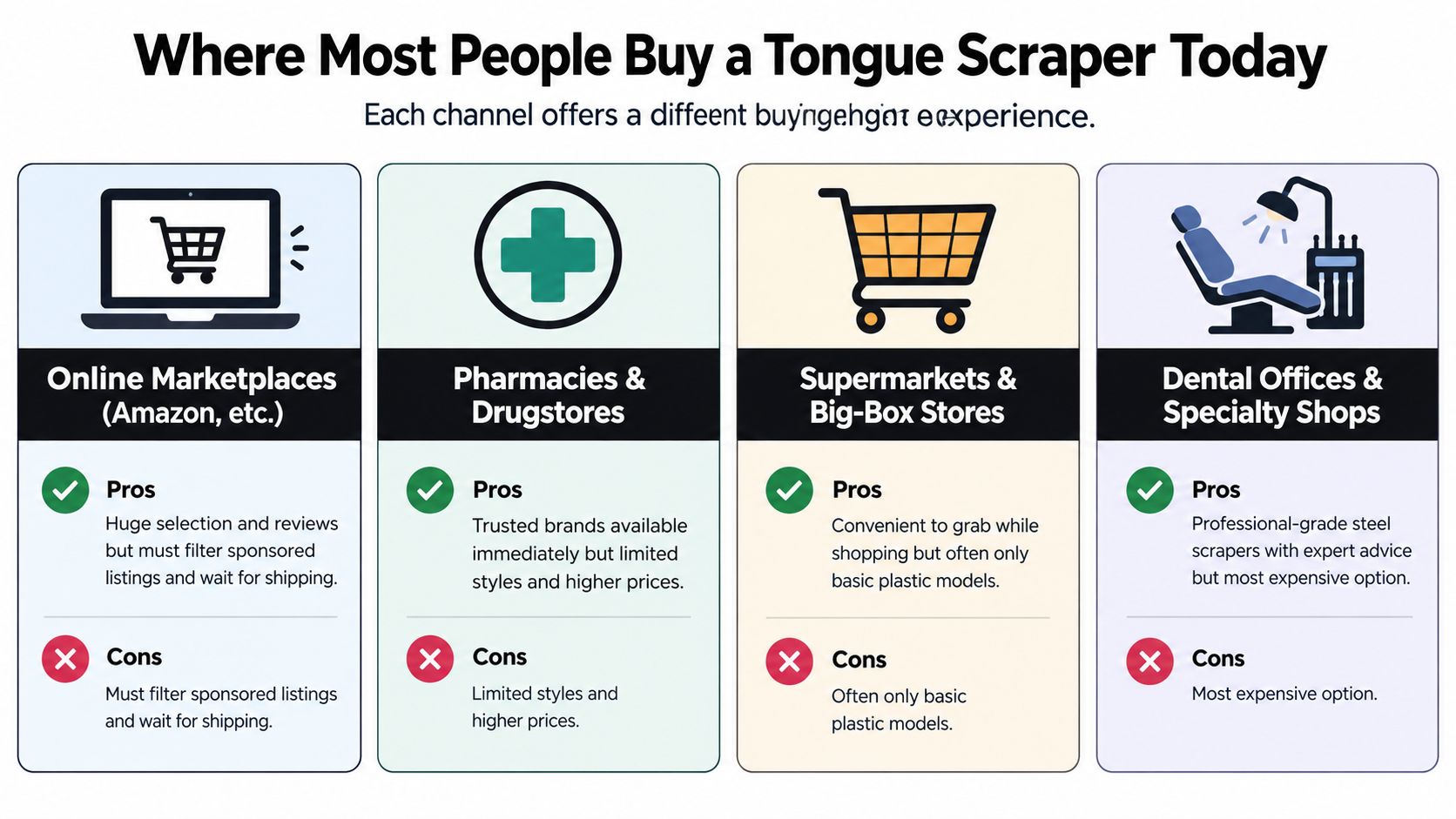
Amazon offers the broadest browsing experience. You can compare copper, steel, plastic, tongue brushes, travel cases, and multi-packs in one place. The downside is that selection can create noise. Sponsored listings, nearly identical product photos, and unclear material descriptions mean you'll need to inspect the product details, edge design, cleaning instructions, and return policy rather than relying on star ratings alone.
Pharmacies and drugstores
Walgreens and CVS are convenient when you want a recognizable oral-care brand or immediate pickup. You may find plastic and basic stainless-steel models without waiting for delivery. The selection is narrower than an online marketplace, and convenience can come with less flexibility in shape, finish, or pack size.
Supermarkets, big-box stores, and brand websites
Supermarkets and big-box stores are useful for an impulse purchase, but the shelf may offer only a basic plastic model. A brand website can provide clearer product information and a more curated routine, especially when the scraper appears alongside toothbrushes, toothpaste, or storage accessories. The trade-off is that you're evaluating a narrower range of designs.
If you're considering a direct brand option, Mouthology's stainless-steel tongue scraper for adults is one product to compare for material, pack format, and included cases.
Dental offices and specialty oral-care shops offer the most personal guidance, but they may have fewer models and higher prices. They're most useful when you have a sensitive tongue, a strong gag reflex, or a question that product packaging can't answer.
How to Choose the Right Scraper for Your Habits
The best scraper isn't necessarily the one with the most reviews. It's the one you can hold with wet hands, place comfortably, rinse easily, and store without creating an unpleasant bathroom chore.
Start with your gag reflex and mouth size. A flexible plastic scraper may feel less intrusive if rigid tools trigger discomfort. If you're comfortable with a firmer edge, stainless steel can provide a steadier stroke. Don't force yourself to reach the far back of the tongue immediately. Comfort determines whether the habit survives.
Then check the grip. A narrow handle can become slippery under running water, while a textured or broader handle may feel easier to control. Look for a smooth scraping edge without visible seams, sharp corners, chips, or rough sections.
| Option | Comfort & Fit | Hygiene Control | Price Value | Travel Friendly | Routine Stickiness |
|---|---|---|---|---|---|
| Copper scraper | Firm with slight flexibility, depending on design | Good when rinsed and dried | Strong for long-term use | Good with a ventilated case | High for people who enjoy a ritual |
| Stainless-steel scraper | Stable and predictable | High with regular washing and drying | Strong over repeated use | Very good | High for simple, durable routines |
| Plastic scraper | Flexible and light | Easy to replace, but must still be washed | Useful for low commitment | Very good | Moderate, depending on edge comfort |
| Pharmacy purchase | Depends on available model | Packaging and instructions vary | Convenient rather than optimized | Depends on format | High if immediate access matters |
| Online marketplace | Wide choice, quality varies | Requires careful product checking | Potentially useful after comparison | Often easy to bundle with a case | High if reordering is simple |
| Dental or specialty purchase | Guidance may improve fit | Product details may be clearer | Usually less focused on low cost | Depends on product | High when advice builds confidence |
A useful test: Choose the scraper you'd still use on a rushed morning, not the one that looks most impressive in a product photo.
For frequent travel, prioritize stainless steel or a compact one-piece plastic design with a clean case. For longevity and a more intentional ritual, copper or stainless steel may suit you better. In a shared household, give each person an individual scraper, or choose options that can be sanitized easily. The right retail channel should support that choice, whether you want broad online comparison, immediate pharmacy pickup, or direct guidance from a dental professional.
Using and Cleaning a Tongue Scraper the Right Way
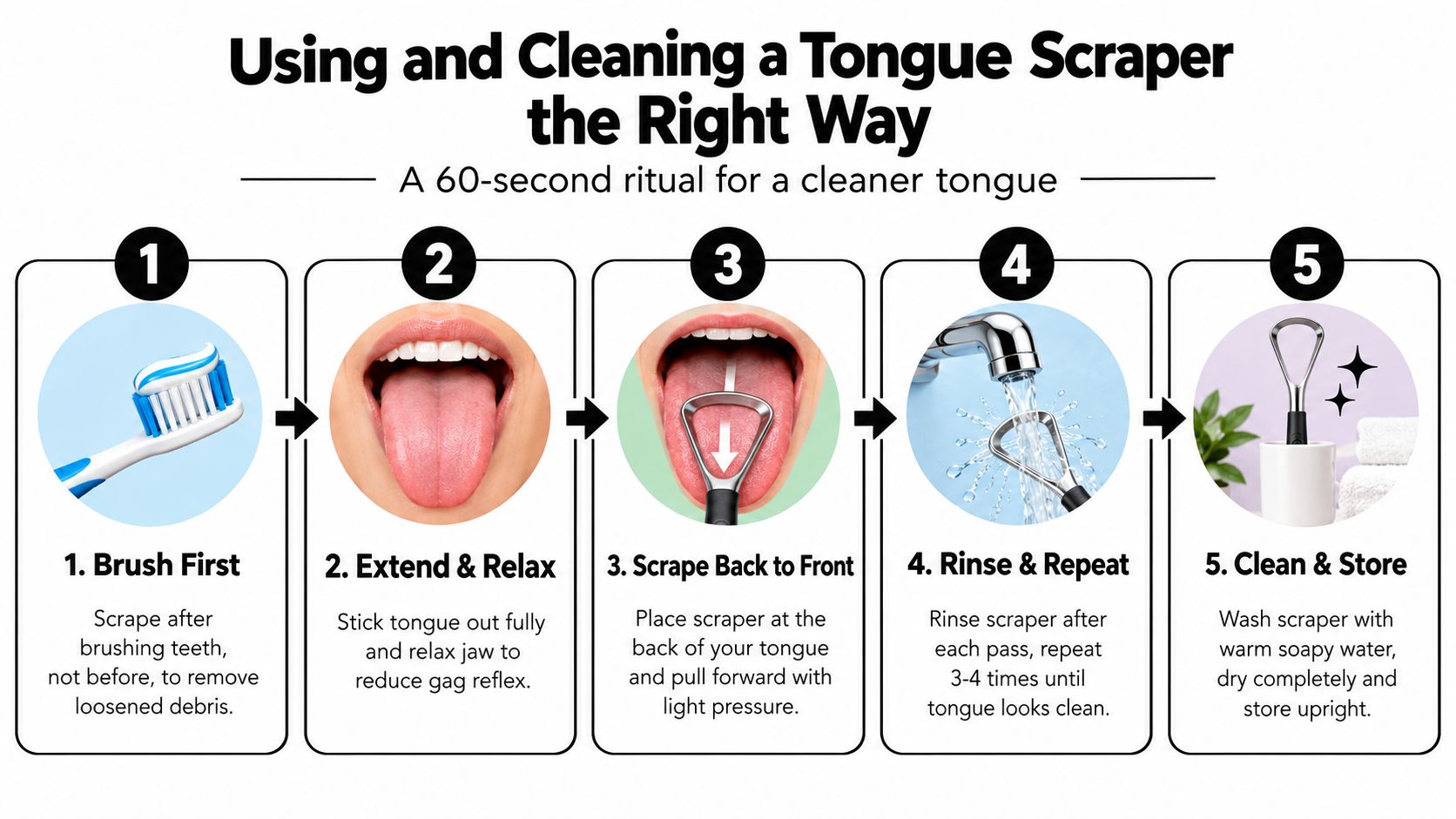
A good technique should feel brief and controlled. Brush your teeth first, extend your tongue, relax your jaw, and place the scraper toward the back without pushing into the throat. Pull it forward with light to moderate pressure, then rinse the scraper before the next pass.
Repeat only a few times, covering the tongue without chasing a perfectly bare appearance. If you notice soreness, tenderness, or bleeding, you're applying too much pressure or scraping an area that needs a break.
Cleaning by material
Copper and stainless steel should be rinsed after each pass, washed as needed, and dried thoroughly. Let the tool air-dry upright rather than placing it wet into a closed container.
Plastic and silicone designs need a soap-and-water wash followed by complete air-drying. Their flexibility doesn't remove the need for hygiene. A lighter tool can still collect residue if you store it damp.
Disposable strips are intended for one use. Don't rinse and reuse them just because they look clean, especially if the surface becomes rough or distorted.
Storage and replacement
A ventilated case protects a scraper during travel, but a sealed bag can trap moisture. At home, keep the tool upright in a clean, dry location where air can circulate.
Replace the scraper when you see a bent edge, discoloration that doesn't improve with cleaning, a persistent odor, chips, or roughness. Those signs matter more than a fixed calendar because use, storage, and material quality vary. A durable scraper can last a long time when cared for, while a worn plastic edge should be retired promptly.
Common Mistakes and Safe Use Warnings
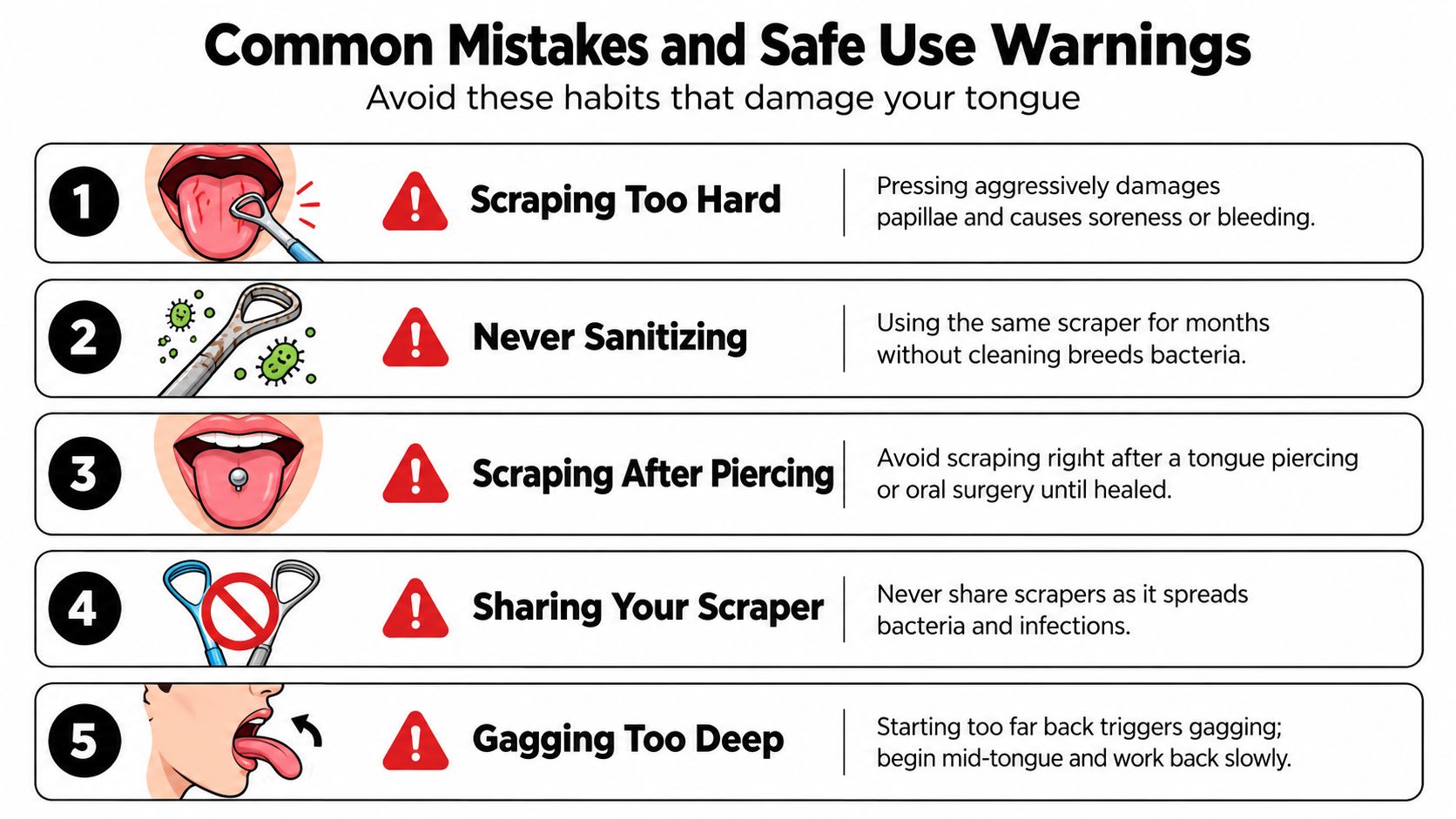
Many poor experiences come from treating the tongue like a hard surface. Pressing aggressively can irritate the tissue and make the routine sore, while starting too far back can trigger gagging before you've learned a comfortable technique.
A white coating also isn't automatically proof of poor hygiene. Hydration, irritation, and oral conditions can affect how the tongue looks. If a coating persists, or if you notice pain, bleeding, unusual patches, or changes that don't settle, speak with a dentist instead of trying to scrape the appearance away.
Keep these boundaries in mind:
- Use gentle pressure: Stop if the tongue feels sore, raw, or unusually sensitive.
- Clean after use: Rinse between passes and wash the tool rather than leaving residue on the edge.
- Pause around injury: Skip scraping over active mouth sores, a recent tongue piercing, or recent dental surgery unless your clinician says it's appropriate.
- Ask before starting when needed: Get professional guidance if you have a bleeding disorder or another condition that makes oral tissue injury a concern.
- Don't share tools: Each household member should have an individual scraper, even when the tool looks clean.
- Avoid the throat: Begin farther forward if you gag, then gradually adjust only while the process remains comfortable.
The simplest rule is the most reliable: gentle, brief, and replaceable beats heroic and permanent. Scraping harder won't turn a basic routine into a better one.
Putting It All Together and Picking a Path
Choose by matching three things: the material you can tolerate, the channel that gives you enough confidence, and the storage setup that makes daily use easy.
If you want a long-term object with a deliberate feel, compare copper and stainless steel. If you want a low-commitment trial or a travel option, look at a flexible plastic design. For immediate access, Walgreens, CVS, Walmart, Target, and similar retailers can solve the purchase quickly. For broader comparison, an online marketplace gives you more shapes and materials to evaluate. If you want help with fit, a dental office or specialty oral-care shop may be worth the extra effort.
A brand-made scraper can also make sense when you already buy toothpaste or brushes from that brand. Keeping compatible tools together can simplify reordering and make material information easier to verify. It's a convenience choice, not a requirement.
Try one scraper for two weeks before buying a backup. Use light pressure, rinse it after each pass, let it dry fully, and notice whether the grip and edge still feel comfortable after the first week. If the tool fits your hands and your routine, you've answered where can you get a tongue scraper in the most useful way: from the channel that helps you choose a hygienic tool you'll keep using.
Pick your preferred material today, order one scraper from a retailer you trust, and place it beside your toothbrush so you can test the routine consistently for the next two weeks.
