

Posted by Sarah Collins
on August 31, 2026

You can brush, floss, and still catch a stale note in your breath a minute later. That's usually the moment people realize teeth aren't the only surface that matters, because the tongue can hold onto coating the way a carpet holds onto dust, especially toward the back where it's harder to see and harder to clean.
A brushed tongue scraper is the comfort-first version of tongue cleaning, a small tool made to sweep that coating away without the harsh feel some people associate with rigid metal scrapers. It's not a miracle fix, and it won't replace the rest of your routine, but it can be a useful missing step when fresh breath matters and your tongue still feels like it's carrying yesterday.
The Breath Problem Most People Miss in Their Routine

You know the routine. Toothbrush. Floss. Maybe mouthwash if you're feeling thorough. Then, a few minutes later, you cup a hand over your mouth and notice that your breath still doesn't feel as clean as your teeth look.
That gap is what catches a lot of people off guard. Teeth get most of the attention, but the tongue, especially the back portion, can collect biofilm, which is a sticky layer of bacteria, food particles, and shed cells. When that layer builds up, it can become a steady source of odor.
Why the tongue matters so much
The chemistry behind bad breath is pretty simple once you picture it. Anaerobic bacteria, the kind that do well where oxygen is low, break down proteins and release volatile sulfur compounds, or VSCs, which are the gases that create that rotten-egg or cabbage-like smell. That's why breath can still feel stale even after a solid brushing session.
A brushed tongue scraper is aimed at that exact blind spot. Instead of treating the whole mouth like one flat surface, it gives the tongue its own tool, one that's easier to use on a sensitive surface than a hard blade for some people.
If you want a broader breath routine, this guide on freshening breath naturally fits well with the idea of treating tongue cleaning as one part of the picture.
Practical rule: if your mouth feels clean but your breath doesn't, the tongue is one of the first places worth checking.
What a Brushed Tongue Scraper Actually Is
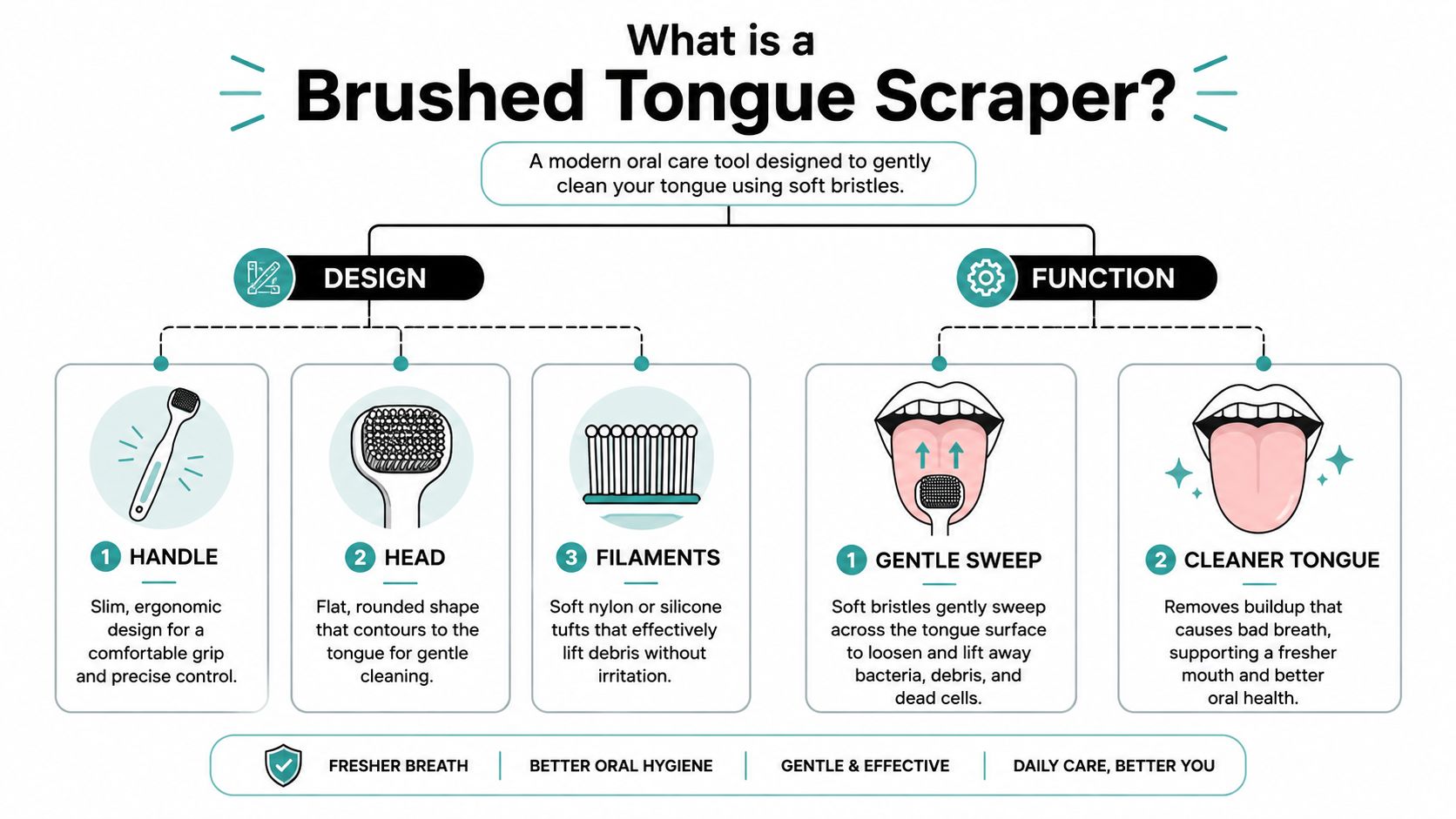
A brushed tongue scraper is exactly what it sounds like, a tongue-cleaning tool with a small head covered in soft filaments rather than a flat metal edge. Think of it as a hybrid between a tongue scraper and a compact toothbrush head, shaped to move across the tongue without feeling overly sharp.
The contrast with a traditional metal scraper is the whole point. A classic scraper is usually a smooth stainless steel or copper bar that removes coating by direct contact, while a brushed version uses rows or tufts of bristles to lift debris as it travels from back to front. That softer contact can feel more approachable if you're new to tongue cleaning.
How the design changes the feel
Bristle length, density, and flexibility matter here. Softer filaments can bend into the tongue's uneven surface, including the tiny papillae that create all those little ridges and valleys where coating gets trapped. Instead of scraping aggressively, the tool sweeps and loosens, then carries residue toward the front of the mouth where you can spit or rinse it out.
Common versions use food-grade silicone or soft nylon filaments, often with BPA-free plastic handles. Some are reusable and meant to be rinsed and air-dried, while travel-style versions may be simpler and more disposable. The key feature isn't the label, it's that the bristled head is built for gentle mechanical cleaning rather than a rigid blade-like pass.
A practical way to think about it, the toothbrush cleans teeth by brushing around contours, while the brushed tongue scraper uses a similar logic on the tongue's surface. That's why people who find metal scrapers too intense often gravitate toward this style first.
How Brushing the Tongue Affects Breath and Coating
A brushed tongue scraper earns its keep in a narrow, practical way. It can help with short-term breath control and reduce visible coating, which is why the strongest evidence sits around halitosis rather than broad oral-health promises. Early high-level evidence was limited, the Cochrane review summary found only 2 randomized trials with a combined 40 participants, yet those studies still showed a small but statistically significant drop in VSCs compared with a toothbrush (Cochrane review summary).
Later trials made that pattern easier to see. In a crossover trial of 10 healthy adults aged 20 to 50, a tongue scraper reduced VSCs by 75%, compared with 45% for a soft-bristle toothbrush, so the scraper had the larger short-term effect on the gases tied to malodor (clinical trial). A separate randomized clinical trial in 2024 also reported an immediate significant reduction in halitosis, with a statistically significant halimetry improvement, p = 0.0006 (2024 trial report).
What the numbers mean in plain language
The result fits the biology. The back of the tongue is a rough, crowded surface, more like a carpet than a countertop. Coating can hold on to odor-producing compounds, so when you clear that layer, breath can improve fairly quickly. A systematic review of mechanical tongue cleaning also concluded that both brushing and scraping can reduce breath odour and tongue coating, while a separate review found that adding a tongue scraper to an active mouthrinse didn't add much for VSC reduction, even though smell scores and coating index improved (systematic review).
| Study Focus | Population / Design | Key Outcome | Limitation |
|---|---|---|---|
| Early halitosis evidence | 2 randomized trials, 40 participants total | Small but significant VSC reduction vs toothbrush | Weak, limited evidence base |
| Scraper vs toothbrush | Crossover trial, 10 healthy adults | 75% VSC reduction with scraper, 45% with toothbrush | Very small sample, short-term outcome |
| Immediate breath change | Randomized clinical trial in 2024 | Significant halimetry improvement, p = 0.0006 | Short follow-up |
The caution matters because these studies are short, and many rely on single-session or crossover designs. That means they are good for showing what happens right after tongue cleaning, but less useful for predicting what changes, if any, survive once habits settle into a real routine. For readers, the practical takeaway is simple, expect fresher breath and less coating, then judge the tool by whether it is comfortable enough to use consistently.
Brushed vs Metal Tongue Scrapers
The question is not which tool looks more serious. It is which one people can use comfortably enough to keep using it. A brushed tongue scraper and a metal scraper both target the same coating, but they reach it with different kinds of contact.
The clinical comparison helps clarify the tradeoff. In a randomized, double-blind, parallel study, a bristled tongue brush head and plastic and metal scrapers all reduced tongue-coating scores, but the plastic and metal scrapers produced greater reductions in anaerobic bacterial counts than the brush scraper (comparative study). That points to a firmer scraping edge doing more debriding, especially on the back of the tongue where coating often gathers like a thin layer of damp residue on a countertop.
Comfort often decides consistency.
A brushed design usually feels softer, slimmer, and less likely to set off a gag reflex. That makes it a practical starting point for beginners, people with a sensitive tongue, or anyone who has tried a rigid scraper and found it too abrupt. Metal scrapers can feel more decisive, but that firmer edge may be harsher on irritated tissue if you press too hard.
Durability and maintenance differ as well. Stainless steel lasts longer and is easy to rinse clean, while soft polymer bristles wear down and need replacement more often. That is not a flaw so much as a tradeoff. Softer contact usually asks for more attention over time.
If comfort keeps the habit going, a brushed version has a clear place. If the goal is stronger coating removal, a rigid scraper may apply more force where the tongue is most coated.
For readers who want a side-by-side look at a comfort-first brushed option and a firmer metal one, Mouthology's stainless steel tongue scraper set is a direct example of the metal format. The main things to compare are head shape, material, and how easy the tool is to rinse after use.
| Feature | Brushed Tongue Scraper | Metal Tongue Scraper |
|---|---|---|
| Feel on the tongue | Softer, more forgiving | Firmer, more direct |
| Gag reflex | Often easier for sensitive users | Can feel more triggering for some |
| Cleaning style | Sweeps and lifts with bristles | Shears and scrapes with a rigid edge |
| Best fit | Beginners, comfort-first users | People prioritizing stronger debridement |
How to Use a Brushed Tongue Scraper Safely
The safest routine is usually the plainest one. Use the tool once a day, ideally in the morning before you eat or drink, when overnight coating is still easy to lift.
Start by sticking your tongue out slightly and finding the area just behind the tip where coating usually gathers. Place the bristled head gently on the surface, then sweep from back to front in short passes so debris moves forward instead of being pushed toward the throat.
Keep the pressure light
The bristles should glide, not dig. Two to four short passes are usually enough for a comfort-first routine, and if the surface feels sore or overly sensitive, ease off rather than scrub harder. The goal is to remove coating, not to leave the tongue irritated.
Rinse the head after each pass so residue does not stay trapped in the bristles. When you are done, wash the device under warm water and let it air-dry, because a damp cleaning head is harder to keep clean. If you want a visual walkthrough of the motion, this tongue scraper how-to guide is a useful companion.
A few safety notes matter here:
- Stop if you notice pinpoint bleeding.
- Skip it right after oral surgery or if a clinician has told you to avoid tongue cleaning.
- Never share the scraper with anyone else.
- Replace worn bristles once they start to splay or feel rough.
Good technique feels light enough that you could do it daily without dreading it.
The whole process usually adds about a minute, which is part of why it fits into an existing routine more easily than people expect.
What a Brushed Tongue Scaper Can and Cannot Do
A brushed tongue scraper is good at one job: lifting tongue coating and helping breath feel fresher for the short term. That is where the evidence is clearest, and it is the part worth trusting.
It does not replace brushing or flossing. Teeth and gums still need their own cleaning, because a tongue tool does not remove plaque from tooth surfaces or along the gumline. If tongue cleaning is treated as a substitute, the small problem gets attention while the bigger ones stay in place.
Claims about “detoxifying” the tongue or dramatically changing the oral microbiome go beyond what the current evidence supports. Most studies focus on coating and breath, not on lasting shifts in the mouth's ecosystem. As noted earlier, review evidence points to limited or inconsistent effects beyond the short-term odor benefit.
Plaque control needs a careful distinction too. Tongue coating is a structured biofilm, but it is not the same as plaque on teeth. Cleaning the tongue can make the mouth feel cleaner and may help with odor, yet the evidence for broader plaque reduction is modest.
The most honest framing is straightforward. A brushed tongue scraper is a comfort-oriented option for breath and coating, especially for people who prefer a gentler feel than a rigid scraper. It is useful, but it is not a catch-all solution for oral health.
Adding a Tongue Scraper to a Complete Routine
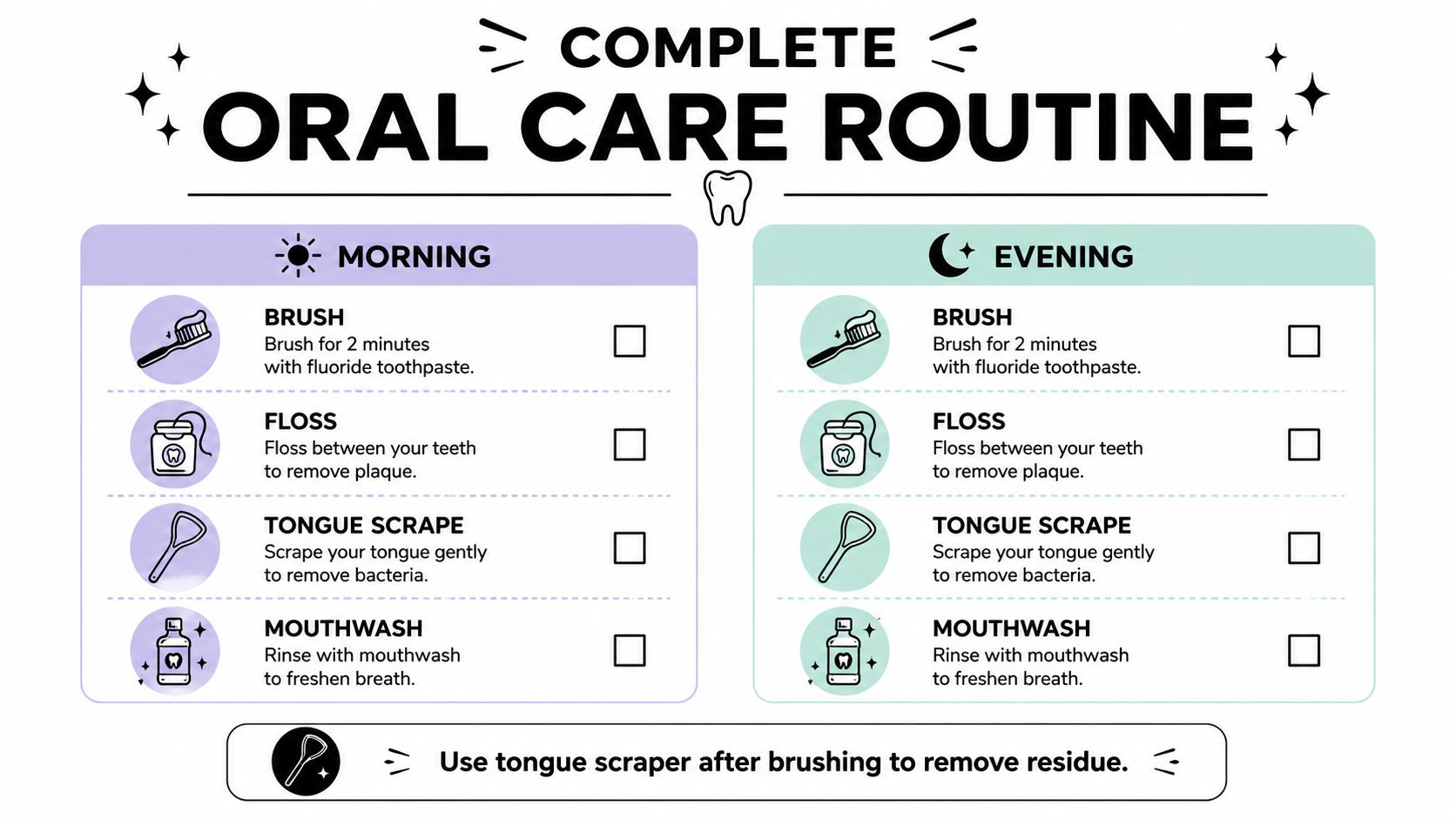
A tongue scraper fits best inside a routine that already covers the basics. Morning can start with toothpaste, then interdental cleaning, then a few gentle passes over the tongue, followed by rinsing if you like that clean finish. Evening can follow the same pattern, especially on days when coating or breath feels more noticeable.
The order matters less than doing it regularly. If tongue cleaning is the step that helps the routine feel finished, place it where you are most likely to remember it and use it well.
Who usually notices the most benefit
People with a coated tongue, dry mouth, or post-nasal drip often notice tongue cleaning more than someone who rarely gets coating in the first place. It can also help as a maintenance habit for people who already pay attention to gum health and want a low-effort way to keep breath under control.
That does not make it necessary for everyone. The device matters most when the tongue is clearly part of the problem, not when someone is chasing a vague promise of perfect oral balance.
A short ramp can make the habit easier to keep:
- Day 1 to 2, one evening pass.
- Day 3 to 4, morning or evening, whichever is easier.
- Day 5 to 7, add a second daily pass if it still feels comfortable.
If you want a family-friendly routine with a tongue-cleaning option built in, Mouthology also sells a tongue-cleaning tool alongside its other oral-care items, which may suit people who prefer one softer approach in the same drawer as a firmer scraper. The main thing is to choose a tool you will use gently and consistently, not one you avoid because it feels awkward.
If fresh breath still feels unfinished, try adding a brushed tongue scraper for seven days and notice what changes in comfort and consistency. Pick the style that feels easiest to repeat, use it gently once a day, and keep the rest of your oral care steady while you see whether the tongue step earns a permanent place in your lineup.
