

Posted by Sarah Collins
on August 28, 2026

You notice a little pink on your toothbrush, or perhaps a faint red swirl in the sink after flossing. Your gums don't hurt, so you rinse, carry on with your morning, and assume you brushed a little too enthusiastically. Sometimes that explanation is right. Persistent bleeding, however, can be your mouth's early signal that gum tissue is reacting to irritation.
Gum inflammation means the tissue around your teeth has become irritated and inflamed. In most cases, plaque, a sticky bacterial film that constantly forms on teeth, sits along the gumline and challenges the body's local immune system. The result can be redness, swelling, tenderness, a shiny gum surface, and bleeding with gentle contact, all signs described in clinical references such as the International Arab Journal of Dentistry reference on gingivitis.
The reassuring part is that early inflammation is often reversible. The important part is not to dismiss it, because gum inflammation can sit at the beginning of a spectrum that includes deeper periodontal disease and lasting damage. Below, you'll learn what the signal means, how to tell gingivitis from periodontitis, what can trigger it, and which practical steps help.
What Gum Inflammation Is
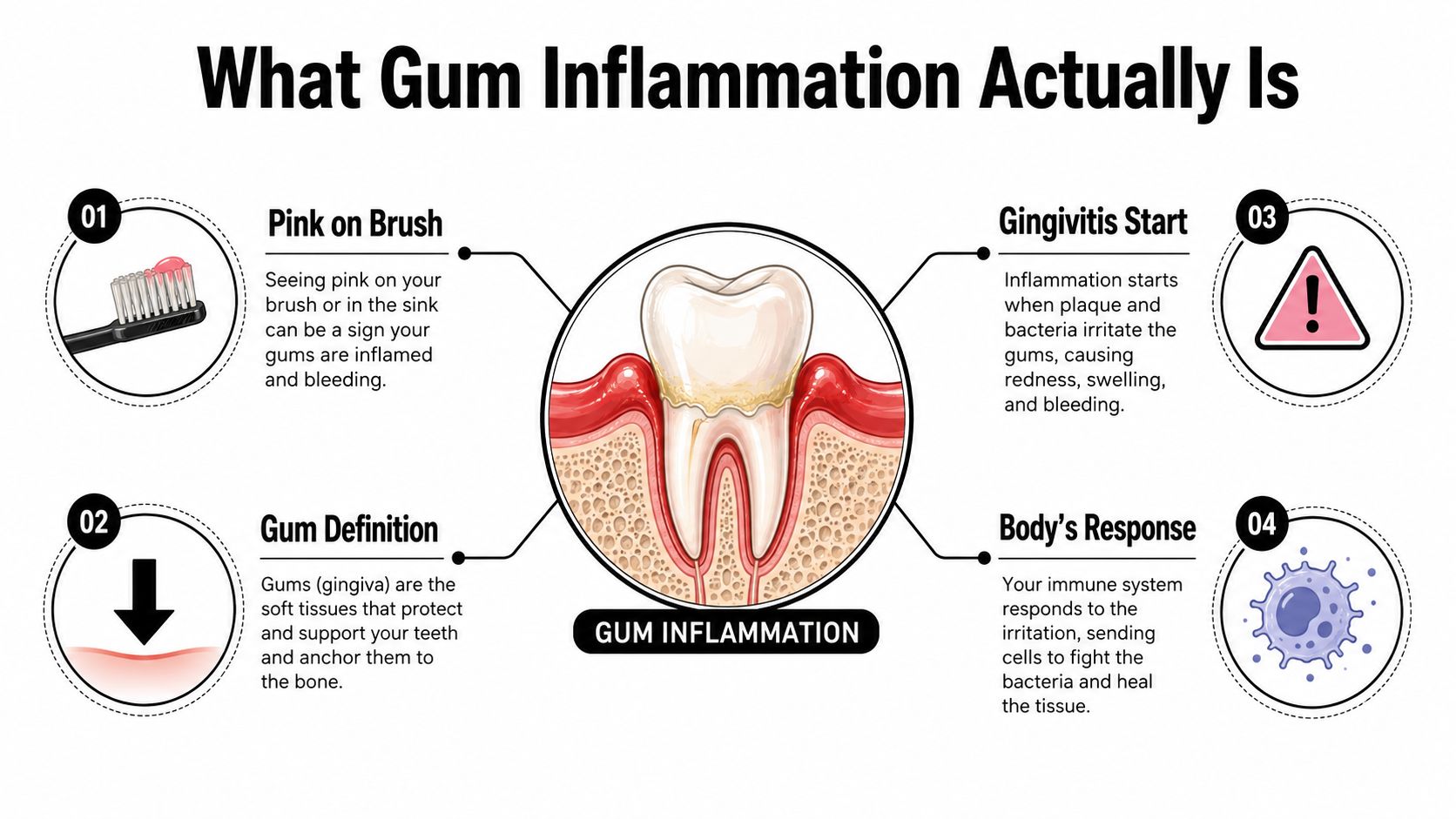
Gum inflammation, also called gingival inflammation, is the immune system's response to irritation in the gum tissue. Plaque is a thin layer of biological residue that gathers where a tooth meets the gum. If this bacterial film stays there, the immune system sends chemical signals and defensive cells to the area, similar to a neighborhood responding to a recurring disturbance.
Those defenses create the changes you can see or feel. Blood vessels in the gums widen, bringing more immune activity near the irritant. Gums may become redder, puffy, tender, smooth, or shiny, and they may bleed when touched by a toothbrush or floss. Bleeding is not the inflammation itself. It is an outward sign that the tissue has become more delicate and has increased blood flow.
Why plaque matters
Plaque forms continuously rather than appearing as a one-time deposit. It contains bacteria, including organisms from groups such as Streptococcus, Fusobacterium, Actinomyces, Veillonella, and Treponema. The NCBI clinical overview of gingivitis identifies plaque biofilm as the most common trigger and notes that gingivitis can be reversed when plaque control improves.
That reversibility gives gum inflammation its value as an early signal. Removing the source can allow a small irritated area to settle. Continued exposure can keep the immune response active. Pink on a toothbrush is not automatically an emergency, but it is information worth acting on.
Gingivitis generally starts at the gumline. Smoking, diabetes, hormonal changes, aging, and low vitamin C intake can affect how strongly the tissue responds or how easily the mouth recovers. Gum inflammation therefore sits on a spectrum. Some cases remain superficial, while others progress into the supporting structures around the teeth.
Gingivitis vs Periodontitis
Gingivitis and periodontitis aren't interchangeable. Gingivitis affects the gum tissue at the surface and is commonly driven by plaque. With effective daily cleaning and professional removal of buildup, the tissue can return to a healthier state.
Periodontitis is more advanced. Inflammation extends below the gumline and affects the tissues and bone that hold teeth in place. Over time, that destructive process can create deeper pockets, weaken support, and contribute to loose or shifting teeth. The World Health Organization's oral-health fact sheet defines severe periodontal disease using deep periodontal pockets or substantial loss of attachment around teeth.
Gingivitis vs Periodontitis at a Glance
| Feature | Gingivitis | Periodontitis |
|---|---|---|
| Main area affected | Gum tissue at the tooth margin | Gum tissue plus supporting connective tissue and bone |
| Common driver | Plaque biofilm | Persistent periodontal inflammation and dysbiosis |
| Typical signs | Redness, swelling, tenderness, bleeding | Possible recession, deep pockets, pus, loose teeth, or bite changes |
| Reversibility | Often reversible when plaque control improves | Requires professional care and ongoing management |
| Main practical message | Early warning signal | Established support damage that shouldn't be ignored |
Not every person with gingivitis develops periodontitis. The path depends on factors such as smoking, diabetes, immune response, genetics, and access to effective oral care. Still, untreated inflammation deserves attention because early action is easier than managing lost support later.
Practical rule: Bleeding is a reason to improve your routine and arrange an evaluation if it persists, not a reason to stop flossing.
Professional maintenance can be especially important for people with a history of deeper gum problems. A resource on periodontal maintenance and ongoing gum care can help explain why treatment doesn't end with one cleaning when periodontitis is present. The distinction matters because the same symptom, such as bleeding, can appear at different points on the disease spectrum.
What Causes Gum Inflammation
Plaque buildup is the central cause of ordinary gingivitis. A toothbrush may clean the broad outer surfaces of your teeth while leaving the narrow edge beside the gums or the spaces between teeth less thoroughly cleaned. Bacteria in that biofilm produce irritants that prompt the immune response described earlier.
If plaque remains long enough, it can harden into tartar, also called calculus. A toothbrush can't reliably remove hardened deposits, so a dental professional may need to clean them. You can explore a broader discussion of biofilm detox plan for fatigue for general context about biofilm, but gum care still depends on dental assessment and direct plaque removal.
Daily factors that raise risk
Several habits can make the gum environment harder to manage:
- Smoking: Tobacco exposure affects gum tissue and makes healthy healing more difficult.
- Vaping: Aerosols and mouth dryness may add irritation, although the exact effects vary by product and person.
- Frequent sugar exposure: Repeated sugary snacks give plaque bacteria more available fuel, especially when cleaning is inconsistent.
- Teeth grinding: Clenching and grinding place mechanical stress on teeth and their supporting tissues.
- Mouth breathing: Constant airflow can dry the front gum tissues, reducing the protective effect of saliva.
These factors don't independently guarantee inflammation. They raise susceptibility or make existing irritation harder to settle.
Body changes and medicines
Hormonal changes during puberty or pregnancy can make gums react more noticeably to plaque. Diabetes can also influence gum health, while immune conditions may alter the body's response to oral bacteria. Stress and poor sleep can affect routines, saliva, and recovery, which may indirectly increase risk.
Some medicines contribute by reducing saliva or encouraging gum overgrowth. Examples include certain antihypertensives, anticonvulsants, and calcium channel blockers. A dry mouth can feel minor, but saliva helps lubricate tissues and supports the mouth's natural defenses.
The cause often has layers. Plaque may start the irritation, while smoking, hormonal shifts, dry mouth, or blood-sugar problems influence how strongly it develops. That combination explains why two people with similar brushing habits can have different gum symptoms.
Common Symptoms and Red Flags
Gum inflammation often announces itself through small changes rather than dramatic pain. Check what you can see, feel, and notice during everyday activities.
Visual cues
- Red or dusky color: Healthy gums commonly look coral pink, while inflammation can make them appear redder or darker.
- Swelling: The gumline may look rounded, puffy, or thicker than usual.
- Recession: Gums may appear to pull away from the tooth, making more of the tooth surface visible.
Sensation and taste
- Tenderness: Inflamed tissue can feel sore when you brush, floss, or eat.
- Persistent bad breath: An unpleasant odor that returns despite cleaning can signal bacterial buildup.
- Metallic taste: Blood or inflamed tissue can leave a recurring metallic taste.
What happens during cleaning
- Bleeding with brushing or flossing: This is a common sign of gingivitis, especially around areas where plaque collects.
- Bleeding without contact: Spontaneous bleeding is more concerning than occasional bleeding after beginning to floss again.
A small amount of pink after flossing can happen when the tissue is irritated, particularly if you've just restarted interdental cleaning. It shouldn't become a reason to abandon flossing. Gentle, consistent cleaning usually gives the tissue a chance to adapt, but ongoing or worsening bleeding deserves professional attention.
Seek a dentist sooner rather than later if you notice any of the following:
- Spontaneous bleeding: Gums bleed without brushing, flossing, or eating something firm.
- Significant pain: Pain interferes with eating or sleep.
- Loose teeth or a changing bite: A tooth feels mobile, or your teeth meet differently.
- Pus: Drainage appears between a tooth and gum.
- Persistent odor: Bad breath continues despite a careful routine.
- Rapid recession: The gumline seems to change quickly.
A guide to why gums bleed during brushing can help you understand common explanations, but online information can't measure gum pockets or assess tooth support. Gum disease can be painless in its early stages, so waiting for strong discomfort isn't a reliable strategy.
Gum Health and the Rest of the Body
A sore, bleeding gum can feel like a warning about your whole body. Usually, it is first a local sign that plaque has irritated the tissue. Treating that inflammation still matters for comfort, fresher breath, cleaner teeth, and preserving tooth support. Broader health connections add context, not a reason for panic.
Periodontal disease has been associated with diabetes, cardiovascular disease, adverse pregnancy outcomes, and some respiratory infections. Diabetes shows why these relationships need careful interpretation: blood-sugar control can affect gum health, while periodontal inflammation may make diabetes harder to manage. An association means two conditions occur together more often. It does not show that one directly caused the other.
What may connect the systems
Researchers have proposed several overlapping pathways:
- Shared inflammation: The mouth and the rest of the body use related immune-signaling pathways.
- Bacterial movement: Inflamed or bleeding oral tissue can allow oral bacteria to enter the bloodstream.
- Common risk factors: Smoking, diet, diabetes, stress, and limited access to care may affect both oral and general health.
- Host response: People can have different immune reactions to the same microbial challenge.
Modern periodontal research examines the interaction between the oral microbiome and the host immune response. Salivary markers such as IL-1β, IL-6, TNF-α, and MMP-8/MMP-9 may help with diagnosis and risk assessment, as discussed in this recent periodontal inflammation review. They may help clinicians judge inflammatory activity and risk, but they cannot replace an examination of the gums and teeth.
Strong claims that gum disease directly causes Alzheimer's disease or specific cancers go beyond what association studies can establish. A National Institute of Dental and Craniofacial Research overview of gum disease explains the local infection and inflammation clearly. Research connecting gum symptoms with multiple health conditions can reveal a pattern without proving direct causation.
That distinction helps keep the practical message clear. Care for gum inflammation because it can improve oral comfort and help protect tooth support. Any broader health benefit remains a possibility, not a promise or the main reason to feel anxious.
Evidence-Based Treatment and At-Home Care
Treatment depends on how deep and persistent the inflammation is. A dentist or hygienist may remove plaque and tartar with a routine cleaning. If deposits and inflammation extend below the gumline, scaling and root planing may be recommended. Antibiotics are sometimes used when a dental professional believes they're indicated, but they don't replace physical removal of the source.
At home, build around repeatable actions rather than aggressive scrubbing.
Remove plaque gently
Brush twice daily with a soft-bristled or electric brush. Angle the bristles toward the gumline and use light pressure. Scrubbing harder doesn't clean better if it traumatizes the tissue.
Clean between teeth daily with floss or interdental brushes. If the spaces are larger, an interdental brush may be easier and more effective than forcing floss into the area. Clean the tongue gently as well, since its surface can hold odor-producing debris.
Support the surrounding routine
A toothpaste containing fluoride or hydroxyapatite can support enamel, including enamel near the gumline. Mouthology's fluoride-free toothpaste uses 10% nano-hydroxyapatite as its active mineral ingredient, and it can be considered alongside other toothpaste options as part of a gentle brushing routine. Toothpaste choice doesn't remove the need for interdental cleaning or professional care.
Alcohol-free mouth rinses may suit people who find alcohol-based products drying. Warm salt-water rinses can provide a simple comfort measure during a short-lived flare-up, but they shouldn't replace evaluation when symptoms persist. For ingredient-focused guidance, see this discussion of alcohol-free mouthwash and gum care.
Consider emerging adjuncts carefully
Recent research is exploring add-ons such as probiotic strains, curcumin-based gels, saliva proteins, and easier detection methods. These approaches are promising areas, not automatic replacements for brushing, interdental cleaning, or dental treatment.
A 2025 study found that both propolis-containing chewing gum and propolis mouthwash reduced plaque, papillary bleeding, and gingival inflammation in people with gingivitis, with no significant difference between the two approaches, as reported in this PubMed study on propolis adjuncts. That result may help explain why readers are interested in targeted adjuncts, but products can differ, and individual suitability matters.
Drink water regularly, stop tobacco use if you can, manage blood sugar with your healthcare team, and protect sleep and stress levels. If you're also comparing general wellness products, a resource on choosing plant based energy formulas may help you evaluate ingredients thoughtfully, but energy supplements won't address plaque at the gumline.
Prevention and When to See a Dentist
Prevention works best as a small daily framework. You don't need a complicated shelf of products. You need a routine that reaches the gumline, cleans between teeth, and makes it easier to notice changes early.
Start with a two-minute brushing routine twice a day using a toothpaste that supports enamel, whether fluoride-based or hydroxyapatite-based. Use a soft brush and gentle pressure. Add daily floss or interdental brushes, then clean your tongue lightly if coating or breath is a concern.
Each habit has a specific job:
- Brush the gumline: Removes plaque where gum irritation often begins.
- Clean between teeth: Reaches surfaces ordinary brushing misses.
- Rinse with water: Helps clear food residue and supports comfort when the mouth feels dry.
- Limit frequent sugar exposure: Reduces repeated fuel for plaque bacteria.
- Avoid tobacco: Removes a major modifiable stressor for gum tissue.
- Keep dental appointments: Allows professionals to remove tartar and detect changes you can't see at home.
Replace a worn or damaged brush, choose softness over force, and make interdental cleaning easier by keeping floss or brushes visible. If your gums bleed when you begin cleaning between teeth, use a careful technique rather than quitting immediately. Persistent bleeding still needs a dental assessment.
Arrange an appointment if bleeding continues, swelling or pain develops, gums recede, teeth loosen, pus appears, or bad breath remains despite good hygiene. The World Health Organization's oral-health information places severe periodontal disease within a substantial global oral-health burden, which is one reason early prevention matters.
You can start today with a soft brush, gentle gumline cleaning, and one interdental tool. If your symptoms don't settle or any red flag appears, contact a dentist and describe exactly what you've noticed, including when the bleeding began and whether it happens without brushing.
Take action today: inspect your gums in good light, clean gently along the gumline and between your teeth, and schedule a dental visit if bleeding or swelling persists. A simple routine and timely professional evaluation can help you protect your gums before an early warning becomes a harder problem.
