

Posted by Sarah Collins
on August 07, 2026

You take a sip of cold water, and a sharp zing shoots through one tooth. Maybe it happens with ice cream, maybe with cold air on a winter walk, or maybe it's the first bite of something sweet that sets it off. The reaction can feel sudden and annoying, but tooth sensitivity is common, with adult prevalence estimates usually falling in the 10% to 30% range, and some studies reporting a broader spread from 3% to 57% depending on how it's measured (PMC review).
That matters because you're probably not dealing with a rare problem, you're dealing with a normal but uncomfortable one that needs a fast, practical response. A general-practice study found a confirmed prevalence of 12.3%, with affected patients averaging 3.5 hypersensitive teeth each, so the issue is often localized rather than mouth-wide (PMC review). If you're trying to sort out what hurts, what helps, and when to call a dentist, our guide to dental pain causes is a useful companion read.
When Tooth Sensitivity Strikes Without Warning
A lot of people know the moment well. One second everything feels normal, the next a sip of cold water, a bite of something sweet, or even a breath of cool air sets off a sharp zing in a single tooth. That kind of brief reaction is often dentin hypersensitivity, and it is the reason many people look for tooth sensitivity immediate relief instead of hoping the problem will settle on its own.
Why one tooth can react while others stay calm
Sensitivity usually starts when the tooth's outer protection has worn thin or the gumline has shifted, so heat, cold, or pressure reaches the inner nerve more easily. Enamel wear, gum recession, brushing too hard, and recent dental work can all set that up, but the pattern is usually the same, one spot reacts to a clear trigger while the rest of the mouth stays quiet.
Practical rule: If a cold sip causes a quick, sharp zing that fades once the trigger is gone, that pattern fits routine sensitivity more than a deeper problem.
That does not mean you have to wait for relief. Clinical evidence supports direct treatment on the sensitive area. A randomized clinical study found 0.454% stannous fluoride produced significantly greater sensitivity reduction after a single direct application and again after 3 days of twice-daily brushing, with a between-group difference of p < 0.0001 (clinical study summary). Another comparative study found an 8% strontium acetate, 1040 ppm fluoride dentifrice showed significant reductions after a single dab-on application, including Schiff score (p = 0.0003), tactile testing (p = 0.0003), and VAS pain ratings (p = 0.0077) (clinical study summary).
The point is simple. Immediate relief does not mean magic, it means using the toothpaste directly on the sensitive tooth so the active ingredient can start working right away, rather than waiting for a routine brush to spread it everywhere first.
A quick self-check helps you sort out what you are dealing with. If the pain is tied to cold, sweet foods, or air, if it stays in one tooth, and if it stops when the trigger stops, that is more consistent with everyday sensitivity. If the pain lingers, spreads, throbs on its own, or comes with swelling, that needs a dentist's attention. If you are unsure which pattern fits, our guide to dental pain causes can help you sort the signs before you decide what to do next.
The Dab-On Technique for Fastest At-Home Relief
A sudden zing from cold water, a sharp jab from air, or a quick ache after something sweet can make you reach for the toothpaste tube and hope for a fast fix. The quickest at-home option is a direct topical application, often called the dab-on method in clinical writing, where the desensitizing toothpaste stays on the sensitive tooth before you brush the rest of your mouth.
How to do it
Find the exact tooth that is reacting. Keep the area as dry as you reasonably can for a moment, then place a small amount of desensitizing toothpaste directly on the exposed spot and gently work it in with a clean finger or cotton swab. Let it sit briefly, then brush the rest of your teeth as usual.
That direct contact matters because it puts the active ingredients on the tooth that is reacting instead of spreading them through the whole mouth first. A comparative clinical study summary on is enamel repair toothpaste described a calcium-phosphate nanoparticle/hydroxyapatite toothpaste as the only toothpaste in its comparison group that produced immediate relief after treatment (clinical study summary).
What gets in the way
A common mistake is using too little toothpaste, brushing it away too quickly, or not giving it enough time to stay in contact with the sensitive area. Another is expecting one application to settle every tooth overnight. Some desensitizing toothpastes are built for quick contact, while others are meant for steadier support over time, so the label matters as much as the technique.
If you want a plain-language visual of ingredient choices, the internal overview at is enamel repair toothpaste helps make the label language easier to sort through. The dab-on step gives you the best chance of early relief, and it also helps you see whether the pain behaves like simple sensitivity or something that needs a dentist.
How Desensitizing Ingredients Work
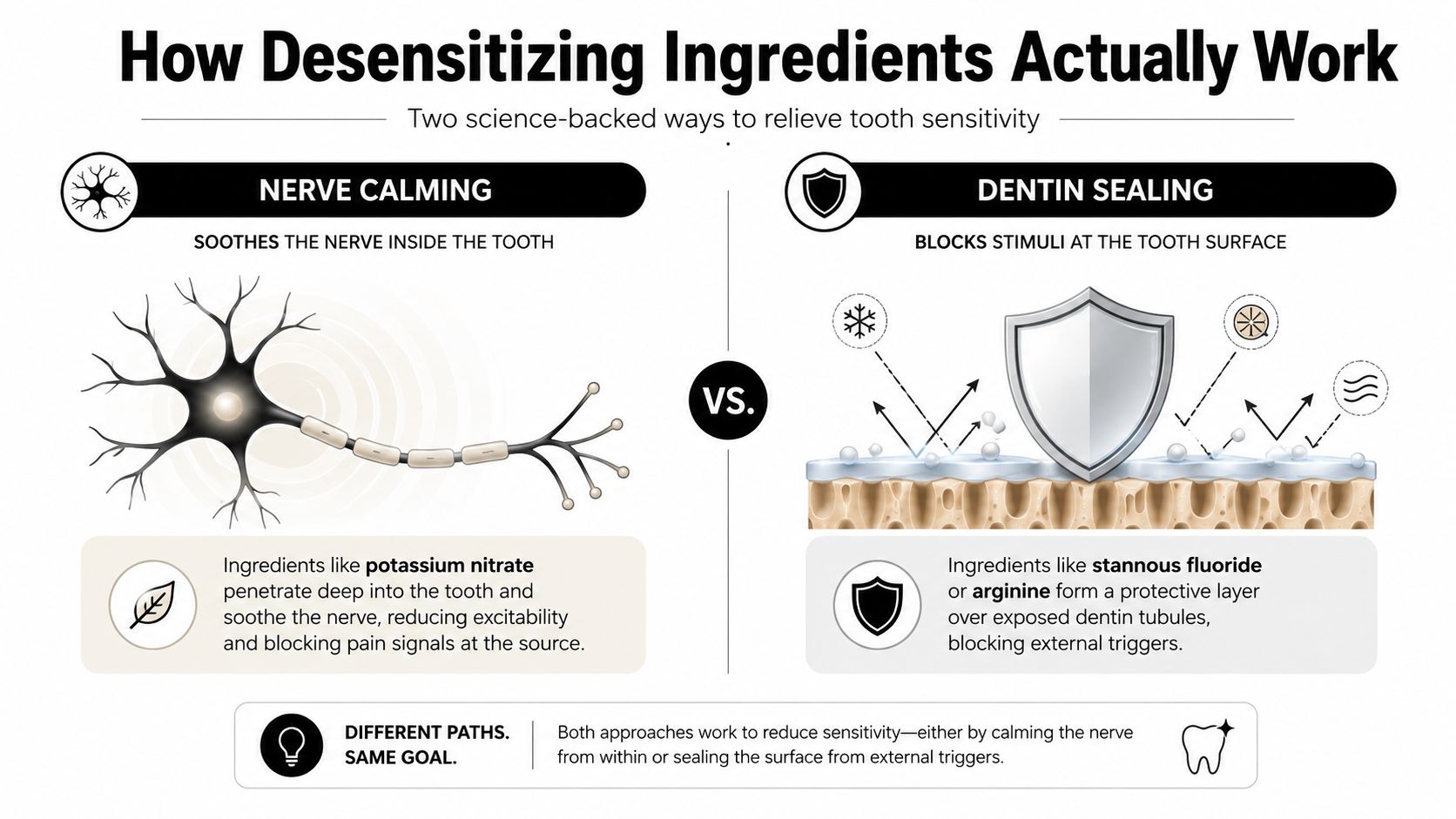
A sensitive tooth usually reacts because one of two things is happening. The ingredient either quiets the nerve signal or helps seal the exposed dentin so triggers have a harder time getting through.
Nerve-calming ingredients
Ingredients like potassium nitrate are used to reduce the pain signal reaching the tooth nerve. That helps explain why some desensitizing toothpastes can feel useful before any longer-term effect has built up. Direct application matters too, because placing the toothpaste right on the sensitive spot gives the ingredient a better chance to stay in contact with the area that is reacting (Ruidoso Dentist).
Dentin-sealing ingredients
Other ingredients, including stannous fluoride and nano-hydroxyapatite, work on the exposed surface itself. They help form a protective layer over dentin tubules, which makes it harder for cold, sweet, or acidic triggers to reach the nerve. That is why ingredient labels matter. A formula designed for rapid relief usually combines direct contact with tubule-occluding ingredients, while a routine toothpaste may be better suited to steadier daily support.
A clinical review of low-level light therapy also points to immediate relief as a real outcome in controlled settings. One clinical study summary reported favorable immediate results compared with placebo, which supports the idea that fast response can be measured, even though not every at-home product works the same way. That finding does not turn every toothpaste into an instant fix, but it does show why short-term relief claims deserve attention when the method and ingredient are matched to the symptom.
For a modern fluoride-free option, is enamel repair toothpaste helps explain how a product such as Mouthology's 10% nano-hydroxyapatite toothpaste fits the same broad idea of supporting enamel surfaces and calming sensitivity triggers. It is still a daily oral care product, not a magic switch. The practical takeaway is simple, choose ingredients that match the kind of relief you need, whether that is fast nerve calming, surface sealing, or both.
Short-Term Remedies and What to Avoid
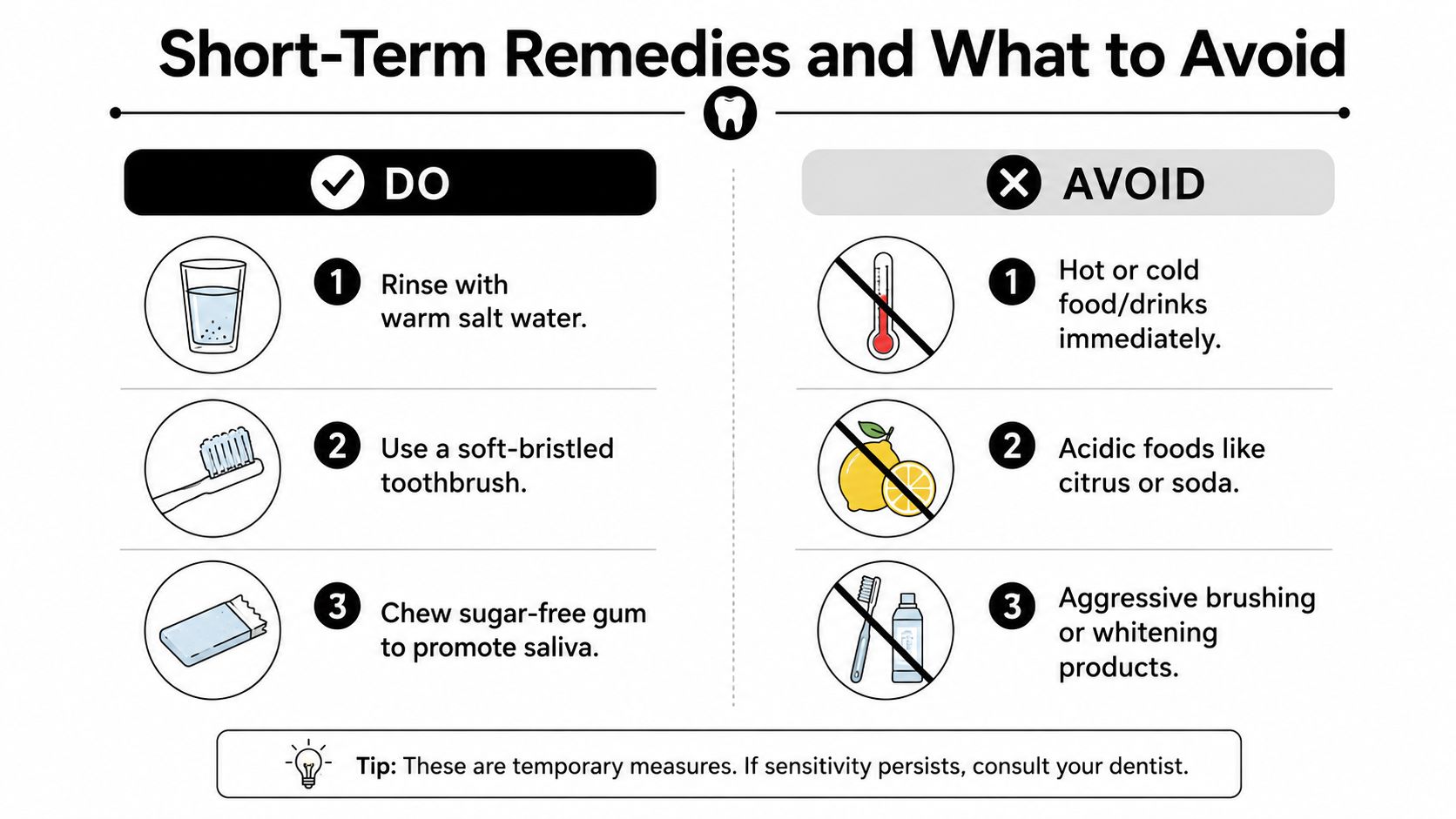
A sensitivity flare-up often gets worse when you keep exposing the same tooth to cold drinks or acidic foods. The safest short-term move is to lower stimulation while you let a desensitizing ingredient do its work.
A simple comfort routine
- Use warm salt water gently: A mild rinse can feel soothing when gums are irritated. Swish lightly and spit it out.
- Choose a soft-bristled brush: A gentler brush reduces extra abrasion on already-sensitive areas.
- Keep food temperature moderate: Very hot and very cold foods can keep the nerve on alert.
- Chew sugar-free gum if it helps saliva flow: More saliva can help wash away irritants between meals.
If the sensitivity started after whitening, Ultra Smile DentalSpa's whitening comfort guide is a practical reference for understanding why that temporary flare-up can happen and what usually helps during the adjustment period.
Stick with one simple rule during a flare-up, don't keep testing the tooth with repeated cold drinks just to see if it still hurts.
What to skip for now
Aggressive brushing can make the problem worse, especially if the gumline is already exposed. Whitening products can also be irritating during a flare-up, and the same goes for frequent acidic snacks or drinks. If you grind at night, a protective guard is worth discussing with a dentist, because constant pressure keeps sensitive teeth from settling down.
A careful routine often needs time, too. As noted earlier, most formulas require 4 to 8 weeks for full effect, so early improvement is welcome, but not every product works at the same speed. For brushing technique specifics, the internal guide on how to brush sensitive teeth is a helpful next step.
Recognizing When Sensitivity Signals Something Serious
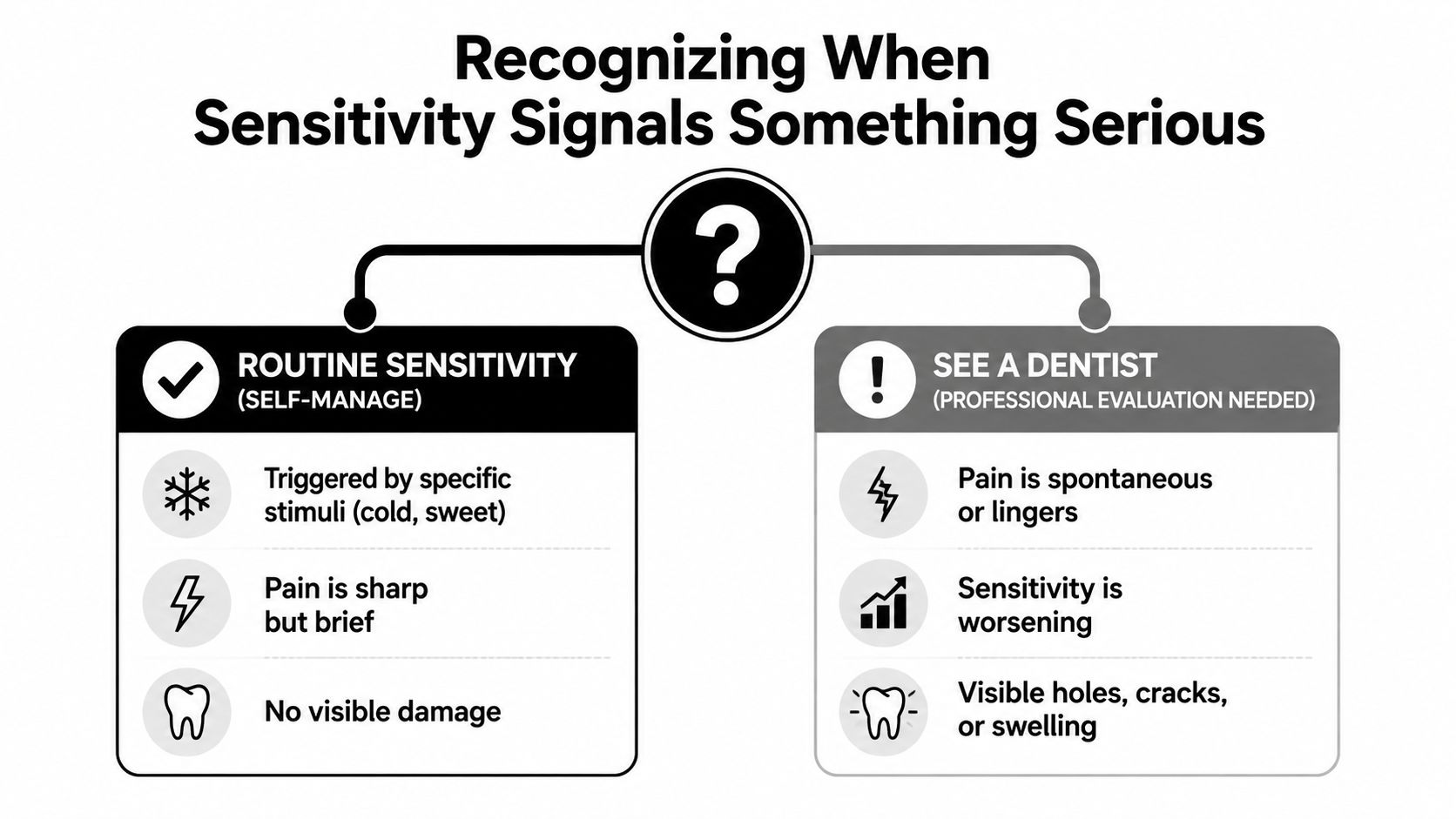
Not every zing is simple sensitivity. Tooth discomfort can also come from gum recession, cavities, cracked teeth, recent dental work, or grinding, and the practical question is whether you're dealing with a trigger-based reaction or something that needs professional attention (Johns Hopkins Medicine).
A quick self-triage check
If the pain is brief, tied to cold or sweet foods, and stops when the trigger stops, that points more toward routine sensitivity. If it lingers, wakes you up, keeps getting worse, or stays locked to one tooth without easing, that's a different story. Swelling, visible damage, or pain that feels spontaneous rather than trigger-based should also move dental care higher on the list.
If you keep reaching for the same home remedy and the tooth still hurts the same way, that's a sign to stop guessing.
The reason this matters is that repeated home treatment can delay the right fix. A cracked tooth, for example, may need structural care rather than another desensitizing product, which is where options like crowns for damaged teeth become part of the conversation.
A useful rule is simple, persistent or worsening pain deserves a dental visit. The goal isn't to panic, it's to avoid mistaking a bigger problem for normal sensitivity and treating it like a nuisance when it needs care.
Building a Sensitivity-Prevention Routine
The most comfortable routine is the one that prevents flare-ups before they start. A soft-bristled brush, gentle technique, and a desensitizing toothpaste that supports enamel can make daily care feel much easier to live with.
That's where a fluoride-free, mineral-based option can fit naturally for families who want a modern routine. Mouthology's 10% nano-hydroxyapatite toothpaste is one example of a toothpaste designed to support enamel health and help reduce sensitivity triggers without changing your whole routine.
A few habits matter more than people expect. Rinse or wait after acidic foods, avoid scrubbing hard at the gumline, and talk to a dentist if grinding keeps showing up. If you want a simple next step, build the day around one gentle brush, one smart ingredient choice, and fewer trigger exposures.
For a deeper daily-care framework, the internal article on tips for sensitive teeth is a good place to tighten up your routine. The less often your teeth get irritated, the less often you'll need to chase quick fixes.
If your tooth keeps zinging with cold, sweet, or air, start with the dab-on method today, then watch the pattern for a few days. If the pain lingers, worsens, or comes with swelling, book a dental appointment instead of trying to outlast it at home.
