

Posted by Sarah Collins
on August 27, 2026

You're standing at the bathroom sink, brushing before work while a child negotiates over bedtime brushing beside you. The toothpaste tube is nearly empty, yesterday's floss pick is in the bin, and another plastic toothbrush is waiting in the drawer. None of these choices feels significant on its own. Repeated every day, they shape a household routine with real material, ingredient, and healthcare consequences.
Sustainable oral care isn't about finding one perfect bamboo toothbrush or abandoning products that protect teeth. It's about looking at the whole life cycle, from ingredients and manufacturing to packaging, daily use, disposal, and the dental problems your routine may help prevent. The most useful choices are usually practical: select durable tools, reduce unnecessary single-use materials, understand fluoride and hydroxyapatite, and keep prevention at the center.
Why the Toothbrush Aisle Quietly Matters
Twice-daily brushing creates a pattern most families barely notice. Toothpaste tubes get squeezed flat, toothbrushes get replaced, floss containers accumulate in drawers, and mouthwash bottles leave the bathroom in household recycling or general waste. The individual items are small, but oral care depends on repeated consumption rather than occasional purchases.
A 2022 review identified carbon dioxide emissions, plastic waste, packaging, and end-user single-use plastics as the main contributors to unsustainable oral healthcare. It connected those impacts with ordinary products, including toothpaste tubes, toothbrushes, and other disposable items used in everyday home care. You can read the review in the research on unsustainable oral healthcare products.
A useful starting point: Don't ask which product has the greenest label. Ask what it's made from, how long it lasts, what you replace, and where each part goes afterward.
That shift makes sustainable oral care less intimidating. You don't need to replace every item at once or treat conventional products as a moral failure. You can improve one decision at a time, starting with the products your household uses most often.
By the end of this guide, you'll have a clearer way to:
- Choose tools thoughtfully: Compare bamboo, recycled-plastic, replaceable-head, and electric toothbrushes through their full life cycles.
- Read ingredient and packaging claims: Understand what fluoride and nano-hydroxyapatite do, while spotting vague sustainability language.
- Cut single-use waste: Use refillable systems, concentrated formats, and durable cleaning tools where they make sense.
- Protect prevention: Recognize that avoiding complex dental treatment can matter more than making a cosmetic packaging swap.
The best routine is one your family will maintain. A lower-waste brush that gets used inconsistently isn't a meaningful upgrade if it leads to missed cleaning and more intensive treatment later. Convenience, oral-health performance, durability, and end-of-life handling all belong in the same conversation.
What Sustainable Oral Care Actually Means
Sustainable oral care sits at the intersection of three questions.
What goes in your mouth
Start with the formula. Fluoride, hydroxyapatite, abrasives, surfactants, flavoring agents, and preservatives all have different functions and manufacturing pathways. A product shouldn't receive a sustainability pass because its container looks attractive. Ingredient safety, appropriate formulation, and reliable daily performance come first.
This is especially important for families. A toothpaste that reduces packaging but doesn't suit a child's needs, sensitivity, enamel concerns, or professional guidance may create a poor trade-off. “Natural,” “fluoride-free,” and “sustainable” aren't interchangeable terms.
What gets thrown away
Next, look at the disposal stream. Toothbrushes, toothpaste tubes, floss, floss picks, mouthwash bottles, and protective packaging may combine materials that local recycling systems don't accept. A refill can reduce waste only if the refill uses less material and the household uses the system consistently.
Packaging deserves a life-cycle view. Raw materials, production, transport, use, and disposal all contribute to a product's footprint, so a heavier or more complicated alternative isn't automatically lower-impact.
What gets prevented
Finally, consider prevention. Regular brushing, interdental cleaning, and appropriate dental care can help maintain oral health and reduce the need for fillings, crowns, extractions, and additional appointments. That matters environmentally because clinical care uses energy, materials, protective equipment, sterilization, and travel.
A 2026 life-cycle assessment found that in-clinic periodontal treatment had approximately 2 to 4 times the environmental impact of at-home preventive routines for the average patient, rising to up to 10 times for severe periodontal disease. The study reported that about 90% of periodontal healthcare's total carbon dioxide equivalent emissions came from clinical interventions, compared with about 10% from home hygiene, with patient and staff travel and clinic energy among the dominant sources. See the life-cycle assessment of periodontal healthcare.
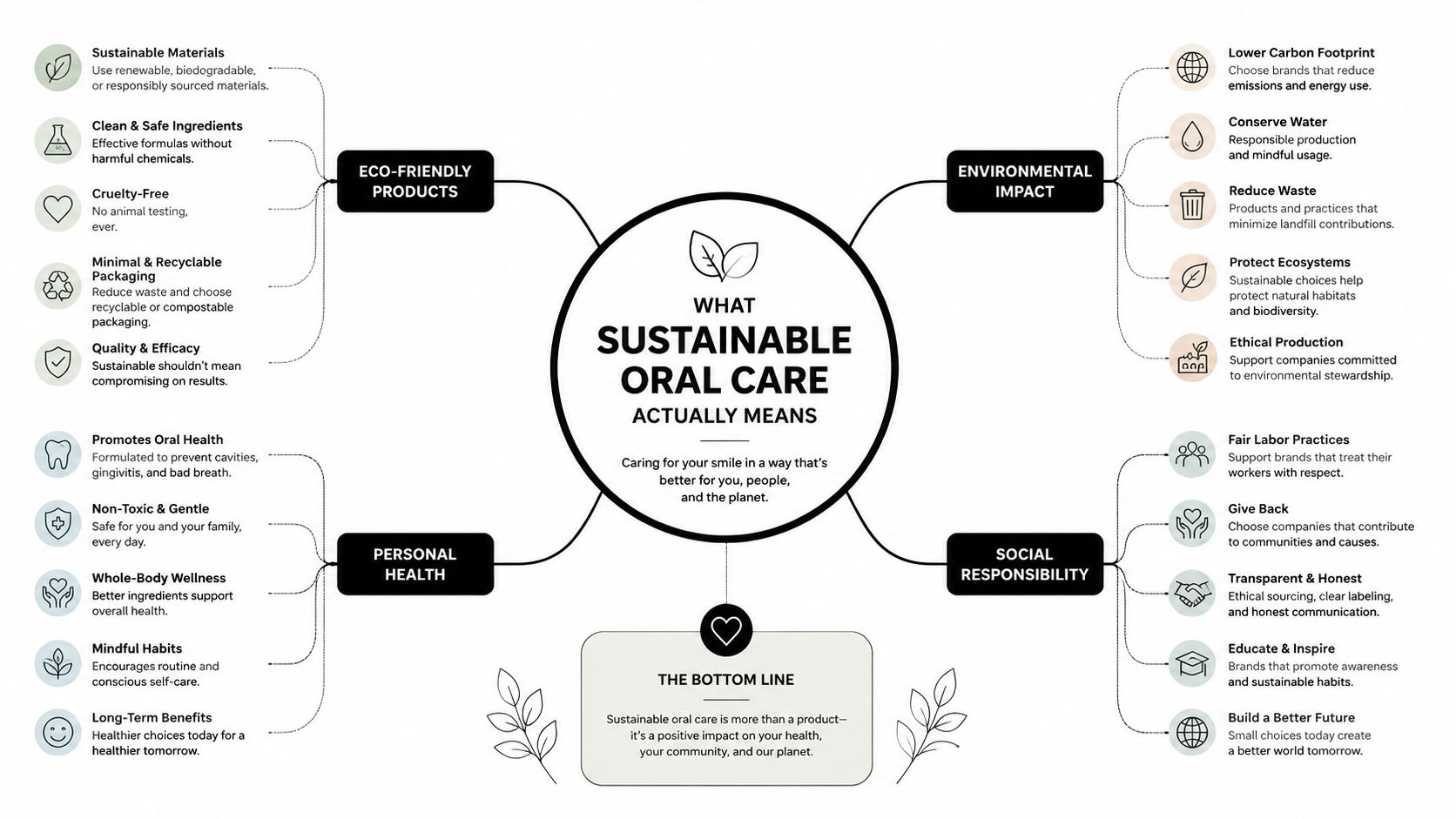
This three-part framework is more useful than the narrow “eco toothbrush” lens. It helps you compare a refillable toothpaste, a long-lasting electric brush head, a recycled-plastic manual brush, or a mineral-based formula without pretending that one material wins every category.
Where the Environmental Impact Really Comes From
Oral-care waste comes from several ordinary pressure points, not one villainous product. Toothbrushes are frequent replacements, toothpaste tubes often combine layers that complicate recycling, and floss is commonly designed for one short use before disposal.
The scale of toothbrush disposal is substantial. Around 4 billion toothbrushes are discarded globally each year, while a widely cited estimate places annual United States disposal at about 1 billion toothbrushes, producing roughly 50 million pounds of waste. These figures come from reporting on the environmental impact of plastic toothbrushes.
Toothpaste tubes create a different problem. One industry source reports that about 300 million toothpaste tubes go to landfill each year, and that tubes can take approximately 500 years to biodegrade. The analysis of toothpaste brands and sustainability concerns describes why packaging design remains a difficult issue.
The main waste streams
- Toothbrushes: Handles and bristles may use different materials, making separation difficult. A brush with a replaceable head can reduce the amount discarded, but only if replacement heads are readily available and the handle remains in service.
- Toothpaste tubes: Multi-layer construction can prevent ordinary curbside recycling. Aluminum tubes, jars, tablets, and refill formats shift the material burden, but each needs local disposal or recycling instructions.
- Floss: Nylon floss and disposable floss picks create small but frequent waste. Coatings, mixed-material dispensers, and limited collection options can make recovery difficult.
- Mouthwash: Ready-to-use liquids require bottles and transport of a product that is mostly water. Concentrates, powders, and tablets can reduce packaging volume, though the formula and user experience still matter.
- Water and ingredients: Turning off the tap while brushing is a simple resource habit. Ingredient choices also deserve scrutiny, but a green-sounding ingredient claim doesn't replace a complete life-cycle assessment.
A household can reduce its routine waste by choosing products with fewer components, refill systems, and durable tools. For a broader explanation of how packaging decisions work across materials, transport, use, and disposal, consult these eco-friendly packaging principles for e-commerce.
The key lesson is scale and prevention. A family's discarded brushes and tubes matter, but avoiding intensive clinical treatment can carry a larger environmental benefit. Sustainable oral care therefore starts with waste reduction and ends with a routine that supports healthy teeth and gums over time.
Fluoride, Nano-Hydroxyapatite, and the Safety Conversation
Fluoride and nano-hydroxyapatite, often shortened to nHa, shouldn't be presented as cartoon rivals. Both are used in toothpaste intended to support enamel and cavity prevention, but they work through different mechanisms and come with different evidence histories.
Fluoride helps strengthen enamel by encouraging the formation of fluorapatite and by slowing demineralization during acid attacks. Its evidence base includes decades of community-water and clinical research. Families still need to follow age-appropriate guidance, especially because young children may swallow toothpaste, and excessive exposure during tooth development can contribute to mild fluorosis.
Nano-hydroxyapatite is a biocompatible mineral related to the hydroxyapatite naturally found in teeth. It can interact with the enamel surface and provide mineral material that supports enamel maintenance. The peer-reviewed evidence base is growing, but it remains smaller than fluoride's long-established literature, particularly for broad population-level cavity prevention.
Safety and formulation matter
The European Union's Scientific Committee on Consumer Safety concluded that hydroxyapatite, nano form, is safe in toothpaste up to 29.5% and in mouthwash up to 10% under the conditions described in its opinion. It also noted that ingested nanoparticles dissolve rapidly in gastric fluid, which reduces nano-specific safety concerns. Review the EU Scientific Committee opinion on nano-hydroxyapatite safety.
| Factor | Fluoride | Nano-Hydroxyapatite (nHa) |
|---|---|---|
| Main role | Supports enamel resistance and slows demineralization | Supplies a tooth-related mineral that supports enamel maintenance |
| Evidence history | Extensive, developed over decades | Growing peer-reviewed research base |
| Family consideration | Use age-appropriate amounts and supervise young children | Choose a properly formulated product and supervise young children |
| Fluoride-free preference | Not applicable | Provides a mineral-based option for families seeking fluoride-free care |
| Sustainability question | Consider the full formula, packaging, and use cycle | Consider ingredient sourcing, formulation, packaging, and performance |
A recent sustainability angle involves circular feedstocks. Research reported that eggshell-derived hydroxyapatite can act as a biomimetic remineralizing agent in toothpaste, with 5 wt% producing improved mechanical integrity and significant enamel remineralization in vitro. That result is promising, but an in-vitro finding isn't the same as a clinical outcome for every household.
For a plain-language discussion of formulation and safety considerations, see is nano-hydroxyapatite toothpaste safe. If you're choosing for a young child, someone with cavity risk, or a person receiving dental treatment, ask a dental professional which active ingredient and routine fit their needs.
Tools, Tubes, and Refills That Cut Waste
The physical toolkit should follow the same logic as the ingredients. Look for durability, replaceability, realistic maintenance, and clear disposal instructions, rather than buying a product only because it looks rustic or arrives without a plastic wrapper.
Toothbrush choices illustrate the trade-offs well. A 2020 life-cycle assessment found that bamboo manual toothbrushes and plastic manual toothbrushes with replaceable heads outperformed traditional plastic manual and electric toothbrushes across every measured environmental impact category over a five-year functional unit. The electric toothbrush had the greatest impact in 15 of 16 categories, and its climate-change impact was reported as more than 11 times that of the bamboo toothbrush. The bamboo brush used 11 g of plastic over five years, 97% less than the plastic manual toothbrush in that comparison. Read the toothbrush life-cycle assessment.
That doesn't mean every bamboo brush is automatically the right choice. Bamboo handles still need bristle removal before composting, and a handle that breaks or lacks replacement access may perform poorly over its actual life. Recycled-plastic handles can keep existing material in use, while electric brushes may suit people who clean more effectively with powered assistance. The best option depends on use, repairability, replacement-head access, and disposal.
Match the format to the household
Toothpaste comes in aluminum tubes, hard-plastic jars, refill pouches, and tablets. Compare the total material used, the amount of water transported, whether the container is accepted locally, and whether your family will use the format correctly. A tablet that gets forgotten in a travel bag doesn't replace a routine product in practice.
For floss, refillable glass dispensers can reduce the need to discard a new plastic dispenser each time. Silk and plant-based fibers may appeal to shoppers avoiding petroleum-derived materials, but check strength, coating, hygiene, and disposal claims. Floss picks are convenient for children and orthodontic users, yet convenience often comes with more frequent single-use plastic.
Stainless-steel or copper tongue scrapers can last for years with ordinary cleaning. Interdental brushes may provide a practical reusable handle with replaceable cleaning heads, especially for people with braces or spaces that require targeted cleaning.
Mouthwash tablets and powder rinses can reduce the need to ship ready-to-use liquid, but they're not automatically preferable if the formula doesn't suit your needs. For examples of how different packaging formats are used across products, browse these eco-friendly packaging examples in the UK.
A Realistic Sustainable Routine for the Whole Family
A workable routine starts with the same anchors every day. In the morning and evening, each family member brushes for two minutes, cleans between teeth with floss or an interdental brush, and uses a tongue scraper if they enjoy it. The sustainable part comes from making those actions easy to repeat, then choosing products that fit each person rather than forcing one formula on everyone.
Consider a family sharing one bathroom. The parents keep durable brushes in a labeled caddy, the children use age-appropriate toothpaste under supervision, and replacement heads go into a small jar until the household checks local collection options. A child with higher cavity risk may use fluoride toothpaste according to professional guidance, while a sensitive adult may prefer a nano-hydroxyapatite option. Those choices can coexist.
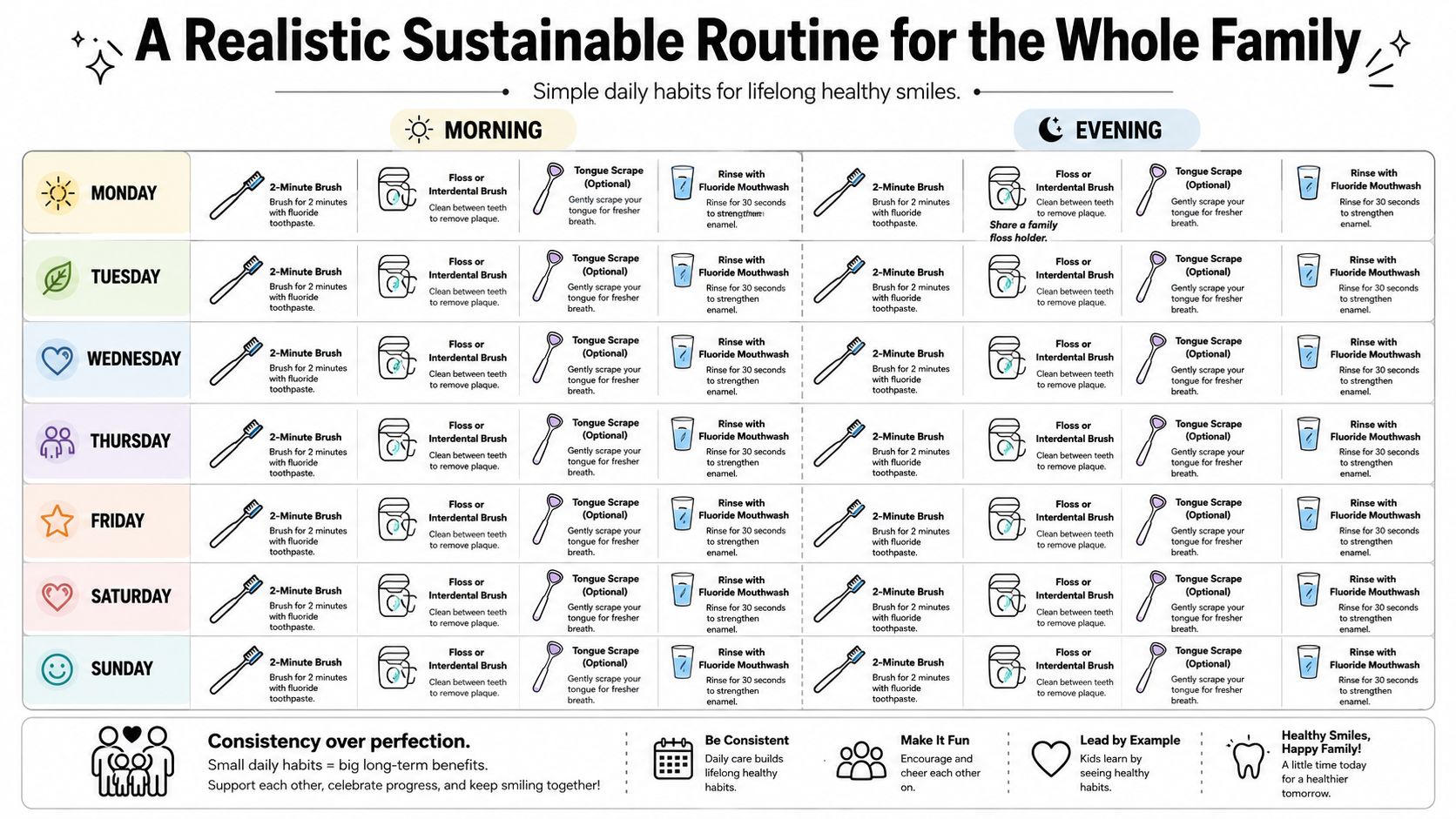
One week in practice
- Monday: Keep the evening routine simple. One parent supervises the children, while everyone places used floss in the appropriate household waste or compost stream only if the product and local guidance permit it.
- Tuesday: Check brush condition and clean reusable scrapers. Don't replace a brush just because a new color is available.
- Wednesday: Pack a compact toothpaste format and a manual brush for school or work travel. Keep the regular routine intact rather than skipping cleaning.
- Thursday: Orthodontic wearers use interdental brushes or tools recommended by their dental team. Denture wearers clean dentures separately and maintain their oral tissues as advised.
- Friday: Restock from a refill or returnable system. Store extras in a dry, labeled place so nobody opens a new product unnecessarily.
- Weekend: Combine family dental appointments where appropriate, and ask the practice about prevention, maintenance, and waste-sorting policies.
Parents dealing with reluctant toddlers can offer limited choices, use a shared brushing song, and supervise rather than turning the bathroom into a negotiation. The oral-care guide for kids can help families adapt the routine to younger users.
When the routine slips, restart at the next brushing. Don't discard usable products in pursuit of a perfect system. Sustainable oral care works through consistency, not guilt.
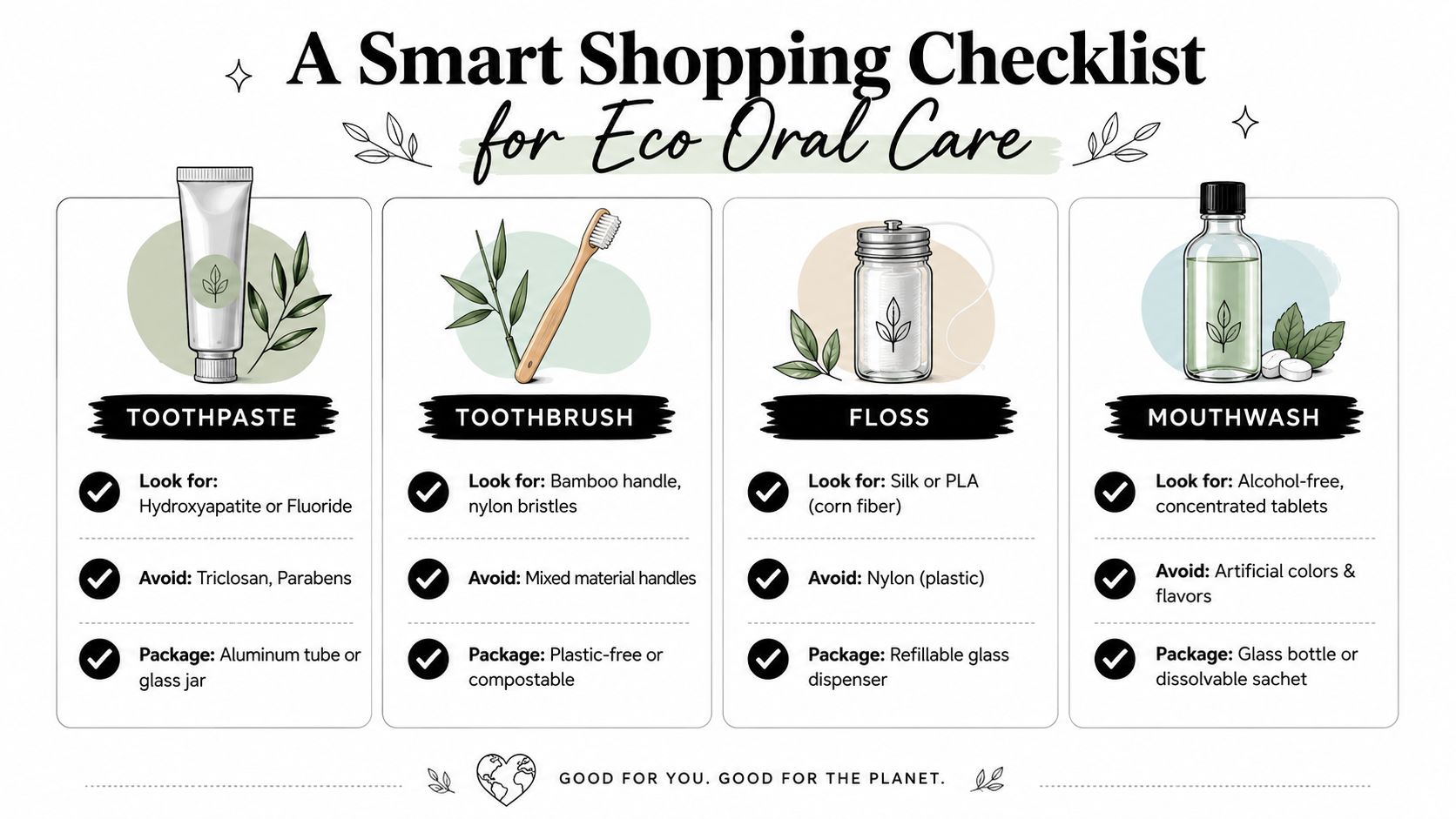
A Smart Shopping Checklist for Eco Oral Care
A shopping label can tell you what a brand wants you to notice. It doesn't always tell you what happens after purchase. Before buying, check the formula, the packaging, the replacement system, and the evidence behind the claim.
Toothpaste
Look for a clearly identified active ingredient, such as fluoride or hydroxyapatite, and choose a formulation suited to the user. Consider aluminum tubes, glass jars, refill systems, or tablets only after checking whether the format protects the formula and works for your household.
Be cautious with vague “biodegradable” language without certification or disposal instructions. Flag products that use plastic microbeads, triclosan, or unclear ingredient descriptions. Charcoal products also deserve care because abrasivity and formula performance matter more than a dramatic color.
Toothbrushes
Compare a bamboo handle, recycled-plastic handle, and electric brush with replaceable heads according to:
- Replacement access: Can you obtain compatible heads without replacing the entire device?
- Longevity: Does the handle or powered unit have a useful warranty and repair path?
- Cleaning performance: Will the design help the user brush consistently and thoroughly?
- End of life: Can you separate materials, return the item, or use a dedicated collection scheme?
A mixed-material handle may look minimal while remaining difficult to process. A simple manual brush may create less waste if it meets the user's needs and lasts through its intended use.
Floss, mouthwash, and supporting tools
Choose refillable floss dispensers where practical, and examine claims around silk, plant-based fibers, nylon, coatings, and PFAS. For mouthwash, concentrated tablets or powders can reduce packaging volume, but confirm the ingredients and instructions before switching.
A stainless-steel tongue cleaner and an interdental brush with replaceable heads can outlast repeated single-use tools. For product and packaging ideas beyond oral care, the eco-friendly mouthwash guide offers useful context for evaluating concentrated formats.
Subscriptions can help only when they match real consumption. Select a schedule you can adjust, pause, or cancel, and look for return programs or store credit that give packaging a clear next step. A refill system that arrives too often creates avoidable stock and waste, while one that's inconvenient may push the household back to disposable purchases.
Habits That Add Up and Questions Worth Answering
The strongest sustainable oral-care decision usually isn't a purchase. It's maintaining the routine that helps prevent avoidable problems. Brushing twice daily, cleaning between teeth, attending appropriate dental visits, and following individualized advice can reduce the chance of more complex treatment, which protects both oral health and resources.
The periodontal life-cycle evidence makes that prevention point concrete. Clinical intervention carries a substantially higher environmental burden than home prevention, particularly as disease severity and treatment intensity increase. That doesn't mean anyone should avoid necessary dental care. It means prevention deserves the same attention as packaging.
A manual brush, refillable floss, mineral or fluoride toothpaste, and durable tongue scraper work best when they support habits rather than distract from them. Choose the lowest-impact option that you'll use correctly and replace responsibly.
Questions families ask
Is nano-hydroxyapatite safe for young children?
The EU safety opinion supports specific concentrations in toothpaste and mouthwash and notes that ingested nanoparticles dissolve rapidly in gastric fluid. Children still need supervision, age-appropriate amounts, and a product selected with their dental needs in mind. Evidence for nHa is growing, but fluoride has the longer-established research record.
Can I recycle brush heads and toothpaste tubes?
It depends on your local program and the material combination. Check municipal guidance or a manufacturer take-back scheme before placing an item in curbside recycling. Don't assume a tube is recyclable because it has a recycling symbol.
Are bamboo toothbrushes compostable?
The handle may be suitable for a composting route after removing the bristles, but the entire toothbrush usually isn't compostable as one piece. Follow the manufacturer's instructions and your local facility's rules.
How can I travel with toothpaste tablets?
Keep tablets in a small reusable container and carry a manual brush. Use the product according to its instructions, and don't switch formats during travel if doing so makes brushing less consistent.
What should I do with leftover conventional products?
Use them safely rather than throwing them away solely to create a new routine. Replace items when they're finished or worn out, then choose a lower-waste option that suits your household.
Sustainable oral care becomes manageable when you focus on a few high-impact actions: maintain prevention, buy durable tools, reduce packaging, evaluate ingredients calmly, and verify disposal locally. You don't need a perfect bathroom cabinet. You need a routine that protects teeth while creating less avoidable waste.
Audit your bathroom this week. Finish usable products, identify the items you replace most often, and choose one practical upgrade, such as a replaceable-head brush, refillable floss, concentrated rinse, or packaging format your local system can handle. If you're considering a fluoride-free routine, discuss the choice with your dentist and compare a properly formulated nano-hydroxyapatite toothpaste with the needs of every family member before making the switch.
