

Posted by Sarah Collins
on August 01, 2026

You probably reach for mouthwash on autopilot. Cap off the bottle, swish for a few seconds, spit, and move on with the morning.
That tiny ritual feels harmless, even virtuous. Your mouth feels fresher, your sink stays tidy, and the routine is so familiar that it rarely gets a second thought. But once you start looking at the full life of that rinse, from ingredients to packaging to how often you use it, eco friendly mouthwash stops being a niche idea and starts looking like a smart upgrade.
Why Your Morning Rinse Deserves a Second Look
A lot of families want a cleaner oral care routine without turning it into a project. That usually starts in the bathroom, where a bottle of mouthwash sits next to the toothbrush and floss, doing its job.
Then the questions start. What's in it? How much plastic comes with it? Does swishing every day make sense if the bottle, formula, and shipping footprint all add up over time? Those aren't dramatic questions. They're practical ones.
Practical rule: if a product is used every day, its ingredients, packaging, and frequency matter more than most people think.
That's why so many shoppers are rethinking the rinse rather than rejecting it. They want the same fresh-mouth feeling, but with a formula and package that fit a more thoughtful routine. The appeal isn't guilt. It's alignment. People want their oral care to support their health and reflect the way they already try to live, with less waste and more intention.
For anyone comparing options, eco friendly mouthwash isn't about being perfect. It's about choosing a rinse that feels cleaner in more than one sense, while still fitting real life at the sink.
The Environmental Cost of Conventional Mouthwash
A bottle of mouthwash looks small on the sink, but the environmental impact builds over repeated use. The footprint becomes easier to see when you look at the product across years, not just at checkout.
A 2023 review in the National Institutes of Health's PubMed Central modeled one person using mouthwash once daily for 5 years at 84.20 kg of carbon footprint after recalculation with updated 2022 data. In that model, electricity alone contributed 34.6%, or 29.13 kg, followed by polyol/sorbitol at 14.3%, glycol at 11.7%, transportation at 11.7%, and glycerine at 10.9%. The same review also noted that a prior 2021 study estimated 148 kg of carbon for 5 years of daily use, compared with 21.1 kg for weekly use in the same framework, so daily use was about 7 times higher than weekly use and roughly 300 times higher than water fluoridation in that modeling setup (PubMed Central review).
What that means in plain language
The main takeaway is simple. Usage frequency changes the picture fast. A bottle used occasionally has a very different impact from a bottle used every day for years.
The full lifecycle matters too, because a rinse is more than the liquid inside it. Packaging is part of the footprint, and conventional mouthwash usually comes in a plastic bottle made from virgin plastic. Greenify cites an estimate that as many as 500 million plastic mouthwash bottles still end up in landfill every year, which makes the waste problem hard to miss (Greenify guide). That kind of waste does not stay abstract. It shows up in bathroom cabinets, trash bins, and the plastic stream that has to be managed after the bottle is empty.
If you want a deeper look at how natural formulas are framed, this guide to natural mouthwashes from Mouthology is a useful place to compare common ingredients and label claims.
So the environmental case for change is not only about a greener-sounding formula. It is about the repeated use of a product whose footprint comes from both the ingredients and the container. It also helps to compare the oral-care side of the equation, including options people use for specific concerns, such as when they compare Chios mastic skincare benefits alongside other plant-based routines. For many households, that makes a more careful swap feel less like a trend and more like common sense.
Ingredients That Make Eco Friendly Mouthwash Work
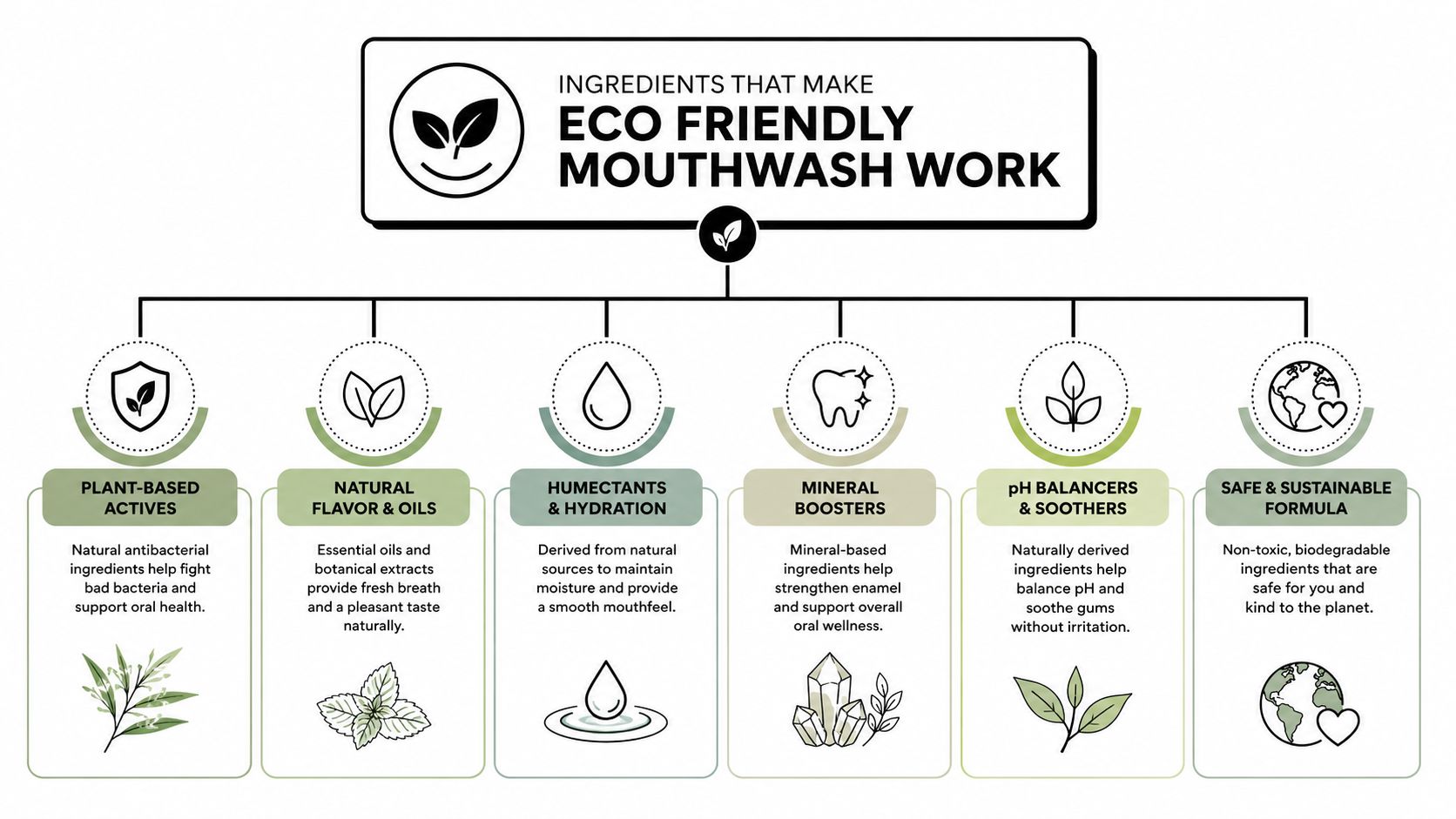
A lot of shoppers scan the front label and stop at words like natural, clean, or zero waste. The more useful place to look is the ingredient panel. That's where you can tell whether the rinse is built to do something.
Start with the active ingredients
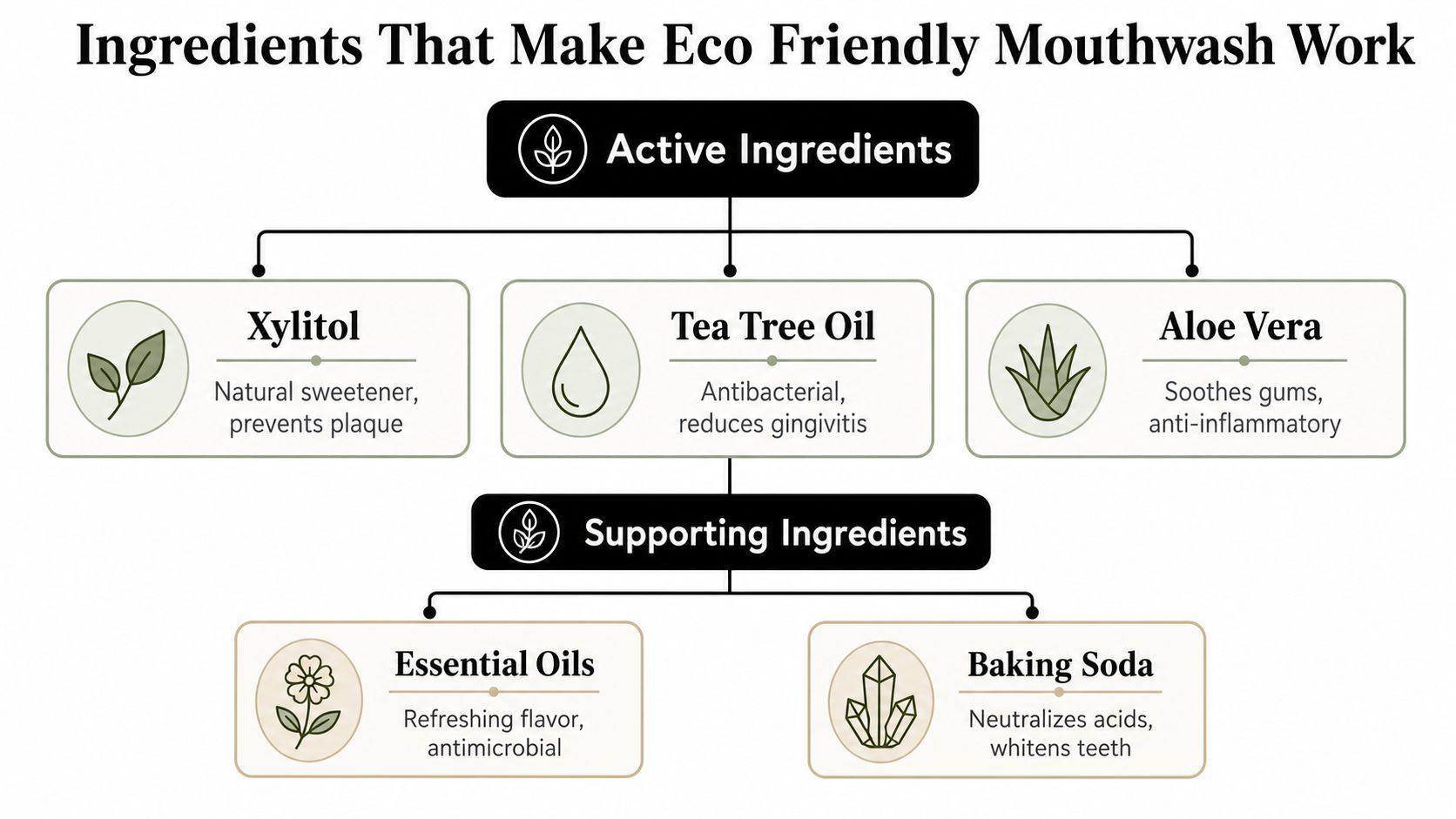
Research on commercially available mouthwashes shows that many low-waste or natural formulas rely on xylitol, sodium bicarbonate, essential oils, and aloe vera, with some products also using nano-hydroxyapatite or low-dose fluoride (peer-reviewed ingredient analysis). In plain terms, xylitol helps support an anticaries-friendly environment, sodium bicarbonate helps buffer oral acidity, and essential oils contribute antimicrobial and breath-freshening effects.
The important part is that these ingredients only help if the formulation holds up. The same analysis makes clear that product efficacy depends on active concentration and rinse contact time, not on the eco-label alone. A gentle rinse can still be useful, but it needs to be formulated with care.
A good label tells you what the rinse is trying to do. A better label tells you how it's doing it.
Read the supporting ingredients too
Supporting ingredients matter because they shape how the rinse feels and functions. Sodium bicarbonate can help balance acidity, while essential oils can give the rinse that clean, crisp finish people expect. Aloe vera is often included for a softer feel in the mouth.
If you're comparing ingredient styles across wellness categories, it can help to look at how plant-derived actives are used in other personal care products too. A useful side-by-side example is this resource to compare Chios mastic skincare benefits, which shows how ingredient function matters more than buzzwords.
For readers who want a more detailed walkthrough, this internal guide to natural mouthwash ingredients and label clues is a helpful companion when comparing rinses.
How to spot a formula that's doing real work
Look for clarity, not clutter. If a bottle lists one or two recognizable active ingredients and explains their role well, that usually tells you more than a long list of trendy add-ins.
If you're shopping with a family in mind, especially kids, consistency matters. A formula doesn't need to be loud to be useful. It just needs the right active ingredients, stable chemistry, and a rinse experience that people will keep using.
Eco Friendly Mouthwash vs Conventional Rinses
A bathroom shelf can make this choice look simple, but the difference reaches farther than the label. One rinse may fit a familiar routine, while another is designed with ingredient choices, packaging, and repeat use in mind.
| Feature | Eco Friendly Mouthwash | Conventional Mouthwash |
|---|---|---|
| Ingredients | Often uses xylitol, sodium bicarbonate, essential oils, aloe vera, or nano-hydroxyapatite | Often uses standard antimicrobial or cosmetic rinse ingredients |
| Packaging | More likely to use refillable, recyclable, or lower-waste formats | More likely to use standard plastic bottles |
| Environmental impact | Typically lower packaging waste and better fit for refill systems | Higher reliance on virgin plastic and single-use containers |
| Efficacy | Depends on formulation quality, active concentration, and contact time | Also depends on formulation quality, not just brand familiarity |
| User preference | Appeals to people seeking a simpler, lower-waste routine | Appeals to people used to traditional liquid rinses |
The main difference is not purity versus performance. Conventional rinses are still the default format in many stores, and they can feel familiar right away. Eco friendly mouthwash is usually built with lower waste in mind, yet that does not guarantee it works well on its own. Ingredient behavior matters, as noted earlier, and a formula still needs to do its job in the mouth.
That is why the label can be misleading if you stop there. A bottle may look sustainable while the formula leans on ingredients that do little, or a rinse may sound plain while still being carefully designed. The better question is whether the active ingredients, stability, and packaging all match the claim.
For a closer look at oral microbiome balance and why a rinse should not wipe out everything in its path, this guide to mouthwash that doesn't kill good bacteria is worth saving for later.
A simple way to think about the comparison
Conventional mouthwash is often the easy default. Eco friendly mouthwash asks for a more careful read, because it ties together what goes into the bottle, what the bottle is made of, and how often you will replace it.
That does not make one category automatically better. It just means the eco option rewards buyers who look past the color of the bottle and check the full lifecycle story.
Packaging and Lifecycle Choices That Actually Reduce Waste
A bottle's color can look green while the waste story stays exactly the same. That's why packaging deserves as much attention as the formula itself.
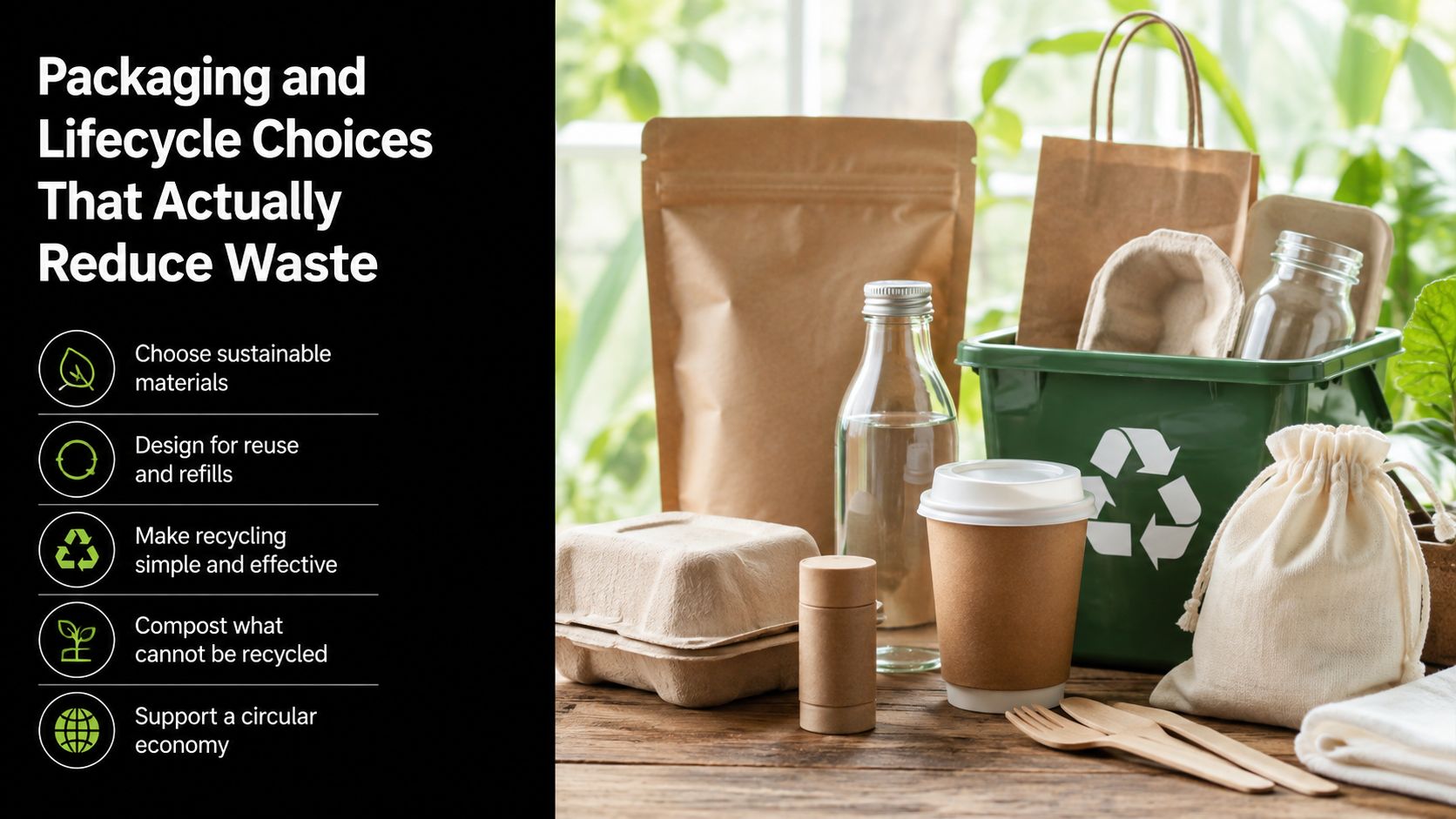
The biggest win comes from reducing material use before a product ever reaches your sink. Glass, aluminum, refill systems, and post-consumer recycled plastic all change the lifecycle conversation in different ways. Glass and aluminum are often easier to picture as lower-waste options, but they still need energy to produce and ship. Refill systems can lower repeated packaging use, which is why they're popular in many low-waste routines.
What to look for on the shelf
- Refillability: A bottle that's meant to be reused usually does more for waste reduction than a one-time “eco” bottle.
- Material honesty: If a brand says recyclable, check whether the packaging format is accepted where you live.
- Small-format packaging: Concentrates and tablets often cut down on shipping weight and bulky liquid transport.
- Real end-of-life planning: Reusable parts should be separated from disposable parts as clearly as possible.
A lot of people get tripped up by the words compostable and biodegradable. If you want a clean explanation before buying, this guide on compostable vs biodegradable differences is a useful reference for understanding what those claims usually mean in practice.
Watch for this: a product can look sustainable because of its color or branding while still relying on the same waste-heavy container model.
Tablets and concentrates are also worth paying attention to because they can fit more easily into travel routines and reduce some packaging pressure. They're not automatically better, but they do show how eco friendly mouthwash is expanding beyond the standard bottle format.
Lifecycle thinking is the test. Ask what the bottle is made from, how many times it's meant to be used, and what happens after the rinse is gone.
How to Evaluate Any Eco Friendly Mouthwash Brand
A good label can still hide a weak product. A strong purchase starts with a fast, repeatable check that you can do in the aisle or on a product page.
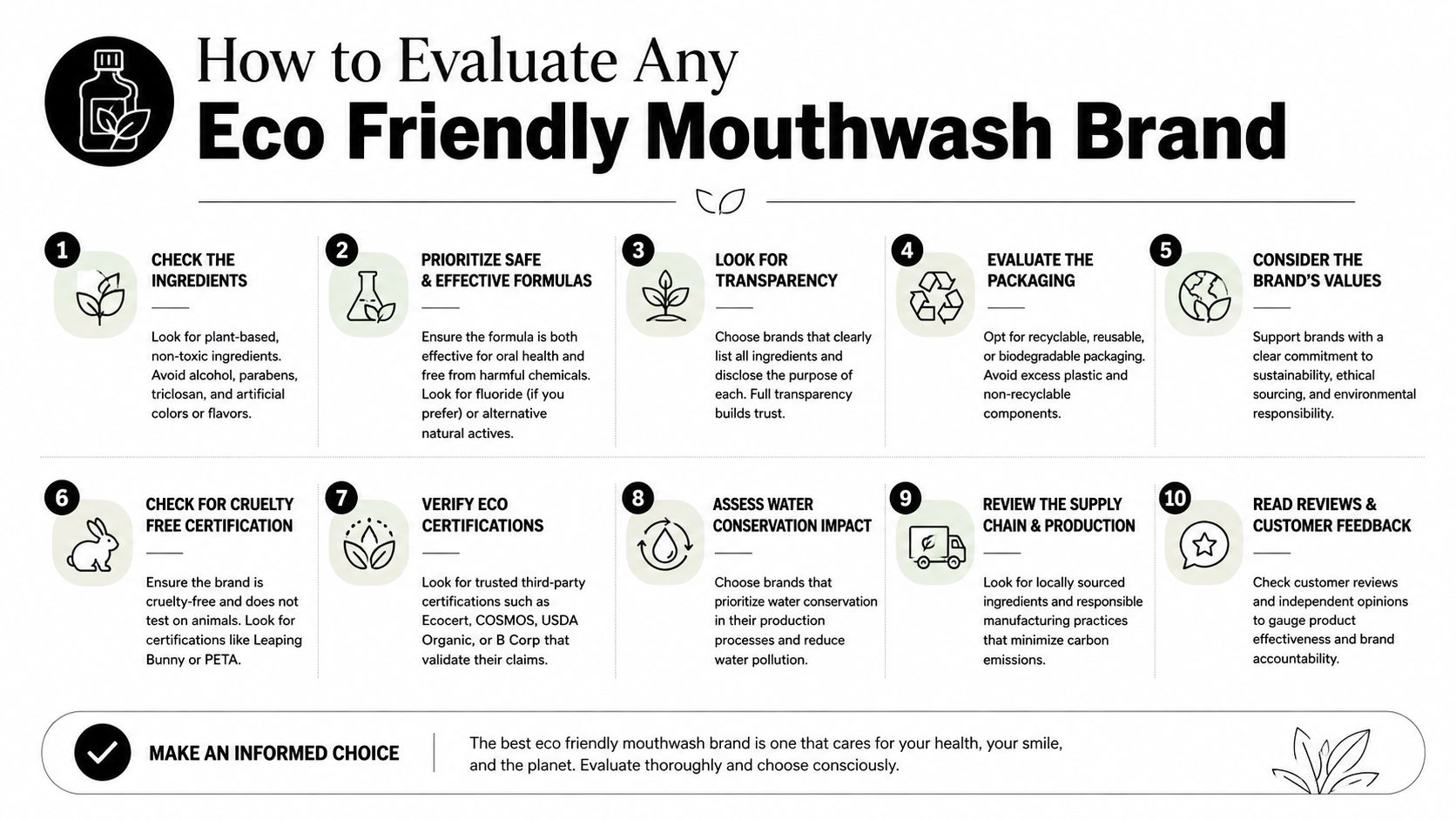
Use a two minute checklist
- Read the active ingredients first. Look for ingredients with a clear function, not just a long list of botanical names.
- Check for formulation transparency. Brands that explain why an ingredient is there usually earn more trust than brands that lean only on mood words.
- Look for packaging details. Refill packs, reusable containers, and lower-waste formats matter more than a green-tinted bottle.
- Separate claims from evidence. If a product sounds eco-friendly but doesn't explain the format, the waste reduction is probably shallow.
- Scan for third-party signals. Certification language can help, but the label still needs to make practical sense.
- Ask whether the format fits your routine. A solid tablet you never use is less sustainable than a liquid you'll finish.
- Match the rinse to your mouth feel. Sensitive users may want gentler flavor profiles and alcohol-free formats.
- Look for stable, purposeful actives. Function matters as much as friendliness to the planet.
- Check whether refills are available. A refill promise only matters if you can buy it again.
- Choose the product you'll stick with. A sustainable routine only works if it's realistic.
A quick decision rule
If a brand is vague about ingredients, vague about packaging, and vague about what happens after use, move on. If it clearly explains its actives, its container choices, and how the product fits into a real routine, it's probably worth a closer look.
For shoppers comparing ingredient-led oral care more broadly, Mouthology's fluoride-free rinse category includes a mouthwash-style option, Coconut Peppermint Pulling Oil, made with fractionated coconut oil and peppermint essential oil. It's one example of how brands are pairing simpler formulas with lower-waste thinking rather than relying on heavy packaging alone.
When you can compare a few products using the same lens, shopping gets easier. You stop chasing slogans and start noticing whether a mouthwash fits your values and your routine.
DIY Mouthwash Recipes and Important Safety Notes
Some people like making their own rinse at home because it feels simple, low-cost, and familiar. That can work, as long as the recipe stays gentle and basic.
Three easy DIY ideas
1. Baking soda rinse
Stir a small amount of baking soda into water until it dissolves. This is the most straightforward option for a mild, balanced rinse, especially for people who want something neutral rather than strongly flavored.
2. Herbal rinse
Steep a mild herbal tea, let it cool fully, and use it as a short-term rinse. This works best as a freshness ritual, not as a replacement for a formulated product with specific actives.
3. Diluted mint rinse
Add a tiny amount of peppermint flavor from a safe, ready-to-use source into water, then swish briefly. Keep it light. Stronger does not mean better.
Safety comes first
- Avoid acidic ingredients: Citrus-heavy mixtures can be too harsh for enamel.
- Don't use undiluted essential oils: They can irritate sensitive mouths.
- Skip abrasive add-ins: Anything gritty can make the rinse unpleasant or too harsh.
- Keep it temporary: DIY rinses are better as occasional complements than as the only oral care step.
If you want a more detailed cautionary take on essential oils in rinses, this internal guide on https://mouthology.com/blogs/news/essential-oil-mouthwash is a practical place to start.
A homemade rinse should feel mild, not intense.
DIY can be a nice experiment, especially for people who enjoy keeping things simple. But if you want consistency, shelf stability, and clearer ingredient control, a commercial eco friendly mouthwash is usually the easier everyday choice.
Your Eco Friendly Mouthwash Questions Answered
A lot of people get stuck on the same few questions right before making the switch. The answers are usually more practical than dramatic.
Is eco friendly mouthwash safe for kids?
Usually, the key is the formula and the child's ability to use it safely. Gentle, alcohol-free options are easier for families to consider, and many parents prefer products with a short ingredient list and a mild flavor.
Can expecting mothers use it?
Many people in that group look for simple, low-irritation formulas. The safest move is to choose a product with clear ingredients and check with a dental professional if there's any uncertainty.
How long does a bottle last compared with a conventional rinse?
That depends on format, not just brand. Tablets, concentrates, and standard liquids all behave differently, so the better question is which format matches your actual daily habit.
Can I use it with other oral care products?
Yes, many people pair a gentler rinse with fluoride-free toothpaste or a mineral-focused routine. The point is to keep the full system easy enough that you'll use it.
What if I have sensitive teeth or gums?
Look for alcohol-free formulas, mild flavors, and ingredient lists that explain their function clearly. Sensitivity is usually about fit, not category.
A final note matters here. If a rinse feels harsh, tastes overwhelming, or makes you skip days, it's probably not the right product for you. The best routine is the one you can repeat calmly, without dreading it.
If you're ready to make your rinse feel lighter on the planet and simpler at the sink, compare a few eco friendly mouthwash options side by side today, check the ingredient list, and choose one you can use every morning without second-guessing it.
