

Posted by Sarah Collins
on August 26, 2026

You're awake for another night feed, your shoulders are tight, and you finally reach for a glass of ice water. A sharp zing shoots through your teeth. Later, the first sip of coffee brings the same surprise from the opposite direction, a hot, sudden flash that makes you pause before swallowing.
Sensitive teeth after pregnancy can feel like one more problem added to an already demanding recovery period. Pregnancy-related oral discomfort is common. In a 2025 cross-sectional study of 606 pregnant women in Saudi Arabia, 59.7% reported tooth sensitivity, 59.2% reported tooth pain or discomfort, and 56.6% reported bleeding gums; bad breath was also reported by 57.4% (study details in PubMed).
Childbirth doesn't instantly reset your mouth. Hormonal changes can keep gum tissue reactive, while reflux, dry mouth, frequent snacking, acidic drinks, clenching, and postponed dental visits may keep sensitivity going after delivery. The reassuring part is that the cause is often understandable and manageable, and dental care can be arranged during breastfeeding.
Why Your Teeth Feel Sensitive After Having a Baby
Many parents expect pregnancy gingivitis, but fewer hear about the possibility of tooth sensitivity after delivery. The discomfort may show up as a quick electric feeling when you drink something cold, a sting from citrus, or soreness when a toothbrush reaches the gumline. It can affect several teeth or seem to move from one area to another as your gums and daily habits change.

The timing can be confusing. You may have brushed throughout pregnancy and still notice new sensitivity in the weeks after birth. That doesn't mean you've failed at oral care, and it doesn't mean your baby has “taken calcium” from your teeth. Postpartum sensitivity is more often connected with inflamed gums, exposed dentin, enamel wear, dry mouth, and changes in eating or cleaning patterns.
Pregnancy hormones increase blood flow and tissue sensitivity in the gums. Those tissues can remain inflamed after delivery rather than returning to their pre-pregnancy state immediately. One review reports that oral inflammation may last up to three months postpartum (review in PMC).
Sleep deprivation adds a practical layer. You might snack during feeds, sip coffee over a long stretch, forget water, brush quickly, or postpone a dental appointment because arranging childcare feels impossible. Each choice is understandable. Together, they can give plaque, acid, and dryness more opportunities to irritate sensitive areas.
A helpful distinction: a brief zing from a cold drink often behaves differently from pain that lingers, throbs, or centers on one tooth.
Perinatal oral-health guidance recommends an oral evaluation and a dental home early in pregnancy, followed by postpartum follow-up and ongoing care (American Academy of Pediatric Dentistry guidance). If sensitivity is new, worsening, or interfering with eating and brushing, a postpartum dental check is a sensible part of recovery, not an optional cosmetic appointment.
Causes Behind Postpartum Tooth Sensitivity
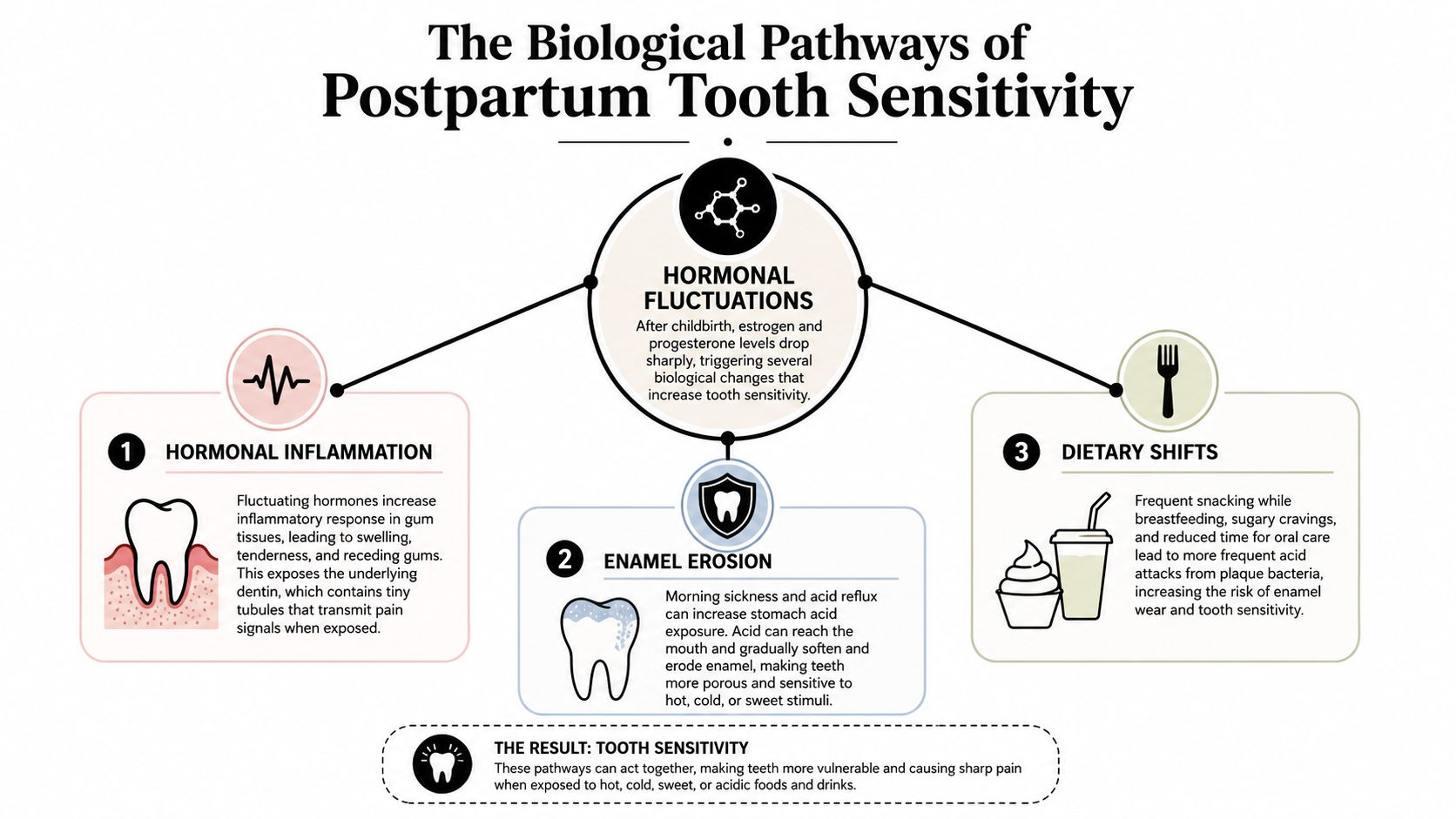
Postpartum sensitivity often has several contributors working together. Enamel forms the tooth's outer shield, gums protect the lower edges, saliva helps neutralize acids, and dentin lies beneath. If enamel becomes thinner or the gumline shifts, hot, cold, sweet, and acidic triggers can reach pathways that send a sharp signal.
Hormonal inflammation changes the gumline
Hormonal shifts increase blood flow and tissue reactivity in the gums. Plaque that previously caused little reaction may now lead to tenderness, swelling, or bleeding. Inflamed tissue can also make brushing uncomfortable. If the gumline recedes or fits less closely around a tooth, dentin near the root may become exposed.
Pregnancy gingivitis is a common oral change during pregnancy. Reported prevalence varies widely by population and diagnostic criteria. One review found pregnant women were more likely to experience gingivitis than non-pregnant women (Frontiers review). Other reviews also describe substantial prevalence in some groups (review of pregnancy-related oral changes). Inflammation may continue after delivery, especially when brushing, flossing, hydration, and dental visits become harder to maintain.
Acid wears down the protective surface
Vomiting exposes enamel to gastric acid. Ongoing reflux can have a similar effect, while acidic drinks and snacks create repeated exposure. Acid temporarily softens enamel, so brushing immediately and forcefully can add abrasion. Over time, erosive wear may make teeth more reactive to temperature and sweetness.
Postpartum routines can keep this process going. Frequent snacking while feeding, sipping coffee or other drinks over long periods, and reflux can leave the mouth with fewer breaks from acid. After vomiting, rinse with water and wait about one hour before brushing, as advised in clinical guidance (clinical review in PMC).
Dentin becomes easier to stimulate
Dentin contains tiny channels called dentinal tubules. Once gum recession or enamel wear exposes them, cold water, hot coffee, air, or sweet foods can stimulate the nerves inside the tooth. The result is usually a quick, sharp sensation. Plaque, gum inflammation, dry mouth, and frequent eating can keep those surfaces irritated.
Sleep loss may also encourage clenching or grinding during tense feeds or broken nights. This can add tooth wear and jaw discomfort, although it may not explain every case. Guidance on tooth sensitivity to cold relief can help you compare common cold triggers with symptoms that deserve dental attention.
The same pattern can begin during pregnancy and continue afterward, as explained in this guide to sensitive teeth in early pregnancy. These causes often overlap: acid can weaken enamel, inflammation can expose dentin, and dry mouth or diet changes can reduce saliva's protective effect. A delayed dental visit may allow a manageable problem to persist, so worsening or lingering pain should be assessed rather than attributed to hormones alone.
How Long Postpartum Sensitivity Typically Lasts
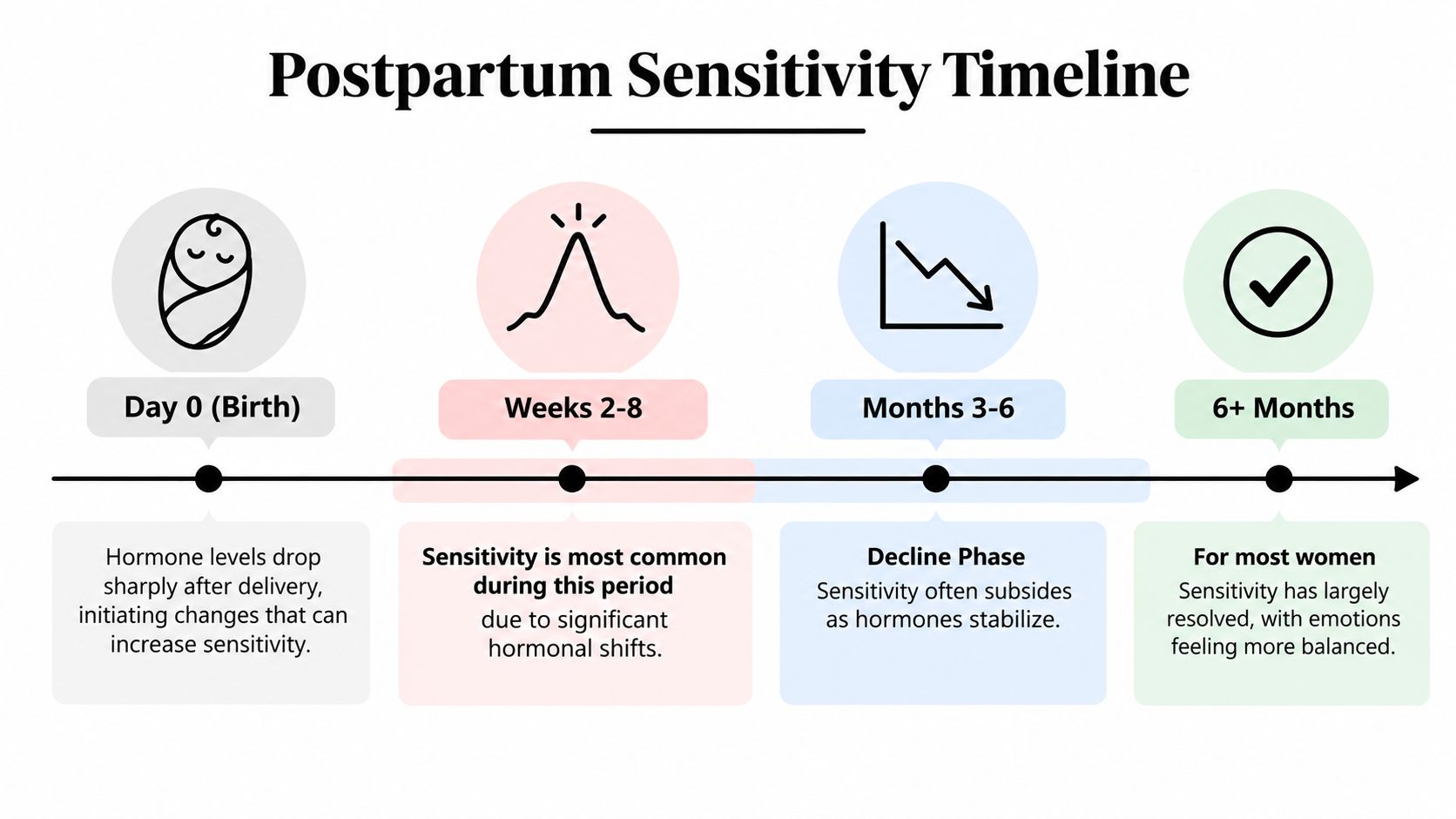
Postpartum sensitivity does not follow one fixed schedule. You may notice it during pregnancy and carry it into recovery, or feel it only after delivery, when hormonal shifts, reflux, dry mouth, disrupted routines, or new eating patterns expose a problem that was developing.
Track the trend rather than waiting for a precise day of relief. Mild symptoms that gradually improve often settle as your routine returns. Sensitivity that stays the same, worsens, or interferes with eating needs a dental assessment.
Early recovery
In the first weeks after birth, gum tissue may still be reacting to pregnancy-related hormonal changes. Feeding schedules can bring more frequent snacks, prolonged sipping of drinks, and missed or rushed brushing. Together, these habits increase contact with plaque, sugar, and acid while the gumline remains tender.
The review cited earlier explains that periodontal tissues may not immediately return to their pre-pregnancy condition. Inflammation can continue for up to three months postpartum. A gradual recovery can be normal when discomfort is mild and steadily easing, but ongoing pain should not be dismissed as a hormonal after-effect.
Reflux and dry mouth can extend this phase. Pregnancy has ended, yet the conditions affecting enamel and saliva may continue during postpartum recovery. That is why sensitivity is often sustained by the months after birth, not caused by pregnancy alone.
The settling phase
As feeding and sleep become more predictable, regular brushing, cleaning between the teeth, hydration, and balanced meals may become easier. Sensitivity related mainly to temporary inflammation or disrupted habits can then lessen.
Delayed dental care can leave other causes in place, including enamel erosion, cavities, gum inflammation, recession, or exposed dentin. A tooth may remain sensitive even after hormones have settled, much like a small irritated area that keeps being disturbed. Mineral-based toothpaste or other enamel-support products may help reduce discomfort, but they cannot repair a cavity or cracked filling.
When the timeline needs a professional opinion
Arrange a dental visit if sensitivity persists, worsens, or makes eating and cleaning difficult. Seek prompt advice for:
- Night-waking pain: Pain that wakes you or continues after the trigger has gone needs assessment.
- One-tooth sensitivity: A single tooth may have a different cause from generalized sensitivity.
- Visible damage: Chips, cracks, rough areas, or a broken filling should be examined.
- Persistent bleeding: Bleeding that does not improve with gentle, consistent cleaning needs attention.
- Swelling: Facial or jaw swelling warrants prompt professional care.
Dental evaluation and necessary treatment can be coordinated with breastfeeding. Tell your dental team that you are nursing so they can review planned care, products, and medicines with you.
Safe Home Care and Dietary Adjustments for Relief
With a newborn to care for, oral care needs to fit real life. A short, gentle routine is more useful than an elaborate plan you cannot maintain. Focus on removing plaque, reducing repeated acid exposure, and keeping saliva moving, since postpartum sensitivity may continue after birth when reflux, dry mouth, frequent snacks, or delayed dental visits keep irritating the teeth.
Brush gently, not cautiously
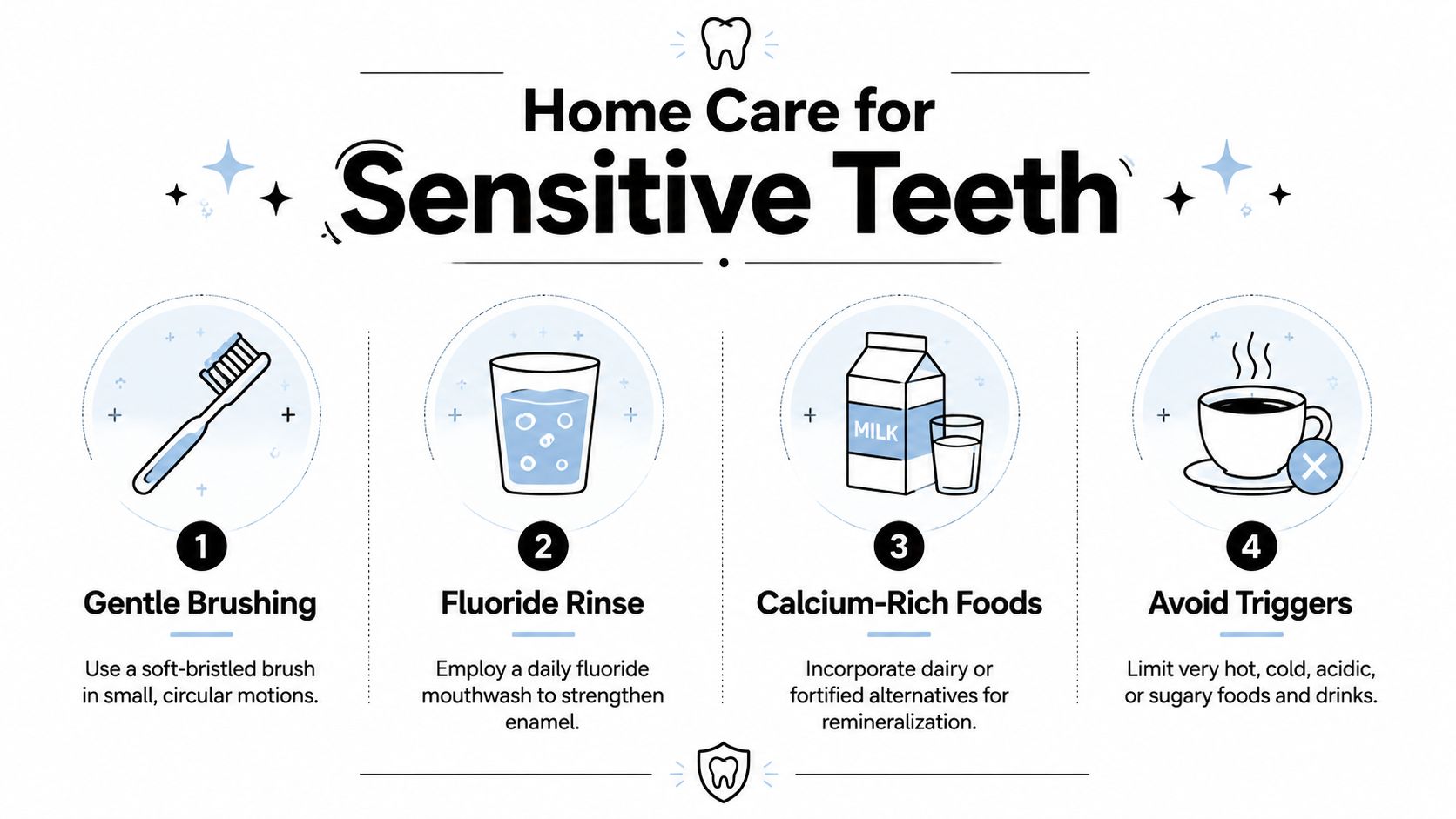
Use a soft-bristled toothbrush with small circular movements along the gumline. Keep your grip light. Pressing harder does not clean better once bristles bend, and it can aggravate tender gums or exposed dentin.
Brush twice daily with toothpaste made for sensitivity or enamel support. Clean between the teeth when possible, using floss, interdental brushes, or a comfortable water flosser. If a feeding or a difficult night causes you to miss one session, resume at the next practical opportunity. Consistency matters more than perfection.
Handle vomiting and reflux carefully
After vomiting or a reflux episode, rinse with water before brushing. A baking soda rinse is sometimes suggested, but frequent vomiting or ongoing reflux deserves discussion with a dentist or medical professional rather than indefinite home treatment.
Acid can temporarily soften enamel, so brushing immediately may increase surface wear. Recommendations differ on the exact waiting interval. Independent clinical guidance advises waiting about one hour before brushing, while some dental materials suggest less time. Follow the plan from your dental team, especially when reflux or vomiting happens often. The FDI pregnancy oral-health fact sheet explains why rinsing first and delaying brushing can remove acid while protecting softened enamel.
Make triggers easier to manage
Cold drinks may feel gentler through a straw, as long as the liquid is not aimed at one sensitive tooth. Allow very hot drinks to cool. Reduce repeated sipping of coffee, citrus drinks, and other acidic beverages. Eating snacks with meals instead of grazing throughout the day can lower the number of acid exposures without imposing a rigid postpartum diet.
Sip water regularly, particularly if breastfeeding, breathing through your mouth, or taking medicine has left your mouth dry. Sugar-free gum can stimulate saliva if chewing feels comfortable. Calcium-rich foods and fortified alternatives support a balanced diet, but they do not replace brushing, fluoride exposure if you choose it, or a dental assessment.
For a broader explanation of what causes sensitive teeth, review how acids, exposed dentin, and daily habits can influence symptoms.
Choosing the Right Toothpaste and Oral Care Products
A toothpaste label can feel surprisingly complicated when you're tired and breastfeeding. Focus on what the ingredient is designed to do, how it feels in your mouth, and whether you can use it consistently without increasing dryness or irritation.
Potassium nitrate is used in many sensitivity toothpastes because it helps reduce the way nerves respond to triggers. Nano-hydroxyapatite is a mineral-based ingredient designed to interact with the mineral structure of teeth and support the enamel surface. These are different approaches, and a dentist can help you choose based on whether your main concern is exposed dentin, erosive wear, gum inflammation, or possible decay.
| Ingredient | How It Works | Breastfeeding Safety | Best For |
|---|---|---|---|
| Potassium nitrate | Helps calm nerve responses to common sensitivity triggers | Discuss personal concerns with your dentist or healthcare professional | People seeking a conventional desensitizing formula |
| Fluoride | Supports enamel resistance against acid-related mineral loss and decay | Generally considered safe and effective when used as directed | People whose dentist recommends fluoride protection |
| Nano-hydroxyapatite | Provides a tooth-like mineral intended to support the enamel surface | Choose a product with clear use directions and discuss individual needs with a professional | People who prefer a mineral-based, fluoride-free option |
| Sodium lauryl sulfate | Creates foam and helps disperse toothpaste ingredients | Usually tolerated, but may feel irritating for some people with dry or sensitive mouths | People who don't experience product-related dryness or irritation |
Fluoride toothpaste and fluoride rinses are widely used for enamel protection and are generally considered compatible with breastfeeding when used as directed. Some mothers prefer fluoride-free products. That choice can be reasonable, but it changes the protection strategy, so discuss cavity risk, erosion, and product selection with your dentist.
Mouthology offers a 10% nano-hydroxyapatite, fluoride-free toothpaste as one mineral-based option. It's not a substitute for diagnosis or dental treatment, and the right choice depends on your mouth, preferences, and professional advice. You can also review ingredient considerations in this guide to the best toothpaste for tooth sensitivity.
Avoid making whitening the priority while your teeth feel reactive. Highly abrasive whitening products can be uncomfortable on exposed dentin or worn enamel. A soft-bristled brush, alcohol-free mouthwash, and a toothpaste you'll use consistently are usually more practical than a strong, heavily flavored formula. Prescription-strength products may be appropriate when a dentist identifies a specific need, but don't start them without guidance.
Building a Simple Postpartum Oral Care Routine
Your routine should survive interrupted sleep. Build it around two dependable anchors, your first substantial morning wake-up and your final bedtime feed or settling period.
In the morning, drink water, then brush gently with a sensitivity toothpaste or a nano-hydroxyapatite formula. Spit rather than repeatedly rinsing if your product directions recommend leaving protective ingredients on the teeth. Clean between the teeth when you have the energy, and keep the toothbrush where you'll see it.
At midday, use the smallest useful action. A water rinse after a snack, a few sips during breastfeeding, or sugar-free gum can help when brushing isn't realistic. If coffee is part of your survival plan, avoid nursing it continuously for hours, and rinse with water afterward.
At night, brush before you're completely depleted. If you've just had reflux or vomiting, rinse first and follow the waiting guidance from your dental team before brushing. On an exhausting day, the priorities are gentle brushing, water after acidic exposure, and avoiding forceful scrubbing.
For broader pregnancy and postpartum habits, see this guide to oral care during pregnancy. Book a dental evaluation if sensitivity persists, worsens, becomes localized, or comes with swelling, cracks, or ongoing bleeding.
Sensitive teeth after pregnancy are manageable for many new mothers, and your mouth deserves care alongside your baby's. Choose one small routine you can repeat today, then contact a dentist to create a personalized plan if the discomfort isn't settling.
Book a postpartum dental appointment if sensitivity is lingering or interfering with eating, drinking, or brushing. Bring your toothpaste and mouthwash labels, mention whether you're breastfeeding, and describe which triggers cause pain. A focused evaluation can identify exposed dentin, erosion, gum inflammation, cavities, or another cause, so you can care for your smile with confidence while caring for your newborn.
