

Posted by Sarah Collins
on October 03, 2026

You take a sip of ice water, bite into a piece of fruit, or enjoy a spoonful of ice cream. Then, without warning, a sharp jolt shoots through one tooth and disappears almost as quickly as it arrived. That sudden spark can make ordinary food and drinks feel like a guessing game.
Quick relief for sensitive teeth usually starts with understanding the timing. Some approaches reduce a trigger immediately, while others need consistent use before they noticeably calm sensitivity. The right choice depends on what caused the discomfort, how long it lasts, and whether you need comfort now or better control over time.
Why Your Teeth Feel That Sharp Spike
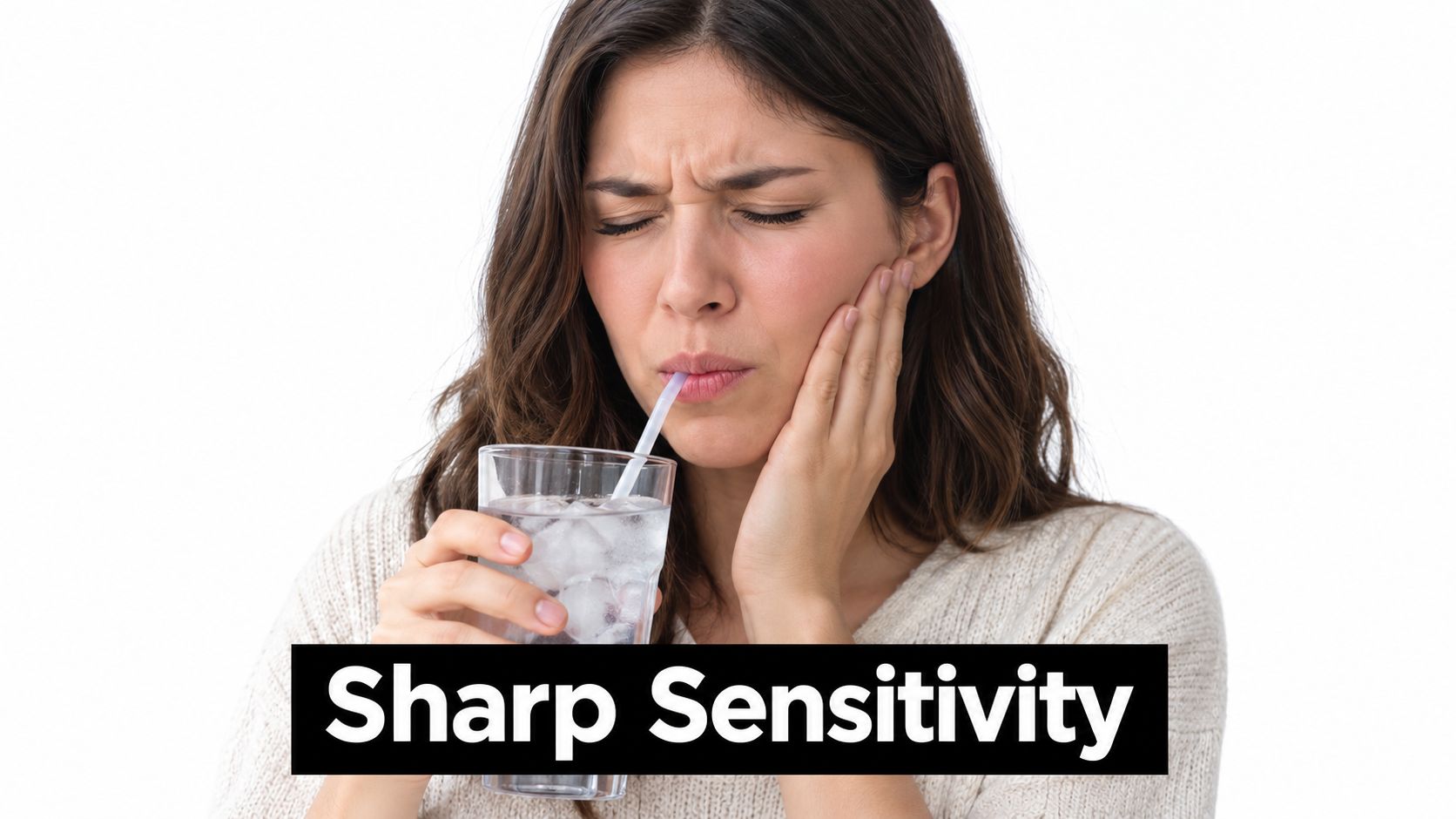
A common sensitive-tooth moment looks like this: you're halfway through a cold drink when one tooth reacts with a quick, electric sting. You pull the glass away, wait a few seconds, and the sensation fades. The next sip may be fine, or the same spot may protest again.
That reaction often happens when the tooth's protective outer layer has worn down or the gum has moved away from part of the tooth. Underneath the enamel sits dentin, a more porous layer containing tiny channels. Temperature, sweetness, touch, and pressure can travel through those channels and irritate the nerve inside.
Think of dentin as a wall with very narrow pipes running through it. When the wall is covered, outside sensations have less access to the nerve. When those pathways become exposed, cold water can create a fast change in fluid movement inside the channels, producing the familiar sharp spike. You can read more about common triggers in this guide to what causes sensitive teeth.
Why the problem feels so sudden
Sensitivity is often brief because the trigger stops quickly. Cold air leaves your mouth, you swallow the drink, or the sweet food moves away from the tooth. That short pattern is different from pain that lingers, starts without a trigger, or keeps intensifying.
Sensitivity can also follow enamel wear, gum recession, acidic foods and drinks, forceful brushing, grinding, whitening, periodontal treatment, or recent dental work. The same cold sensation can therefore have different causes, which is why a toothpaste may help one person while another needs a dental examination.
Dentin hypersensitivity is widely relevant rather than unusual. A systematic review covering 65 papers and 77 studies estimated a best global prevalence of 11.5%, with an average across the included studies of 33.5%. Reported figures ranged from 1.3% to 92.1%, reflecting differences in populations, definitions, and testing methods, as described in the systematic review on dentin hypersensitivity prevalence.
The useful question isn't only “What can stop this zing?” It's also “How quickly should this approach work, and when should I stop treating it as ordinary sensitivity?”
How Desensitizing Ingredients Actually Work
Sensitivity products generally use one of two strategies. Tubule-blocking ingredients act like a temporary seal over exposed dentin pathways. Nerve-desensitizing ingredients reduce how strongly the nerve responds to stimulation.
Neither strategy guarantees instant comfort from a single brushing. A barrier may build with repeated exposure, while a nerve-calming ingredient may need consistent contact before the change becomes noticeable. The distinction helps you choose a product based on its mechanism rather than its packaging.
| Mechanism | How It Works | Key Ingredients |
|---|---|---|
| Tubule blocking | Creates or supports a protective layer over exposed dentin channels, reducing the movement of hot, cold, sweet, or acidic stimuli toward the nerve | Stannous fluoride, calcium sodium phosphosilicate, mineral-based ingredients such as nano-hydroxyapatite |
| Nerve desensitizing | Moves through dentin pathways and reduces nerve excitability, so the nerve sends a less intense response to stimulation | Potassium nitrate |
Tubule blocking and surface protection
Stannous fluoride is commonly described as forming a protective layer that helps block exposed dentin tubules. Calcium sodium phosphosilicate has also shown an early sensitivity response in clinical testing. In a 12-week randomized, double-blind study, the calcium sodium phosphosilicate toothpaste reduced air sensitivity by 45% and water sensitivity by 49% at two weeks, while stannous fluoride gel reduced those measures by 30% and 26%, and potassium nitrate toothpaste reduced them by 35% and 34%. The results are reported in the clinical comparison of desensitizing formulas.
Those figures don't mean every person will experience the same timeline. They do show why a tubule-blocking formula may be appealing when cold water or brushing touches a particular exposed area. Mineral-based formulas, including products made with nano-hydroxyapatite, are designed around the idea of supporting a tooth-like mineral surface and reducing access to exposed pathways. Mouthology is one fluoride-free oral-care brand that offers nano-hydroxyapatite toothpaste, but it should be considered one option among several, not a substitute for diagnosis.
Nerve desensitizing with potassium nitrate
Potassium nitrate works differently. It diffuses along dentinal tubules and reduces nerve excitability rather than physically sealing the channels, according to this review of potassium nitrate in desensitizing toothpaste. The American Dental Association also identifies potassium nitrate toothpaste as an at-home option that can help reduce sensitivity by blocking sensory stimuli in dentinal tubules, as explained in its guidance on sensitivity pain.
Stannous fluoride and potassium nitrate can therefore be understood as two different tools. One focuses mainly on the exposed surface, while the other focuses more on the nerve response. Some formulas combine a protective ingredient with a nerve-desensitizing ingredient, giving users more than one route to comfort.
For a more detailed explanation of active ingredients, see this guide to sensitive-teeth toothpaste active ingredients. The practical takeaway is simple: look for a clearly identified active ingredient, use it consistently, and don't judge the formula after one brushing unless a dental professional has applied an in-office product.
Immediate Steps to Stop the Pain Now
When a tooth has just reacted, the fastest home strategy is to remove the trigger and avoid adding another one. These steps won't identify the cause, but they can reduce irritation while you decide what to do next.
- Switch to room-temperature water. Cold and very hot drinks can provoke another response, so sip water that feels neutral rather than reaching for ice.
- Pause acidic and sweet foods for the rest of the day. Citrus, soda, sports drinks, wine, candy, and other acidic or sugary choices can make an already reactive area feel worse. Rinse with plain water after eating or drinking instead of brushing immediately after an acidic exposure.
- Use a soft-bristled toothbrush and a light touch. Scrubbing harder doesn't clean a sensitive area better. Hold the brush gently and guide it with small movements around the gumline.
- Don't repeatedly “test” the tooth. Taking several more sips of cold water to see whether it still hurts keeps provoking the same nerve. Give the area time without the trigger.
- Keep the mouth comfortable. If cold air is a trigger, breathe through your nose when possible and cover your mouth outdoors. A neutral-temperature rinse may feel more comfortable than an extreme hot or cold one.
Immediate relief usually comes from reducing stimulation, not from forcing the sensitive tooth to tolerate more of it.
For additional practical ideas that fit into a broader comfort routine, review this resource on self-care for dental comfort. Avoid placing household chemicals or undiluted essential oils directly on a tooth or gum. If pain is severe, persistent, or accompanied by swelling, home steps are not a replacement for professional care.
Building a Routine for Lasting Relief
A single comfortable sip doesn't prove that the underlying sensitivity has settled. Daily use matters because desensitizing products need repeated contact with the tooth surface and exposed dentin. The aim is to reduce the number and intensity of flare-ups over time, not to survive the next cold drink.
Make brushing gentler and more deliberate
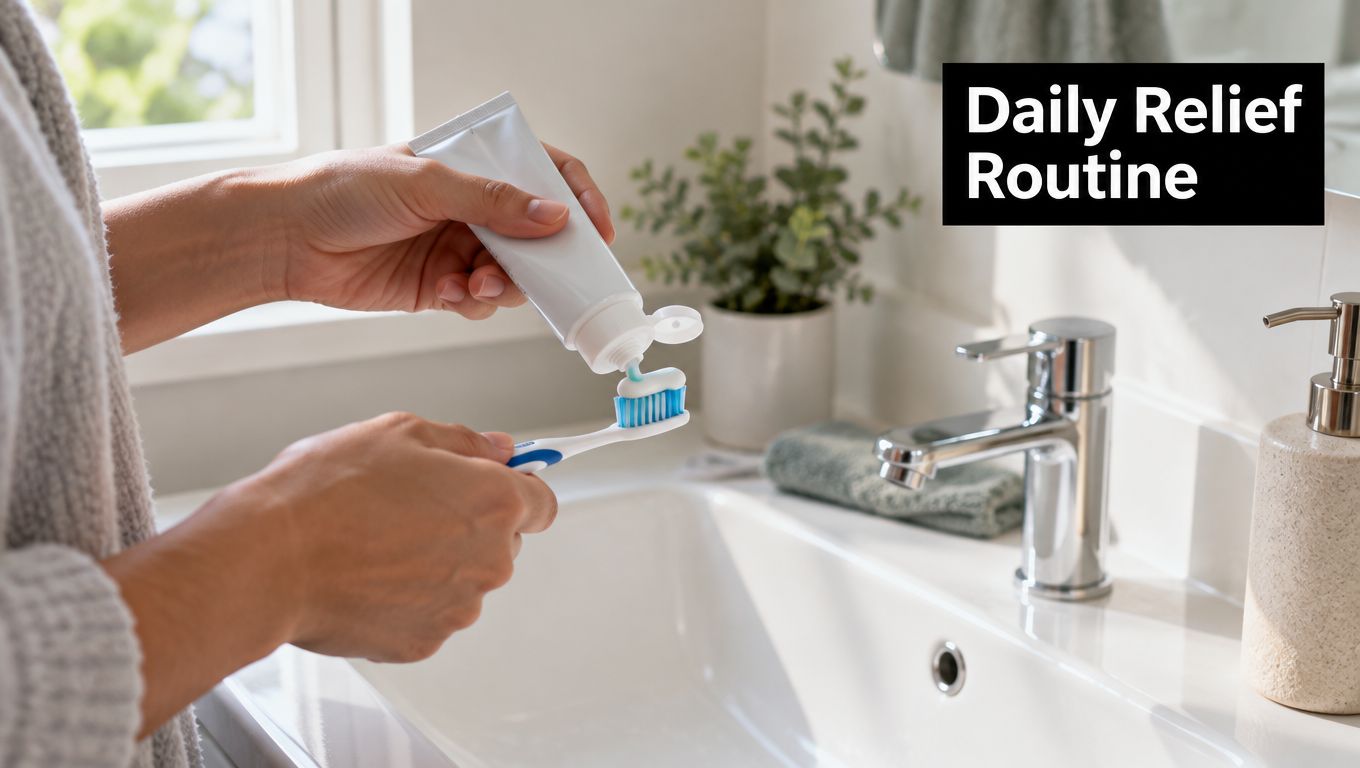
Choose a toothpaste with a recognized sensitivity active ingredient that fits your preferences and dental needs. Apply it with a soft-bristled brush, use light pressure, and pay attention to areas where the gumline feels tender or where cold tends to trigger a reaction.
Clinical evidence supports the value of a regular schedule. In a randomized trial of 120 participants, brushing twice daily for one minute with toothpaste containing 5.0% potassium nitrate plus 0.454% stannous fluoride produced statistically significant reductions in tactile and air-blast sensitivity at four and eight weeks, compared with the controls. The trial details are available in this randomized clinical study of potassium nitrate and stannous fluoride.
The exact timing won't be identical for everyone. Some people notice improvement early, while others need a longer consistent routine. Avoid switching formulas every few days, because frequent changes make it difficult to know whether the active ingredient is helping.
Support the whole mouth
Sensitivity can become more noticeable when brushing is painful, because people may avoid certain areas. Continue cleaning gently around the gumline and between the teeth. Floss, interdental brushes, or floss picks can remove plaque where a toothbrush can't reach, while a tongue scraper can help with tongue coating and breath freshness.
A fluoride-free nano-hydroxyapatite toothpaste may suit people who prefer mineral-based oral care. Nano-hydroxyapatite is designed to resemble the mineral component of teeth and can support the surface as part of a consistent brushing routine. It isn't a universal answer to every source of sensitivity, and it shouldn't delay an examination when symptoms don't follow the usual brief, trigger-related pattern.
Match the routine to the timeline
Research on professional desensitizing applications shows that relief can begin quickly in the dental office. In one controlled study involving 150 subjects, professional product application improved tactile sensitivity by 49.8% and air-blast sensitivity by 26.0% immediately after treatment compared with a negative control. At eight weeks, the improvements reached 57.5% and 38.4%, respectively, as reported in this controlled study of desensitizing treatment.
That contrast explains the timeline clearly. Professional treatment may offer same-visit relief, while home products usually support gradual control. If your need is occasional comfort, a consistent toothpaste routine may be reasonable. If you need relief before an important event or your sensitivity keeps interfering with eating, ask a dentist about options that can work more quickly.
When Home Care Is Not Enough
Brief pain from a clear trigger is often different from pain that continues after the trigger disappears. Pay attention to the pattern, not just the intensity. A mild sensation that lingers can deserve more attention than a sharp sensation that ends immediately.
Arrange a dental evaluation if you notice any of the following:
- Lingering pain: The discomfort continues after the cold drink, sweet food, or touch has stopped.
- Spontaneous pain: The tooth hurts without an obvious trigger, especially if it wakes you or appears while you're resting.
- One-tooth sensitivity: A single tooth repeatedly reacts while the surrounding teeth feel normal.
- Biting pain: Chewing or releasing your bite causes a sharp response.
- Visible or noticeable changes: You see swelling, a crack, a chip, discoloration, or a damaged filling.
- Worsening symptoms: Sensitivity continues to increase despite gentle brushing and consistent use of a desensitizing product.
These patterns can occur with gum problems, decay, a cracked tooth, a faulty restoration, or irritation deeper inside the tooth. A toothpaste can reduce the sensation at the surface, but it can't determine which of those possibilities is present.
Use home care for comfort, but use an examination for answers.
Early attention can keep a small concern from becoming more disruptive. If you're unsure whether a spot could involve decay, this overview of early cavity treatment may help you understand why prompt assessment matters. Seek urgent dental advice for swelling, fever, severe pain, or difficulty swallowing or breathing.
Your Action Plan for a Comfortable Smile
When sensitivity strikes, stop the trigger first. Choose room-temperature water, avoid acidic or extreme-temperature foods for the moment, and brush gently with a soft-bristled brush.
For ongoing control, select a toothpaste with a clearly identified sensitivity ingredient and use it consistently. Give a home routine time to work rather than expecting every formula to provide instant relief. If you prefer fluoride-free care, a nano-hydroxyapatite formula is one option to consider, alongside other ingredient approaches.
Keep the key distinction in mind:
- Need comfort right now: Remove the trigger and reduce stimulation.
- Want fewer flare-ups: Follow a consistent, gentle brushing routine.
- Need same-visit relief: Ask a dentist about professional desensitizing treatment.
- Have lingering, spontaneous, localized, or worsening pain: Schedule an examination.
Start today by replacing your next icy drink with room-temperature water and checking your brushing pressure. If the pattern continues or any warning sign appears, contact your dentist and describe exactly what triggers the pain, how long it lasts, and which tooth is involved.
Book a dental appointment if your sensitivity lingers, occurs without a trigger, affects one tooth, or fails to improve with consistent home care. For brief trigger-related discomfort, begin a gentle twice-daily routine with a suitable desensitizing toothpaste and track your response over the coming weeks.
