

Posted by Sarah Collins
on August 13, 2026

You can do everything “right” and still end the day with that faint twinge when you sip something cold, hot, or sweet. That's often the moment people realize enamel isn't just a cosmetic detail. It's the thin outer shield that lets teeth handle daily life, and once it starts wearing down, your mouth has to work harder to keep up.
Tooth enamel is the hardest mineralized tissue in the human body, but it has one big limitation, it can't regenerate the way bone does. That's why protecting tooth enamel is less about perfection and more about steady, everyday choices that reduce acid, limit abrasion, and support saliva. Oral disease is widespread, with an estimated 3.5 billion people affected worldwide, and dental caries affects 2.3 billion people (PMC review), so this is a real public-health habit, not a niche beauty routine.
Why Enamel Deserves Your Attention
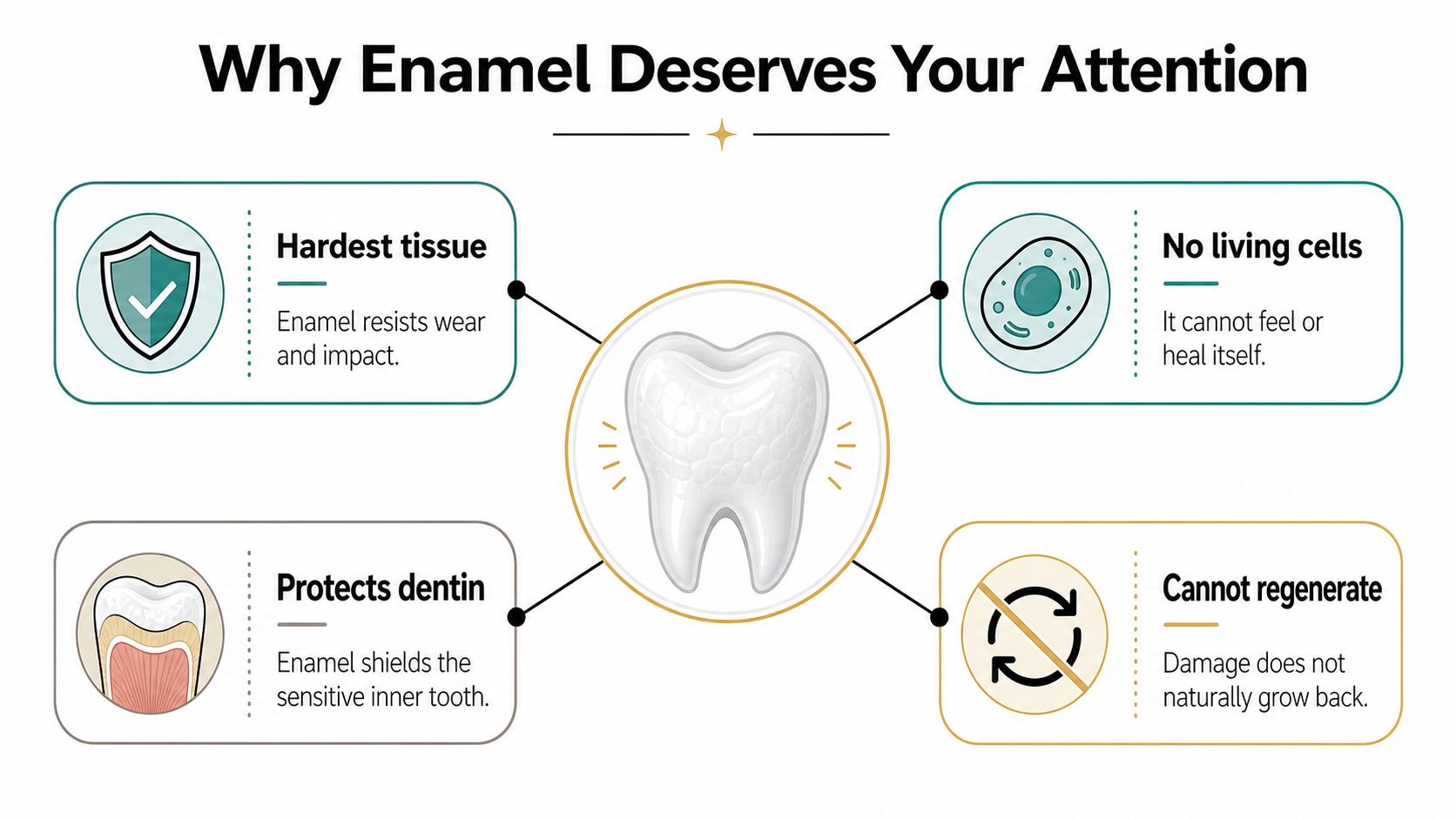
You usually notice enamel only after it has been protecting your teeth for a long time. Then a cold drink feels a little sharper, or a sweet snack seems to linger longer than it should. That shift matters, because enamel is the outermost shield on the tooth, and even small losses can reveal the softer layers underneath.
What enamel does every day
Enamel acts like a hard shell around each tooth crown. It helps protect the inner tooth from acid, temperature changes, and the wear that comes with chewing, while also giving the surface enough strength to handle daily use. It is not living tissue in the way bone is, so once it is worn away or lost, the body cannot rebuild it in the same way it repairs bone.
That is why enamel protection comes up so often in oral care. The goal is not just a brighter look or a smoother feel. It is keeping the tooth surface stable enough that sensitivity, erosion, and decay have less opportunity to settle in.
Practical rule: if a habit brings enamel into contact with acid more often than the mouth can recover, that habit deserves a second look.
Why the numbers matter
Enamel defects are reported to affect between 20% and 80% of the world's population, a wide range that reflects different ways researchers define and measure them. The range does not mean everyone faces the same risk, but it does show how common enamel-related concerns can be (PMC review).
The broader public-health picture points in the same direction. Oral diseases affect an estimated 3.5 billion people, and dental caries alone affects 2.3 billion people. In plain language, enamel is not a luxury issue. It is part of the basic machinery that keeps teeth comfortable and functional.
A simple mindset shift
Treat enamel care as an everyday pattern, not a single fix. Brush gently. Keep acid exposure brief. Support saliva. Clean the spaces your brush cannot reach. That combination gives teeth the kind of steady support that is easier to maintain day after day.
How Enamel Breaks Down
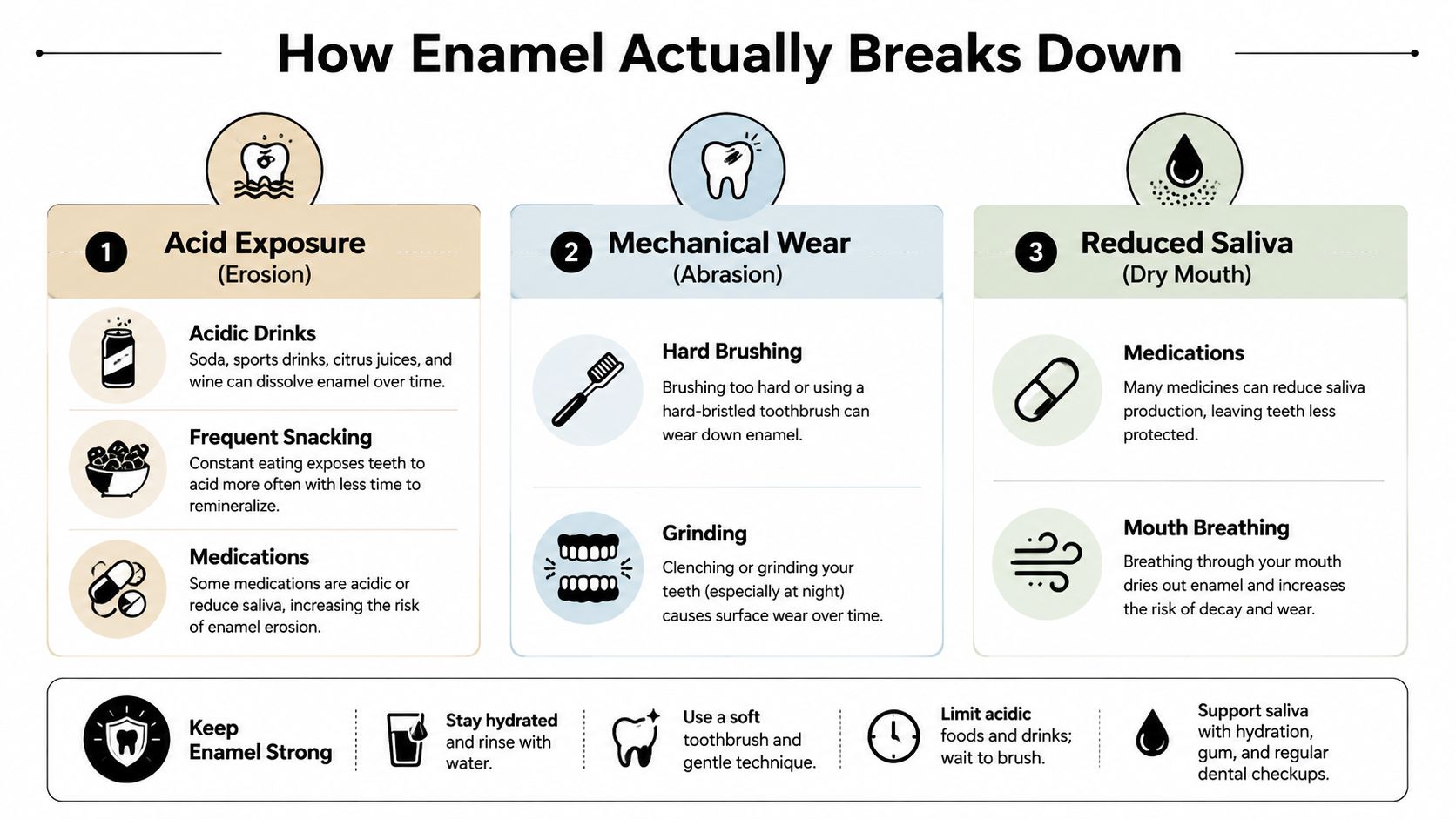
Enamel usually does not fail in one dramatic moment. It wears down through repeated pressure, acid exposure, and times when saliva cannot buffer the mouth well enough. Once those three drivers are clear, it becomes easier to spot which everyday habits are nudging teeth in the wrong direction.
Acid exposure is the big one people miss
Acid does not have to come from obvious sour foods to matter. Citrus water sipped all morning, sparkling drinks held in the mouth, frequent snacking, reflux, and vomiting can all keep the mouth in a low-pH state long enough for minerals to leave the enamel surface. A key tipping point is the critical pH threshold near 5.5, below which enamel begins to demineralize (Scientific Reports).
Timing matters as much as the food or drink itself. One acidic drink is not the same as taking small sips for hours. The longer enamel sits in that environment, the less chance saliva has to restore balance.
Mechanical wear can stack on top of softness
Abrasion is the physical side of the story. Hard brushing, a firm brush, or whitening products that are too abrasive can wear down enamel that is already softened by acid. Clenching and grinding add stress that enamel was never meant to handle alone.
A major dental source recommends waiting at least one hour after acidic foods or drinks before brushing (PubMed study summary). That delay gives softened enamel time to recover a bit before a brush touches it.
Acid softens. Brushing too soon can scrub away what the mouth has not had time to reharden.
Saliva is the quiet defender
Reduced saliva flow changes the whole picture. Whole human saliva outperformed dialysed saliva and artificial saliva in limiting enamel loss in an erosion model, which shows that both salivary proteins and salivary ions matter for defense (Scientific Reports). Mouth breathing at night, dehydration, and medications that dry the mouth can all make that protective system less effective.
For a related look at common causes, this overview of tooth enamel loss is a useful companion read. A few everyday patterns make the picture easier to spot. Coffee all morning, a citrus snack between meetings, and a rushed brush right after lunch can create more wear than many people realize. A small upgrade routine can help here too, especially when you want a practical example of how treats and timing fit into a broader enamel-friendly pattern, so some readers may want to explore Playz candy kits as a reminder that frequency and rinsing habits matter as much as the treat itself.
Your Daily Enamel Routine
A good enamel routine feels boring in the best way. It's gentle, repeatable, and built around timing as much as products. The goal isn't to do more to your teeth. It's to stop stressing them so much.
Start with a soft touch
Use a soft brush and gentle circular motions, not a scrubbing motion. The point is to lift away plaque without grinding on enamel that may already be softened by acid or exposed at the gumline. A calmer hand matters more than a forceful one.
Brush with a remineralizing toothpaste that fits your preferences, then let the paste sit on the surfaces long enough to do its job before rinsing too aggressively. That simple shift supports the protective layer you're trying to preserve.
Respect the acid window
If you've had something acidic, give your teeth time before brushing. Rinsing with water helps move acids out of the way, and waiting 20 to 60 minutes after acid exposure is a more enamel-friendly habit than brushing immediately (Delta Dental). That same logic is why many people do better by brushing at a consistent time, not in the middle of a long acid-sipping window.
Flossing belongs in the routine too, because the brush can't reach every surface. Interproximal enamel, the enamel between teeth, is a common blind spot. If you only clean the visible faces, plaque and acids can stay active where you can't easily see them.
Don't skip the spaces and the tongue
Use floss or an interdental cleaner once a day so the contact points between teeth don't become the quiet place where problems build. That's especially useful if your teeth touch tightly or you've had early spots of sensitivity between teeth.
Tongue care is the last piece. A tongue scraper or gentle tongue cleaning can reduce the bacterial load that feeds plaque, which supports the rest of your routine instead of competing with it. The sequence is simple. Clean the spaces, clean the surfaces, and avoid turning a fresh-brushed mouth into an acid bath right after.
A routine that protects enamel usually feels slower, not fancier.
Smart Dietary and Lifestyle Habits
Food choices matter for enamel, but timing and frequency often matter just as much as the food itself. A cup of coffee with breakfast is a different animal from sipping it for hours. The same goes for citrus, sparkling water, sports drinks, and any snack you keep grazing on all afternoon.
Think in acid events, not just food groups
A useful way to protect enamel is to reduce the number of acid events. That means fewer repeated sips, fewer long snack windows, and less lingering liquid in the mouth. If you want the flavor, enjoy it, then move on and give saliva a chance to rebalance things.
Water rinses help after acidic drinks or meals, especially when brushing needs to wait. Sipping through a straw can reduce how much liquid bathes the teeth, and sugar-free gum can support saliva when you're done eating and can't brush right away. Those are small upgrades, but they add up because they shorten the time enamel spends under stress.
Reflux and late-night habits deserve attention
Some enamel risk comes from the body, not just the plate. Reflux, vomiting, and frequent acid exposure can wear enamel, and those patterns are easy to underestimate if you're focused only on brushing. Mouth breathing at night can also leave the mouth drier, which makes recovery slower.
A lot of people do best by pairing hydration with meal timing. Drink water regularly, avoid turning bedtime into a sipping session, and support saliva whenever the mouth feels dry. That's not about being strict, it's about giving enamel fewer chances to soften.
A simple swap mindset
Instead of banning foods, ask three questions. How acidic is this, how long will it stay in my mouth, and what can I do afterward to help saliva recover? That framework works for office coffee runs, sports drinks, and family snack time alike.
For a playful example of how sugar and texture can affect mouth feel during food prep, explore Playz candy kits. It's a useful reminder that sticky or acidic treats tend to linger longer than people expect, which is exactly why timing and rinsing matter so much.
Understanding Remineralizing Ingredients
Toothpaste labels can read like a shelf full of promises until you know what the ingredients are trying to do. The job is straightforward. After acid exposure, the right formula should help enamel recover its surface stability and make the tooth feel less vulnerable. Different ingredients reach that goal in different ways, so ingredient literacy helps when you are choosing a routine that fits your mouth.
Fluoride and nano hydroxyapatite side by side
Fluoride has the longest modern research history in this area. A Cochrane review found high-certainty evidence that toothpastes with 1000 to 1250 ppm fluoride are more effective than non-fluoride toothpaste at preventing caries, and toothpaste with 1500 ppm fluoride reduces decayed, filled surfaces compared with placebo. Earlier epidemiologic data also found that children who have drunk fluoridated water from birth have, on average, 50% to 70% less tooth decay than children who have not (Cochrane Library).
Nano-hydroxyapatite, often called nHa, takes a mineral-matching approach. Hydroxyapatite is the mineral that naturally makes up much of tooth enamel, so nHa-based products are often chosen by people who want a fluoride-free routine with a mineral-based feel. Mouthology offers a 10% nano-hydroxyapatite toothpaste as one such option, and that fits the broader category of mineral-supportive oral care.
What the evidence says about formulations
Ingredient form matters, not just the ingredient name. In one meta-analysis, stannous fluoride showed the largest mean effect at 4.789 μm of enamel tissue loss reduction, compared with 0.820 μm for sodium fluoride in the same analysis. That does not make every formula interchangeable, it shows that the details inside the formula can change how well a toothpaste performs.
The same idea applies to the rest of the label. A tube that looks simple on the front may still work differently because of how the active ingredient is delivered, how often it is used, and whether the formula is meant to support enamel in a fluoride or fluoride-free routine.
Here is a simple way to read labels without getting lost in jargon.
| Ingredient | Mechanism | Typical Concentration | Best For |
|---|---|---|---|
| Fluoride | Supports resistance to demineralization and helps prevent caries | 1000 to 1250 ppm or 1500 ppm in the reviewed evidence (Cochrane Library) | People who want the most established evidence base |
| Nano-hydroxyapatite | Provides a mineral-based enamel-supporting approach | Varies by formula | Families or individuals seeking a fluoride-free routine |
| Xylitol | Supports a less plaque-friendly environment and is often used in gum or toothpaste | Varies by product | People who want an easy add-on between meals |
A useful way to compare products is to ask whether the ingredient supports the same repair window your mouth already relies on. Saliva does a lot of that work on its own, so a toothpaste or gum ingredient is most helpful when it supports recovery after meals, snacks, or a dry mouth moment. If you want a plain-language walkthrough of how that idea works in practice, this guide to reversing cavities breaks down the label language in a helpful way.
Special Considerations for Kids, Pregnancy, and Sensitivity
Some routines need a softer lens. Kids swallow more toothpaste, pregnancy can make the mouth feel unpredictable, and sensitive teeth can turn basic habits into something people start avoiding. The good news is that all three situations respond well to gentler, more deliberate care.
Kids need simple, safe routines
For children, the main goal is consistency without a struggle. A soft brush, a small amount of toothpaste appropriate for the child's age, and a routine tied to predictable moments of the day usually work better than making brushing feel like a chore. The texture and taste matter too, because kids are much more likely to cooperate when the routine feels easy.
A fluoride-free option can be appealing for families who want a mineral-based routine that children are more comfortable using. The key is to choose low-abrasion formulas and keep the brushing habit gentle, not rushed. If you're comparing options, Feed Mom & Me's calcium guidance is a helpful reference for parents thinking about oral care as part of a broader mineral-support conversation.
Pregnancy changes the playing field
Morning sickness, reflux, and shifts in saliva can all make enamel care feel harder during pregnancy. The practical response is to focus on gentleness, timing, and products that don't leave the mouth feeling irritated. Rinsing after nausea or acid exposure helps, and waiting before brushing matters even more when enamel has been softened repeatedly.
Some expecting parents prefer a fluoride-free option during this period, and it helps to choose a formula that fits that preference without making the routine complicated. For readers comparing product styles, this fluoride-free toothpaste guide for pregnant women is a useful place to start.
Sensitivity often means exposed dentin
When enamel thins, the underlying dentin becomes easier to stimulate, and that's when cold, sweet, or acidic foods can feel sharper. The response isn't to scrub harder. It's to use a softer brush, shorten acid contact, and pick ingredients that support a calmer daily routine.
If brushing starts to sting, the toothbrush technique may need adjusting before the product does. A lighter hand, a non-abrasive toothpaste, and more attention to timing after acidic foods usually help more than people expect.
When to Bring in a Dental Professional
A dentist isn't just there to fix a problem after it gets loud. They're part of the enamel-protection plan, especially when sensitivity keeps hanging around or your habits don't fully explain what you're feeling. That partnership matters because some enamel stress comes from reflux, dry mouth, or grinding, and those aren't always obvious at home.
Signs that deserve a closer look
Persistent sensitivity is one of the clearest signals. So are visible pitting, edges that look more translucent than they used to, pain after acidic foods, and dry mouth that doesn't seem to settle. If those show up together, home care alone may not be enough.
A dentist can look for patterns you can't easily spot in the mirror. They may identify erosion, clenching, bruxism, or dietary habits that are keeping the mouth acidic for too long. That kind of checkup turns the visit into something useful instead of routine.
Questions worth asking at the appointment
Bring concrete questions so you leave with a plan. Ask whether your enamel looks softened or thinned, whether a remineralizing treatment makes sense, and whether your brushing timing needs adjusting after acidic foods or drinks. If you wake up dry-mouthed, mention that too.
The most helpful dental visits usually end with one or two clear changes, not a long list you won't remember.
It also helps to ask about what might be driving the problem in the first place. Reflux, frequent vomiting, mouth breathing, and nighttime clenching can all change the enamel picture, and the dentist may suggest next steps based on those clues. That's especially useful if your symptoms keep recurring even though your routine is already pretty solid.
Use professional care as a partner, not a rescue plan
For home care, think gentle brushing, smart timing around acids, interdental cleaning, tongue care, hydration, and sugar-free gum after meals when appropriate. For professional care, think targeted evaluation and practical follow-up. The two work best together.
Start with one or two changes this week. Keep the brush soft, give enamel time after acidic foods, and clean the spaces between teeth instead of assuming the brush gets everything. If you want a fluoride-free, mineral-based toothpaste to fit that routine, Mouthology's 10% nano-hydroxyapatite formula is one option to compare alongside other remineralizing approaches. Then book a dental check if sensitivity, dry mouth, or visible enamel changes are already part of your day.
