

Posted by Sarah Collins
on August 12, 2026

You're not alone if you've stared at a white spot, a sensitive molar, or a “small cavity” comment from your dentist and wondered whether better brushing, less sugar, or a fluoride-free routine could make things go away on their own. The honest answer is more precise than most headlines: natural tooth decay repair is real only at the earliest stage, when enamel has lost minerals but no hole has formed yet. Once a true cavity exists, the tooth can't grow that structure back by itself.
That boundary matters because tooth decay is widespread. The WHO says untreated dental caries in permanent teeth is the most common health condition worldwide, and the NIDCR reports that nearly 90% of U.S. adults ages 20 to 64 have experienced decay in their permanent teeth NIDCR tooth decay process. So the question isn't whether teeth can ever recover. It's whether you've caught the problem early enough for remineralization to work.
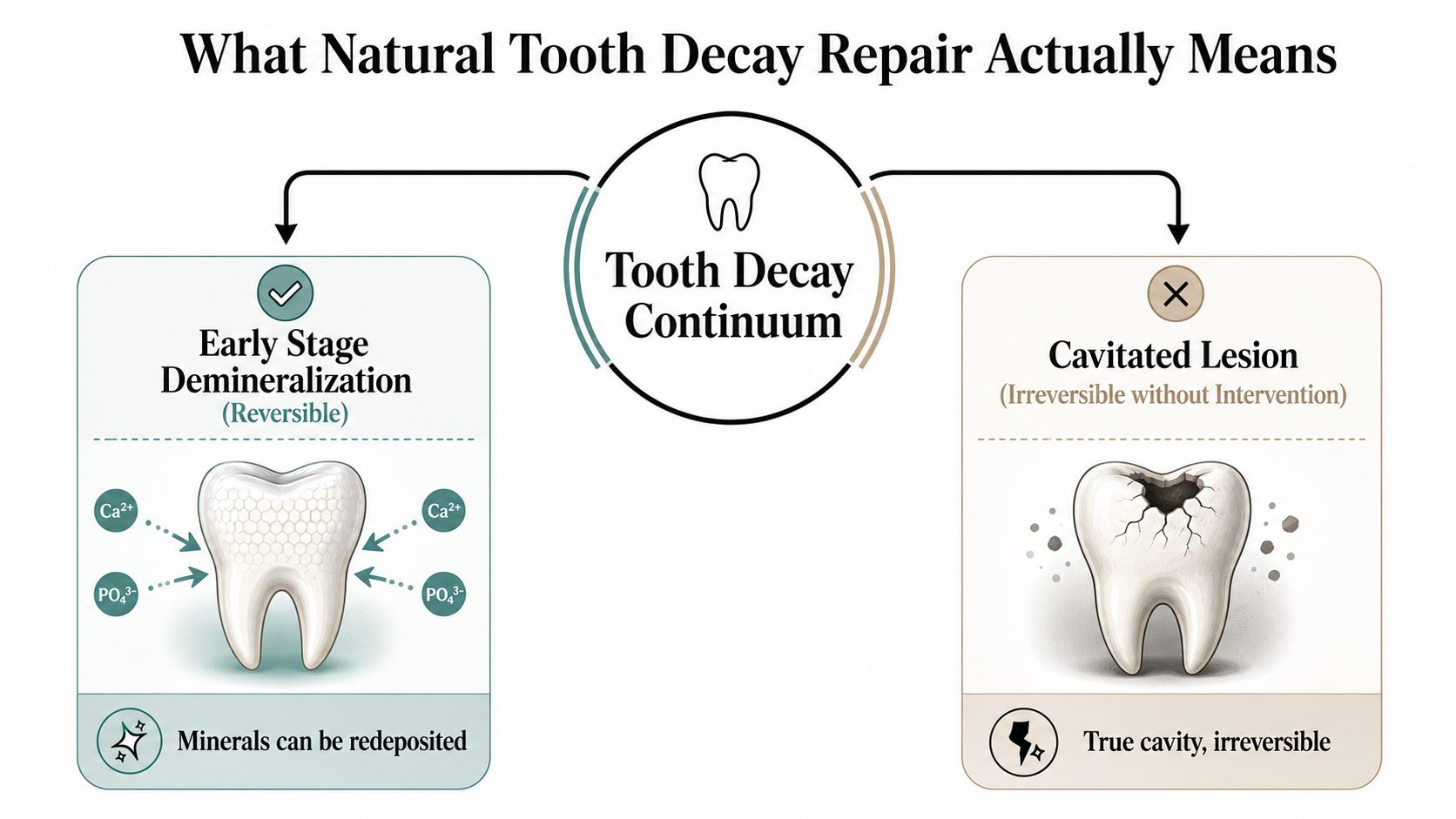
Core truth: early mineral loss can be repaired with remineralization, but a visible cavity can't simply close up on its own.
If you want a practical companion while you read, expert tips from The Smile Spot are a useful reminder that prevention habits matter long before a filling is on the table.
What Natural Tooth Decay Repair Means
A tooth can sometimes recover at the surface, and that is where natural tooth decay repair begins. The process is remineralization, which means enamel has lost calcium and phosphate to acid, but the surface is still intact enough for saliva to put minerals back into place. Once the enamel opens into a hole, that structure is gone, and the tooth will not rebuild it on its own.
That boundary sounds small, but it changes what repair can mean in practice. A white spot on enamel can sometimes improve if the environment around the tooth changes. A crater, pit, or soft-edged hole is a different problem entirely. The NIDCR explains that saliva can return calcium and phosphate to the tooth surface and may repair damage before a cavity forms, but once decay breaks through enamel into a hole, it cannot heal on its own.
The public-health picture shows why this matters. The WHO calls untreated dental caries in permanent teeth the most common health condition worldwide, and the NIDCR reports that nearly 90% of U.S. adults ages 20 to 64 have experienced decay in their permanent teeth. When a problem is that common, vague promises become expensive fast.
Repair is possible while enamel is still a mineral system that can exchange ions with saliva and plaque fluid. That is why prevention and early intervention are the critical threshold, not after-the-fact rescue.
Practical rule: if the tooth surface is still intact, remineralization may help. If there is a hole, home care can support the tooth, but it cannot replace the lost structure.
For a second source of plain-language context, expert tips from The Smile Spot are a useful reminder that prevention habits matter long before a filling is on the table.
How Enamel Remineralization Works
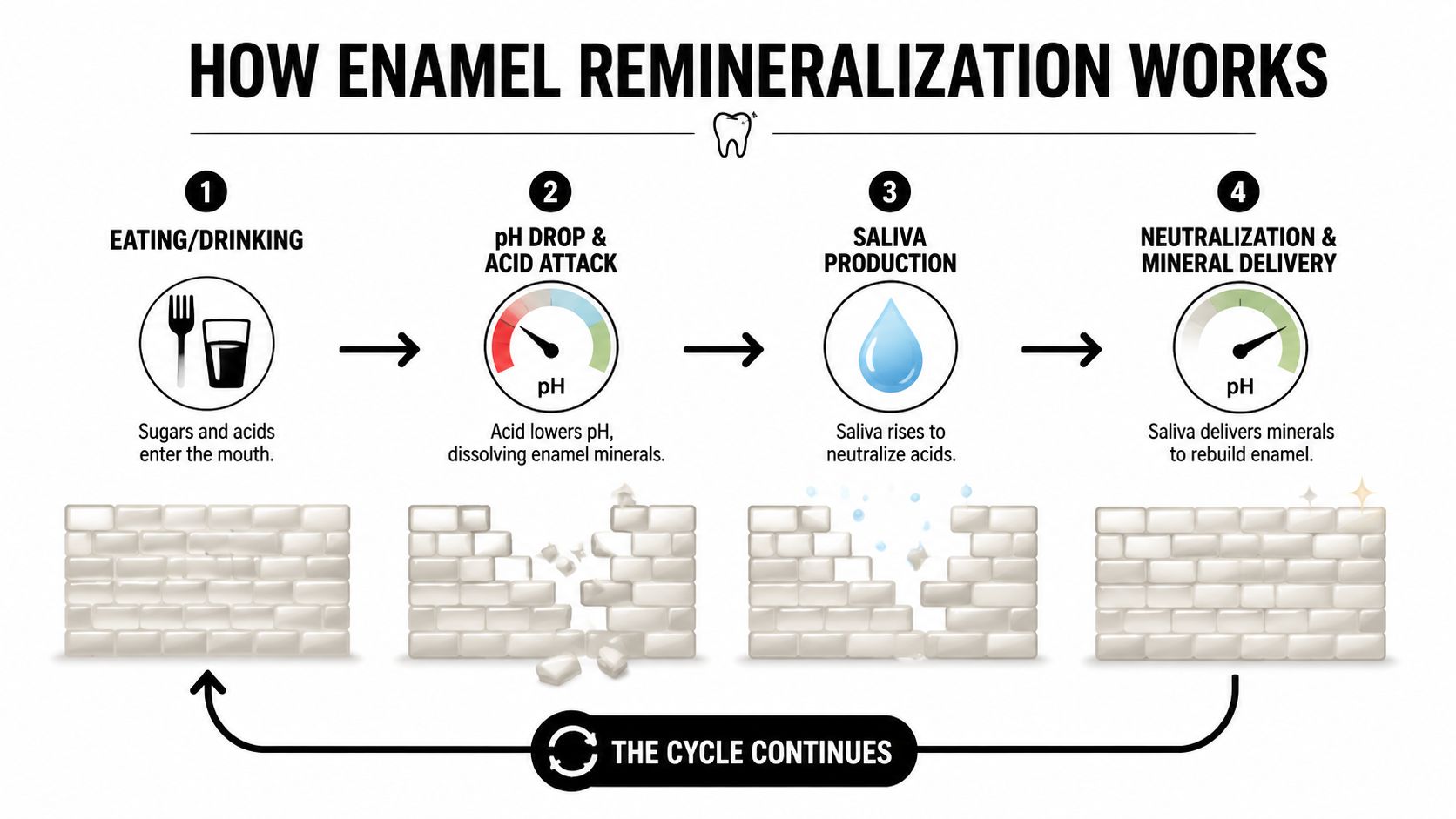
A tooth can look unchanged while its surface chemistry is shifting all day long. After sugar or acid exposure, enamel loses a little mineral, then saliva tries to put some back once the mouth moves toward a safer pH. That back-and-forth is the part of natural tooth decay repair that is real, measurable, and easy to misunderstand if you expect a cavity to vanish.
The daily pH cycle
Enamel is built from a hydroxyapatite lattice, and acid pulls minerals out of that structure. That first phase is demineralization. When saliva and plaque fluid later supply calcium and phosphate under better conditions, the surface can rebuild with crystals that are larger and more acid-resistant than the ones that were lost, as summarized in a PMC remineralization review and the NCBI Bookshelf review. In plain terms, the tooth is not growing new enamel tissue, it is restoring mineral to a surface that is still alive to chemistry.
This only works while the enamel surface is still intact. Early, non-cavitated lesions can sometimes improve because the structure is still there for minerals to move in and out. A visible hole is different. Once decay has broken through the surface, home care can support the tooth environment, but it cannot recreate the lost shape of the tooth.
Why prevention became dentistry's center of gravity
That chemistry is why prevention sits at the center of modern dentistry. A standard epidemiology review reports that children who drank fluoridated water from birth had, on average, 50% to 70% less tooth decay than children who did not NCBI Bookshelf review. The larger lesson is not about a single ingredient, it is about keeping enamel in the repair phase more often than the loss phase.
Saliva is the delivery system for that repair. It buffers acids, carries minerals, and gives the tooth a chance to recover after each attack. The cycle is simple, but the timing matters, because repair only happens before the surface collapses into a cavity. For a plain-language overview of that process, see what remineralization of teeth actually means.
If you want the idea in one sentence, reminalization is the tooth's early repair response, and saliva is what makes that response possible.
Fluoride vs Nano-Hydroxyapatite for Enamel Repair
A true cavity is already a structural loss, so no toothpaste ingredient can put the missing shape back. What fluoride and nano-hydroxyapatite can do is support enamel while it is still in the repair stage, before the surface gives way. That is the line that separates real remineralization from marketing language.
Fluoride helps the tooth form mineral that is more resistant to acid attack at the surface. Nano-hydroxyapatite, often shortened to n-HAp, is built to resemble the mineral already in enamel and to deposit that material directly onto the tooth.
For families choosing a fluoride-free routine, that difference matters. It does not make one option magic and the other useless. It means you are choosing between two different repair pathways, while keeping an eye on how strong the evidence is and whether the product fits the household routine you plan to follow.
Fluoride vs Nano-Hydroxyapatite at a Glance
| Criterion | Fluoride | Nano-Hydroxyapatite |
|---|---|---|
| Mechanism | Supports acid resistance at the tooth surface | Deposits a hydroxyapatite-like layer directly |
| Evidence base | Deep, long-standing prevention evidence | Growing evidence, including enamel-binding studies |
| Safety profile | Widely used in dentistry | Reviewed as high safety profile, with no fluorosis risk HAP toothpaste review |
| Fit for fluoride-free homes | Not a match if you're avoiding fluoride | Strong fit for fluoride-free routines |
The hydroxyapatite review in The use of hydroxyapatite toothpaste to prevent dental caries describes HAP particles in micro- or nanocrystalline form depositing onto demineralized enamel. In extracted-teeth studies, the particles also bound to the surface and filled pitted areas, which is the kind of repair behavior people usually mean when they talk about fluoride-free enamel support HAP toothpaste review. The same review covers in vitro, in situ, and in vivo testing, and it describes a high safety profile with no fluorosis risk.
That makes nano-hydroxyapatite a practical option for families who want a fluoride-free choice with a clear biomimetic logic behind it. It is not a promise to rebuild every cavity. It is a way to support the mineral-repair cycle the tooth already uses, with an ingredient that is chemically close to tooth mineral.
If you want a side-by-side explanation at the brand and ingredient level, this comparison of fluoride vs nano-hydroxyapatite is useful for sorting through labels and claims.
Bottom line: fluoride has the deepest track record, nano-hydroxyapatite is the most credible fluoride-free alternative for enamel support, and neither one turns a true cavity into untouched enamel again.
Your Daily Routine for Natural Enamel Repair
A useful routine starts with one simple habit, don't brush immediately after an acidic meal or drink. Right after acid exposure, enamel is temporarily softer, so a little patience protects the surface you're trying to support. Rinsing with plain water first gives saliva a better chance to do its job.
Morning and evening, kept simple
In the morning, brush after breakfast if it's the first acidic exposure of the day, or wait a bit if you've had citrus, coffee, or juice. Floss before brushing or after, whichever you will keep doing consistently, because the goal is to remove plaque from between teeth so fluoride or nano-hydroxyapatite can reach more surfaces. Tongue cleaning is a nice add-on because it lowers the load of debris sitting in the mouth.
At night, the order matters a little more because you're about to spend hours with less swallowing and less saliva movement. A simple sequence is floss, tongue clean, brush, then stop snacking. If you use a fluoride-free paste, a 10% nano-hydroxyapatite toothpaste can fit here as a modern option for people who want a mineral-based routine rather than a fluoride-centered one.
A home routine also gets easier when the rest of the day stops feeding the acid cycle. Plain water is the easiest rinse after meals. Dairy can be a useful choice when you want something more filling than water, while sugary drinks keep the cycle going.
Small habits that actually help
- Xylitol instead of sugar: xylitol is a non-fermentable sweetener, so cavity-causing bacteria can't use it the same way they use sugar.
- Water after eating: a quick swish helps clear food particles and acidic residue.
- Less grazing: repeated snacking keeps the mouth in a low-pH state longer.
- Consistent timing: the same routine every day beats occasional “perfect” cleanups.
For readers who want a second take on the timing piece, the article on how to reverse cavities lines up with the same preventive logic, especially around catching early mineral loss before it becomes structural loss.
Starter week idea: keep the routine exactly the same for seven days, but add just one upgrade, either water after meals or xylitol gum after lunch. Small wins are easier to repeat than dramatic overhauls.
Diet, Saliva and Other Remineralization Levers
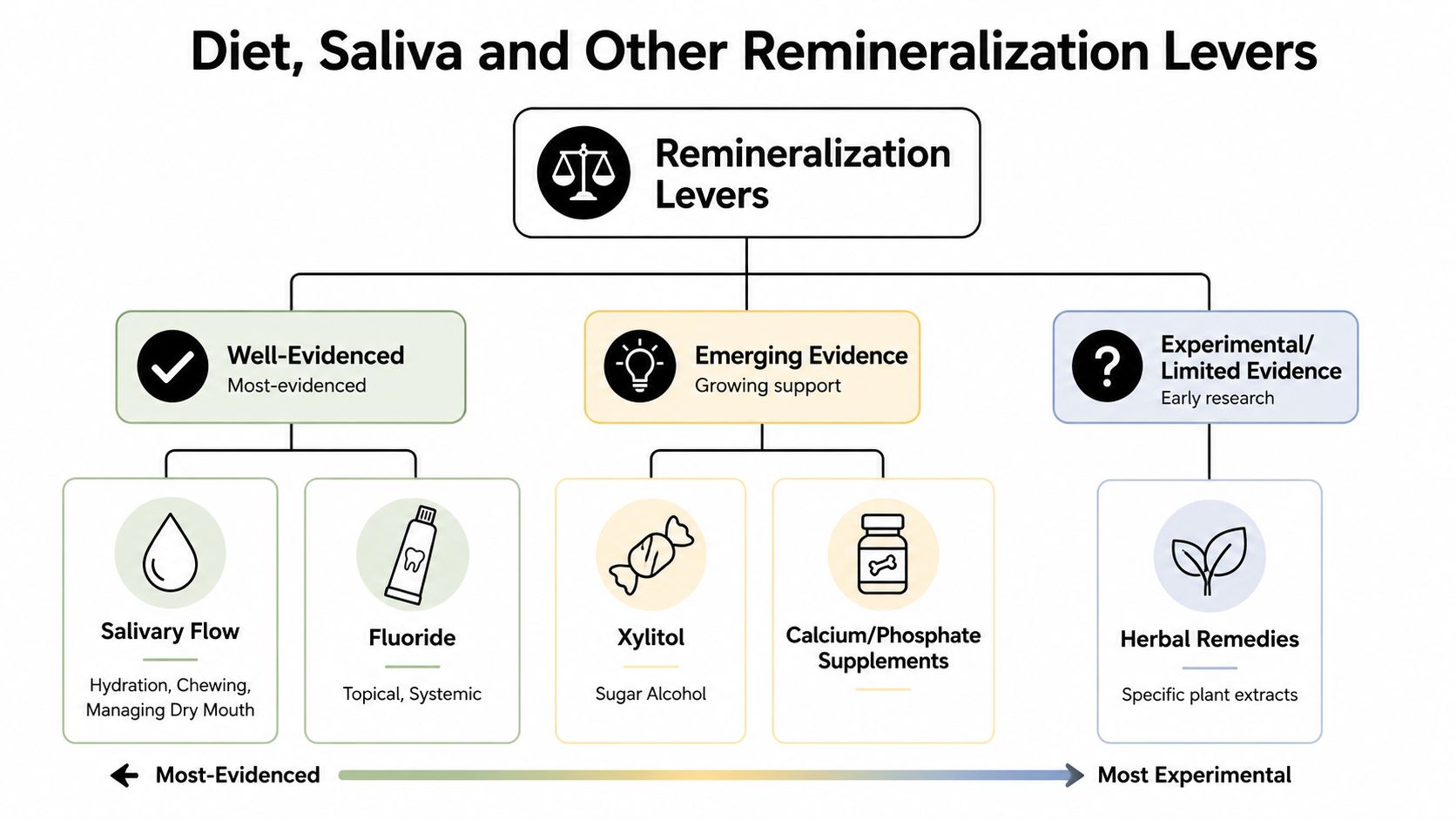
Tooth mineral repair doesn't depend on toothpaste alone. Saliva, dietary minerals, chewing, and dryness management all influence whether the mouth spends more time rebuilding or breaking down enamel. If your mouth feels dry often, the repair cycle has less raw material and less buffer against acid.
The levers that support repair
Hydration and chewing help because they stimulate saliva flow. That's especially important when medications, mouth-breathing, or poor sleep leave the mouth dry. If dry mouth shows up at night or first thing in the morning, SleepHabits has useful dry-mouth breathing tips that can help you think beyond toothpaste and look at airflow, sleep posture, and nighttime mouth breathing.
Dietary minerals matter too. Saliva doesn't create calcium and phosphate out of nowhere, so food patterns that support those minerals make the environment more favorable for remineralization. Probiotics and sugar-free gum sit in a middle zone of evidence. They're not miracle tools, but they can support a mouth environment that's less friendly to decay.
Where the frontier is heading
The more experimental side of the field is biomimetic repair. A review of amelogenin-derived peptides describes peptides that bind to tooth surfaces, recruit calcium and phosphate, and can deposit roughly 10 to 50 μm of new enamel-like mineral layer after each use in vitro PMC amelogenin review. That's not the same as a fully regrown tooth, but it is a serious benchmark for future enamel repair technology.
A recent ACS Biomaterials review frames the bigger picture clearly. Natural repair in dentistry is about remineralization and partial repair, not true routine regrowth of lost tooth structure ACS Biomaterials review. That keeps the hype in check and makes the science easier to trust.
Common Myths About Natural Tooth Decay Repair
Much confusion stems from conflating what aids the mouth with what repairs enamel. Saliva matters. So do minerals. That aspect is true. The leap people make is assuming any “natural” method that changes the mouth must also close a cavity, and that's where the story goes off track.
Oil pulling is a good example. It may make some people feel cleaner, but there's no reason to treat it like cavity reversal. It doesn't fill a hole, and it doesn't rebuild lost enamel structure. The same goes for claims that enamel fully regrows after it's broken down into a cavity. Biology doesn't work that way in routine care.
DIY pastes can be misleading too. Baking soda and charcoal may sound clean or “detoxifying,” but abrasion is not remineralization. If a paste scrubs the surface, that's a different action from redepositing minerals into enamel. Whitening strips also belong in a separate category. They're made for cosmetic color change, not structural repair.
A fluoride-free routine can still be smart, but it doesn't erase risk by itself. The evidence ladder still matters. Well-evidenced options include saliva support, fluoride, nano-hydroxyapatite, xylitol, and dietary mineral sufficiency. Adjunctive or speculative options can sit underneath that, but they shouldn't be sold as if they're doing the same job.
Practical filter: if a method can't explain how it brings calcium, phosphate, or acid resistance back to the tooth surface, it probably isn't true remineralization.
That's the core reason to stay skeptical of anything that promises a cavity can vanish just because the ingredient sounds natural.
Red Flags That Need a Dentist Not a Routine
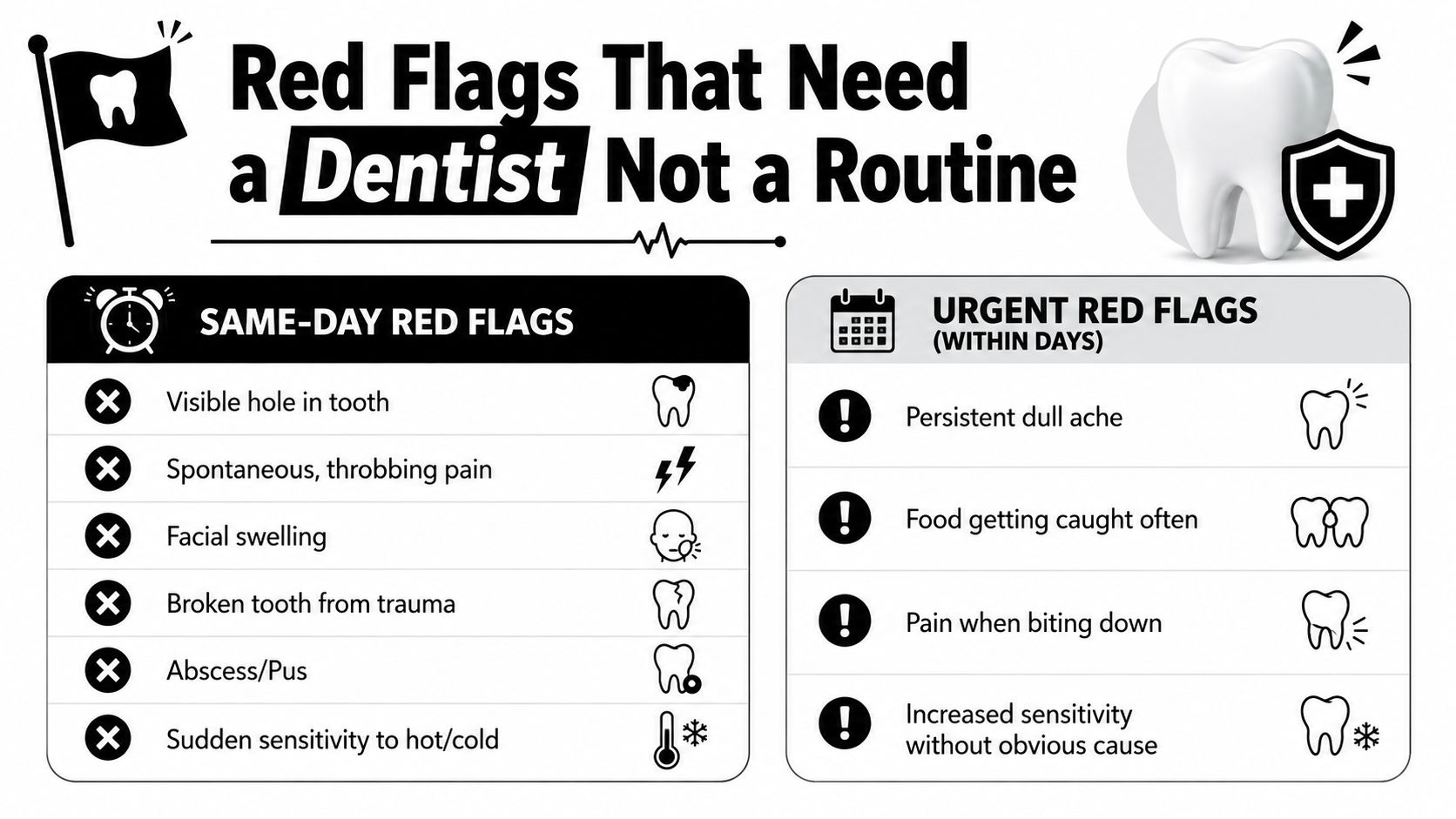
Home care has a real role, but it has limits. If you can see a hole, feel spontaneous pain, notice swelling, or break a tooth, that calls for a dental exam, not another toothpaste switch. A cavity that has opened up is already past the stage where mineral support alone can close it.
Same-day signs
- Visible hole in the tooth.
- Spontaneous, throbbing pain.
- Facial swelling.
- Broken tooth from trauma.
- Abscess or pus.
- Sudden sensitivity to hot or cold that lingers.
These signs point to something more than early mineral loss. They need attention quickly because untreated decay can keep moving deeper, and the problem is still common. The CDC reports that untreated cavities affect many adults and children, which is why waiting for a home routine to solve a clear cavity can backfire.
Urgent, but usually not same-day
- Persistent dull ache.
- Food getting caught often.
- Pain when biting down.
- Increased sensitivity without an obvious cause.
These symptoms can still point to decay, a cracked tooth, worn enamel, or gum issues. A dentist can sort out which one is happening, and that difference matters because the wrong home approach can waste time while the underlying problem gets worse.
If the problem is visible, persistent, or painful, book a dentist. If it's mild, occasional, and tied to a clear trigger, support the tooth with a remineralization-focused routine and keep watching it closely.
Building a Family Routine That Lasts
A realistic family routine doesn't chase a miracle ingredient. It layers simple habits that support the mouth's own repair system, and it does that in a way kids and adults can keep up with. For parents, that usually means choosing swallow-safer options, using kid-friendly flavors, and supervising brushing so the right amount gets used without turning the bathroom into a battle.
Expecting mothers often want the same thing, a routine that feels gentle and straightforward while still being evidence-led. That's where the early-stage mindset matters most. Natural tooth decay repair is about catching mineral loss before a hole forms, then keeping the tooth in a favorable environment long enough for remineralization to do what it can.
If you want a fluoride-free example of that approach, Mouthology's 10% nano-hydroxyapatite toothpaste is one option people use to support enamel in a mineral-based routine. It fits best as part of a broader pattern that includes water after meals, smart snacking, and regular dental checkups.
The takeaway is simple. You're not a passive consumer of oral care products, you're the person shaping the environment your teeth live in every day. That's a lot of influence, and it starts with the habits that make early repair possible.
If you've noticed a white spot, lingering sensitivity, or a tooth that feels different after meals, book a dental exam soon and use a remineralization-supportive routine at home in the meantime. The best next step is the one that matches the biology, not the marketing.
