

Posted by Sarah Collins
on September 29, 2026

You're unpacking your toiletry bag after a long day of travel when you notice the problem: your regular floss spool is bulky, your family's floss picks are scattered through the suitcase, or nobody remembered to pack floss at all. The toothbrush made the trip. The toothpaste did too. Yet the small habit that helps remove food from between teeth disappeared somewhere between the bathroom cabinet and the hotel room.
Dental floss travel size solves more than a packing problem. The right compact format makes floss easier to see, reach, and use when your schedule changes. A mini reel, floss pick, or lower-waste alternative can all work, but each one affects control, storage, thread length, cleanup, and how likely you are to keep the routine going.
Why Your On-the-Go Flossing Routine Needs an Upgrade
Travel disrupts ordinary cues. At home, floss may sit beside the toothbrush, so using it feels automatic. On a trip, you may brush in a hotel bathroom, an airplane lavatory, a shared holiday rental, or a campsite. A full-size spool can stay buried in a toiletry pouch, while a small dispenser or sealed pick pack keeps the next step visible.
That convenience matters for more than frequent flyers. A commuter may want floss in a desk drawer. A parent may need something a child can use after a snack. Someone moving between work, school, and evening plans may prefer a compact case that fits in a pocket or small bag. The format supports the habit because it reduces friction, not because smaller packaging changes the purpose of flossing.
Practical rule: Choose the format you'll actually use when you're tired, rushed, or away from a familiar bathroom.
Travel-size floss is commonly sold in compact packs and mini rolls, including products with 3-yard rolls and listings labeled mini or trial size, according to travel-toiletry guidance from Thither. That makes the category useful for portability, but pack size alone doesn't tell you how long the floss will last or how much waste you'll create.
A traveler taking a short trip might value a small reel that offers familiar hand control. A parent managing several routines may find picks quicker and easier to distribute. Someone focused on reducing disposable plastic may prefer a reusable dispenser with a replaceable spool or a biodegradable option, provided the product remains clean and practical to carry.
The useful question isn't just, “Is this floss small enough?” Ask instead: Will this format stay accessible, last for the trip, and fit my values? That shift turns a last-minute purchase into a straightforward oral-care decision.
Comparing Compact Floss Formats for Every Type of Trip
A red-eye flight, a road-trip stop, and a family holiday create different flossing problems. The right compact format depends on how much control you want, how many steps you can manage, and what kind of waste you are willing to carry or discard.
| Format | Best For | Key Advantage | Main Tradeoff |
|---|---|---|---|
| Mini spool | Travelers who prefer familiar hand control | You measure and tear only what you need | It requires winding, cutting, and keeping the dispenser clean |
| Floss picks | Quick routines, families, and use after meals | Each pick is ready without extra preparation | Individual picks create more disposable material |
| Biodegradable picks or strands | Travelers seeking lower-plastic choices | The material may fit a low-waste routine | Availability, packaging, and disposal instructions still matter |
Mini spools give you control
A mini reel works like a smaller version of the setup at home. You guide the thread around your fingers, adjust tension, and use a fresh section as you move between teeth. This format suits travelers who value familiar technique and want one reusable dispenser instead of many separate pieces.
The tradeoff is effort. You need to cut the thread, handle the dispenser, and protect it from moisture or dirt in a toiletry bag. A small reel may also run out during a longer trip, so convenience depends on both the journey and your flossing frequency. Its compact shape saves space, but it does not remove the need to plan.
Picks remove steps
Floss picks are useful after a flight, during a road trip, or when a child finds finger-wrapping difficult. They work well for travelers who want a quick routine with fewer moving parts. A sealed pack can also be divided among family members without carrying a loose spool and cutter.
That simplicity produces more individual waste. Each pick is made for one use, so a multi-day trip can leave a pile of handles and wrappers. Choose a lower-waste design when available, and follow local disposal guidance rather than assuming the material belongs in household recycling.
Biodegradable options require a wider check
“Biodegradable” describes one material, not necessarily the whole product. Check the handle, floss strand, wrapper, pouch, and disposal instructions. A pick with a plant-based handle may still arrive in individual plastic packaging, while the conditions needed for breakdown may not exist where you are staying.
For a weekend away, picks may be the easiest option. For a longer journey, a mini spool can provide more control with less repeated packaging. Biodegradable formats can support lower-plastic habits, but only when their packaging and disposal pathway also fit your values.
Children may need a different priority. The practical choice is the format they can hold comfortably and use consistently, with adult supervision when appropriate. Convenience, waste, and control should be weighed together, like choosing a small tool for the job rather than selecting the smallest package.
The Math Behind Mini Spools and Travel Kits
A mini dispenser saves space by trading away thread length. Travel-size floss commonly contains about 5 meters, or 5.4 yards, while standard retail floss often contains 30 to 55 yards or more. KleenTeeth's travel-size floss details illustrate the tradeoff: a smaller package fits neatly into a toiletry bag, but repeated use can exhaust it sooner.
Package size also affects value density. One compact travel floss case measures roughly 8.5 × 4.5 × 1.8 cm, or 3.3 × 1.8 × 0.7 inches, and weighs about 22 g, or 0.8 ounces. Those details appear in the CVS travel oral-care kit listing. Its footprint is easy to store beside a toothbrush, yet the limited thread supply may matter more than the saved space on a longer trip.
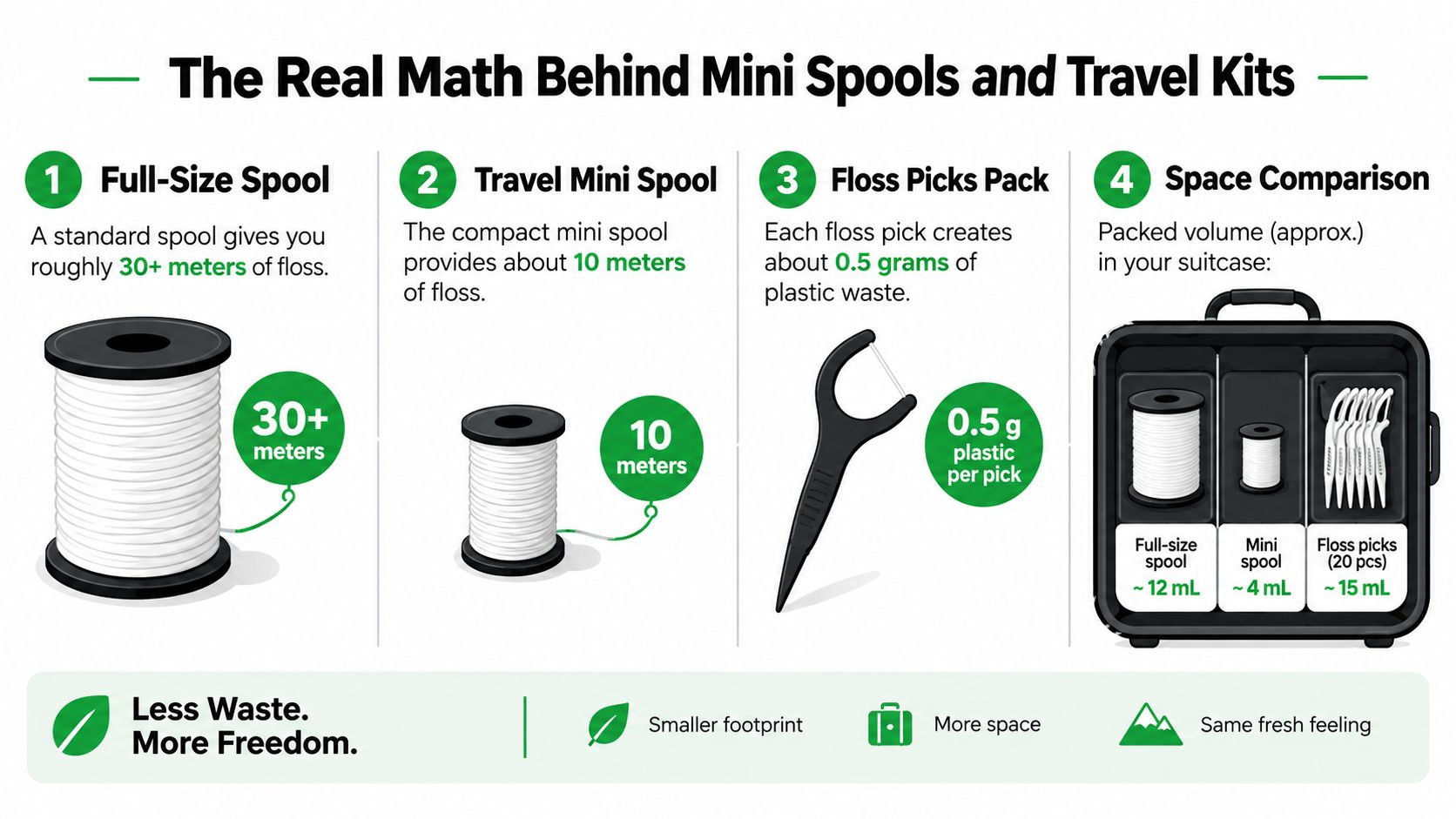
A bundled kit requires a separate calculation. The Colgate travel essentials pack listed by Woolworths includes a toothbrush, 40 g toothpaste, 60 mL mouthwash, and 2.74 m of floss. That combination can simplify packing for a short itinerary or serve as a backup, but its floss supply is modest beside a standalone dispenser.
Compare the trip, not just the package
Match the format to the itinerary. Estimate the number of days, then consider whether one person or several will share the supply. A mini reel may suit a brief solo trip. A longer journey may call for extra floss or a standard spool placed in a clean compact case. Families should also account for how quickly separate picks are used.
Packaging labels can mislead. “Trial/Mini/Travel Size” may describe the package position rather than a short length of floss. A Target listing for REACH Waxed Dental Floss, 55 yards uses compact travel-oriented positioning despite its substantial supply, as shown on Target's product page. Check the measured length before choosing the smallest-looking container.
Navigating Sustainability and Packaging Waste on the Road
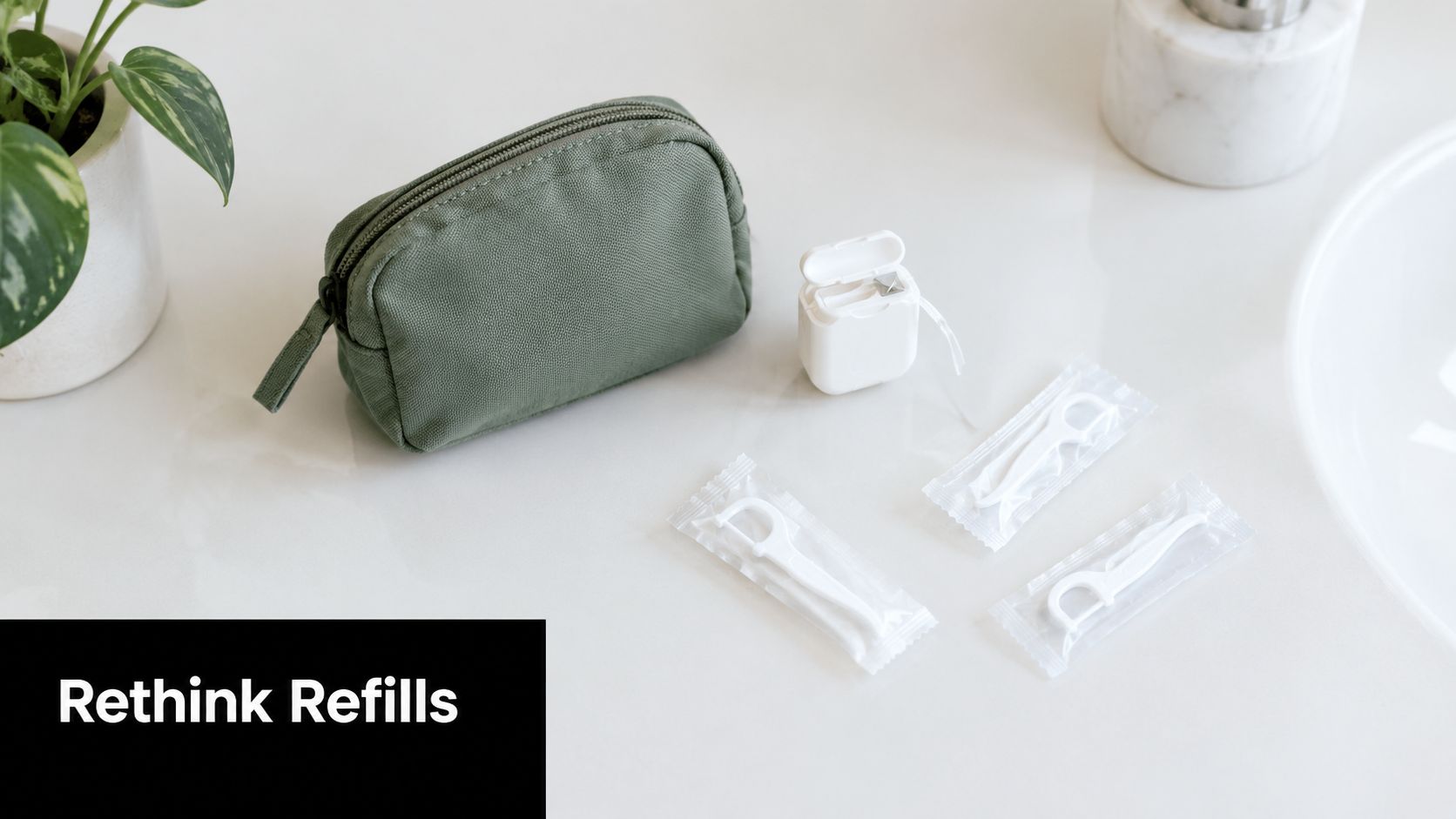
Travel-size doesn't automatically mean eco-friendly. A small box can reduce storage space while adding wrappers, plastic handles, or a resealable pouch that you won't reuse. The sustainability question has two parts: what the floss is made from and how the product is packaged.
Market analysis for Europe identifies packaging pressure around recycling and lightweight design, while a disposable floss report says 58% of packaging innovations focus on resealable pouches for 50 to 100 picks. Those figures come from the European Union travel-size dental floss market analysis. Resealable packaging can protect hygiene and prevent loose picks from spreading through a bag, but it doesn't eliminate the material used for the picks themselves.
Look beyond the word biodegradable
A lower-waste choice depends on the whole routine. A reusable mini spool can reduce the number of handles you discard, particularly if you buy replacement floss rather than a new dispenser each time. Biodegradable picks may be a practical alternative for people who need the pick format, but check the manufacturer's disposal directions and don't assume home composting is available.
Mouthology offers biodegradable floss picks in a 200-count product format, listed as portable for on-the-go oral care. If you're comparing options, you can also review this educational guide on whether floss is biodegradable.
A simple low-waste packing approach looks like this:
- Choose reusable storage: Keep a mini reel or pick pack in one washable case instead of carrying loose floss.
- Buy the amount you need: Avoid oversized multipacks for a short trip if the remaining packaging will sit unused.
- Separate clean and used items: Carry a small sealable bag for used picks or empty wrappers until you find an appropriate bin.
- Check the label: Packaging material, handle composition, and disposal instructions matter more than the word “travel.”
The best choice balances hygiene, convenience, and waste reduction. A format that stays unused in the bottom of your bag creates no benefit, regardless of its material.
Smart Packing and Airport Security Strategies
Pack floss where you can reach it without unpacking your entire bag. A hard-shell case protects a mini spool from crushed toiletries, while a resealable pouch keeps picks clean and contained. If you use a toothbrush case, choose one that allows the brush to dry rather than sealing in moisture immediately after use.
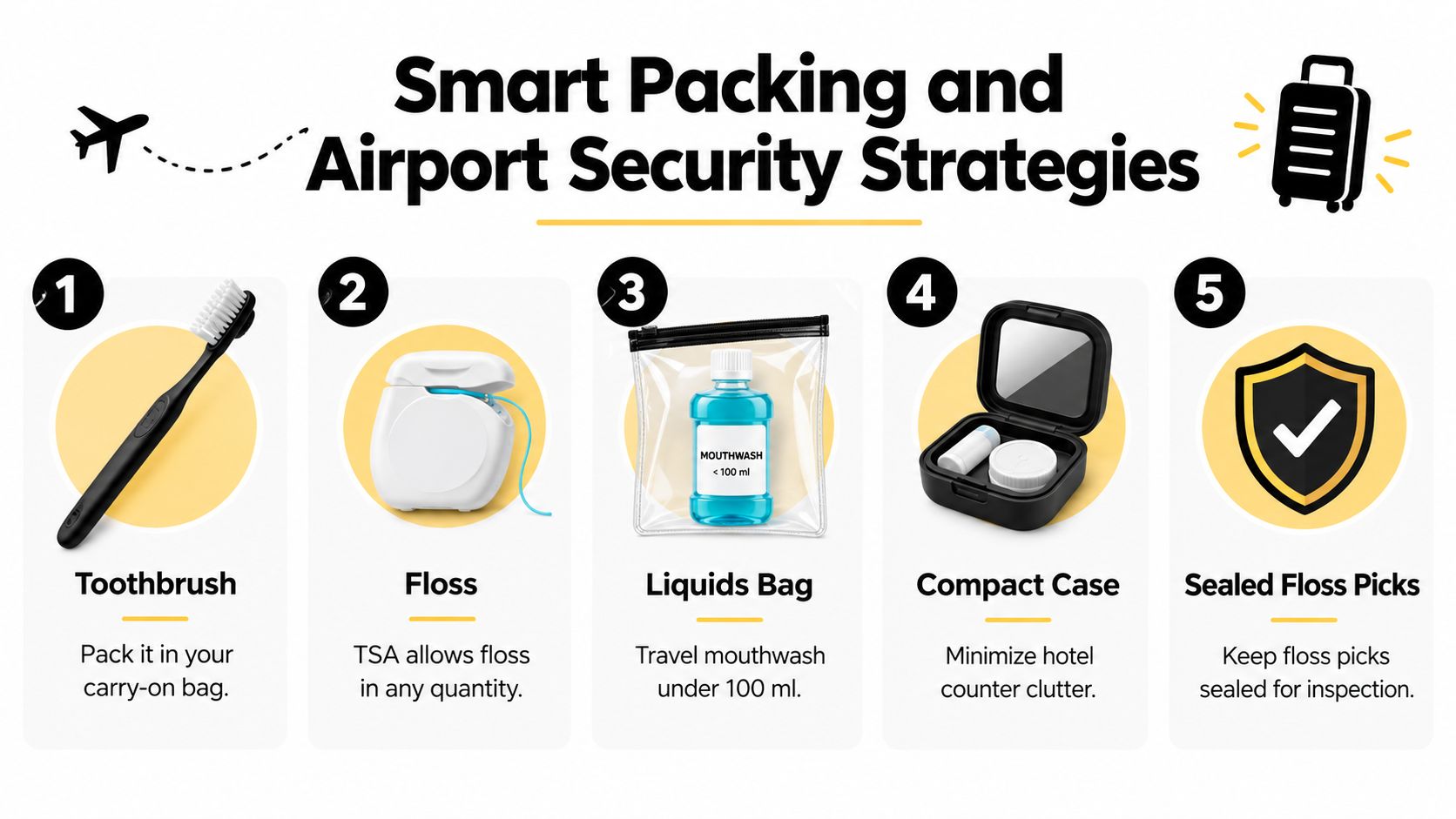
Airport rules are easier to understand when you separate solid floss from liquid oral-care products. Dental floss is generally treated as a solid and isn't subject to the TSA's 3.4-ounce, or 100 milliliter, liquid limit that applies to toothpaste and mouthwash, according to CVS travel oral-care guidance.
Use a simple carry-on system
- Put floss with your daily essentials. Store it beside your toothbrush, toothpaste, and any mouthwash so you see the complete routine at once.
- Keep liquids separate. Toothpaste and mouthwash must follow the applicable liquid rules, even though floss doesn't.
- Leave the dispenser identifiable. A labeled case or original package can make inspection straightforward.
- Protect opened products. Place a mini spool in a clean case and keep picks sealed until you need them.
- Make access intentional. A front pocket works better than the bottom of a packed suitcase when you plan to floss after eating.
For a broader checklist covering clothing, documents, electronics, and personal care, use this practical carry-on bag essentials guide from Urban Totes. For toothpaste-specific questions, Mouthology's explanation of TSA rules on toothpaste can help you keep the liquid portion of your kit organized.
Hotel bathrooms create a second hygiene challenge. Don't place floss directly on a wet counter, and don't return used floss to a clean dispenser. A small case with a secure lid keeps the routine tidy without adding much bulk.
Building a Consistent Travel Oral Care Routine
The most useful travel kit is the one that matches your habits at home. Start with the routine you already understand, then remove the obstacles created by travel. Keep the floss beside the toothbrush, use it at a predictable point in the day, and make the choice easy enough that a late arrival doesn't cancel it.
A simple framework can guide the format:
- Trip length: Use a mini spool for compact control, but bring enough thread for the entire itinerary. A short supply may suit a brief trip and create frustration on a longer one.
- Personal technique: Choose a traditional reel if you prefer wrapping and guiding the floss yourself. Choose picks if cutting and handling floss makes you skip the habit.
- Family needs: Pack separate, clearly contained options when children or multiple travelers share the toiletry space.
- Waste priorities: Favor reusable storage or biodegradable materials, then check the packaging and disposal directions.
Pair floss with brushing and the toothpaste you already tolerate well. Travelers who prefer fluoride-free care may choose a toothpaste featuring nano-hydroxyapatite, a mineral ingredient studied for its interaction with tooth mineral, but product selection should reflect personal preferences and advice from a dental professional. Mouth care products support a routine, while a dentist can address individual concerns.
Make disrupted days easier
For an early flight, floss before leaving home and keep a second option in the carry-on. After a long travel day, a short routine is better than abandoning the habit because the full toiletry bag is packed away. If a child resists, offer a pick or let them choose between two formats, then supervise the process calmly.
A compact bag can hold the essentials without becoming a cluttered drawer. For more organization ideas, this guide to packing tips for a men's toiletry bag from Grainmark Leather offers useful context for arranging small personal-care items.
Your decision doesn't need to be complicated. Pick the format that fits your trip, carry a clean backup when the supply is limited, and store it where your next brushing routine begins. Before your next departure, check the floss length, seal the case, and place it beside your toothbrush so the habit travels with you.
Choose your next travel format today. For a short trip, pack a compact mini spool or sealed picks. For longer travel, confirm the available floss length and bring a refill or backup. If reducing waste matters to you, compare the handle material, packaging, and disposal instructions before buying, then place the finished choice in your carry-on's most accessible pocket.
