

Posted by Sarah Collins
on September 28, 2026

The most popular advice about toothpaste no glycerin is also the least reliable: that removing glycerin automatically helps enamel remineralize. It sounds plausible, but the evidence points somewhere else. Glycerin is a common humectant that helps toothpaste stay smooth and moist, while enamel support depends much more on the formula's active mineral system, your saliva, acid exposure, and consistent brushing.
That doesn't make glycerin-free toothpaste pointless. Some people prefer its texture, ingredient philosophy, or simpler label. The useful question isn't “Is glycerin secretly damaging my teeth?” It's “What does this formula contain to support my oral-care goals, and will I use it consistently?”
The Truth About the Glycerin Free Movement
Glycerin-free oral care has become popular among shoppers who want shorter ingredient lists and a more minimalist bathroom routine. Search for “toothpaste no glycerin” and you'll often find a familiar warning: glycerin supposedly coats enamel and prevents minerals from reaching the tooth surface.
That warning has spread widely, but there's no peer-reviewed clinical evidence that glycerin in toothpaste blocks enamel remineralization. Independent dental summaries report that glycerin is water-soluble and cleared by saliva, rather than remaining as a persistent coating that interferes with mineral uptake. The American Dental Association's toothpaste guidance identifies glycerol, another name for glycerin, as a humectant used in toothpaste.
The practical takeaway: choosing glycerin-free is a preference, not a proven requirement for healthy enamel.
The movement still reflects a reasonable consumer instinct. People want to understand what they're putting in their mouths, avoid ingredients they consider unnecessary, and find fluoride-free or mineral-focused alternatives. Those priorities deserve a thoughtful answer, not fear-based marketing. A formula can feel cleaner to you without the omitted ingredient having been clinically harmful.
Look beyond the ingredient being removed
The more important label question is what replaces glycerin and which ingredient does the active work. A glycerin-free paste may use another humectant, a dry powder base, or a different texture system. None of those choices automatically determines its dental performance.
For a broader look at common toothpaste ingredients, you can read Mouthology's guide to ingredients in toothpaste. The strongest upgrade is usually moving from an ingredient-avoidance mindset to an ingredient-purpose mindset. Ask what each component does, especially the active ingredient responsible for enamel support.
What Glycerin Does in Your Toothpaste
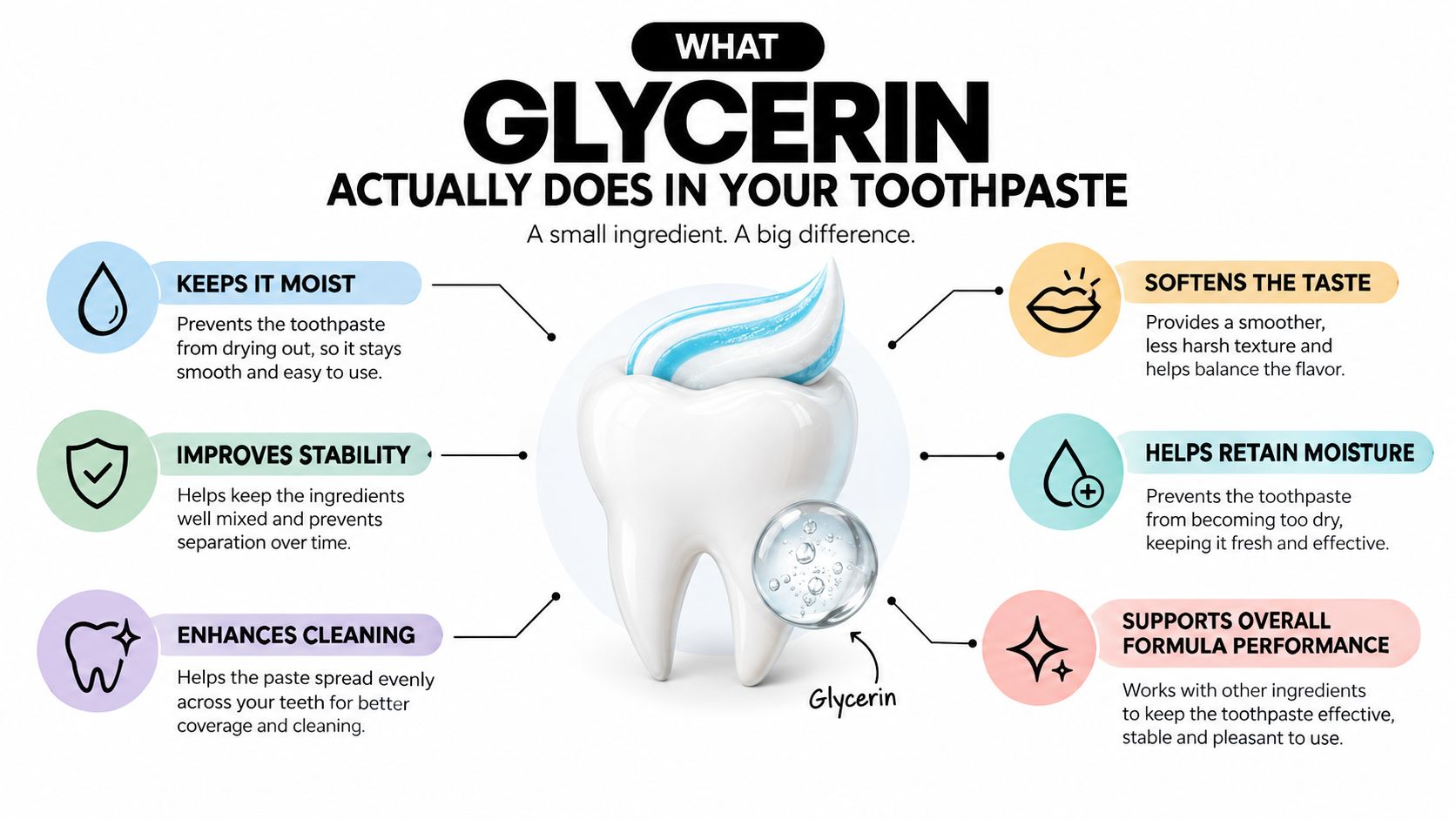
Glycerin, often listed as glycerol, is a humectant. It attracts and holds moisture, much like the moisture-keeping ingredients found in skincare lotions. A peer-reviewed review of toothpaste ingredients identifies glycerol as a humectant that helps reduce water loss.
Toothpaste is a coordinated mixture, not a collection of unrelated ingredients. Abrasives help clean, active ingredients support oral health, flavorings make brushing more pleasant, and the base keeps the formula evenly distributed. Glycerin helps that base remain usable from the first squeeze to the last.
Its role is functional, not anticavity
Glycerin does not provide fluoride activity or deliver minerals to enamel. Its contribution is mainly to the product's texture, stability, and handling. It can help toothpaste:
- Retain moisture: The paste is less likely to dry in the tube.
- Maintain texture: A smooth consistency spreads more easily over tooth surfaces.
- Support stability: Ingredients can stay suspended instead of separating.
- Improve handling: The product remains squeezable and easy to place on a brush.
- Add mild sweetness: Glycerin can improve taste without acting as fermentable sugar.
- Preserve usability: A consistent base makes daily brushing more predictable.
These are formulation benefits, not evidence that glycerin strengthens enamel. A glycerin-free formula therefore reflects a texture or ingredient philosophy preference. The active system still deserves closer attention than the humectant.
For a practical guide to common toothpaste components, Mouthology's toothpaste ingredient guide explains how to distinguish a functional base ingredient from an active oral-care ingredient. That distinction helps prevent a common label-reading error: expecting every ingredient to affect enamel directly.
Why formulators include it
A toothpaste without glycerin needs another method for managing moisture and consistency. Some formulas feel thinner or less creamy. Others use a dry base, changing how the product mixes with saliva during brushing.
Neither texture demonstrates better dental performance. It represents a different formulation choice. If you prefer a glycerin-free paste and use it consistently with thorough brushing, that preference can work well. The formula should still contain an active ingredient system suited to your oral-care needs.
Debunking the Remineralization Myth
The glycerin myth usually follows a simple chain of reasoning. Glycerin feels smooth, so it must leave a film. A film must block saliva minerals. Therefore, removing glycerin must improve remineralization.
The problem is that the middle step hasn't been demonstrated in controlled human research. Glycerin is water-soluble and rapidly cleared by saliva. Independent dental sources report no peer-reviewed evidence that toothpaste glycerin coats enamel or interferes with fluoride uptake, remineralization, or caries outcomes. The evidence-focused explanation of glycerin and remineralization addresses this distinction directly.
What actually supports mineral balance
Enamel is constantly exposed to opposing influences. Acids from foods, drinks, and bacterial activity can promote mineral loss, while saliva and active ingredients can support mineral replacement. The important factors include:
- The active mineral system. Fluoride and hydroxyapatite are examples of ingredients studied for enamel support.
- Saliva conditions. Saliva supplies minerals and helps regulate the environment around teeth.
- Acid exposure. Frequent or prolonged acid exposure can make mineral balance more challenging.
- Brushing consistency. A formula only helps when you use it regularly and brush effectively.
Removing a humectant doesn't automatically improve any of those factors. A glycerin-free paste with no established remineralizing active may be less useful for your goals than a conventional paste with a well-studied active system.
For readers exploring mineral-focused oral care, Yuve's dental aid on hydroxyapatite and calcium offers additional background on how mineral ingredients fit into oral-care discussions. It's still important to separate general education from personal dental advice, particularly if you have a high risk of decay or ongoing sensitivity.
You can also learn more about the process in Mouthology's explanation of tooth remineralization. The central idea is simple: the presence of a proven active matters more than the absence of glycerin.
Why the claim keeps returning
The claim survives because it connects a visible ingredient choice with a desirable outcome. “Free from” language is easy to understand, while active-system design requires more explanation. A product can be glycerin-free and still vary widely in its abrasives, mineral concentration, flavoring, detergent system, and preservation approach.
That's why the better question is not whether a tube excludes glycerin. Ask whether it contains an active ingredient with relevant evidence and whether its texture encourages you to brush thoroughly every day.
Benefits and Trade-Offs of Glycerin Free Formulas
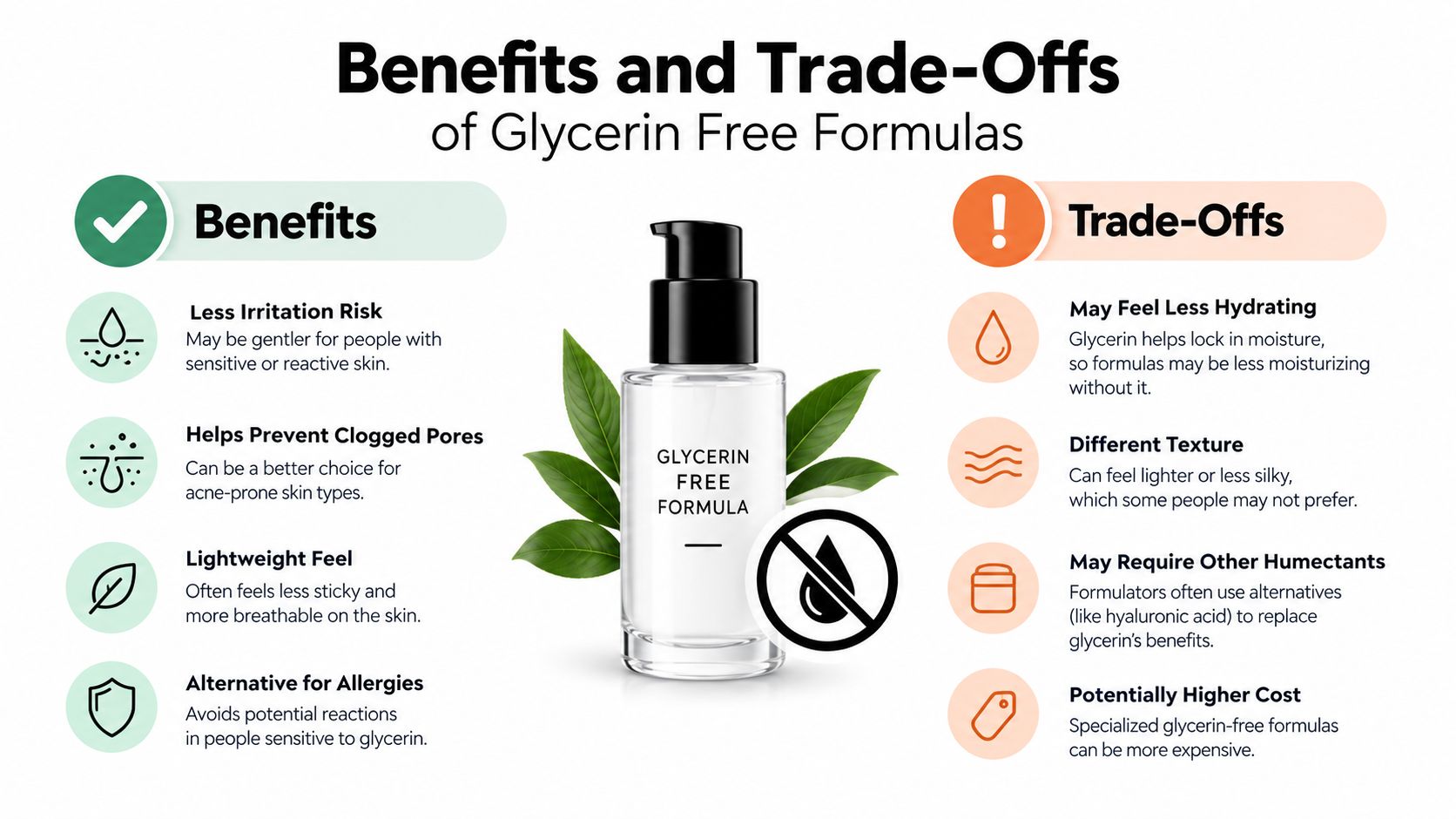
A glycerin-free formula can be a perfectly reasonable choice, even when glycerin itself isn't a proven dental concern. The benefit may be personal rather than clinical. Some people prefer a less slick mouthfeel, a shorter ingredient list, or a product aligned with a minimalist lifestyle.
The sensory experience can differ from conventional toothpaste. Glycerin-free pastes may feel thinner or more fluid, and some create less of the familiar creamy coating. Depending on the formula, the product may also have different storage and shelf-life characteristics after opening.
Reasons people choose them
- Minimalist preference: Some shoppers want fewer formulation aids and a label that feels easier to understand.
- Texture preference: A lighter paste may feel more natural to people who dislike a rich, slippery texture.
- Lifestyle alignment: Glycerin-free products may fit a broader vegan, low-waste, or ingredient-conscious routine, depending on the full formula and packaging.
- Routine satisfaction: If the taste and feel make brushing more pleasant, that can support better consistency.
The trade-offs deserve equal attention. Glycerin contributes to smoothness and moisture retention, so removing it can require other ingredients or a different format. A dry powder, tablet, or thinner paste may feel less familiar, and a new texture can take time to get used to.
A useful rule: choose the formula you'll use correctly and consistently, not the label that makes the boldest promise.
Compare the whole experience
A conventional toothpaste may offer a creamy, stable paste with familiar foaming. A glycerin-free alternative may offer a simpler-feeling base but require more attention to storage or dispensing. Neither format wins by default.
Look at the active ingredient, brushing comfort, flavor, packaging, and how the product works for everyone in your household. A parent choosing a children's formula, for example, may care more about age-appropriate use and a gentle taste than whether the tube includes a particular humectant. Someone with sensitivity may prioritize a mineral active and low-irritation formula over a glycerin-free claim.
The best choice is the one that balances evidence, comfort, and personal values. Glycerin-free can satisfy a preference, but it shouldn't distract you from the ingredients that have a direct oral-care purpose.
Why Active Ingredients Matter More Than the Base
Glycerin-free is not automatically a stronger toothpaste choice. The base mainly controls texture, moisture, and dispensing, while the active system determines what the formula is designed to do. For enamel support or sensitivity care, start with the active ingredient rather than treating the absence of glycerin as the main benefit.
Nano-hydroxyapatite, often abbreviated as nHA, is a mineral-based active used in fluoride-free oral-care formulas. Its appeal comes from its similarity to the mineral structure in teeth. A 2021 review of hydroxyapatite in oral care describes how nano-hydroxyapatite may support enamel remineralization and reduce hypersensitivity through mineral deposition and tubule occlusion, as discussed in a review of hydroxyapatite in oral care.
How hydroxyapatite works
A hydroxyapatite formula supplies mineral particles to the tooth surface. Those particles can support mineral deposition and help occlude exposed dentinal tubules, much like filling tiny open channels that contribute to sensitivity. Researchers therefore study the ingredient for enamel support and sensitivity reduction.
A randomized clinical trial reported statistically significant reductions in sensitivity scores within 30 seconds of biomimetic hydroxyapatite application, according to the randomized clinical trial report. The same 18-month randomized, double-blind trial involving 194 adults compared toothpaste containing 10% hydroxyapatite with toothpaste containing 1,450 ppm sodium fluoride. Mean DMFS increment was 0.02 in the hydroxyapatite group and 0.31 in the fluoride group, while 89.3% of the hydroxyapatite group showed no increase in caries experience.
These findings concern hydroxyapatite, not glycerin. They show why particle behavior and active delivery deserve more attention than a simple ingredient exclusion.
The formula matters as a system
Performance depends on factors such as mineral load, particle design, contact time, and brushing adherence. A hydroxyapatite toothpaste may include glycerin and still center its formula on a mineral active. A glycerin-free toothpaste may contain too little of a relevant active to match your goals.
Glycerin-free can be a reasonable texture or ingredient-philosophy preference. It is not, by itself, evidence of better remineralization. Evaluate the complete formula, especially the active system and how reliably you can use it.
How to Read Labels and Choose the Right Paste
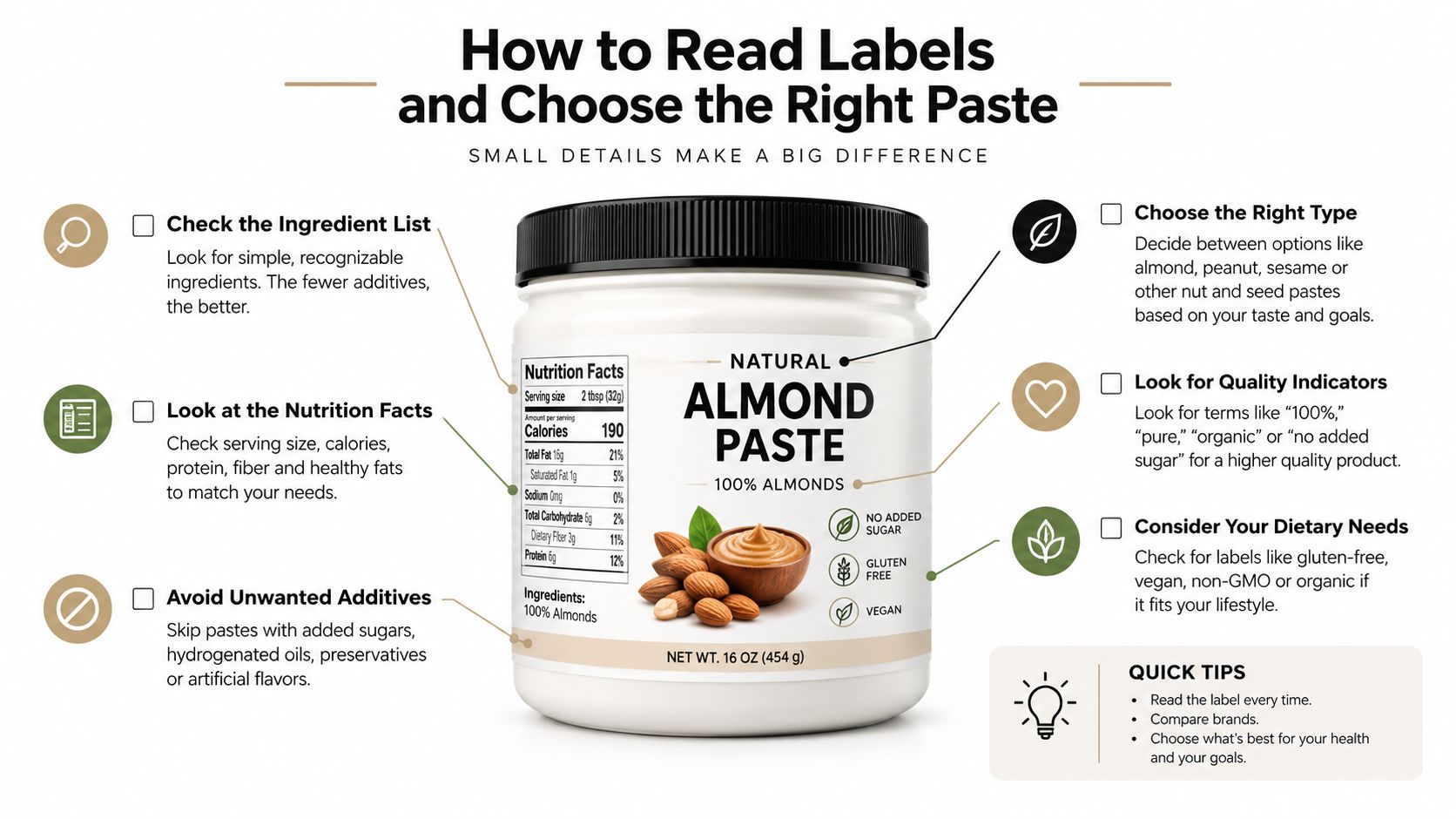
Ingredient labels become easier to understand when you read them in categories rather than as a long string of unfamiliar names. Start with the active ingredient, then examine the base, cleaning agents, flavoring, and any ingredients that matter to your household.
Begin with the active
Look for the ingredient the product uses to support enamel or sensitivity goals. A fluoride toothpaste will identify its fluoride active and concentration according to the relevant labeling requirements. A fluoride-free mineral formula may identify hydroxyapatite, including a stated concentration when the manufacturer provides one.
A 2023 randomized trial found strong controlled-study performance for a 10% hydroxyapatite toothpaste compared with a 1,450 ppm sodium fluoride toothpaste, but that evidence applies to the tested formulation, not every product using the word hydroxyapatite. The published trial details can help you see why ingredient identity alone isn't enough.
Then inspect the supporting ingredients
- Find humectants: Glycerin or glycerol are common, but sorbitol and xylitol may also help manage texture or sweetness. Their presence doesn't tell you whether the formula supports enamel.
- Check the cleanser: Abrasives such as silica or calcium carbonate help remove surface deposits. The right level depends on how the product is intended to be used.
- Consider foaming agents: Sodium lauryl sulfate, or SLS, creates foam. Some people prefer to avoid it because oral tissues can feel irritated by particular formulas.
- Review flavoring: Strong mint, essential oils, and other flavor components can affect comfort, especially for children or people with sensitive mouths.
- Match the age group: Children's products should include clear use instructions and be appropriate for the child's stage. Don't assume “natural” means suitable for swallowing in unlimited amounts.
Make the label match your priorities
If you want glycerin-free toothpaste, confirm that the ingredient list excludes glycerin and glycerol. Then check what replaced its moisture-retention role and whether you're comfortable with the resulting texture and storage instructions.
If you're shopping for a family, consider taste, packaging, active ingredients, and ease of use together. Mouthology's 10% nano-hydroxyapatite toothpaste is one example of a fluoride-free mineral formula that lists glycerin among its ingredients. That illustrates the central point: a formula can use glycerin as a base ingredient while focusing on hydroxyapatite as its active system.
Building a Modern and Effective Oral Care Routine
A modern oral-care routine starts with the active ingredient, then accounts for texture, comfort, and daily habits. Glycerin-free toothpaste can suit someone who prefers a thinner, simpler-feeling base, but it is not automatically more effective.
Use this decision framework:
- Choose your active system. Fluoride and hydroxyapatite support different product preferences, so consider your dental guidance and decay risk before focusing on the base.
- Choose your texture. Glycerin-containing formulas often feel smooth and familiar. Glycerin-free products may feel thinner or less creamy.
- Check household needs. Children, people with sensitive mouths, and those with a higher risk of decay may need product advice from a dentist or dental hygienist.
- Use the product consistently. A toothpaste that stays in the cabinet cannot contribute to your routine, whatever its ingredient list says.
- Keep brushing mechanics strong. Brush gently and thoroughly, clean between teeth, and replace worn tools as needed.
For a general overview of toothpaste categories and active ingredients, consult this dental association resource on brushing and toothpaste. Persistent sensitivity, visible changes, or enamel concerns deserve a professional assessment rather than ingredient elimination alone.
Your best formula combines a relevant active, a comfortable texture, and habits you can maintain.
A minimalist glycerin-free paste may feel right for one person. Another may choose a hydroxyapatite formula that includes glycerin because its texture makes regular brushing easier. Both choices can be reasonable when the complete label, rather than a viral claim, guides the decision.
Mouthology's 10% nano-hydroxyapatite toothpaste provides one example of a fluoride-free mineral formula that lists glycerin among its ingredients. Its label shows why the base and active system should be judged separately: glycerin can affect feel, while hydroxyapatite serves as the featured mineral ingredient.
To change your routine, write down the active ingredient and its concentration from your current tube before shopping. Compare that information with other formulas, then choose the product you can use consistently and brush twice daily with a gentle technique. Ask a dental professional about fluoride-free or sensitivity-focused options when you need individual guidance.
