

Posted by Sarah Collins
on August 25, 2026

You've brushed carefully, rinsed, and still notice a faint film on your tongue or a little morning breath. That's the moment many shoppers start looking at a tongue scraper Oral-B option and wondering whether a separate tool will make a meaningful difference, or add another item beside the sink.
The short answer is practical. Tongue scraping can make the mouth feel cleaner and can reduce odor-related gases in the short term, but the shape of the edge, the pressure you use, and the material you choose all affect comfort and consistency. An Oral-B plastic scraper is one reasonable format, not the only answer.
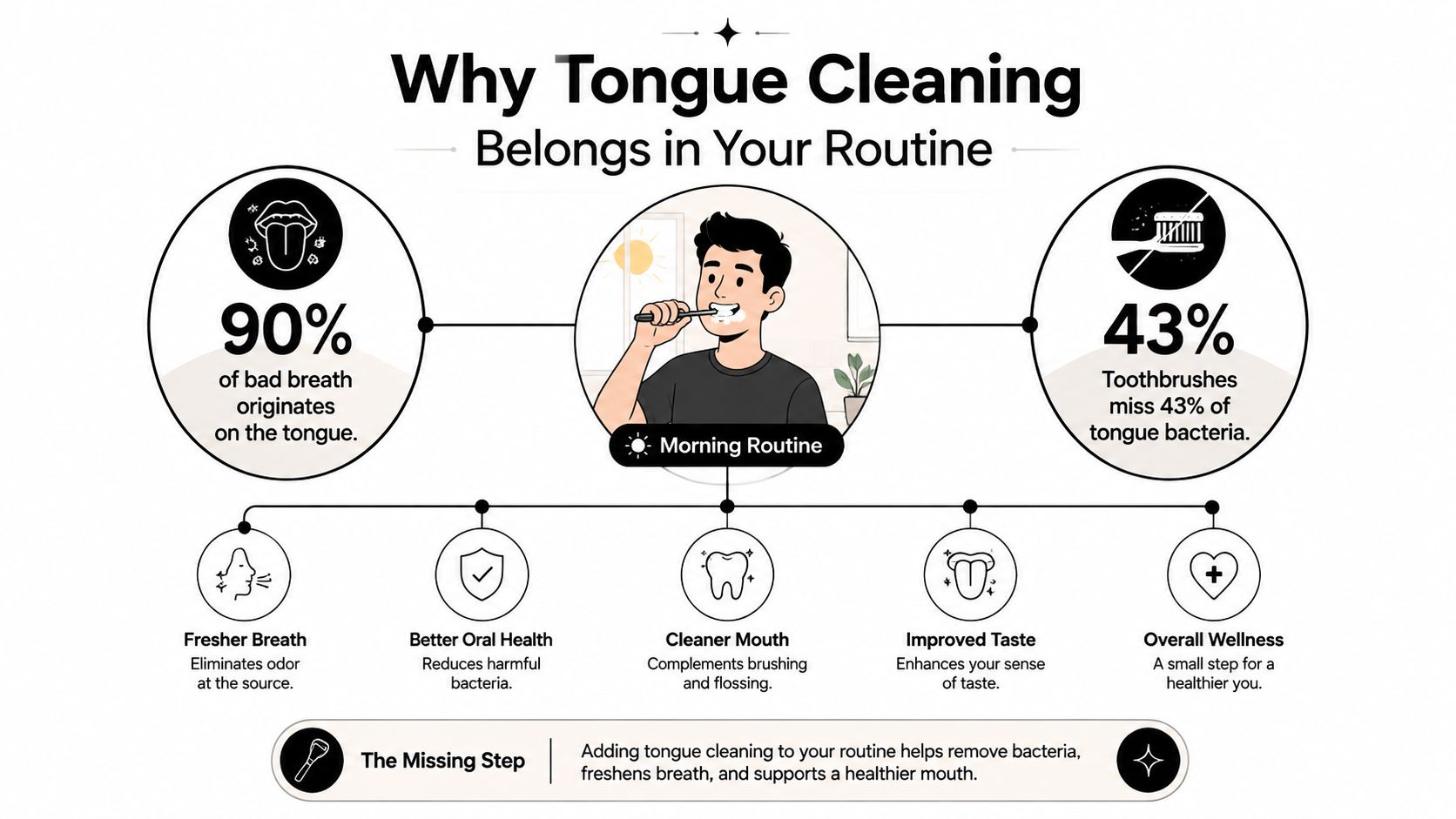
Why Tongue Cleaning Belongs in Your Routine
Your tongue isn't a smooth tile. Its surface has papillae, tiny structures that create a textured area where food particles, shed cells, and coating can collect. A plush carpet holds more debris than a hardwood floor, and the tongue works more like the carpet.
That helps explain a familiar morning experience. You can brush your teeth thoroughly and still feel a layer on the tongue because a toothbrush's bristles may not collect and remove coating efficiently, particularly toward the back of the tongue. A dedicated scraper uses a broad edge to gather that material and pull it forward in one controlled pass.
The coating matters because odor-producing compounds can form where debris and bacteria remain. Clinical research has linked mechanical tongue cleaning with reduced oral malodor and improved tongue coating, while a Cochrane review found a statistically significant, short-term reduction in volatile sulfur compounds compared with toothbrush use, although the review described the evidence as weak and unreliable Cochrane-indexed evidence on tongue cleaning.
A small gap in a familiar routine
After scraping, many people notice a fresher mouthfeel after rinsing. Some also find that food tastes clearer when a layer of coating has been removed. A controlled study found that taste improved after tongue brushing or scraping, especially with the scraper, even though the bacterial reduction was negligible, under 0.5 log controlled tongue-cleaning study.
That distinction is useful. Tongue cleaning is best viewed as a comfort and breath step that complements brushing and flossing, not as a replacement for either one. For a fuller explanation of the practical benefits, see this guide to the benefits of tongue scraping.
Practical rule: If your tongue feels coated or your breath seems stale after brushing, a gentle scraper can fill a gap that brushing alone may leave behind.
What the Oral-B Tongue Scraper Actually Is
The Oral-B tongue scraper is a small, curved plastic tool designed to sit across the tongue and sweep coating forward. It has a handle, a slightly arched head, and a cleaning edge shaped to follow the tongue's natural curve rather than pressing into it like a flat blade.
This format is lightweight and easy to hold. The plastic construction also tends to feel less cold and less intimidating than metal, which can matter if you have a sensitive gag reflex or are new to tongue cleaning.
Reading the shape
Many tools in this category use two cleaning surfaces. One side has a narrower ridge for more targeted contact, while the wider curved edge covers more of the tongue in fewer strokes. Neither side needs force. The edge should glide over the surface and collect coating, not scrape as though you're trying to polish it.
The handle is shaped for control, often with a thumb area that helps prevent slipping when the tool is wet. The angled head follows the tongue's curve, so you shouldn't need to open your jaw unusually wide or stretch the tongue uncomfortably far.
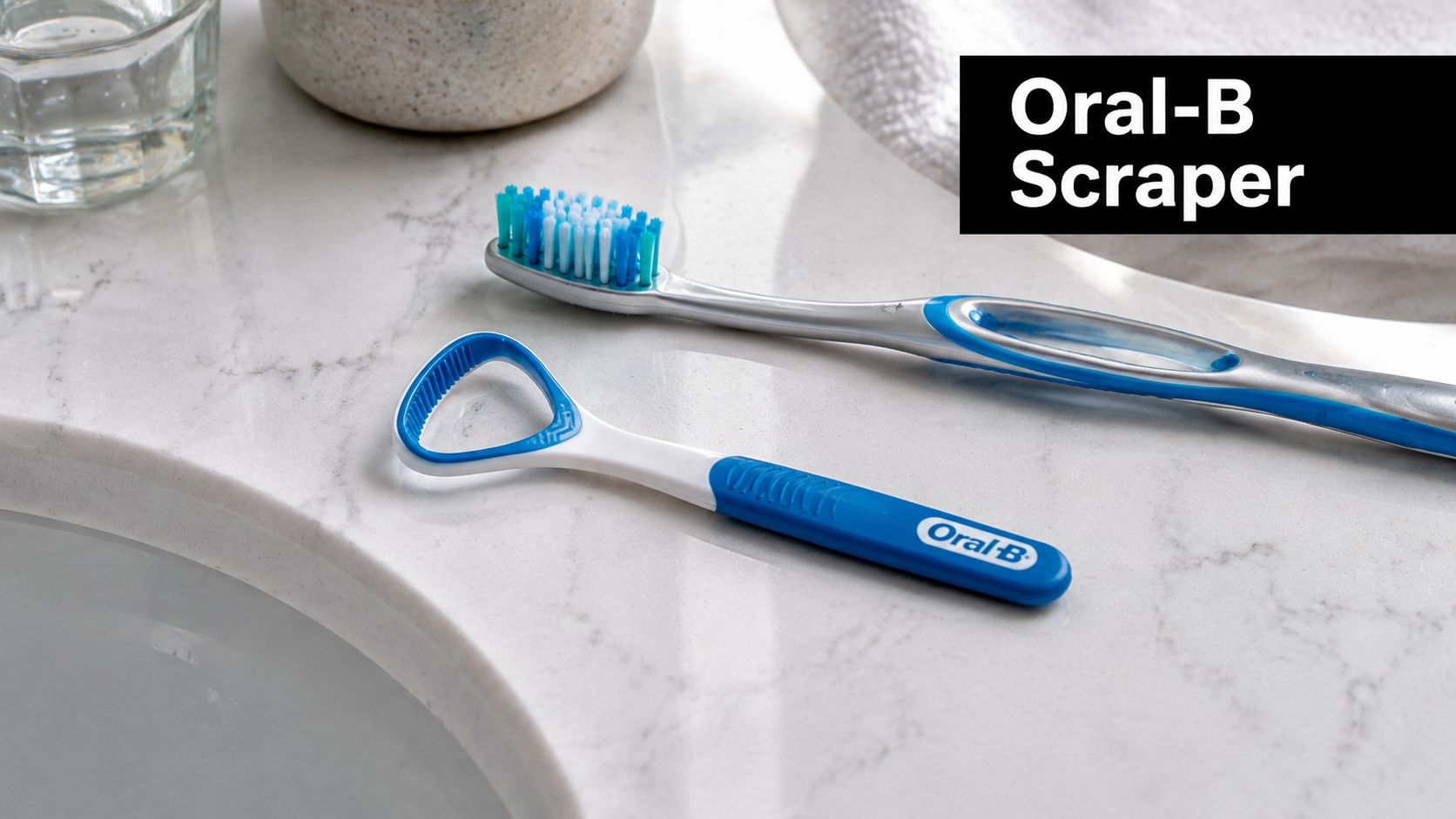
A toothbrush used on the tongue can still be useful, especially if you don't have a scraper. The difference is in the motion. Bristles brush across the surface and may move residue around, while a scraper's edge gathers it in a forward sweep. Research comparing a toothbrush with a tongue-cleaning feature and a conventional commercial scraper found similar short-term outcomes for breath improvement and tongue microbiota, so convenience and comfort remain important parts of the decision comparative tongue-cleaning research.
If you're also exploring botanical oral-care ingredients, a separate resource on how to use organic clove oil can help you understand safe handling and context. Clove oil isn't a substitute for a tongue scraper, and concentrated oils shouldn't be applied casually inside the mouth.
How to Use a Tongue Scraper Safely
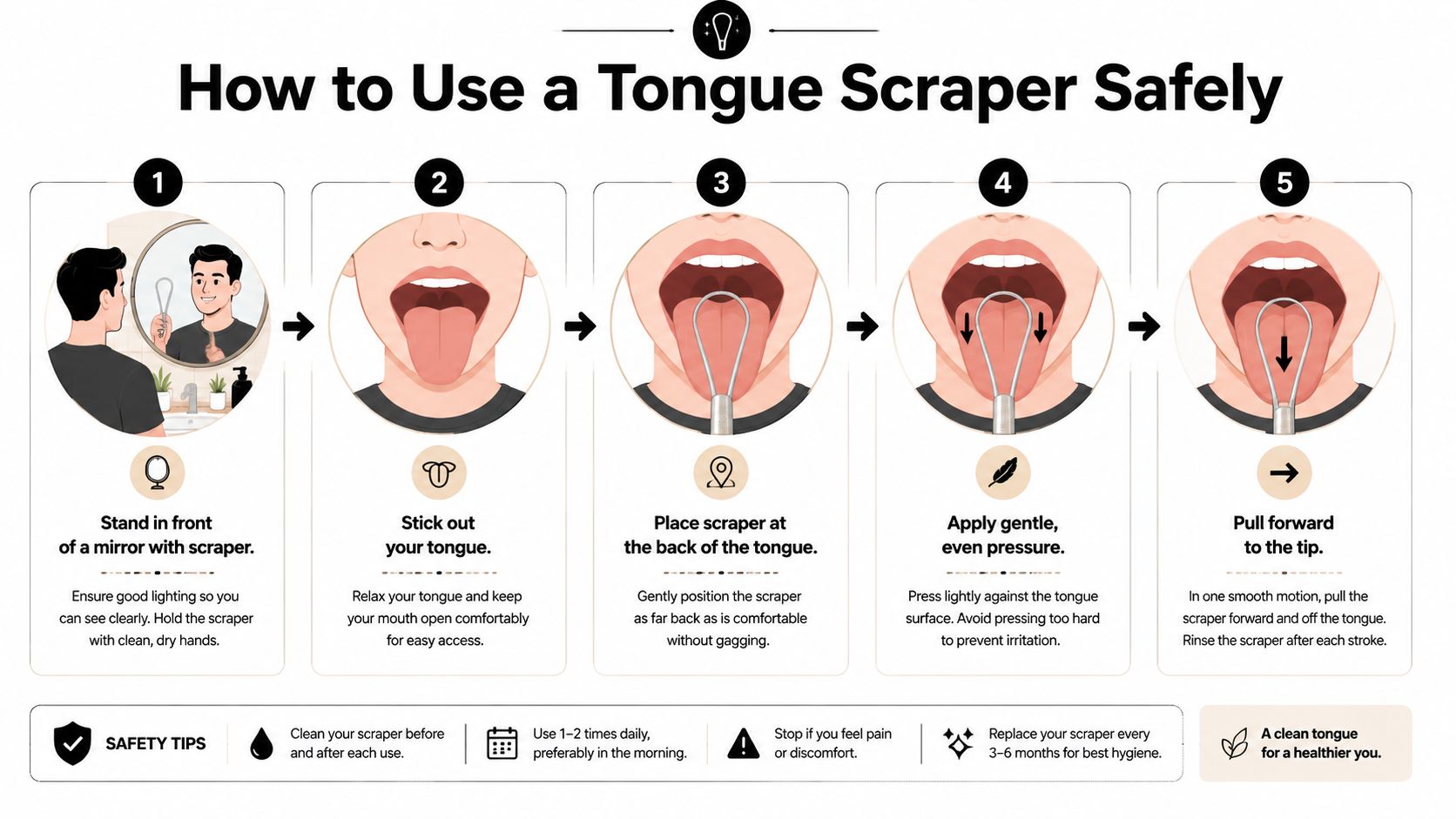
A tongue scraper works best when you treat it like a squeegee, not a wire brush. The goal is to lift coating with light, even contact while leaving the underlying tissue comfortable.
Stand in front of a mirror and stick your tongue out fully. Start near the middle if reaching farther back makes you gag, then gradually explore a more posterior position as your comfort improves. Place the curved edge as far back as feels comfortable, never forcing it toward the throat.
A gentle sequence
- Set the position: Hold the scraper by its handle and place the edge on the tongue's surface.
- Use light pressure: Apply less force than you'd use to peel a sticker from a notebook. The scraper should contact the coating without digging in.
- Pull forward: Draw the tool in one smooth motion from the back toward the tip.
- Rinse between passes: Rinse away collected material before placing the edge back on the tongue.
- Finish with a rinse: Rinse your mouth with water or mouthwash, then clean and dry the tool.
Repeat the motion two to four times, stopping when the tongue feels cleaner. You don't need to chase every last trace of coating. Tongue tissue is more delicate than tooth enamel, and repeated back-and-forth scrubbing can cause irritation.
Finding a sustainable frequency
A once-daily morning routine is a sensible starting point, especially before eating or drinking. Clinical studies have also examined regimens used once or twice daily over periods ranging from one to four weeks, while consumer medical guidance describes scraping as generally safe when performed gently WebMD guidance on tongue scraping.
Use the scraper before brushing if that sequence feels convenient. It lets you rinse away loosened material instead of brushing it across the mouth. If the tool causes pain, bleeding, or lingering sensitivity, stop and ask a dentist or dental hygienist for advice. More pressure won't produce a better result.
For a simple walkthrough with additional technique guidance, use this resource on how to use a tongue scraper.
Plastic vs Copper vs Stainless Steel Scrapers
Material changes the experience more than many shoppers expect. Plastic feels light and forgiving, copper offers a firm traditional metal edge, and stainless steel brings durability with a neutral finish. The right choice depends on what you'll use comfortably and consistently.
| Material | Feel on Tongue | Durability | Cleaning Ease | Typical Cost |
|---|---|---|---|---|
| Plastic | Light, flexible, and generally gentle | Replaceable, with the edge able to flex or wear | Simple rinsing and washing | Lower |
| Copper | Firm, with a distinct metallic feel | Durable, but can tarnish | Requires regular rinsing and drying | Moderate |
| Stainless steel | Rigid, smooth, and somewhat heavier | Highly durable | Easy to sanitize, with many versions dishwasher-safe | Moderate to higher |
Plastic for a softer introduction
An Oral-B-style plastic scraper is often a comfortable starting point. It's lightweight, easy to handle, and less likely to feel cold in the mouth. The trade-off is that a thin plastic edge can flex when you press too hard, and plastic may eventually stain or lose its smooth cleaning feel. Those changes are signs to replace it, not reasons to apply more pressure.
Copper for a traditional, firm edge
Copper has a long association with Ayurvedic tongue-cleaning practices and offers a rigid edge that maintains consistent contact. It can bend rather than snap if accidentally bitten, but it may tarnish and leave a metallic taste that some people dislike. If copper appeals to you, inspect the edge regularly and keep it dry between uses. A dedicated option is this copper tongue scraper two-pack.
Stainless steel for durability
Stainless steel sits between the other two choices in feel. It's firm, durable, and easy to sanitize, but it can feel colder and heavier than plastic. That extra rigidity may suit someone who prefers a defined sweep across a heavily coated tongue, while a sensitive user may prefer the softer response of plastic.
Mouthology also offers stainless steel tongue scrapers and a tongue brush and scraper kit, giving shoppers another format to consider alongside Oral-B, copper, and other stainless steel tools. No material wins for everyone. The best scraper is the one whose edge feels smooth and whose handle lets you use gentle pressure.
What the Research Actually Shows About Effectiveness
The clearest benefit is short-term breath improvement. Volatile sulfur compounds, or VSCs, are gases associated with oral malodor, and a comparative clinical trial reported a 75% VSC reduction with tongue scraping, compared with 45% using a toothbrush comparative VSC trial. That result supports the practical reason people scrape: removing dorsal tongue coating can reduce the material that contributes to odor.
The same evidence shouldn't be stretched into a promise of all-day freshness. Another randomized study found that the immediate halitosis improvement from scraping lasted only up to about 2 hours randomized halitosis study. Breath can also reflect causes beyond tongue coating, so persistent odor deserves a dental conversation rather than increasingly forceful scraping.
Coating improves more reliably than bacterial counts
A controlled study found that tongue coating decreased significantly after two weeks of brushing or scraping, while bacterial reductions remained small, under 0.5 log cross-over tongue-cleaning study. That's an important translation for shoppers. The visible and sensory change may be more dependable than a deep change to the tongue's bacterial population.
Another PubMed-indexed study reported significant reductions in salivary Mutans Streptococci from 3.37 ± 0.71 to 2.27 ± 0.80 and Lactobacilli from 3.22 ± 0.85 to 2.32 ± 0.87 after tongue scraping twice daily for 7 days, with both changes reported as statistically significant at P = 0.000, along with reduced oral malodor seven-day tongue-scraping study.
Taken together, the evidence supports a modest, useful role. Scraping can improve coating and breath, but it isn't a substitute for brushing, flossing, dental examinations, or professional cleanings. The research also doesn't establish tongue scraping as a way to prevent cavities or gum disease.
Who Should and Shouldn't Use One
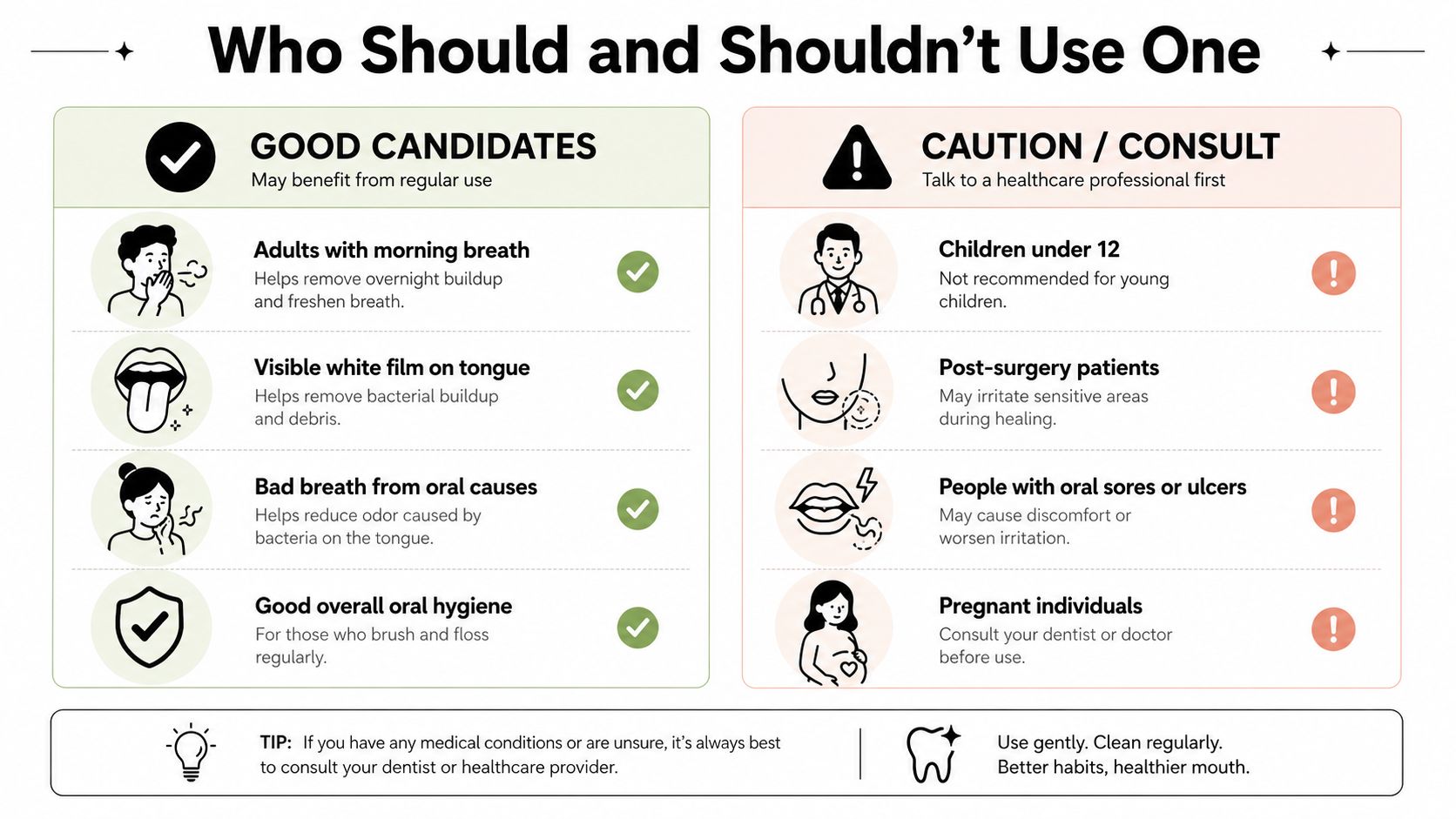
Most adults can try tongue scraping as a gentle addition to routine oral care, particularly if morning breath or a visible coating bothers them. The screening question is simple: can you use the tool without pain, bleeding, or persistent irritation?
People with a sensitive gag reflex may find a smaller plastic head easier to control than a wide metal scraper. Someone with a firm, stubborn coating may prefer a rigid copper or stainless steel edge, provided the surface is smooth and the user doesn't compensate with excessive pressure.
Pause when tissue is vulnerable
Wait for healing or ask a dental professional before scraping if you have active oral sores, a tongue piercing, or recent dental surgery. A diagnosed condition such as geographic tongue or oral lichen planus also deserves individualized guidance, since irritated tissue may react poorly to routine scraping.
Children need supervision and very light pressure. A child should be able to follow the instruction to pull forward gently and stop if the tool feels uncomfortable. The infographic may mention younger users, but the safest approach is to ask a pediatric dentist about readiness rather than relying on age alone.
Pregnancy doesn't automatically rule out tongue cleaning. Nausea and a stronger gag reflex can make the routine unpleasant, especially early in pregnancy, so use a smaller head, begin farther forward, and keep pressure minimal. Stop if scraping triggers vomiting or discomfort.
A tongue scraper should leave your mouth feeling cleaner, not tender. Discomfort is feedback to change the technique or pause.
If breath remains unpleasant despite consistent brushing, interdental cleaning, and gentle tongue care, arrange a dental checkup. Scraping can address coating-related odor, but it can't identify every reason breath changes.
Buying, Cleaning, and Replacing Your Scraper
Start at the point of contact. Choose a handle that stays secure when wet, a head that suits the width of your tongue, and an edge with no burrs, cracks, or rough spots. A scraper that feels awkward will probably spend more time in the drawer than beside the sink.
Oral-B tongue scrapers are commonly found in pharmacies and may appear alongside toothbrush products. Copper and stainless steel models are often sold through dental suppliers or online retailers. Availability varies, so compare the physical design rather than assuming a familiar brand guarantees the right fit.
Keep the tool clean
Rinse the scraper under warm water after every use. For plastic heads, wash with mild soap weekly and rinse thoroughly. Store any scraper in a clean, dry place, since trapped moisture can make the tool less pleasant to use and may encourage residue to remain on its surface.
Metal tools deserve particular inspection. Look for tarnish, pitting, sharp points, or roughened edges. Stainless steel is generally easy to sanitize, and some models are dishwasher-safe, but follow the manufacturer's care instructions instead of assuming every metal scraper belongs in the dishwasher.
Know when to replace it
Replace a plastic scraper around every 3 months, or sooner if its edge becomes dull, stained, cracked, or uneven. Metal versions can last a year or more, but longevity doesn't override inspection. A rough edge can irritate the tongue regardless of the material's age.
Use this quick decision checklist:
- Choose plastic if you want a lightweight, gentle tool and easy replacement.
- Choose copper if you prefer a firm traditional metal edge and don't mind occasional tarnishing.
- Choose stainless steel if durability, rigidity, and straightforward sanitation matter most.
- Choose a toothbrush tongue cleaner if convenience is more important than having a dedicated scraping edge.
- Choose a smaller head if gagging is your main concern.
Pick the format you can use gently and regularly. That matters more than finding a universal winner.
If you're ready to try tongue cleaning, begin with a smooth, comfortable scraper, use it once daily with light pressure, rinse it after every pass, and replace it when the edge changes. For ongoing bad breath, pain, sores, or unusual tongue changes, book an appointment with your dentist rather than scraping harder.
