

Posted by Sarah Collins
on September 11, 2026

Brushing after every meal isn't always better. After acidic foods, waiting 30 to 60 minutes can protect softened enamel, while immediate brushing after an erosive meal has been linked with up to 1.846 μm of tooth surface wear in laboratory conditions (peer-reviewed study).
That doesn't mean brushing is harmful or that you should leave food and plaque sitting on your teeth all day. It means timing matters. A toothbrush removes plaque effectively, but acid can temporarily make enamel more vulnerable to mechanical wear. The practical question isn't “Should you brush your teeth after every meal?” It's “What did you eat, and when is the safest time to brush?”
The Brushing After Every Meal Myth
The idea that brushing immediately after every meal is the gold standard sounds logical. Food has just entered your mouth, so removing it right away must be better, right? Not necessarily.
More brushing isn't automatically more protection. If your meal or drink was acidic, your enamel may be temporarily softened. Brushing at that moment adds mechanical friction to a surface that hasn't fully recovered. Mayo Clinic advises waiting an hour after acidic foods or drinks because saliva needs time to clear acid and enamel needs time to harden again (Mayo Clinic guidance).
The important distinction is between plaque removal and poorly timed scrubbing. Brushing helps remove plaque and food residue, but a clean mouth isn't achieved by pressing harder or reaching for the toothbrush after every bite. A gentle technique, a soft-bristled brush, and a schedule you can maintain matter more than reacting to every meal with immediate brushing.
Two questions make the decision easier
Before you brush, ask:
- Was the meal acidic? Think soda, sports drinks, citrus juice, sour candy, citrus fruit, wine, tomato-based foods, or vinegar-heavy dishes.
- How long ago did you eat? If acid was involved, saliva needs time to wash it away and help the enamel surface recover.
After a neutral meal, brushing soon afterward is generally acceptable if you're gentle. After an acidic meal, rinse with water, wait, and then brush. That simple split is more useful than a blanket rule that treats a bowl of rice and a glass of soda exactly the same way.
Practical rule: Don't count meals. Classify the exposure, then choose the timing.
The better question is not whether you should brush after every meal. It's when you should brush after each type of meal.
Why Acids Soften Your Enamel
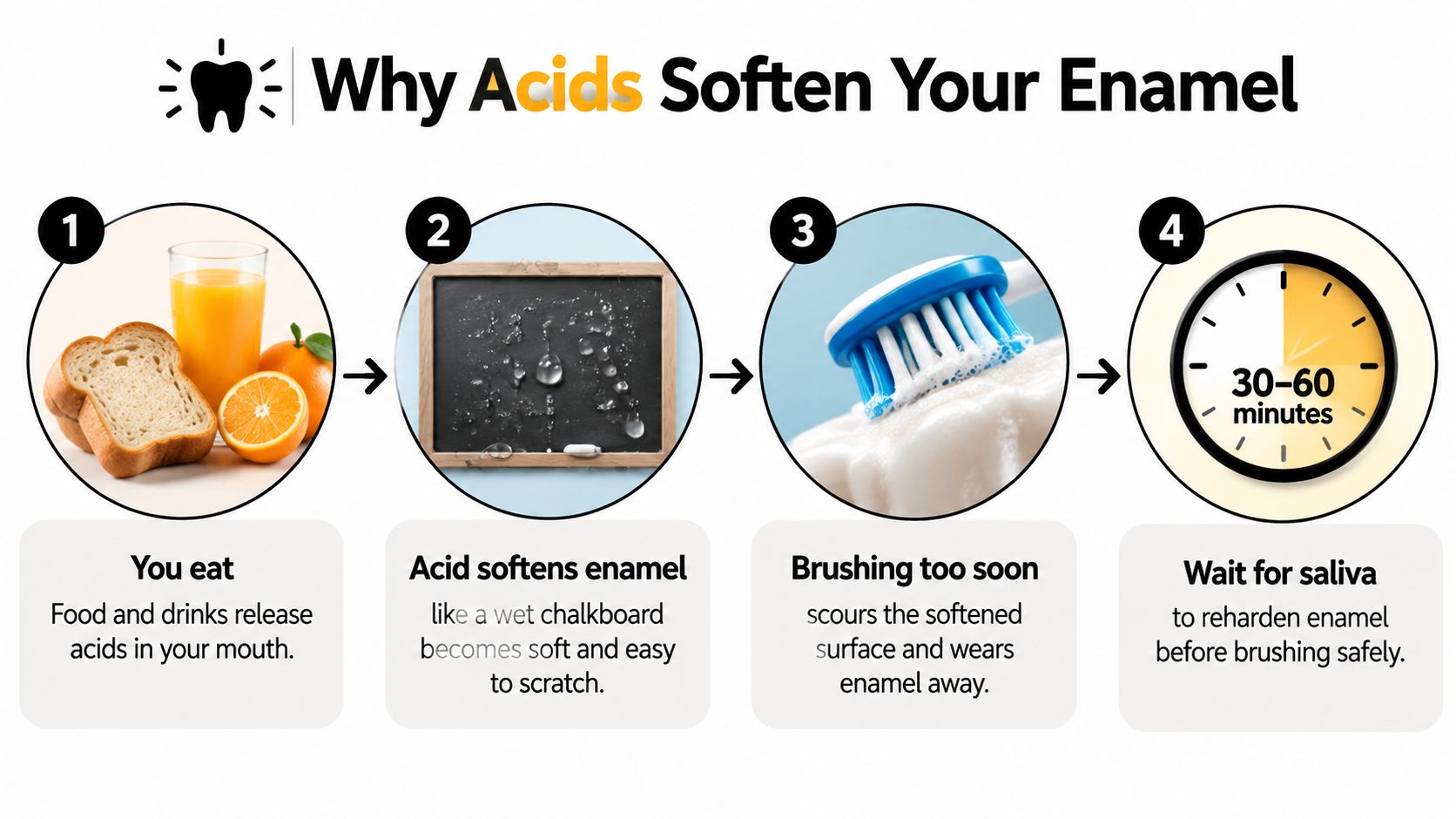
Enamel is hard, but it isn't invulnerable. Acidic foods and drinks temporarily pull the mouth away from its usual balance. As the acid interacts with the enamel surface, minerals can be lost from that outer layer. Dentists call this process demineralization.
A useful analogy is a chalkboard. A dry chalkboard can tolerate firm writing and erasing. A wet chalkboard is softer, and aggressive scrubbing can damage its surface. Acid-exposed enamel is similar. The acid doesn't make your teeth disappear, but it can leave the surface more vulnerable for a while.
The sequence looks like this:
- You eat or drink something acidic.
- Acid temporarily softens the enamel surface.
- Saliva dilutes and buffers the acid.
- The surface gradually hardens again.
This is why brushing immediately after acidic exposure can be different from brushing after a neutral meal. The toothpaste and bristles are designed to clean teeth, but brushing still involves physical contact. On a softened surface, that contact may create more wear than it would after recovery.
Everyday acid can be easy to miss
Many people recognize soda and sour candy as acidic. Coffee, citrus juice, sports drinks, and fruit can also contribute. Even a drink that doesn't taste sharply sour may still expose your teeth to acid.
If coffee tastes unpleasantly sharp, adjusting its brewing or serving conditions may help. This guide on how to make coffee less sour offers practical context about coffee acidity, which can help you think more carefully about what you're sipping.
A 2016 laboratory study found that brushing after erosive breakfast or dinner exposure produced up to 1.846 μm of tooth surface loss (study details). That doesn't mean one rushed brushing session will visibly damage your smile. It shows why repeated timing matters, especially when acid exposure and forceful brushing occur together.
For a broader explanation of everyday enamel wear, see what causes tooth enamel loss.
The 30 to 60 Minute Wait Rule Explained
The 30 to 60 minute wait is a practical buffer after acidic food or drink. Saliva needs time to dilute and neutralize acids, while the enamel surface begins to recover. Mayo Clinic specifically recommends waiting an hour after soda, sports drinks, citrus juice, sour candy, and similar acidic exposures (Mayo Clinic advice).
You don't need to stare at the clock after every bite. Use the range according to the exposure.
Use the shorter end for mild exposure
After a mildly acidic meal, waiting around 30 minutes may be reasonable. For a meal built around citrus, soda, wine, vinegar-heavy foods, sports drinks, or sour candy, waiting closer to 60 minutes is the more cautious choice.
Common triggers include:
- Fruit and juice: Citrus fruits, citrus juice, and fruit-based drinks.
- Carbonated drinks: Soda and sparkling beverages.
- Sports beverages: These can combine acidity with frequent sipping.
- Sour foods: Sour candies and strongly tart snacks.
- Meal ingredients: Tomatoes, wine, and pickled foods.
- Dressings: Vinegar-based dressings and marinades.
Make the waiting period useful
Rinse with plain water after eating. Drinking water also helps clear leftover acids and food particles. Sugar-free gum can stimulate saliva, and xylitol gum is a practical option when brushing isn't convenient.
A small piece of cheese or another non-acidic food may also help end an acidic eating episode. Avoid replacing one acidic exposure with another, such as rinsing with lemon water or apple cider vinegar.
For more timing guidance that fits around morning, midday, and evening habits, review this best time to brush your teeth guide.
Quick check: Acidic taste or drink? Rinse, wait, then brush. Neutral meal? Gentle brushing soon afterward is usually acceptable.
A 2024 scoping review adds an important nuance. In the studies it examined, brushing immediately after an erosive acid challenge with fluoride-containing toothpaste did not increase erosive tooth wear, and the review noted that delaying brushing may not always be more protective than brushing promptly (2024 scoping review). If you have enamel erosion, sensitivity, braces, or a dentist's individualized instructions, follow that professional advice rather than applying a universal rule.
Acidic Meals Versus Neutral Meals
The food on your plate changes the answer. A meal of chicken, rice, and plain vegetables creates a different brushing situation from a meal accompanied by soda, citrus, or vinegar dressing.
Acidic meals can leave enamel temporarily softened. After them, rinse with water and wait before brushing. Neutral meals generally don't create the same acid-softening concern, so brushing afterward is usually fine when you use light pressure and a soft brush.
Taste offers a useful everyday clue. If your mouth feels tart, sharp, or tangy after eating, treat the meal as acidic. If it feels neutral, standard brushing timing is usually less concerning.
| Meal Type | Examples | Recommended Action |
|---|---|---|
| Acidic | Citrus fruit, soda, wine, tomato dishes, vinegar dressing, sour candy | Rinse with water, wait about 30 to 60 minutes, then brush gently |
| Mildly acidic | Fruit tea, coffee, sparkling water, yogurt with berries | Rinse, allow recovery time, and brush after the wait |
| Neutral | Chicken, rice, nuts, plain vegetables, lean proteins | Gentle brushing soon afterward is generally acceptable |
| Mineral-rich or non-acidic | Cheese, unsweetened dairy, nuts | Brush according to your normal routine, without aggressive pressure |
Foods people often underestimate
Sparkling water can seem harmless because it contains no sugar, but carbonation can make a drink acidic. Fruit teas may also have a tart profile. Sports drinks deserve attention because people often sip them over time, extending the period of exposure.
That doesn't mean you need to avoid every acidic food. It means you should notice patterns. A glass of orange juice at breakfast, lemon in water throughout the morning, and a vinegar dressing at lunch create a different routine from occasional acidic food consumed with water.
The rule of thumb is simple: tart or tangy means rinse and wait; neutral means brush gently when convenient.
Your Practical Post-Meal Brushing Routine
A useful routine protects enamel without turning oral care into a series of alarms.
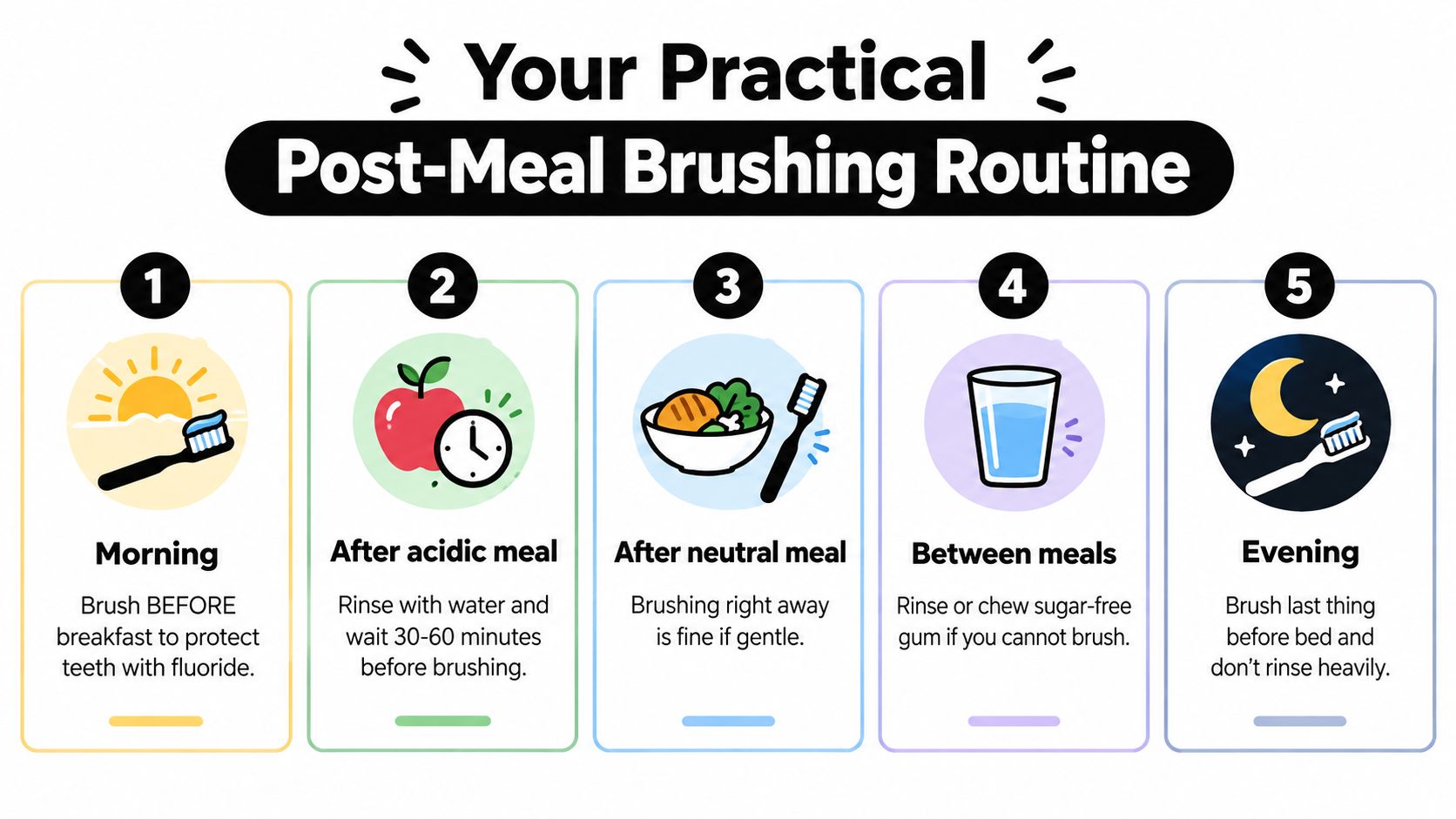
Start in the morning by brushing before breakfast. This places brushing before coffee, juice, or other breakfast acids. ColumbiaDoctors says many dentists suggest brushing before breakfast or waiting about 30 minutes after eating because foods such as fruit, soda, juice, and sour candy can soften enamel (ColumbiaDoctors guidance).
At midday, adapt to the meal:
- Neutral lunch: If you've eaten chicken, rice, nuts, plain vegetables, or lean protein, you can brush afterward with a soft-bristled brush and gentle pressure.
- Acidic lunch: Rinse with water first. If brushing isn't practical, chew sugar-free gum, preferably with xylitol, and brush after the 30 to 60 minute wait.
- No brush available: Water is still useful. A fluoride mouthwash can fit into the gap, but don't use an acidic drink as a rinse.
- Between meals: Keep plain water nearby, especially if you tend to sip coffee, fruit tea, or sparkling water.
Keep the evening routine consistent
Nighttime deserves a reliable habit. Brush and floss before bed, using fluoride toothpaste if that's part of your dental routine. Saliva flow decreases during sleep, so cleaning away the day's plaque and food residue before bed is especially practical.
Use a soft-bristled toothbrush, a small amount of toothpaste, and light pressure. If you're looking for lower-waste accessories, eco-friendly floss options can help you keep daily interdental cleaning convenient.
Mouthology is one fluoride-free oral care option featuring 10% nano-hydroxyapatite formulations. Choose products based on your dental needs, ingredient preferences, and advice from your dental professional.
For the order of brushing, flossing, and other steps, this oral care routine order guide can help you build a sequence that's easy to repeat.
Screenshot rule: Rinse after acidic meals, wait 30 to 60 minutes, brush gently after neutral meals, and never skip the bedtime routine.
Common Brushing Mistakes After Eating
People can follow the right intention and still use the wrong sequence. The most common problems involve acid, pressure, and assuming brushing replaces every other part of oral care.
Mistake one, brushing immediately after acid
A toothbrush can add wear while enamel is temporarily softened. Rinse with water, wait, and then brush gently instead.
Mistake two, scrubbing with stiff bristles
Firm or medium bristles combined with heavy pressure can be unnecessarily abrasive. Pick a soft-bristled brush and use small, controlled movements rather than sawing back and forth.
Mistake three, using a large amount of whitening paste
Whitening products can contain polishing ingredients, and repeatedly pairing abrasive paste with acid exposure may be a poor habit. Use a pea-sized amount of fluoride toothpaste, follow the product directions, and let technique do the work.
Mistake four, rinsing with another acid
Lemon water and apple cider vinegar aren't neutral rinses. After acidic food, plain water is the safer default. If you use a mouthwash, choose an alcohol-free formula that fits your dental professional's advice.
Mistake five, skipping between-tooth cleaning
Brushing doesn't clean every contact between teeth. Daily flossing or another interdental tool removes residue from places bristles may not reach.
A case-control study found that brushing within 10 minutes of acid intake wasn't associated with erosive tooth wear after adjustment for dietary factors. Its reported odds ratio was 1.41, with a 95% confidence interval of 0.82 to 2.42, and the authors concluded that universal advice to delay brushing may not be substantiated (case-control study).
That finding is a reminder that dental advice isn't one-size-fits-all. The safest general habit remains gentle, consistent cleaning, while people with specific risks should ask their dentist for personalized timing.
A Real Day of Post-Meal Brushing
Consider a morning coffee and pastry. Coffee can be acidic, and the pastry may leave sticky residue. Instead of brushing the instant breakfast ends, the person rinses with water, waits around 45 minutes, and then brushes gently. If work starts immediately, sugar-free gum and water can cover the gap until brushing is practical.
Lunch is chicken and rice with plain vegetables. Because the meal is comparatively neutral, the person can brush gently after a short pause, or just keep the regular morning and evening brushing schedule if lunch occurs away from home.
Dinner is pasta with tomato sauce and wine. That combination introduces acidic ingredients, so the person rinses with water, waits about 30 minutes, and brushes as part of the bedtime routine. Flossing follows, and the toothbrush is finished for the day.
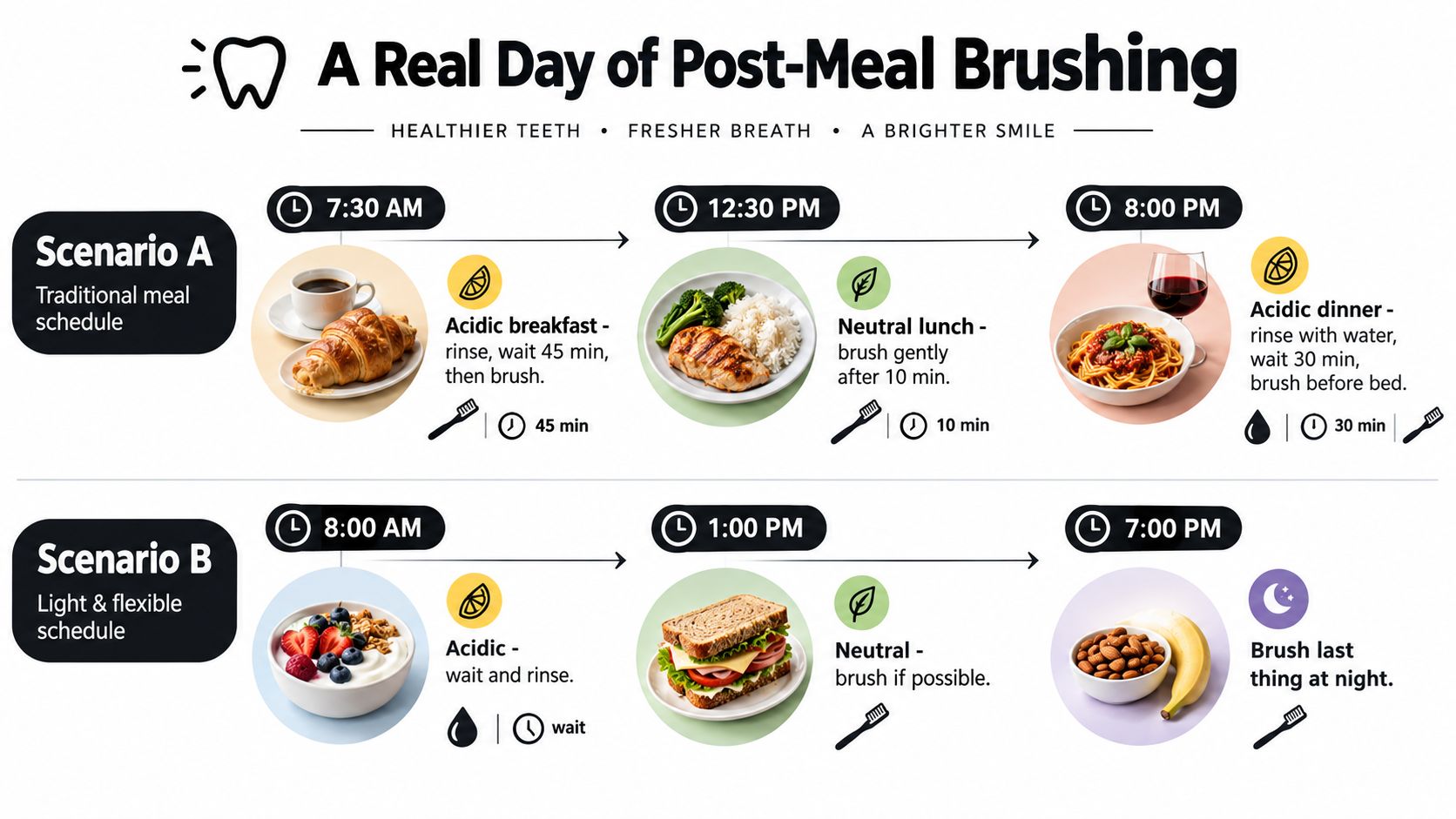
A different day might include soda with breakfast, citrus as a snack, a tomato-based lunch, and a vinegar-dressed salad at dinner. Brushing immediately after each exposure would create a repeated acid-and-scrubbing pattern. The person instead drinks water after each acidic episode, uses sugar-free gum when brushing isn't available, and waits before bringing out the toothbrush.
The key is sequence, not chasing a perfect number of brushing sessions. Water handles the immediate response, saliva gets time to work, and brushing happens when the enamel surface is less vulnerable.
Some meals still need judgment. Yogurt with berries may taste tart, while a sandwich may be neutral unless it includes pickles, tomato, or vinegar-based sauce. A late snack may be followed by the final bedtime brush, especially if it leaves food residue on the teeth.
Your day doesn't need to look identical to either example. Match the response to the meal, keep brushing gentle, and protect the bedtime routine.
Should You Brush Your Teeth After Every Meal
So, should you brush your teeth after every meal? Not immediately after every meal. Brush after neutral meals if that fits your routine, but after acidic foods or drinks, rinse with water and wait about 30 to 60 minutes before brushing.
The evidence isn't perfectly uniform. Laboratory research demonstrates measurable wear when brushing follows erosive exposure, while the 2024 scoping review found that fluoride toothpaste did not increase erosive wear in the studies it reviewed. The case-control evidence also cautions against treating the wait rule as an absolute instruction for every person and every meal.
A balanced routine looks like this:
- Morning: Brush before breakfast when possible.
- After acidic food or drink: Rinse with water, use sugar-free gum if useful, and wait before brushing.
- After a neutral meal: Brush gently if convenient.
- Every evening: Brush and floss before bed.
- If you have specific concerns: Ask a dentist or hygienist for advice for your enamel, gums, diet, and dental appliances.
You don't need fear or excessive force to care for your teeth. You need a soft brush, a calm technique, awareness of acidic exposures, and a routine you can repeat.
Use your next meal as a simple test. Notice whether it tastes tart or tangy, rinse with plain water if it does, and set a reminder for the appropriate wait before brushing. If you're experiencing sensitivity, enamel concerns, or uncertainty about fluoride-free products, schedule a dental appointment and take your current toothpaste and brushing routine with you so you can get personalized guidance.
