

Posted by Sarah Collins
on August 22, 2026

You notice your teeth look a little longer in the mirror. Cold water sends a quick sting through one tooth, and brushing near the gumline feels unexpectedly tender. A search for receding gums toothpaste seems like the obvious next step, but toothpaste can't rebuild gum tissue that has already moved away from a tooth.
It can still have a useful role. The right formula may help manage sensitivity, support plaque control, and reduce irritation around exposed surfaces. The key is matching the product to the problem instead of trusting a label that promises more than toothpaste can deliver.
Why Your Gums Are Receding and What Toothpaste Can Do About It
A cold drink causes a sharp twinge, or one tooth suddenly looks longer in the mirror. You may also feel a notch near the gumline. These signs can point to gum recession, but they can have other causes too, so toothpaste cannot replace a dental examination.
Gum recession is common across populations. A 2023 systematic review pooling 15 studies and 37,460 participants estimated overall prevalence at 78.16% using the minimum reported threshold and 84.92% at a 1 mm cutoff, concluding that more than two-thirds of the global population is affected (systematic review indexed by PubMed). A 2025 systematic review and meta-analysis reported prevalence estimates of 81.1% for recession of at least 1 mm, 48.4% for at least 3 mm, and 16.2% for at least 5 mm. These findings show that measurable recession is widespread, while deeper recession is less common.
Bottom line: toothpaste can help manage an exposed tooth surface, but it cannot replace gum tissue that has already been lost.
What toothpaste can help with
As the gumline moves downward, the exposed root may react more strongly to cold, heat, touch, or sweet foods. Desensitizing toothpaste can reduce that discomfort by calming nerve responses or blocking pathways through exposed dentin. The effect is similar to placing a temporary shield over tiny routes leading toward the tooth's nerve. It does not rebuild the gum, but it can make daily brushing and eating easier.
Toothpaste also supports plaque removal. Used with gentle brushing and cleaning between the teeth, it can help keep the gumline cleaner and reduce irritation.
A clinical study involving teeth with gingival recession found that desensitizing toothpaste reduced dentin hypersensitivity. Combining toothpaste with a diode laser produced a stronger reduction than toothpaste alone, with p < 0.001, supporting toothpaste as a practical first-line at-home option for exposed-dentin sensitivity (clinical study indexed by PubMed).
What toothpaste can't do
Lost gum tissue does not spontaneously regenerate. Toothpaste may manage sensitivity, support plaque control, and help limit irritation, but it cannot move the gumline back over an exposed root. An evidence-based guide describes the useful goals of toothpaste for recession as symptom control and slowing further inflammatory progression, rather than tissue regrowth (evidence-based gum health guide).
That boundary helps you choose more wisely. Select ingredients according to the main problem, such as sensitivity or plaque-related irritation, then seek dental care if the recession continues or its cause is unclear.
Understanding the Biology Behind Gum Recession
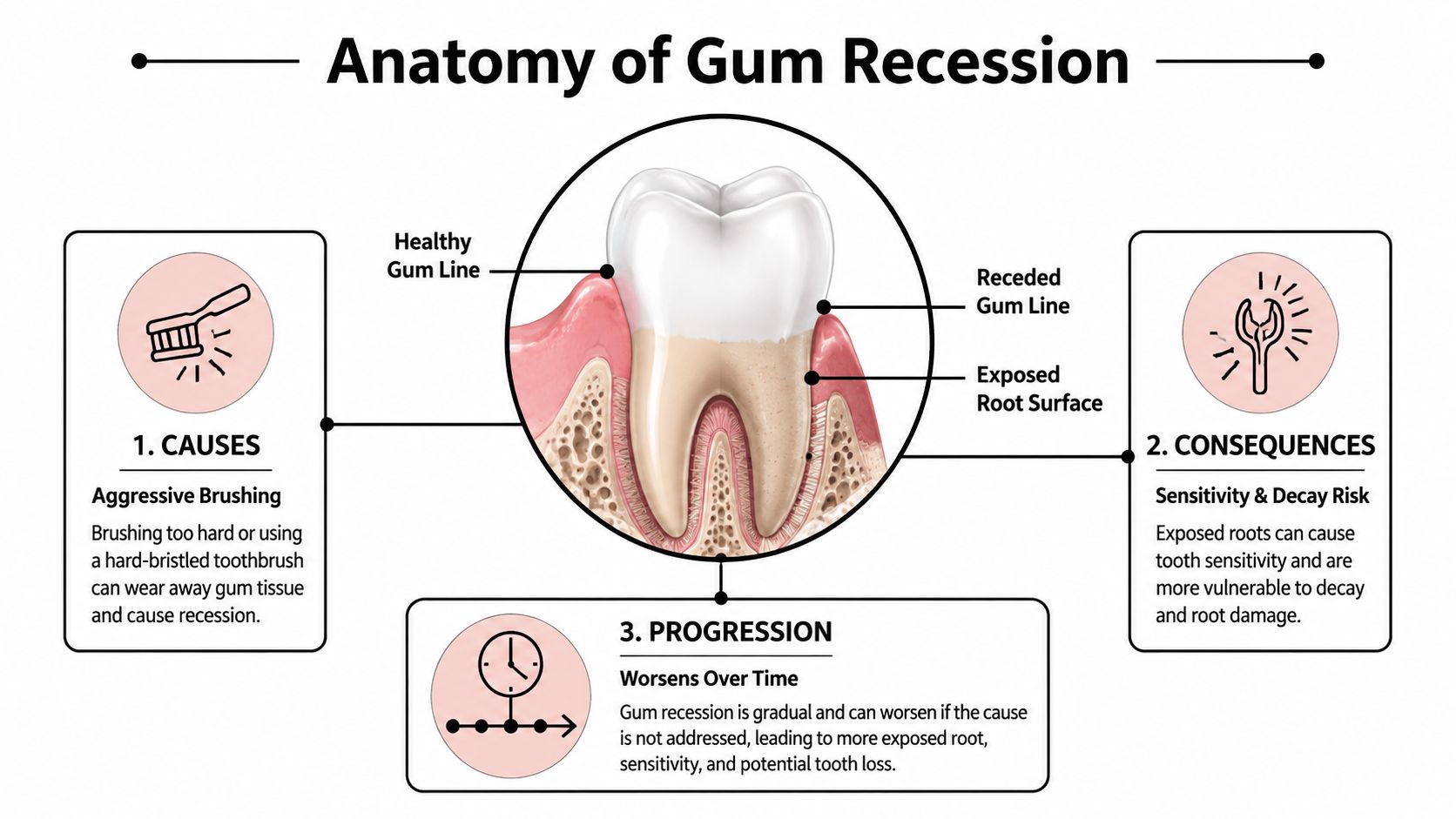
Think of gum tissue as a protective collar around the base of each tooth. It helps shield the transition between the visible crown and the root, where the surface is less protected. When that collar shifts downward or wears away, the root surface becomes exposed.
The root contains dentin, a porous tooth layer filled with microscopic channels called tubules. You can think of these tubules as tiny straws that lead toward the nerve. Cold air, hot drinks, sweet foods, or touch can disturb fluid inside those channels, creating the brief, sharp sensation many people call sensitivity.
Why recession develops
Several forces can contribute, and more than one may be present at the same time:
- Mechanical pressure: Scrubbing with excessive force or using a stiff-bristled brush can traumatize delicate gum margins.
- Plaque-related inflammation: Plaque biofilm irritates gum tissue. Periodontal disease can damage the tissues that support teeth and contribute to recession.
- Tooth grinding: Repeated clenching or grinding places unusual forces on teeth and the surrounding tissues.
- Tooth position: A tooth that sits outside the thicker area of supporting tissue may be more vulnerable.
- Inherited tissue characteristics: Some people naturally have thinner gum tissue and may be more susceptible.
- Age-related changes: Gum position and tissue resilience can change over time.
Population evidence illustrates how broadly recession appears across different groups. A classic U.S.-linked epidemiology paper reported recession in 78% to 100% of middle-aged individuals, affecting 22% to 53% of teeth. The same source described 51% prevalence among adults over 18 in Oslo, Norway, and 68% in a Finland study. Another population study reported 63.9% overall prevalence, with 68.9% in males and 59.3% in females (population evidence reviewed by the Journal of Applied Oral Science).
Why lost tissue doesn't simply return
Gum tissue doesn't behave like a temporary cover that grows back after you remove irritation. Once the margin has moved and the supporting structures have changed, brushing with a different paste can't recreate the original anatomy. Professional treatment may be appropriate when coverage or disease control requires more than home care.
Toothpaste still matters because exposed roots need daily protection from plaque, inflammation, and sensitivity triggers. Its role is more like maintaining a vulnerable edge of a roof. It can help limit wear and keep the area cleaner, but it can't rebuild the missing section.
Toothpaste Ingredients That Actually Help Receding Gums
Ingredient labels make more sense when you start with the symptom. Potassium nitrate and strontium chloride are mainly associated with sensitivity management. Stannous fluoride can support fluoride protection and gum-focused plaque control. Nano-hydroxyapatite offers a fluoride-free mineral option that has been studied for dentin sensitivity.
The evidence isn't a reason to declare one ingredient universally superior. Recession-related discomfort can involve exposed dentin, while redness or bleeding may point toward plaque-related irritation that deserves separate attention.
How the main options differ
| Ingredient | Primary Function | Best For |
|---|---|---|
| Potassium nitrate | Helps calm nerve responses inside sensitive teeth | Sharp sensitivity to temperature or touch |
| Strontium chloride | Helps reduce sensitivity associated with exposed dentin | People seeking another desensitizing active |
| Stannous fluoride | Supports enamel and root-surface protection while helping with plaque and gingival concerns | Sensitivity combined with gumline irritation |
| Arginine | Included in desensitizing formulations that target exposed dentin sensitivity | People looking for a sensitivity-focused formula |
| Nano-hydroxyapatite | Mineral-based support for tooth surfaces and sensitivity management | People who prefer a fluoride-free option |
| Enzyme- or protein-enriched formulas | May support gingival health as part of a broader formulation | Readers focused on gum comfort and inflammation support |
Cleveland Clinic guidance identifies potassium nitrate, stannous fluoride, arginine, and strontium chloride as desensitizing actives that can help calm nerves inside teeth affected by recession (Cleveland Clinic guidance on gum recession). A separate clinical guidance source also discusses these ingredients in the context of sensitivity, reinforcing that their purpose is symptom management rather than gum regrowth (clinical dental guidance on toothpaste selection).
Where nano-hydroxyapatite fits
Nano-hydroxyapatite is a mineral designed to resemble the mineral component of natural tooth structure. The European Commission's Scientific Committee on Consumer Safety concluded that hydroxyapatite in nano form is safe in toothpaste at concentrations up to 29.5% and in mouthwash up to 10% under the conditions assessed. Its opinion also states that uptake through the buccal mucosa is considered negligible and that swallowed nanoparticles rapidly dissolve in gastric fluid (European Commission SCCS opinion).
A randomized controlled trial found that a fluoride-free nano-hydroxyapatite gel toothpaste significantly reduced cold-air and tactile sensitivity after 2 and 4 weeks, with statistically significant lower VAS scores versus baseline and control groups (randomized controlled trial on nano-hydroxyapatite toothpaste). Another clinical efficacy study reported consistent reductions in dentin hypersensitivity with toothpastes containing 10% and 15% nano-hydroxyapatite, concluding that nano-hydroxyapatite toothpastes were as effective as calcium sodium phosphosilicate for relief when used at least twice daily (clinical efficacy discussion).
For a gum-health-focused comparison of ingredients and product features, readers can also explore guidance on toothpaste for gingivitis. Choose based on your main concern, and don't confuse a sensitivity result with evidence of regenerated gum tissue.
Building a Complete Oral Care Routine for Gum Health
A toothpaste only works within the routine that delivers it. If brushing pressure keeps injuring the gum margin, a carefully selected formula can't compensate for that mechanical stress. If plaque remains between teeth, the gumline may stay irritated even when the visible tooth surfaces look clean.
Start with gentler brushing
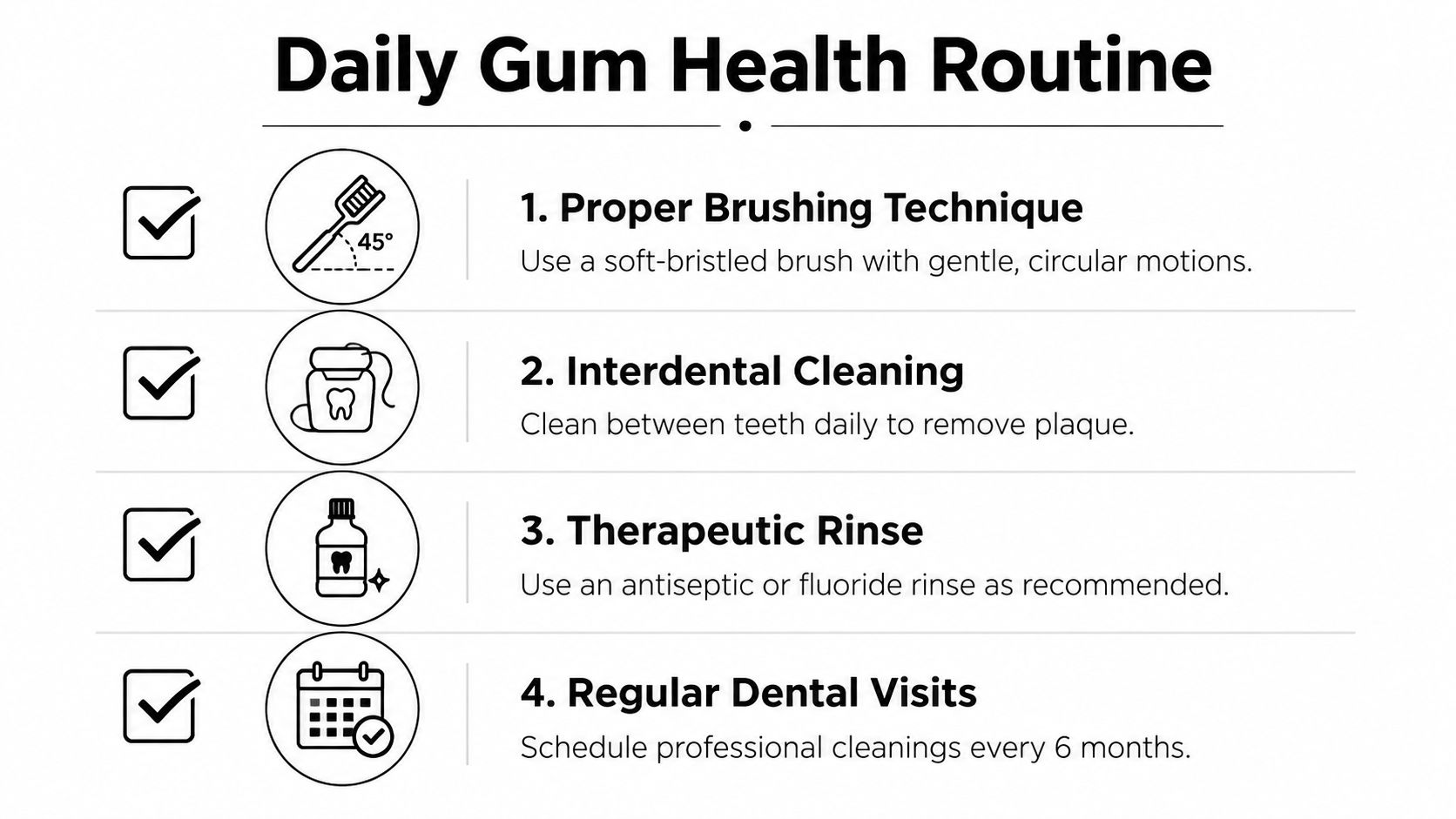
Use a soft-bristled brush and place it toward the gumline rather than attacking the area with force. Small, gentle circular movements clean the margin without the aggressive back-and-forth scrubbing that can aggravate already sensitive tissue.
An electric brush with a pressure sensor can help if you tend to press hard. A manual brush works well too, provided you let the bristles do the work. Aim for consistent coverage of the outer, inner, and chewing surfaces, and spend extra attention near the gumline without repeatedly scraping it.
Clean where bristles can't reach
Floss or use an interdental brush to clean between teeth. Curve floss around each tooth and move it gently rather than snapping it into the gums. An interdental brush may be more practical where spaces are wider, while a water flosser can help people who struggle with string floss or fixed dental appliances.
A tongue scraper is optional. It can help remove coating from the tongue and improve the sense of freshness, but it doesn't replace cleaning between teeth or brushing the gumline.
Give the routine time to work
Brush with your selected toothpaste consistently, and follow the product label for use and rinsing instructions. If you use a rinse, choose one recommended for your needs, especially if the gumline is sensitive. People with recurring bleeding, tenderness, or known periodontal concerns should ask a dental professional whether a therapeutic rinse is appropriate.
Practical rule: improve pressure and plaque removal before buying a more complicated collection of oral-care products.
Common Myths and Misleading Claims About Gum Recession Toothpaste
The most important label-reading skill is knowing the difference between comfort support and tissue regeneration. A paste can help reduce a cold-triggered sensation, support tooth-surface protection, or assist with plaque control. None of those functions means the gum has grown back.
Myth one, toothpaste can regrow receded gums
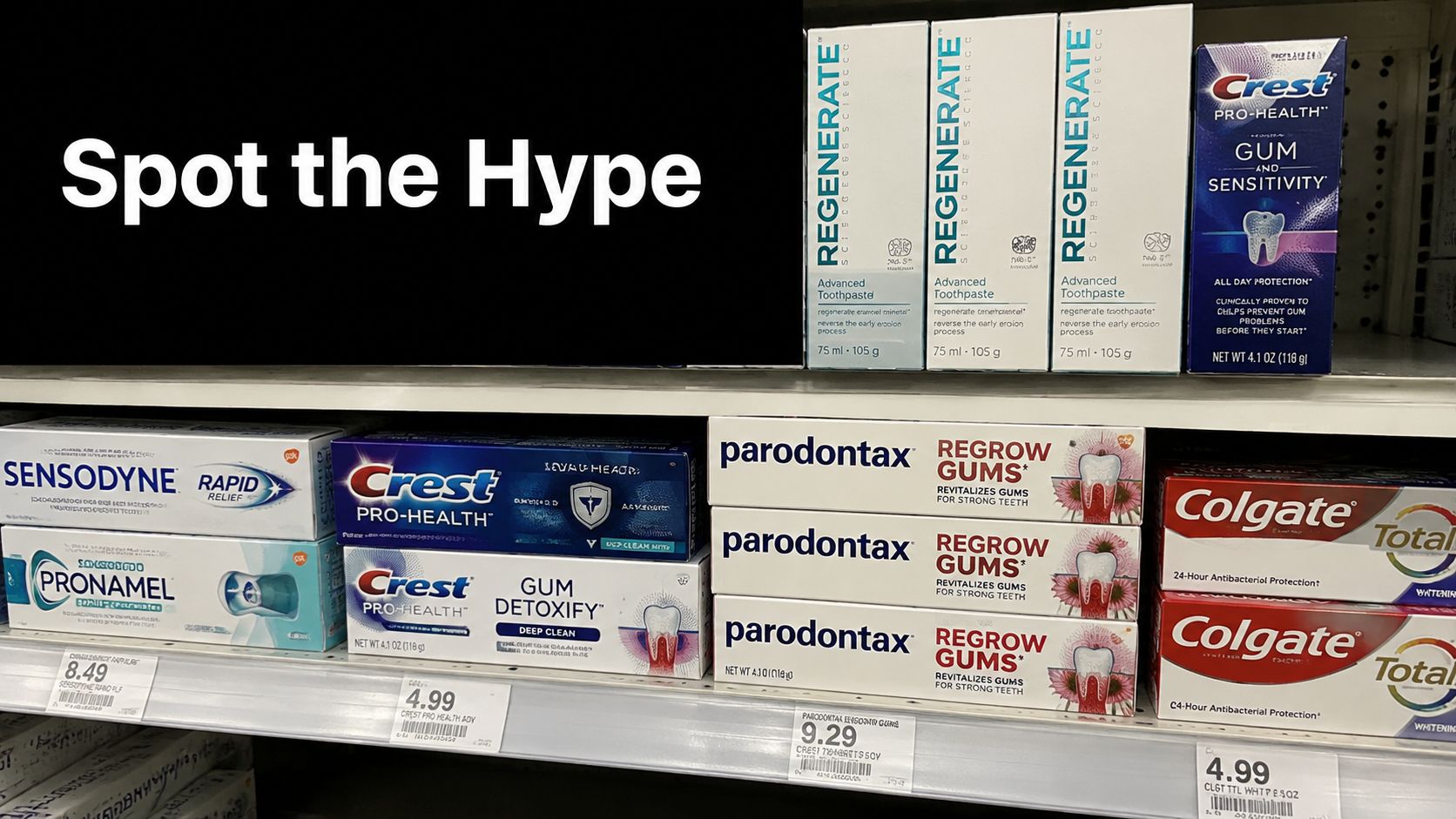
Established recession involves lost tissue and changes around the tooth. A toothpaste can't restore that anatomy. Be cautious with phrases such as “regenerates gums” or “reverses recession” unless the product clearly explains that it means supporting gum comfort or reducing irritation, not physically replacing missing tissue.
Myth two, faster relief means a permanent fix
Sensitivity relief can be useful, but it doesn't tell you whether the cause has stopped. If a product makes cold drinks more comfortable while brushing remains forceful or plaque remains along the gumline, the underlying issue may continue. Treat symptom improvement as one measure, not proof that recession has been reversed.
Myth three, natural automatically means safer
“Natural” describes an origin, not a complete safety profile or clinical result. A natural flavor can still feel harsh to sensitive tissue, and a synthetic ingredient may have a well-understood purpose and safety record. Judge the entire formulation, your comfort, the product directions, and professional advice.
Fluoride and fluoride-free choices
Fluoride and fluoride-free formulas represent different preferences and formulation approaches. Nano-hydroxyapatite has been evaluated for safety and studied for sensitivity support, while fluoride formulas remain an established option for protecting tooth surfaces. The useful question isn't which label wins an argument. It's which active ingredients suit your needs and which product you can use consistently.
Also look beyond the front of the package. Strong whitening abrasives, intense flavoring, or foaming agents may be uncomfortable for some people with exposed roots, although individual tolerance varies. A label that makes a dramatic promise deserves closer inspection than one that describes a specific, limited function.
When Toothpaste Is Not Enough and You Need Professional Help
Home care may be reasonable when sensitivity is mild, stable, and clearly improving with gentler brushing and a desensitizing formula. It isn't enough to assume that every exposed-looking root is harmless, especially when the change is new or progressing.
Book a dental appointment if you notice rapid changes, persistent or severe sensitivity, bleeding, swelling, loose teeth, visible root exposure, chewing discomfort, or ongoing bad breath. These signs can indicate inflammation, periodontal concerns, root-surface problems, or another issue that toothpaste can't evaluate.
A dentist can examine gum levels, assess plaque and tartar, check the tooth itself, and investigate contributing factors such as grinding or tooth position. Treatment may include professional cleaning, scaling and root planing when appropriate, protective bonding for a sensitive root, or referral to a periodontist.
Treatment can complement your routine
A gum graft may cover exposed root surfaces when the anatomy and diagnosis make it appropriate. Pinhole surgical techniques are another professional approach that may reposition existing gum tissue in selected cases. These aren't alternatives to daily brushing and interdental cleaning. They address problems that a topical paste cannot physically correct.
If your dentist recommends surgical evaluation, you can use this resource to find gum grafting specialists and learn what specialist care may involve. Ask about the cause of recession, the goal of each option, expected maintenance, and how to protect the area afterward.
For a focused explanation of the relationship between exposed roots and sensitivity, see this guide to gum recession and sensitivity. The central point is simple: a paste can make the daily experience easier, but a professional must assess tissue loss, disease activity, and structural risk.
How to Choose the Right Receding Gums Toothpaste for Your Needs
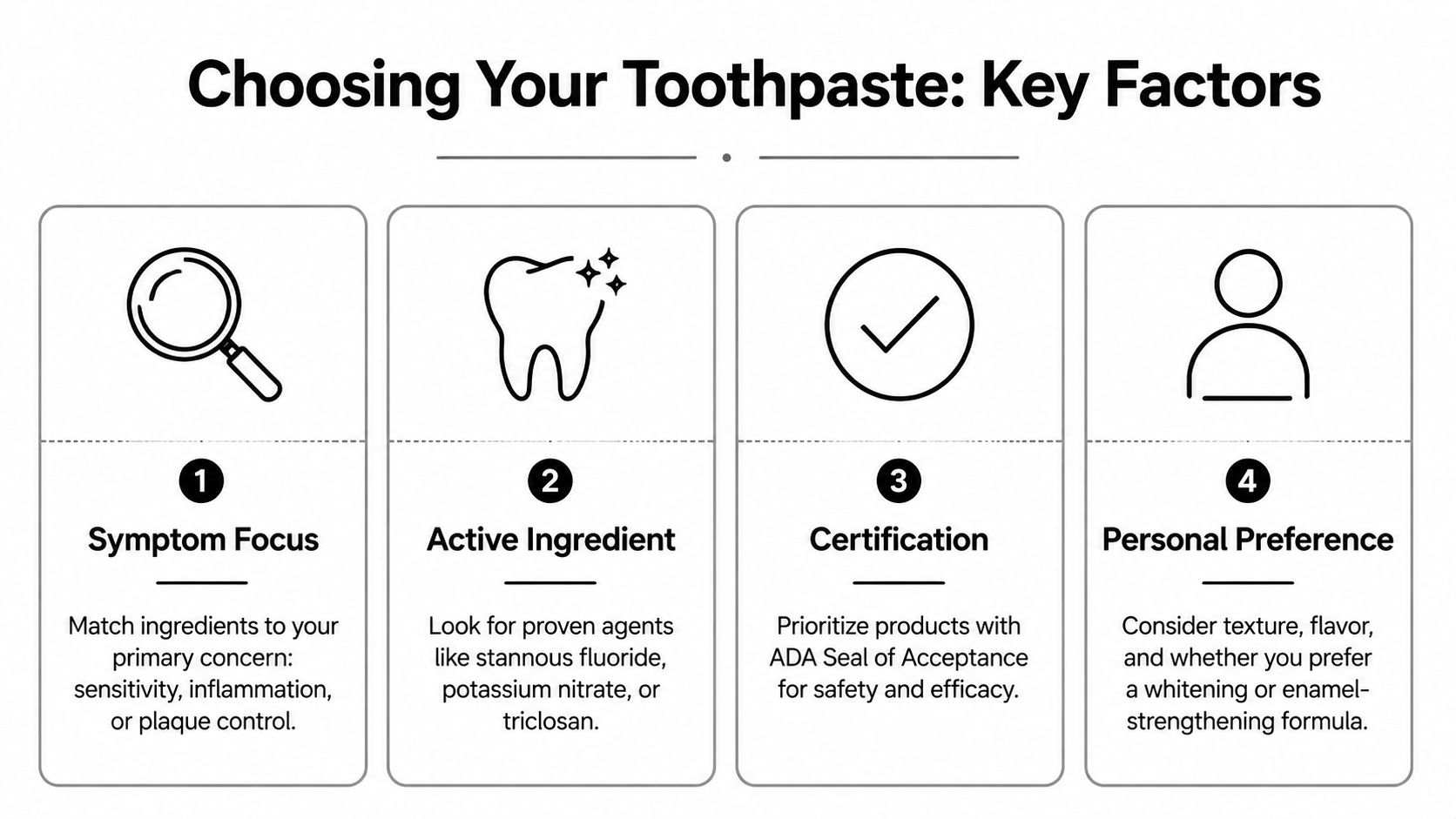
Start with the symptom you want to improve, not the most dramatic claim on the package. A person with cold sensitivity may prioritize a desensitizing active, while someone with bleeding or persistent gum irritation needs a dental assessment alongside a formula that supports plaque control.
Use a four-question filter
- What do you feel? Sharp cold sensitivity points toward potassium nitrate, strontium chloride, arginine, stannous fluoride, or nano-hydroxyapatite. Redness or bleeding shifts attention toward plaque control and professional evaluation.
- Which active matches that concern? Check the ingredient panel rather than relying only on phrases such as “gum repair.” Look for a clearly identified active and a product designed for regular use.
- Does the texture suit exposed roots? A smooth, comfortable paste is easier to keep using than one that feels harsh or overly abrasive. If whitening is your priority, ask a dental professional whether the product is suitable for exposed root surfaces.
- Will you use it consistently? Flavor, foam, mouthfeel, and preference matter because an abandoned toothpaste can't help your routine.
Mouthology's fluoride-free toothpaste uses 10% nano-hydroxyapatite, making it one option for readers who prefer a mineral-based formula and are focused on tooth-surface support and sensitivity management. Its use should still fit your personal dental needs, and it doesn't change the basic limitation that toothpaste can't regrow lost gum tissue.
Track comfort without overpromising
Give a new product enough consistent use to judge comfort and sensitivity, while following its label directions. Keep a simple note of which triggers cause discomfort and whether the response changes. If symptoms worsen, don't keep switching products indefinitely. Arrange a dental assessment.
You can also compare broader gum-health priorities in this toothpaste selection guide. The best choice is the one that matches your primary symptom, feels gentle enough for daily use, and supports a routine that includes careful brushing, interdental cleaning, and professional monitoring when needed.
If your gums look lower than before or cold sensitivity keeps returning, schedule a dental examination rather than relying on a “gum regrowth” promise. Bring the toothpaste you currently use, mention your brushing technique, and ask which active ingredient and professional follow-up fit your mouth.
