

Posted by Sarah Collins
on September 15, 2026

You're standing in the toothbrush aisle with a manual multipack in one hand and an electric model that costs dramatically more in the other. One promises simplicity. The other promises timers, pressure sensors, specialized modes, and a cleaner feeling. The packaging makes the decision look like a technology upgrade, but the better question is more personal: which brush helps you clean consistently, gently, and thoroughly every day?
The evidence gives electric toothbrushes an advantage for plaque and gingivitis control, but that doesn't make a manual brush useless. Your hand skill, brushing habits, sensitivity, dexterity, budget, travel routine, and toothpaste all change the recommendation. A disciplined manual brusher can do an excellent job, while an electric brush can make good technique easier to repeat.
This guide breaks down the actual cleaning mechanics, compares the everyday trade-offs, matches brush types to real user profiles, and explains how toothpaste fits into the decision. Stop looking for a universal winner. Choose the brush that makes your best routine easier to maintain.
Why This Question Trips Up So Many People
A parent may choose a brightly colored manual brush for a child because it's inexpensive and easy to replace. Someone with sensitive gums may buy an electric model after seeing a pressure sensor advertised. A frequent traveler may reject both the charging cable and bulky case, then wonder whether a manual brush is somehow an inferior choice.
Those decisions make sense because the manual vs electric toothbrush question combines performance with lifestyle. The brush has to remove plaque, but it also has to suit the person using it. A device that sits uncharged in a bathroom drawer won't help. Neither will a manual brush that someone rushes through with a tight grip and uneven coverage.
The real source of confusion
Marketing often treats the handle as the main event. In practice, the bristles still need to contact the tooth surfaces, gumline, and chewing areas. You still need enough time, gentle pressure, and a method that reaches the whole mouth.
Electric brushes add useful assistance. Timers can make brushing duration more visible, pressure alerts can interrupt heavy-handed brushing, and powered movement can reduce the amount of precise hand motion required. Manual brushes provide direct control, easy replacement, quiet operation, and no charging routine.
The research supports a meaningful but practical distinction. Powered brushes generally remove more plaque and reduce gingivitis more effectively than manual brushes, yet the benefit doesn't erase the importance of behavior. The person who brushes carefully with a manual brush may outperform someone who owns an expensive electric device but rushes, presses too hard, or skips difficult areas.
The useful question: Which brush removes more plaque for this person, with this person's actual habits?
To answer it, look beyond the price tag. Cleaning mechanics matter. So do comfort, maintenance, affordability, supervision, and the toothpaste placed on the bristles.
How Each Brush Cleans Your Teeth
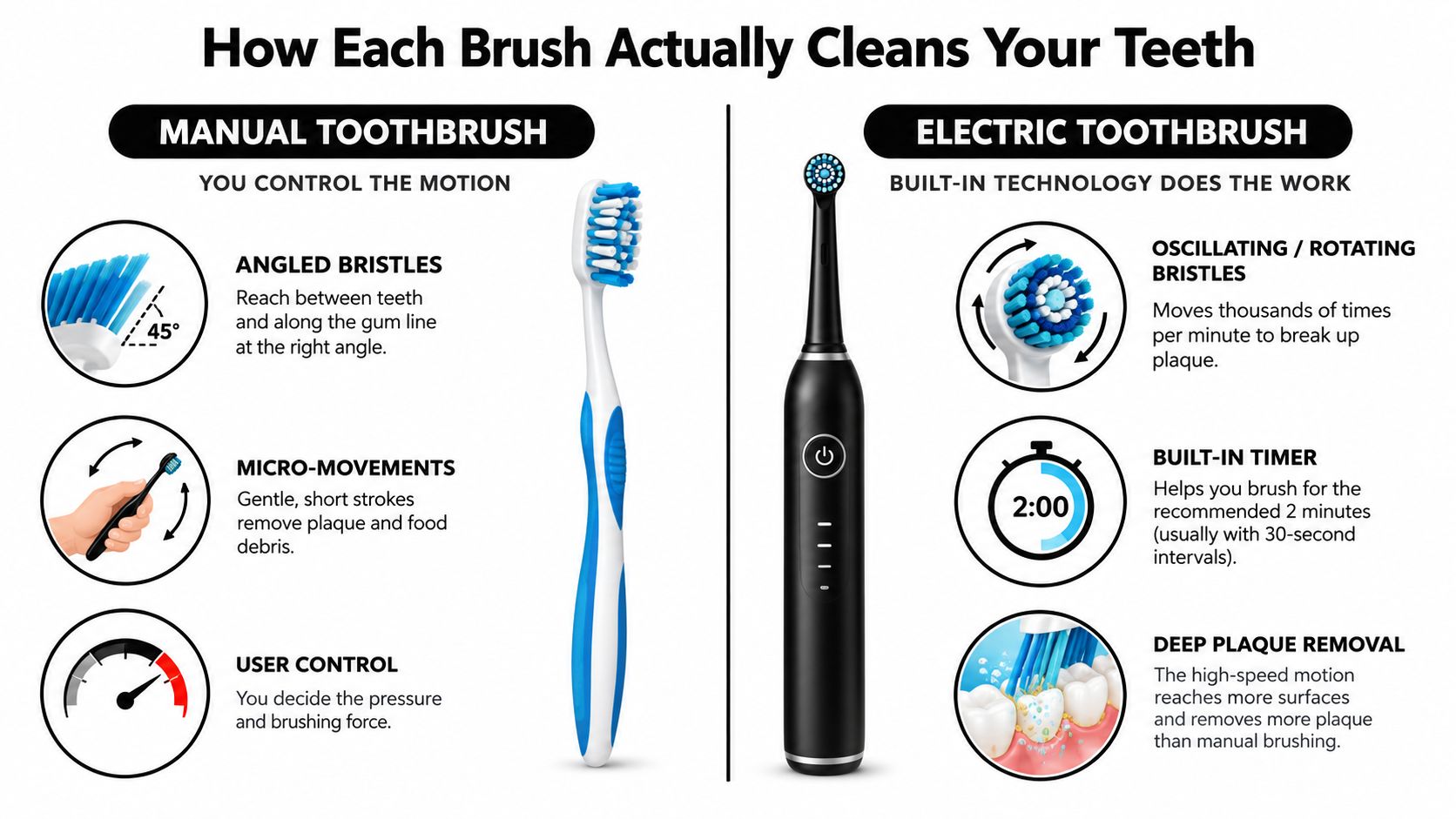
Your choice should match how reliably you brush, not just which handle claims stronger cleaning. A manual toothbrush uses movement from your hand. Place the bristles near the gumline, angle them toward the margin, and make small, controlled motions to disrupt plaque. You control pressure and direction directly, but results depend on coordination, patience, and reaching every surface.
An electric toothbrush supplies repetitive movement through a motor. Sonic models use high-frequency vibration, while oscillating-rotating models move the head through repeated rotation. You still guide the brush from tooth to tooth, but the powered head handles much of the fine motion that a manual user must create independently. A comparison of electric toothbrush effectiveness can help clarify what powered assistance does and does not change.
What the evidence says
A 2014 Cochrane review of 40 trials involving 2,871 participants found that powered toothbrushes reduced plaque more than manual brushes at both short-term and long-term follow-up. It also concluded that powered brushes reduced plaque and gingivitis over time. Read the Cochrane review
A 2016 systematic review and meta-analysis reached the same broad conclusion. Powered brushes achieved about 9% more plaque removal and 6% less gingivitis than manual brushes, with significant advantages for plaque and gingival indices, including an SMD of -0.40 for plaque and -0.29 for gingivitis. Review the 2016 meta-analysis
The average advantage is measurable, not magical. Powered movement helps most when a user rushes, struggles with precise motions, or repeatedly misses the same areas.
Where powered movement helps most
Clinical review data found a clearer difference in difficult-to-clean areas. Oscillating-rotating brushes outperformed manual brushes on lingual, lingual approximal, and lingual gingival-margin surfaces, where hand brushing can leave biofilm behind. See the clinical review
My recommendation is direct. Electric brushes are most valuable when they reduce user error. Choose one if you rush, miss the gumline, have limited dexterity, or need the brush to provide more consistent movement. A careful manual brusher may notice a smaller practical gap.
A later network meta-analysis also found that oscillating-rotating and high-frequency sonic brushes were more effective than manual brushes for plaque removal, with oscillating-rotating brushes ranking especially well across comparative trials. Explore the network meta-analysis
Whichever handle you choose, the toothpaste on its bristles still matters to the daily routine. Pick a formula you will use consistently, then match the brush to your habits and control.
Side-by-Side Comparison at a Glance
The right comparison separates cleaning support from daily practicality. Electric brushes provide timed guidance, pressure feedback, and powered movement. Manual brushes offer lower cost, quieter use, easy packing, and no charging. Neither suits every user equally well.
Manual vs Electric Toothbrush at a Glance
| Feature | Manual Toothbrush | Electric Toothbrush |
|---|---|---|
| Plaque removal | Effective when technique, coverage, and timing stay consistent | Generally more effective on average when technique is inconsistent |
| Ease of use | Requires active hand control and attention | Requires guiding the head while the motor supplies repetitive movement |
| Beginners and kids | Simple, familiar, and easy to replace | Timers and engaging movement can support routine-building |
| Gum comfort | Depends heavily on grip and pressure | Pressure alerts or sensors can help limit excessive force |
| Timer | Usually requires a phone, clock, or personal counting | Many models include a built-in two-minute timer with 30-second quadrant pulses, as summarized in dental guidance (Dental guidance on brushing time) |
| Pressure feedback | Usually absent | Available on some models |
| Upfront cost | Low | Higher, especially for feature-rich models |
| Ongoing cost | Replacement brush purchases | Replacement heads, charging, batteries, and upkeep |
| Charging | Not required | Required for rechargeable models |
| Travel | Lightweight and easy to pack | Requires a charger, battery planning, or a travel case |
| Replacement availability | Usually easy to find | Compatible heads may be less widely available |
| Noise | Quiet | Motor noise varies by model |
| Environmental considerations | Fewer electronic components | More electronic waste, though only the head is replaced on many models |
The cost gap can shape the decision. One 2026 comparison estimated manual brushes at about £1 to £5 upfront, compared with £15 to £300 or more for electric models. It estimated annual running costs of roughly £12 to £20 for manual brushes and £20 to £60 for electric heads and upkeep. Review the cost comparison
Choose a manual brush if you travel often, want the simplest setup, or already cover every surface carefully. Choose an electric brush if timing, pressure control, or reduced hand effort would make consistent brushing easier. The toothpaste matters too. A brush only supports the routine, so pair it with a formula you will use consistently rather than treating the handle as the whole solution.
Matching the Brush to the Person
The best recommendation changes with the user. A brush that suits an independent adult with reliable technique may be frustrating for a young child, uncomfortable for someone with sensitivity, or physically difficult for someone with limited hand control.
Children need support, not just a smaller handle
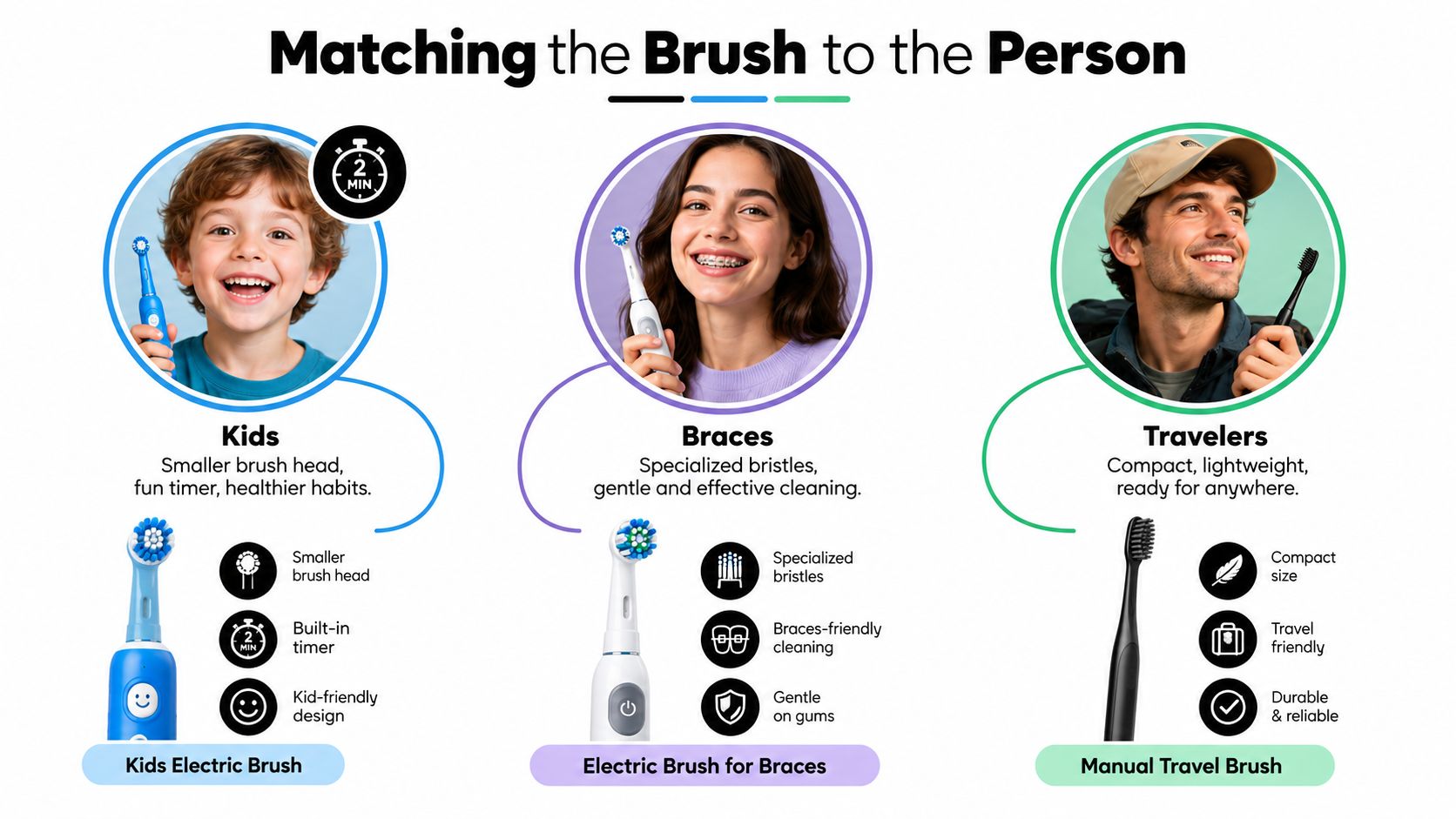
For many children, I lean toward a small-headed electric brush with a timer. The movement can make brushing more engaging, while timing features help families build the recommended routine of two minutes, twice a day. Parents should still supervise and assist until the child can reliably cover every area, commonly around age seven.
A manual brush can work well if an adult guides the process and chooses an appropriately sized, soft-bristled head. The decisive factor is not the cartoon on the handle. It's whether the child receives enough help to clean thoroughly without turning brushing into a rushed chore.
Braces reward consistency around hardware
For people with braces, I usually favor an oscillating-rotating or sonic brush used gently and carefully around brackets and wires. Powered movement can make repeated coverage easier, but it doesn't replace an interdental tool or orthodontic instructions.
A soft manual brush remains useful on travel days or whenever charging is inconvenient. A single-tufted brush can also help reach around brackets and along the gumline. If an electric brush feels harsh, choose a sensitive setting and let the head glide rather than pushing it into the appliance.
Sensitive teeth need less force, not more technology
Choose ultra-soft bristles first. An electric model with a pressure sensor can be helpful because it gives immediate feedback when you press too firmly. Manual users should loosen their grip and use extra-soft bristles rather than trying to scrub exposed areas clean.
For arthritis, Parkinson's, carpal tunnel, or post-stroke recovery, an electric brush with a thick handle can make brushing less physically demanding. The motor handles repetitive movement while the user guides the head. Caregivers should focus on training, supervision, and a comfortable grip, because a device only helps when the routine remains manageable. A 2026 systematic review on people with special health care needs highlighted caregiver training, supervision, cost, and newer brush technologies as important implementation factors. Read the special health care needs review
Travelers and budget-conscious adults don't need to feel guilty choosing manual. A well-used manual brush is enough when you maintain gentle technique, complete coverage, and adequate duration. The best brush is the one the right person will use properly twice a day.
Three Myths That Deserve a Second Look
The most common toothbrush advice often fails because it treats the handle as more important than the routine.
Myth one says electric brushes are always better
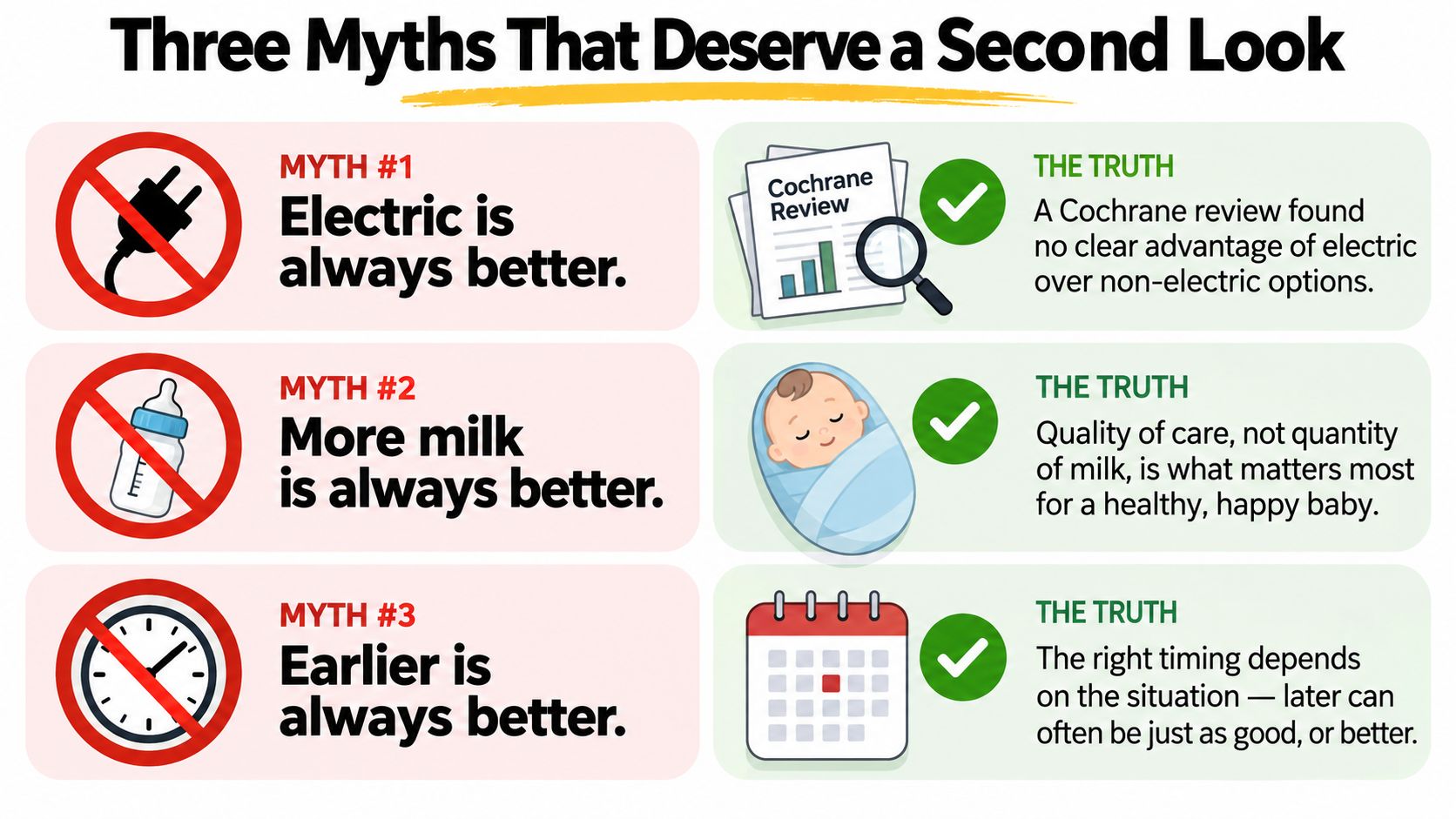
Powered brushes have a real evidence-based advantage for plaque and gingivitis reduction, as the clinical reviews above show. But “always” is too strong. A person with excellent manual technique, consistent timing, and careful gumline coverage may already be achieving a strong result.
The powered brush earns its place when it improves consistency, reduces rushed movement, or makes brushing physically easier. It isn't a substitute for attention.
Myth two says hard bristles clean better
Hard bristles don't turn poor technique into good technique. They can feel aggressive while you brush, and heavy pressure can irritate the gumline and create unnecessary wear. Choose soft or extra-soft bristles and allow the tips to disturb plaque rather than trying to scour the teeth.
Myth three says a new brush fixes bad habits
A new handle won't automatically correct rushed brushing, excessive force, or missed surfaces. If you switch from manual to electric but continue brushing carelessly, the upgrade may not deliver the result you expect.
The reset is simple:
- Duration: Brush for two minutes total, twice daily, divided across the mouth.
- Pressure: Use gentle contact, especially at the gumline and on sensitive areas.
- Bristles: Choose soft or extra-soft rather than hard.
- Paste: Use a toothpaste containing fluoride or nano-hydroxyapatite, depending on your preferences and dental guidance.
The brush is a tool. Your repeatable routine determines what that tool accomplishes.
Getting the Technique Right No Matter Which You Pick
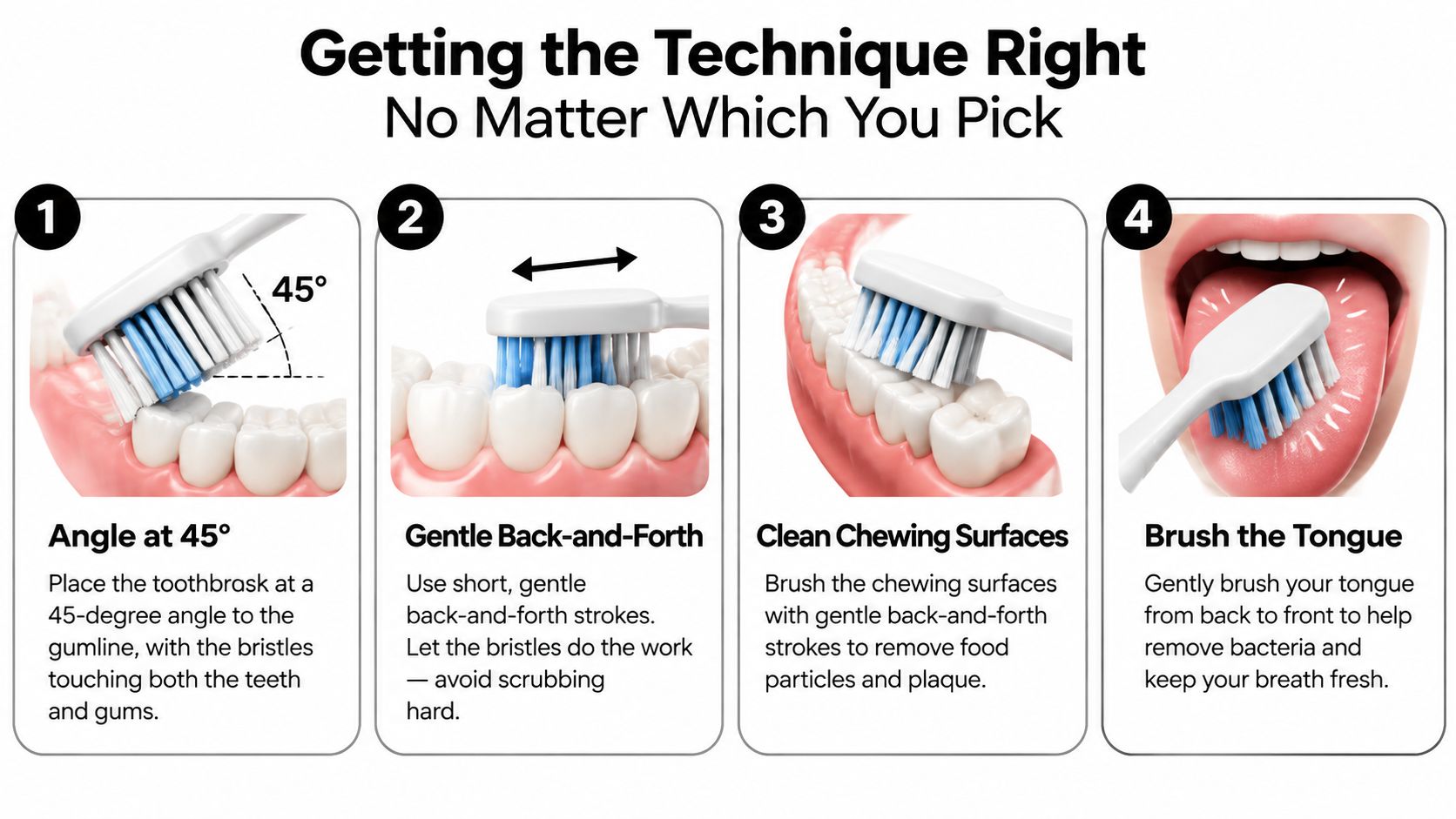
Your brush choice matters less than whether you can use it gently and consistently. Start with the Bass technique: angle the bristles about 45 degrees toward the gumline, with the tips resting near the margin. Use small, controlled movements instead of forceful scrubbing. That positioning helps clean the narrow area where tooth and gum meet.
Manual technique
Hold the handle lightly, much like a pencil. Use a pea-sized amount of toothpaste, then follow the same route around your mouth each time. A fixed sequence prevents you from repeatedly cleaning the easy front surfaces while missing the inner teeth and back molars.
If you press too hard, briefly use a kitchen scale or phone pressure app to build awareness. The goal is not a perfect reading. It is learning how gentle contact feels, then keeping that pressure without the device.
Electric technique
Place the powered head against each tooth and guide it slowly from one tooth to the next. Let the motor provide the movement. Scrubbing back and forth with an electric brush adds force and can wear the bristles sooner. The electric toothbrush technique guide explains placement and movement in more detail.
Clean the outer, inner, and chewing surfaces. Give extra attention to the back molars, inside lower teeth, and gumline. An electric brush helps only when you pause long enough to cover each area.
Habits that apply to both
Brush for two minutes total, splitting your mouth into four 30-second quadrants. Replace the brush or brush head every three months, or after illness. Rinse it after use and let it air-dry upright. Never share a toothbrush handle.
Parents can use this children's tooth brushing guide for a practical, child-focused routine. Match the toothpaste to your needs, too. The bristles spread its formula across the surfaces you clean, so a good technique and suitable toothpaste should work together.
So Which One Should You Buy and What to Pair It With
My direct recommendation is simple. Choose electric if you need help with consistency, pressure, timing, or hand movement. Choose manual if you already brush carefully and value low cost, portability, and simplicity. Neither choice excuses rushed brushing or neglected spaces between teeth.
| User Profile | Recommended Brush | Why It Fits | Pair With |
|---|---|---|---|
| Children | Small-headed electric brush | Timer and engaging movement can support supervised habits | Child-sized toothpaste and adult assistance |
| Sensitive teeth or receding gums | Gentle electric model with pressure feedback, or extra-soft manual brush | Makes lighter pressure easier to monitor | Sensitivity-conscious toothpaste and gentle technique |
| Braces wearers | Sonic or oscillating-rotating brush used carefully | Supports consistent cleaning around brackets and wires | Interdental brushes and a single-tufted brush |
| Limited dexterity | Electric brush with a thick handle | Reduces repetitive hand movement | Caregiver supervision and a pressure indicator |
| Budget-conscious adults | Soft manual brush | Low cost, no charging, easy replacement | Two-minute timer and interdental cleaning |
| Frequent travelers | Manual brush | Compact, quiet, and usable anywhere | Travel case and a small toothpaste tube |
The toothpaste layer matters
The brush controls mechanical cleaning. Toothpaste adds the formula that contacts the enamel during that process. Nano-hydroxyapatite is a mineral ingredient studied for its relationship to enamel mineral structure and is used in fluoride-free oral care. Mouthology offers a 10% nano-hydroxyapatite toothpaste designed for use with both manual and electric toothbrushes, making it one possible option for people who prefer a fluoride-free routine.
You don't need a different paste for an oscillating head and a manual brush. Apply the paste to the bristles, use light pressure, and allow the brush to distribute it across the mouth. If you're choosing a fluoride-free product for a child, during pregnancy, or alongside sensitivity concerns, discuss the routine with a dental professional who knows your circumstances.
Parents looking for a more engaging electric option can also explore this resource to support kids' brushing with Vitamin Planet. The useful feature isn't the novelty alone. It's whether the child accepts the brush and completes the routine with supervision.
Build the full kit
A brush handles tooth surfaces, but it doesn't replace cleaning between teeth. Add the tools that match your gaps:
- Interdental brushes: Useful where spaces, braces, or dental work make ordinary brushing incomplete.
- Floss picks: Convenient when traditional floss feels difficult to control.
- Tongue scraper: Helps remove coating from the tongue's surface as part of a fresh-mouth routine.
- Two-minute timer: Keeps manual users honest and reinforces even coverage.
- Replacement heads or brushes: Keep the bristles functional rather than waiting until they look badly worn.
For electric models, account for charging, compatible heads, and the long-term upkeep before buying. This electric toothbrush lifespan guide can help you think through replacement and maintenance rather than treating the handle as a one-time purchase.
If you want my bottom line, buy an electric brush for assistance and feedback, not status. Buy a manual brush when affordability and portability matter, then spend your attention on technique. Either way, pair the brush with a toothpaste you tolerate and will use consistently, clean between your teeth, and keep the routine simple enough to repeat.
Choose your brush today based on your actual routine, not the most impressive packaging. If your brushing is rushed, your pressure is heavy, or hand movement is difficult, select a gentle electric model with a timer and pressure feedback. If you already brush thoroughly and want the simplest low-cost option, choose a soft manual brush, add a two-minute timer, and replace it regularly.
