

Posted by Sarah Collins
on August 11, 2026

That sudden zing when you sip iced coffee, bite into a popsicle, or even breathe in cold air can make you second-guess every drink and snack. Tooth sensitivity often feels random, but it usually has a pattern, and once you know the pattern, you can choose the right fix instead of cycling through products that don't match the underlying cause.
The good news is that sensitive teeth are common enough to take seriously, but also modifiable enough that small daily changes can help a lot of people. A globally relevant review estimates a best guess of about 11.5% prevalence in adults, while other reviews report ranges from 3% to 57% depending on the population and method used, which is one reason the problem can feel so universal and so confusing at the same time (British Dental Journal review).
Why Your Teeth Hurt and What to Do About It
A lot of people think tooth sensitivity is just a “cold drink problem.” It's usually more specific than that. When the protective outer layers of a tooth get thinner, the inner dentin can become more exposed, and those tiny dentinal tubules can react to cold, heat, pressure, sweetness, or even air.
That's why the pain often feels sharp and quick. The tooth isn't trying to be dramatic, it's signaling that something is exposing or irritating the sensitive layer beneath the enamel.
Once you see sensitivity as a signal, not just a nuisance, the next decision gets easier. If the trigger is enamel wear, the fix looks different than if the trigger is gum recession, whitening, or grinding at night.
Practical rule: don't buy the first “sensitive teeth” toothpaste you see and hope for the best. Match the solution to the trigger first, then use the product consistently.
That approach saves time and frustration. It also keeps you from blaming the wrong habit, like toothpaste, when the core issue is a brushing style, acidic drinks, or a structural problem that needs a dentist's help.
Identifying What Is Causing Your Sensitivity
Sensitivity usually has a root cause, and the fastest way to feel better is to identify it instead of guessing. Acid wear, gum recession, aggressive brushing, bruxism, and post-whitening irritation are some of the most common triggers dentists look for, and they don't all respond to the same fix (Johns Hopkins Medicine).
The most common patterns people notice
If your teeth sting after citrus, soda, sports drinks, or wine, acid exposure may be softening enamel before you brush. If the pain is closer to the gumline or shows up on one side, recession may be exposing root surfaces, which is why people often ask about the relationship between gum movement and sensitivity, as discussed in this guide to gum recession and sensitivity.
If you brush hard or use a whitening paste with a gritty feel, the problem may be mechanical wear. A toothbrush should clean plaque, not sand the tooth surface.
Bruxism is another quiet culprit. People who grind at night often wake up with sore jaws, flattened edges, or sensitivity that seems to flare for no obvious reason.
Whitening can also irritate teeth, especially if the enamel is already stressed. If the sensitivity started soon after whitening strips or a bleaching treatment, that timing matters.
Helpful distinction: a single painful tooth, pain that lingers, or sensitivity with swelling can point to decay, a crack, or another issue that isn't solved by a new toothpaste alone.
For readers who want a second practical perspective, Grand Parkway Smiles has a useful resource on how to stop tooth sensitivity, and the most valuable part of any guide like that is the emphasis on identifying the trigger before changing products.
Daily Habits That Protect Sensitive Teeth
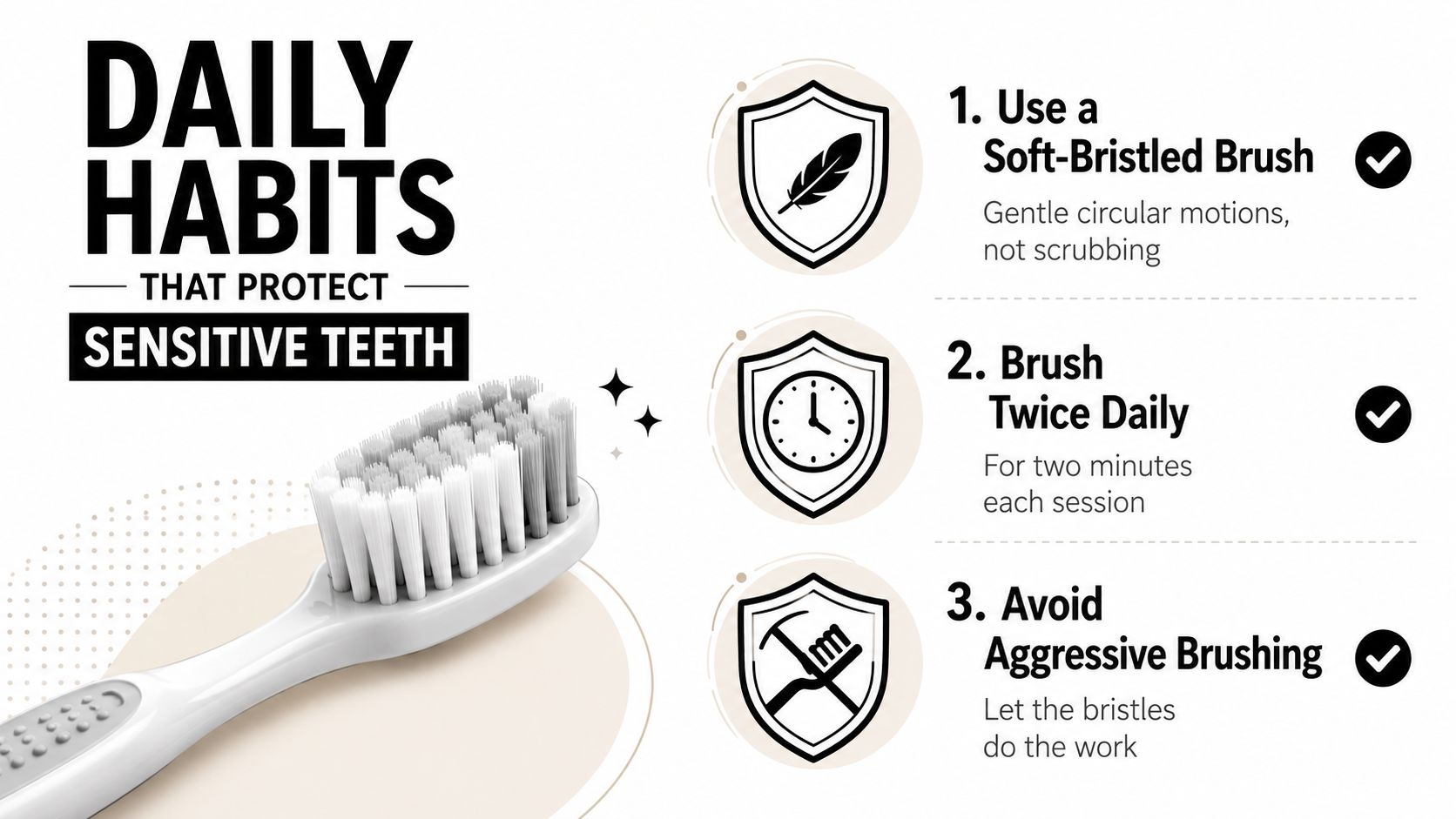
The foundation of sensitivity control is boring in the best possible way. Use a soft-bristled toothbrush, brush with gentle circular or short strokes, and stop scrubbing like you're trying to erase a stain from tile. The goal is to clean the tooth surface without adding more wear (Mayo Clinic).
Timing matters more than most people think
Brushing right after acidic foods or drinks can be rough on softened enamel. Waiting about 30 minutes gives saliva time to help neutralize the mouth and reduces the chance that brushing will grind away a softened surface (Mayo Clinic).
That same logic applies to rinse habits. If you rinse immediately after brushing, you can wash away ingredients before they stay in contact with the tooth long enough to matter.
A simple daily routine
- Use a soft brush: choose bristles that bend easily, not stiff ones that dig in.
- Brush twice daily: steady cleaning matters more than aggressive pressure.
- Floss daily: plaque trapped between teeth can keep irritation going.
- Use a night guard if you grind: persistent grinding needs protection, not just a gentler toothpaste.
- Avoid abrasive whitening pastes during flare-ups: they can add surface wear when you need the opposite.
The same principle shows up in many clinical guides. If you suspect your routine itself is causing the problem, the most useful change is often technique, not shopping for a fancier product. Mayo Clinic also notes that sensitivity can be linked to bruxism and gum recession, so persistent symptoms deserve a closer look rather than endless trial and error (Mayo Clinic).
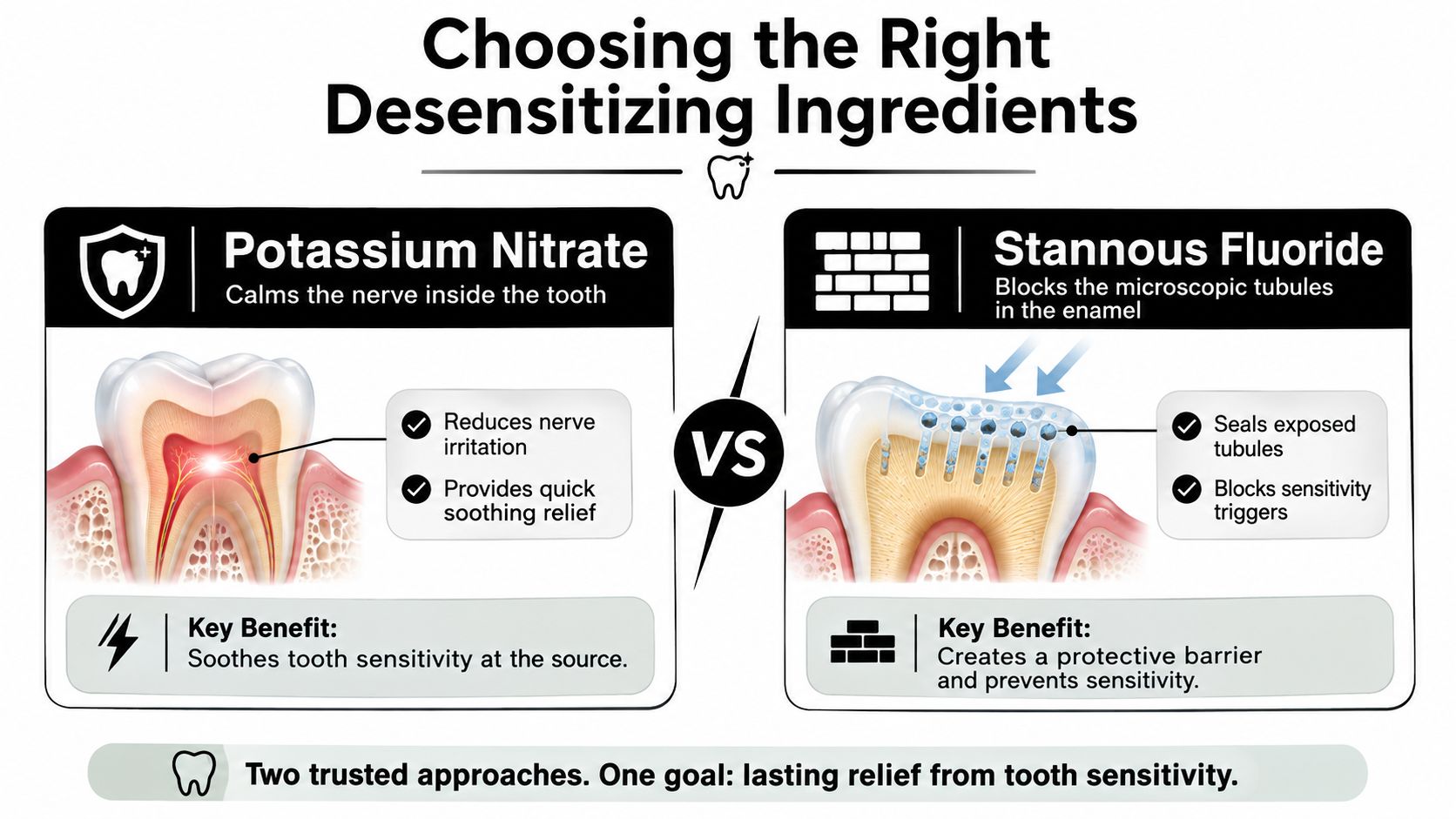
Choosing the Right Desensitizing Ingredients
Not every sensitive-teeth formula works the same way. Some ingredients try to calm nerve response, while others try to block exposed tubules so triggers can't get in as easily. That's why two toothpastes can feel similar on the shelf and still work differently in the mouth (Journal of Clinical Periodontology systematic review).
How the main options differ
Stannous fluoride, arginine, calcium sodium phosphosilicate, and strontium-based toothpastes all have clinical support for reducing dentine hypersensitivity compared with control products (Journal of Clinical Periodontology systematic review). They're part of the traditional toolkit because they've been studied for years and are widely used in everyday oral care.
Nano-hydroxyapatite works from a more mineral-based angle. A meta-analysis found that hydroxyapatite added to oral-care products produced a 39.5% reduction in dentin hypersensitivity versus placebo, and a 23% advantage versus fluoride in comparative analyses (meta-analysis and review). A clinical study of a toothpaste containing nano-hydroxyapatite plus other desensitizing ingredients reported pain improvements of 52% to 76% within 48 hours and 70% to 84% after two weeks in patients with significant baseline sensitivity (same review).
That's why mineral-based formulas have drawn so much attention. They're designed to physically support the tooth surface rather than just masking discomfort.
If you want a fluoride-free option in that category, Mouthology's 10% nano-hydroxyapatite toothpaste is one example of a mineral-based formula people look at for sensitive-teeth routines. The important part is not the label alone, it's whether the ingredient set fits your trigger and whether you'll use it consistently.
Building an Effective At-Home Sensitivity Routine
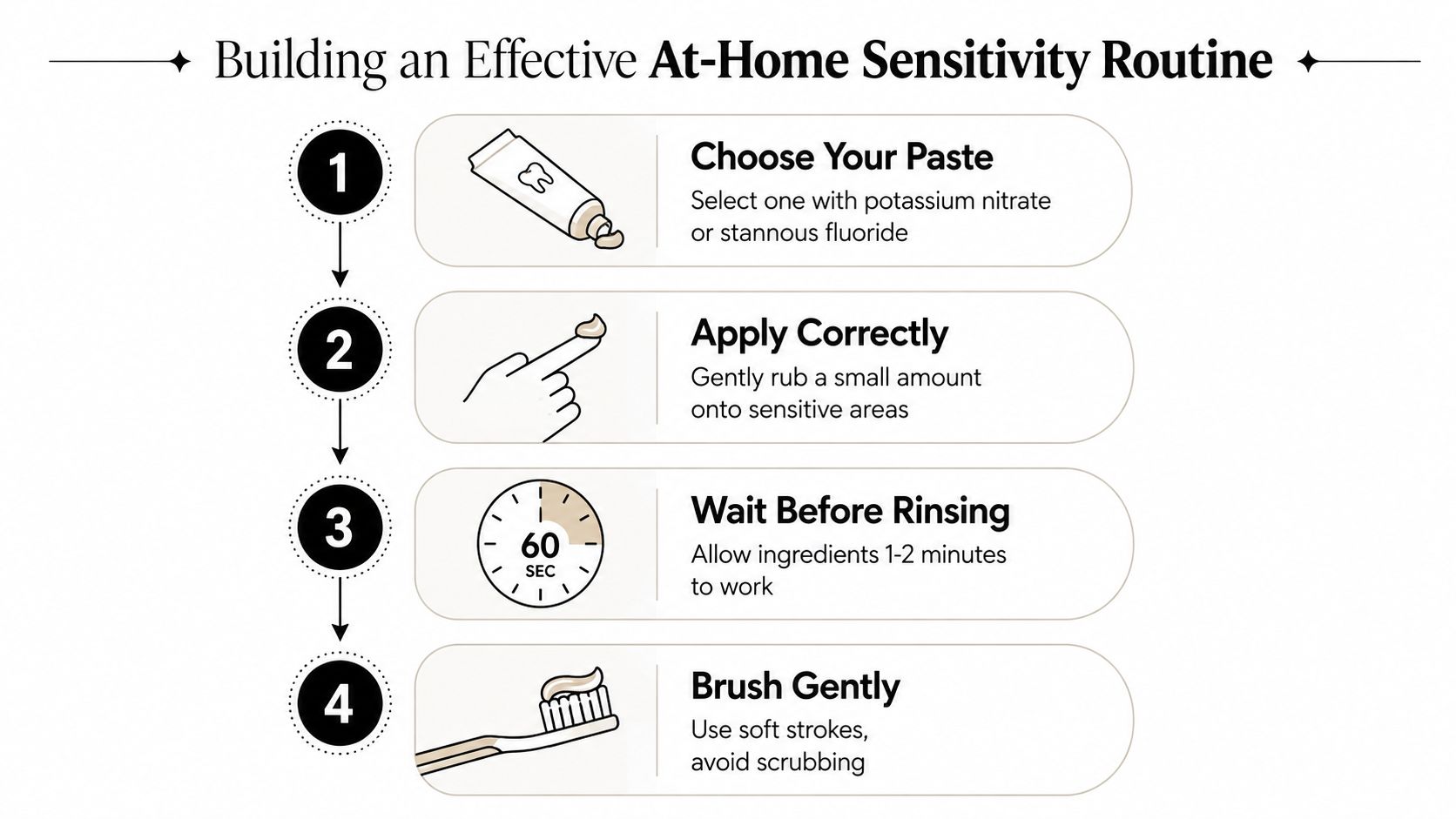
A desensitizing toothpaste won't help much if it gets brushed on and immediately rinsed away. The practical protocol is simple, use it twice daily for about two weeks, and give it time to build up in the spots that hurt (Dental Protocol guide).
A routine that actually sticks
Start with a small amount on the toothbrush, then use it gently instead of aggressively. If one tooth or one area is especially reactive, you can also apply a little directly to that spot before bed and leave it there overnight for longer contact with exposed dentin tubules (Dental Protocol guide).
Then leave the toothpaste in place instead of rinsing right away. That dwell time matters because the ingredients need a chance to sit against the sensitive area instead of disappearing down the sink.
Useful habit: treat sensitive teeth like you'd treat a sore muscle. Repeated, gentle care usually works better than a one-time burst of intensity.
What slows progress
Whitening paste is a common mistake when people are trying to calm sensitivity. The abrasive feel can undercut the purpose of a desensitizing routine, especially if the teeth are already irritated.
The same is true for brushing too hard while expecting a mineral paste to do all the work. A good toothpaste supports the routine, but your hand pressure decides a lot of the outcome.
For readers who want a broader mineral-based perspective, this companion guide on remineralize teeth naturally adds useful context for how everyday habits and mineral support fit together. The main idea stays the same, choose a gentle routine, then repeat it long enough for the mouth to respond.
When to See a Dentist About Sensitivity
Home care can help a lot, but it can't fix every cause. If sensitivity stays stubborn after two to four weeks of steady at-home care, or if it keeps coming back in one specific tooth, a dentist should take a look.
Pain that wakes you up at night, shows up with swelling, or comes with visible tooth damage deserves more than another toothpaste swap. Those patterns can point to a crack, decay, or another issue that needs a professional plan.
What dental care can add
Dentists may recommend in-office fluoride varnish, bonding, gum-related procedures, or evaluation for grinding and structural wear. If the root cause is deeper, home routines support the teeth, but they don't replace treatment.
The clearest reason to book is simple. Sensitivity that changes in character, gets worse instead of better, or feels localized to one tooth needs a diagnosis, not guesswork.
If you're not sure how to bring it up, Patient Talker LLC has a practical guide on how to talk to your doctor, and the same communication habits help at the dental office. Write down what triggers the pain, how long it lasts, and whether it's one tooth or several, because that information helps the dentist narrow the cause faster.
Common Questions About Tooth Sensitivity
Can sensitivity be cured permanently? Sometimes the trigger can be removed or corrected, but many people need ongoing management because the underlying issue, like recession or wear, can still be there.
How long does it take to notice change? With a desensitizing toothpaste used consistently, many routines need about two weeks before relief becomes noticeable (Dental Protocol guide).
Can kids use desensitizing toothpaste? Families should check age-appropriate labeling and ask a dentist when they're unsure, especially if a child's sensitivity seems new or unusual.
What about whitening? If whitening makes your teeth more sensitive, pause it until things calm down, then reintroduce it cautiously. The safer move is to get the sensitivity under control first, then decide whether whitening still makes sense.
If your teeth are giving you that cold-shock feeling more often than you'd like, pick one trigger to focus on this week, brush more gently, and try a desensitizing routine consistently for two weeks. If the pain still lingers, especially in one tooth, book a dental visit and bring a short note about what sets it off, because that small detail can make the next step much clearer.
