

Posted by Sarah Collins
on October 04, 2026

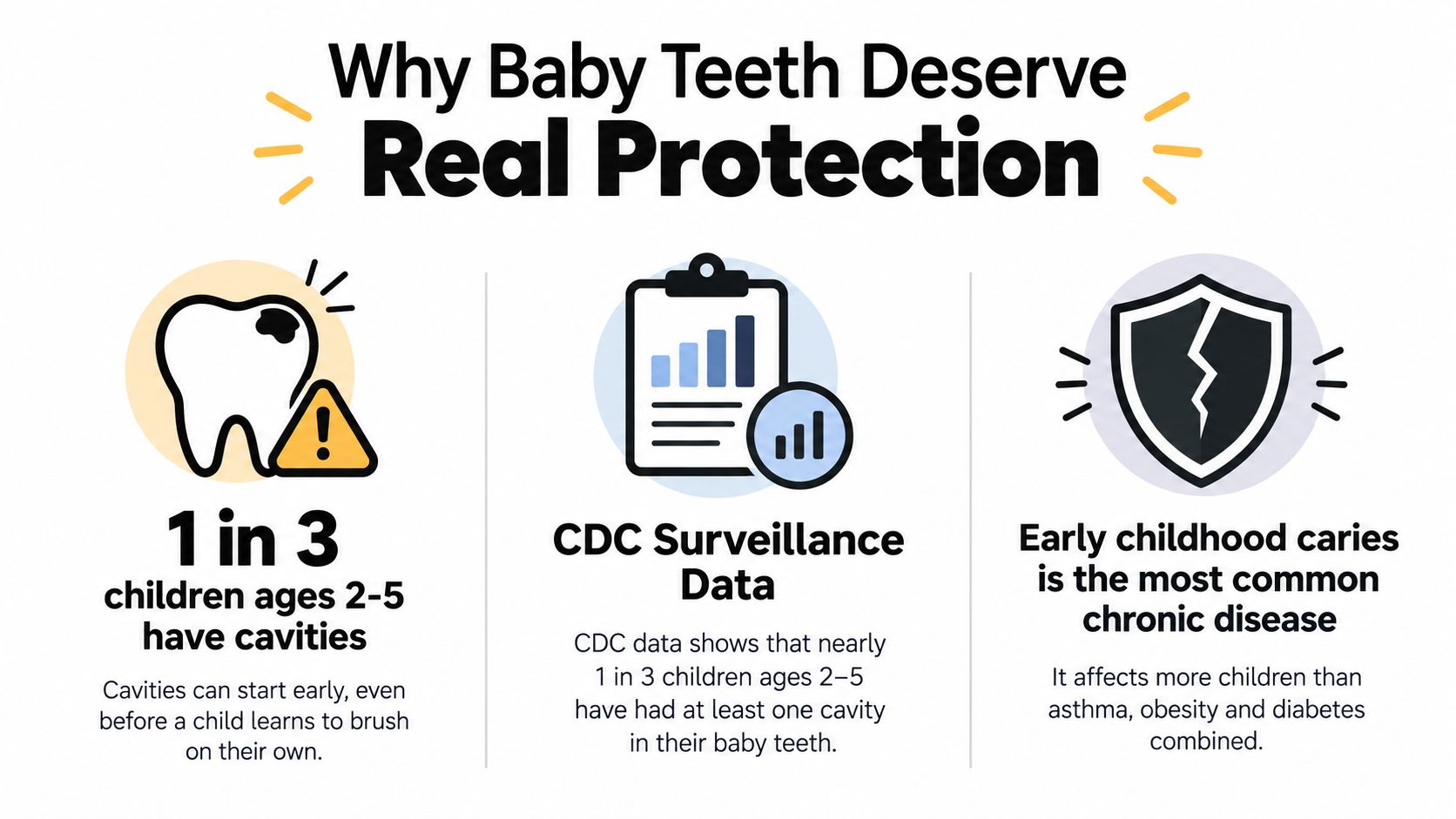
About 23% of children ages 2–5 had dental caries in their primary teeth during 2011–2016, according to CDC data summarized by the American Academy of Pediatric Dentistry. More than 1 in 10 children in that age group already had an untreated cavity in their baby teeth in the CDC's 2024 surveillance report.
That sounds worrying, but it doesn't mean you need a perfect household routine. Learning how to prevent cavities in toddlers comes down to a few repeatable choices: clean teeth twice a day, use the right amount of toothpaste, reduce frequent sugar exposure, start dental visits early, and make oral care predictable enough that your child knows what comes next.
Why Baby Teeth Deserve Real Protection
Baby teeth aren't disposable placeholders. They help toddlers chew comfortably, form sounds for speech, and hold space for permanent teeth while adult teeth develop. If decay makes a baby tooth sore, eating, speaking, sleeping, and brushing may become harder. Protecting these teeth supports everyday comfort now, not only a future smile.
A simple way to understand the risk is to focus on repeated exposure. Each time sugary food or drink stays on the teeth, plaque bacteria have another opportunity to produce acids. The total amount matters, but frequent sipping or snacking can keep that acid cycle going for longer. Water between meals gives teeth a break, while a predictable cleaning routine removes plaque before it remains in place.
The practical reason to start early
A toddler's teeth meet food, drinks, and plaque from the moment they erupt. Early protection gives you more opportunities to prevent problems before a child needs treatment. It does not require elaborate equipment. A caregiver handles the parts a toddler cannot yet perform consistently, then builds a routine the child can gradually learn.
The AAPD guidance on early childhood caries supports this prevention-first approach:
- Clean the teeth: Brush every tooth surface twice daily.
- Dose toothpaste carefully: Use a rice-sized smear for children younger than 3, then a pea-sized amount from ages 3–6. That small amount provides fluoride while limiting what a child may swallow.
- Choose exposure wisely: Offer water between meals and avoid prolonged contact with sugary drinks. Sugar frequency often matters more than serving size because repeated exposure gives plaque bacteria more chances to produce acid.
- See a dentist early: The first visit can focus on risk assessment, caregiver education, and prevention planning.
- Build repetition: Attach brushing to routines that already happen every morning and evening.
Reassurance: A missed brushing session doesn't undo your child's oral health. Return to the routine at the next opportunity and repeat it over time.
The idea that baby teeth will “fall out anyway” overlooks the years they support eating, speech, comfort, and the position of developing permanent teeth. Protection means giving your child a comfortable, stable start, not maintaining a flawless routine.
Building a Brushing Routine That Sticks
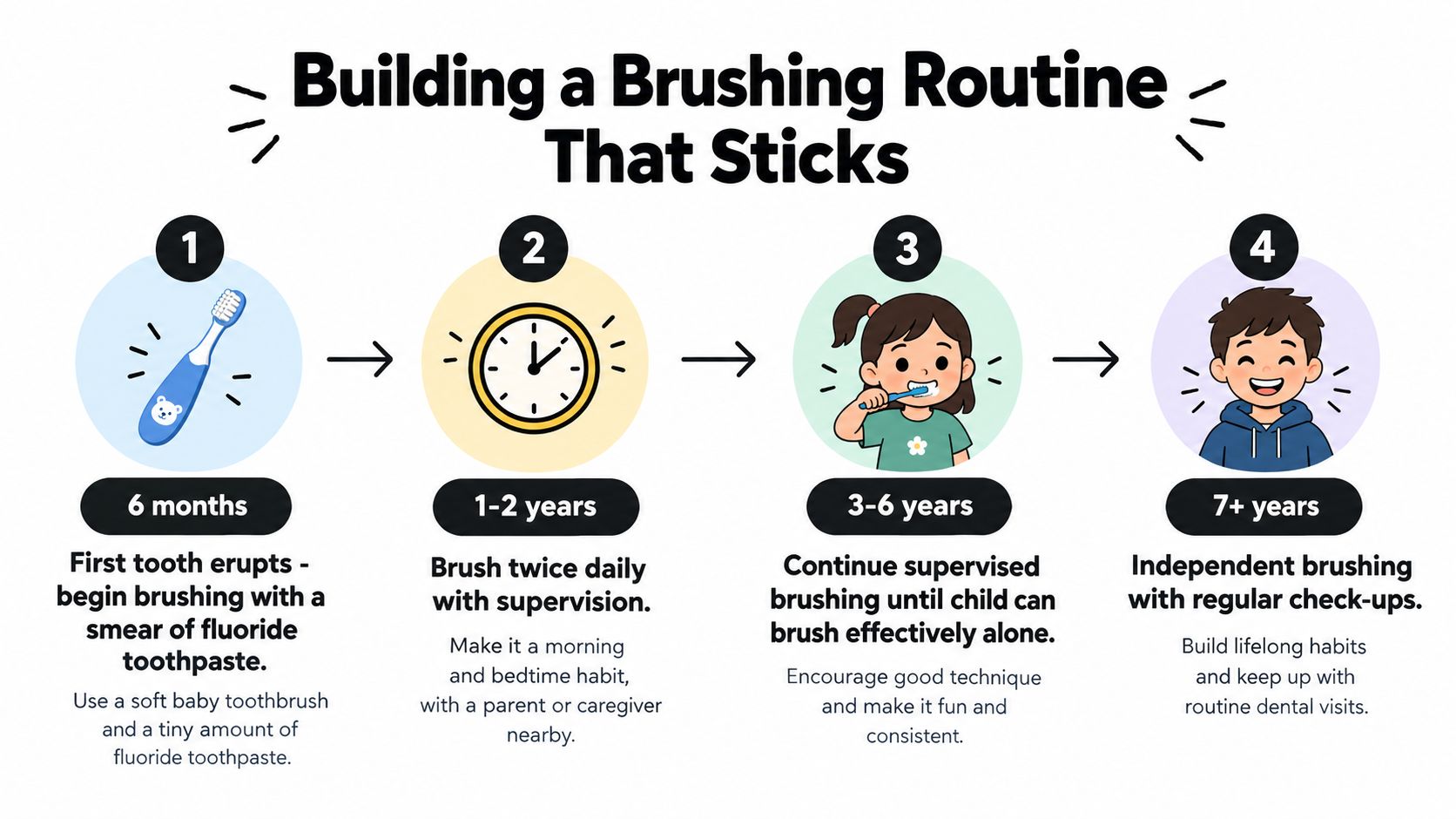
Begin brushing as soon as the first tooth erupts, which can happen as early as 6 months. Brush twice a day, with the evening session happening before sleep. Toddlers don't yet have the coordination to clean every surface reliably, so an adult should supervise and usually finish the brushing until at least age 6–8.
The Canadian Dental Association's toddler oral-care guidance emphasizes the details that are easy to skip when everyone is tired.
What a complete session looks like
Use a small, soft-bristled toothbrush and guide it with gentle circular or jiggling movements. Work across the outside, inside, and chewing surfaces of every tooth, paying attention to the gumline and the back teeth that a toddler may not reach alone.
After brushing, encourage your child to spit. Don't rinse with a mouthful of water, because leaving a light toothpaste residue on the enamel allows fluoride to remain in contact with the teeth longer. A toddler who can't reliably spit may need especially close supervision, but the adult still controls the amount of toothpaste placed on the brush.
A useful morning routine might look like this:
- Brush after breakfast or as part of getting dressed.
- Let your toddler hold a second brush or take a turn.
- Take over and clean all tooth surfaces.
- Encourage spitting without a full-water rinse.
At bedtime, repeat the process after the final food or drink. Make brushing the last cleaning step before sleep, rather than something that happens early in the evening and is followed by snacks.
When your toddler resists
Resistance isn't proof that you're doing anything wrong. Toddlers often object because brushing takes control away from them, so give them small choices without giving them the option to skip.
Try letting your child brush a doll's teeth first, choose between two toothbrushes, or hold a second brush while you work. Some families use a two-parent tag-team approach, with one adult telling a short story and the other brushing. A familiar brushing song can work better than a countdown timer because it turns the end point into something predictable and enjoyable.
For more ideas that fit into a family routine, see oral care for kids. The goal isn't a theatrical performance every night. It's a calm sequence your child recognizes: brush, adult finishes, spit, and move on to the next bedtime step.
Choosing Toothpaste Your Toddler Can Swallow Safely
Toothpaste decisions often feel confusing because parents are balancing two needs. Fluoride helps reduce cavity risk, but toddlers may swallow some toothpaste because they haven't mastered spitting. The safest starting point is to use a very small amount and keep the adult in charge of dispensing it.
For a fluoridated toothpaste containing 1000 ppm fluoride, the American Academy of Pediatric Dentistry recommends a smear about the size of a grain of rice for children younger than 3. From ages 3–6, use a pea-sized amount. The AAPD describes these amounts as approximately 0.1 mg of fluoride and 0.25 mg of fluoride, respectively, in its early childhood caries policy.
Toothpaste amount by age
| Age | Amount | Approximate fluoride |
|---|---|---|
| Younger than 3 | Rice-sized smear | About 0.1 mg |
| Ages 3–6 | Pea-sized amount | About 0.25 mg |
A fluoride-free toothpaste can be another family's preferred option, especially when a toddler can't spit reliably. Nano-hydroxyapatite is a mineral that mirrors the natural mineral makeup of tooth enamel and is studied for supporting healthy enamel. Fluoride-free formulations are designed to be swallow-safe when small amounts are ingested, but parents should still use only the amount needed for brushing.
This isn't a fear-based choice between “good” and “bad” toothpaste. Fluoridated water and brushing with fluoridated toothpaste are recognized as effective cavity-prevention tools, while a fluoride-free nano-hydroxyapatite option may suit families who want a different ingredient approach. If your household uses well water, bottled water, or another low-fluoride water source, discuss toothpaste, supplements, and professional fluoride with your child's dentist rather than guessing.
Parents comparing child-friendly formulas can also review NINI and LOLI toothpaste selection and check the ingredient list, age guidance, and swallowing instructions. Mouthology is another fluoride-free oral-care brand families may consider when comparing nano-hydroxyapatite options. Whatever you choose, the adult should apply the dose and supervise brushing.
Rethinking Sugar Beyond Just Limiting Sweets
The most useful sugar question isn't only, “How much did my toddler eat?” It's also, “How many times did the teeth encounter sugar today?”
Each sugary sip or bite gives mouth bacteria material to turn into acid. When a child grazes or slowly sips a sweet drink, the teeth receive repeated exposure with less time between episodes. A 2024 systematic review found a consistent association between early-childhood sugar consumption and higher caries risk. Its pooled result was OR 1.59, meaning children consuming sugar were 59% more likely to develop caries. The result appears in the systematic review published in Brazilian Oral Research.
Change the rhythm, not just the treat
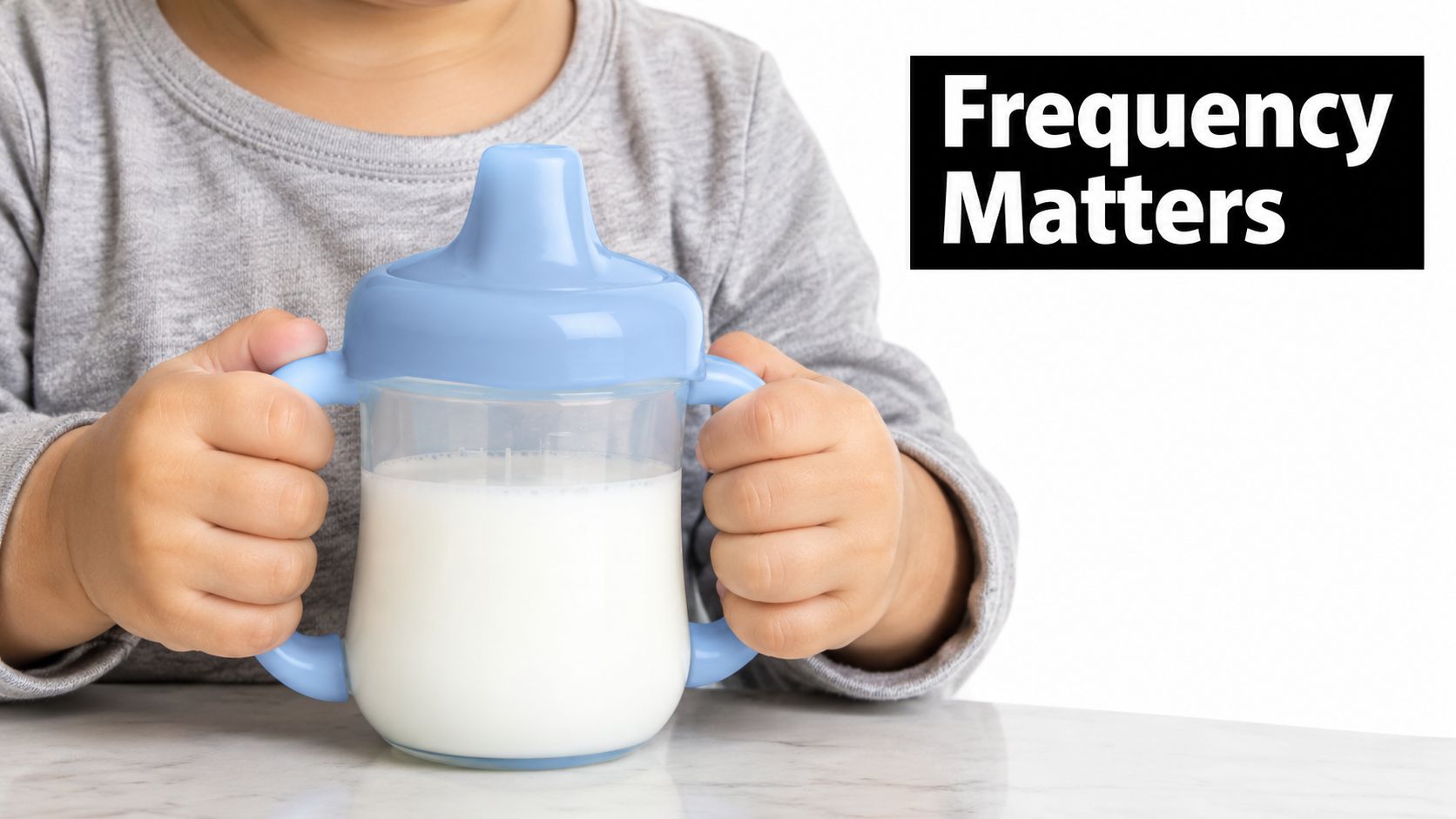
A practical adjustment is to keep sugary foods and drinks with meals instead of offering tiny portions throughout the day. Give water between meals, and avoid filling a sippy cup with juice or another sweet drink for all-day sipping. Milk contains natural sugar too, so prolonged contact with milk can also raise concern for developing teeth.
The American Academy of Pediatrics advises against giving children bottles or sippy cups containing sugary liquids at bedtime or for long periods during the day. It also recommends moving from breast or bottle to a lidded cup around 12 months and not allowing a child to fall asleep with a bottle.
A family-friendly pattern might look like this:
- Lower-exposure rhythm: Breakfast with milk, water between meals, lunch with water or milk, an afternoon snack, dinner, then brushing before bed.
- Higher-exposure rhythm: Juice in the morning, a sweetened pouch later, a sippy cup carried through the afternoon, milk at bedtime, and another drink overnight.
The second pattern may contain small amounts at each occasion, but the teeth keep encountering a fermentable drink or snack. For practical ideas that help replace grazing with planned choices, parents can browse low sugar toddler snacks. The aim isn't to make every meal austere. It's to protect the long stretches between meals and keep bedtime free from sugary liquids.
Making the Most of Dental Visits
Your toddler's first dental visit should happen by the eruption of the first tooth or no later than 12 months of age. This early appointment usually isn't about putting a child through extensive treatment. It gives the dental team a chance to assess caries risk, examine the mouth, answer parent questions, and create a prevention plan that fits the child's teeth, diet, water source, and daily routine.
The concept of a “dental home” is useful here. Pediatric guidance recommends establishing one within 6 months of the first tooth and no later than 12 months. Starting early also helps your child experience the dental office as a familiar place rather than somewhere they visit only when something hurts.
What prevention can include
For toddlers with a high cavity risk, a clinician may discuss fluoride varnish, dietary changes, brushing technique, and other conservative options. Pediatric guidance describes varnish application 2–4 times per year for high-risk toddlers, and a review of controlled trials concluded that fluoride varnish can reduce primary-tooth caries incidence in children aged 6 years and younger. The evidence review also noted that certainty wasn't fully conclusive across all studies, so your dentist should explain why varnish is or isn't appropriate for your child.
The AAPD year-one visit guidance places the focus on identifying risk early and using prevention before a small concern becomes a larger one. A dentist may also discuss silver diamine fluoride or other nonsurgical approaches when appropriate. These decisions depend on what the clinician sees, not on a generic age-based rule.
Make the first appointment easier
Schedule the visit when your child is usually rested and fed. Keep your explanation simple: “The dentist is going to count your teeth and help us keep them strong.” Avoid promising that nothing will happen, since the dentist may need to examine the mouth or recommend a preventive treatment.
Bring the child's toothbrush and a short list of questions. Mention nighttime bottles, frequent snacking, fluoride exposure, swallowing toothpaste, and any visible changes. Waiting for pain is a poor screening strategy because a toddler may not describe discomfort clearly. Early appointments give you a chance to act while prevention can remain simple.
Turning Oral Care Into a Habit Your Child Enjoys
Toddlers cooperate more readily when brushing belongs to an existing sequence. Attach it to something that already happens every day, such as putting on pajamas, reading a bedtime book, or washing hands after breakfast. The fewer decisions you make at the sink, the less room there is for a nightly negotiation.
Parents also set the emotional temperature. Let your child watch you brush, smile in the mirror, and talk casually about cleaning every tooth. A toddler may still resist, but seeing the adults follow the same routine makes brushing feel like a normal family activity rather than a task imposed only on them.
Give your child a role without handing over the job
A useful compromise is, “You brush first, then I finish.” Your child gets a turn, while you still clean the areas they miss. Other small tools can help:
- A song: Choose one consistent brushing song that signals when the routine begins and ends.
- A second brush: Let your toddler hold one while you use another.
- A sticker chart: Track participation and returning to the routine, not perfect technique.
- A mirror: Show your child where you're brushing, especially the back teeth.
- A simple choice: Offer two toothbrushes or ask whether to brush before or after pajamas.
Daycare and grandparents need the same basic message. You might say, “Please offer water between meals, avoid a bottle or sweet drink for sleep, and let us know if you notice a change on the teeth.” Consistency across caregivers matters because a strong home routine can be undermined by long periods of sipping elsewhere.
You won't win every brushing session. A child may cry, hurry, or refuse one evening. Reset at the next morning or bedtime opportunity, keep the dose small, and return to the familiar sequence. Consistency over weeks and months matters more than a perfect performance on one difficult night.
Signs It Is Time to Call the Dentist
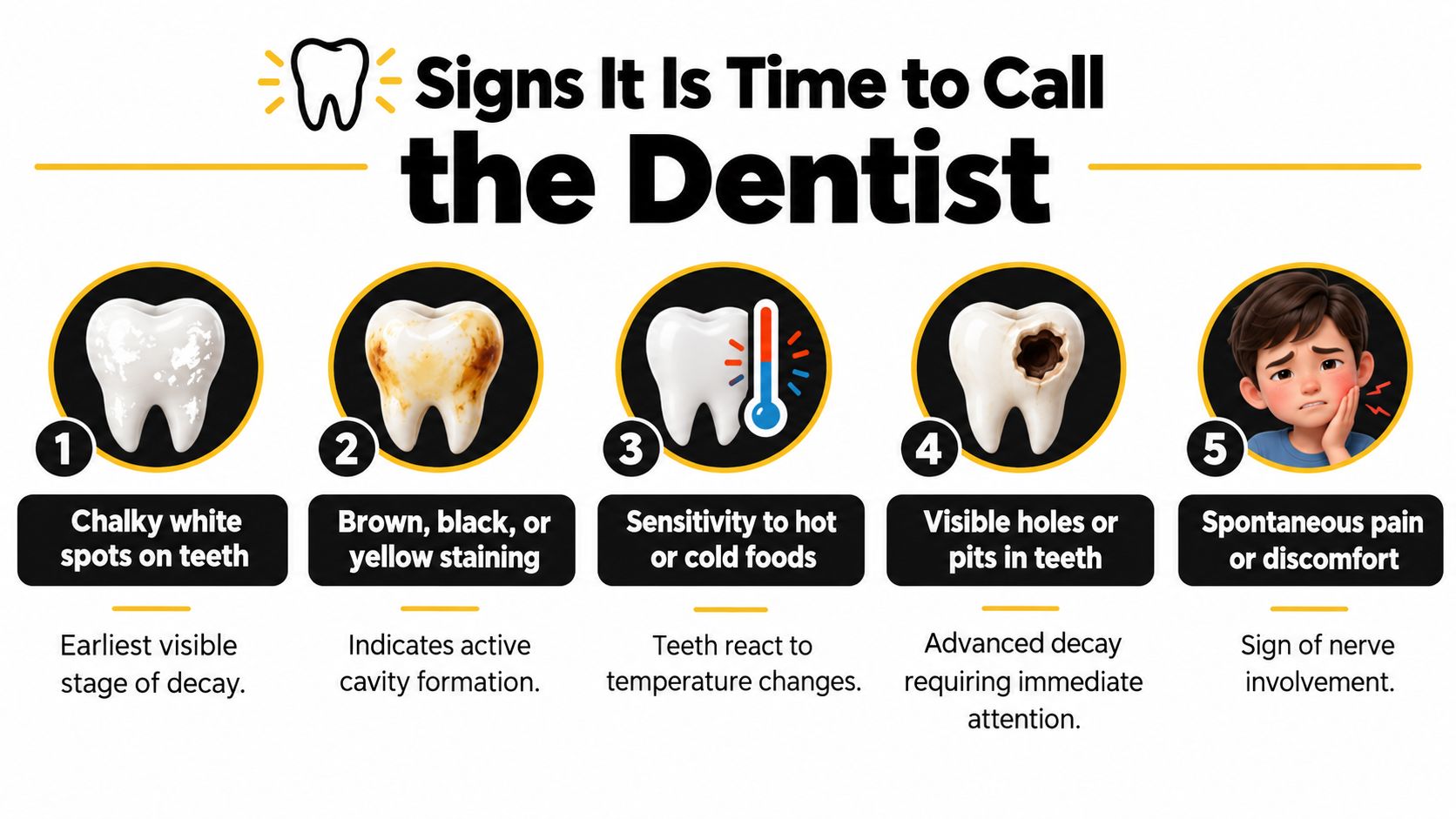
A toddler may not be able to explain tooth discomfort clearly, so parents often notice changes first. Call the dental office if you see a chalky white area, brown or dark discoloration, a chip, a rough edge, a visible hole, or a change in how your child eats.
White spots can be an early visible sign that the enamel has lost minerals. They don't always mean a cavity has progressed, but they deserve professional attention because early changes may be managed more conservatively than established damage. Brown, black, or yellow areas can have several explanations, including staining, so a dentist needs to assess them rather than relying on a photograph or online description.
Watch behavior as well as appearance
Contact the dentist promptly if your child:
- Avoids foods: Refuses hot, cold, or sweet foods they previously enjoyed.
- Touches the cheek: Rubs the face or holds the cheek during meals.
- Reports pain: Says a tooth hurts or wakes uncomfortable.
- Chews differently: Favors one side or stops chewing normally.
- Has visible damage: Shows a pit, hole, chip, or rough area on a tooth.
The CDC's guidance for children's oral health says children should visit a dentist by their first birthday and that brushing should begin when the first tooth erupts, which can be as early as 6 months. Those milestones matter even when the teeth look fine, because a preventive examination can identify risks that aren't obvious at home.
A quick call doesn't mean your child definitely has a serious problem. It means a dental professional can look, explain what they see, and tell you whether monitoring, a routine visit, or earlier care makes sense. For background on acting promptly when a concern appears, see early cavity treatment.
The everyday plan is manageable: brush twice daily with the age-appropriate toothpaste amount, keep sugary exposure infrequent, avoid bedtime bottles with sugary liquids, schedule dental care early, and make oral hygiene a shared family habit. Start with the next brushing session, not with perfection.
If your toddler hasn't had a dental visit by the first tooth or 12 months, schedule one now. Then place a soft toothbrush by the sink, choose the correct toothpaste amount, and ask every regular caregiver to follow the same water-between-meals and bedtime-brushing routine. Small actions repeated calmly can give your child's baby teeth meaningful protection.
