

Posted by Sarah Collins
on September 19, 2026

You probably know the basics already. Brush morning and night, don't rush, try to hit every tooth. The tricky part is that many feel like they're brushing well while still missing the small habits that create that smooth, fresh, dentist-clean feel.
That gap usually isn't about effort. It's about routine design. If you've ever brushed, rinsed, and gone on with your day only to wonder why your mouth still doesn't feel fully clean, a few small upgrades can make a big difference.
How Often and How Long to Brush
Your nighttime routine can feel complete in a hurry. You put toothpaste on the brush, scrub until your mouth feels minty, spit, and move on. But fresh flavor is not the same thing as full plaque removal, and that gap is where a lot of brushing routines fall short.
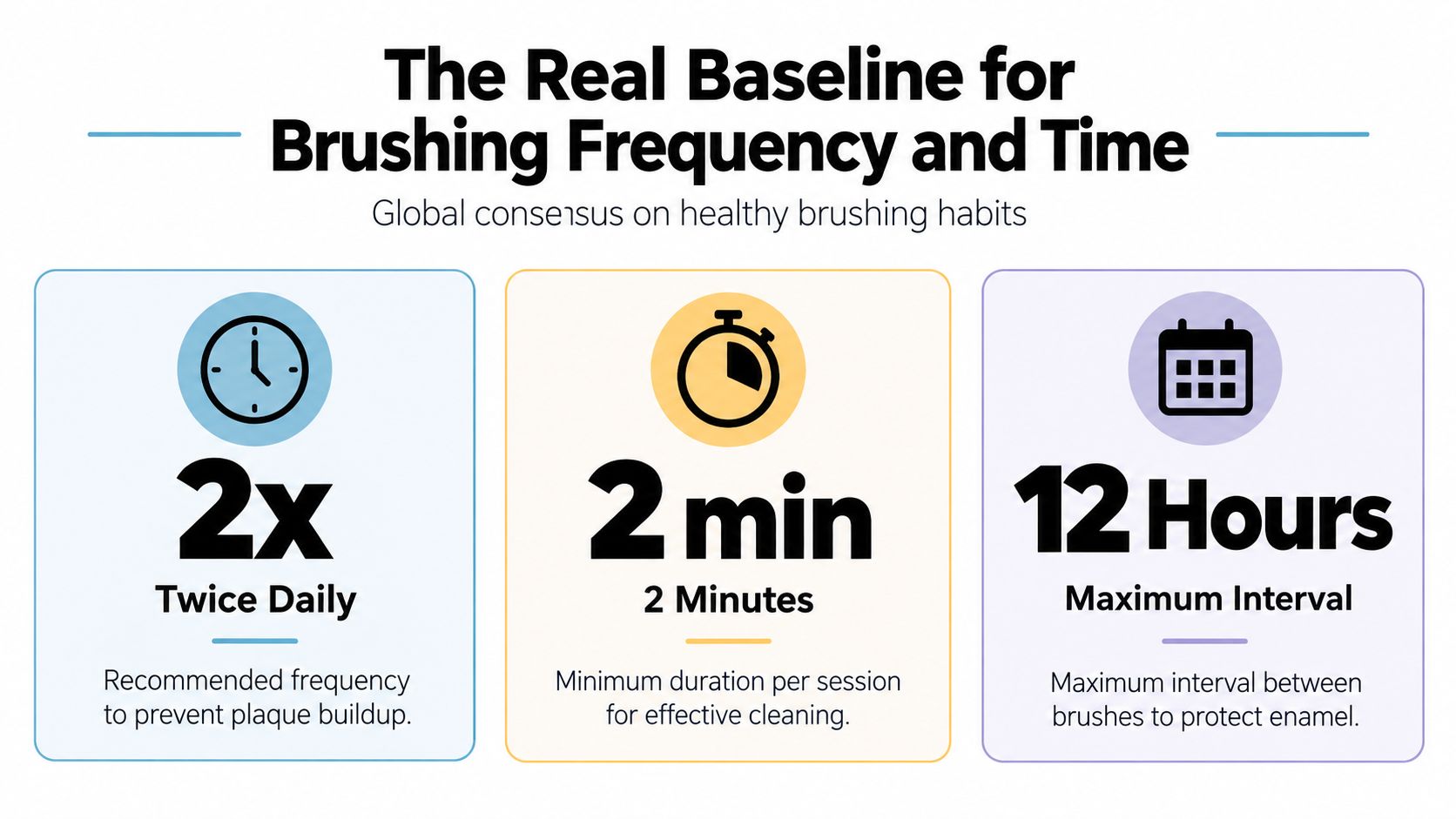
Major oral-health guidance agrees on a simple starting point: brush at least twice a day for about 2 minutes, including one brush before bed. The American Dental Association supports that home-care routine, and a 2023 evidence review found strong agreement across modern guidance on both twice-daily brushing and a 2-minute duration (ADA home care guidance).
Why 2 minutes works better than a quick scrub
Two minutes gives you enough time to cover your whole mouth with intention instead of chasing the easiest-to-reach spots. Front teeth usually get plenty of attention. The back molars, the tongue side of lower teeth, and the gumline often do not.
Research reviews on brushing time have found better plaque removal with longer brushing, including clear gains when people brush for 2 minutes instead of 1 (systematic review on brushing time).
A helpful way to make 2 minutes feel manageable is to divide your mouth into four quadrants and spend about 30 seconds on each one. That turns brushing from one long scrub into four short jobs. It also sets up the rest of your routine, because good oral care is less about brushing harder and more about giving each area enough consistent attention.
A practical baseline you can repeat every day
Use this as your default routine:
- Brush in the morning and before bed. The bedtime brush matters most because saliva flow drops while you sleep, which gives plaque and acids more opportunity to sit on the teeth (NHS teeth-cleaning guidance).
- Stay with the full 2 minutes. A timer on your phone or toothbrush can help if time tends to slip.
- Cover the whole mouth in an organized pattern. Quadrant by quadrant is easier to repeat than brushing wherever the bristles happen to land.
If you want a more detailed breakdown, this guide on how often to brush teeth explains timing choices clearly. And even a strong home routine has limits. A professional dental cleaning Las Vegas visit removes hardened buildup that a toothbrush cannot lift off at home.
Mastering the Angle and Pressure for Better Plaque Removal
Most adults learned to brush by scrubbing side to side. It feels active, so it feels effective. But that motion often misses the gumline and can be rough on the tissues you're trying to protect.
The better model is gentler and more deliberate.
Where to point the brush
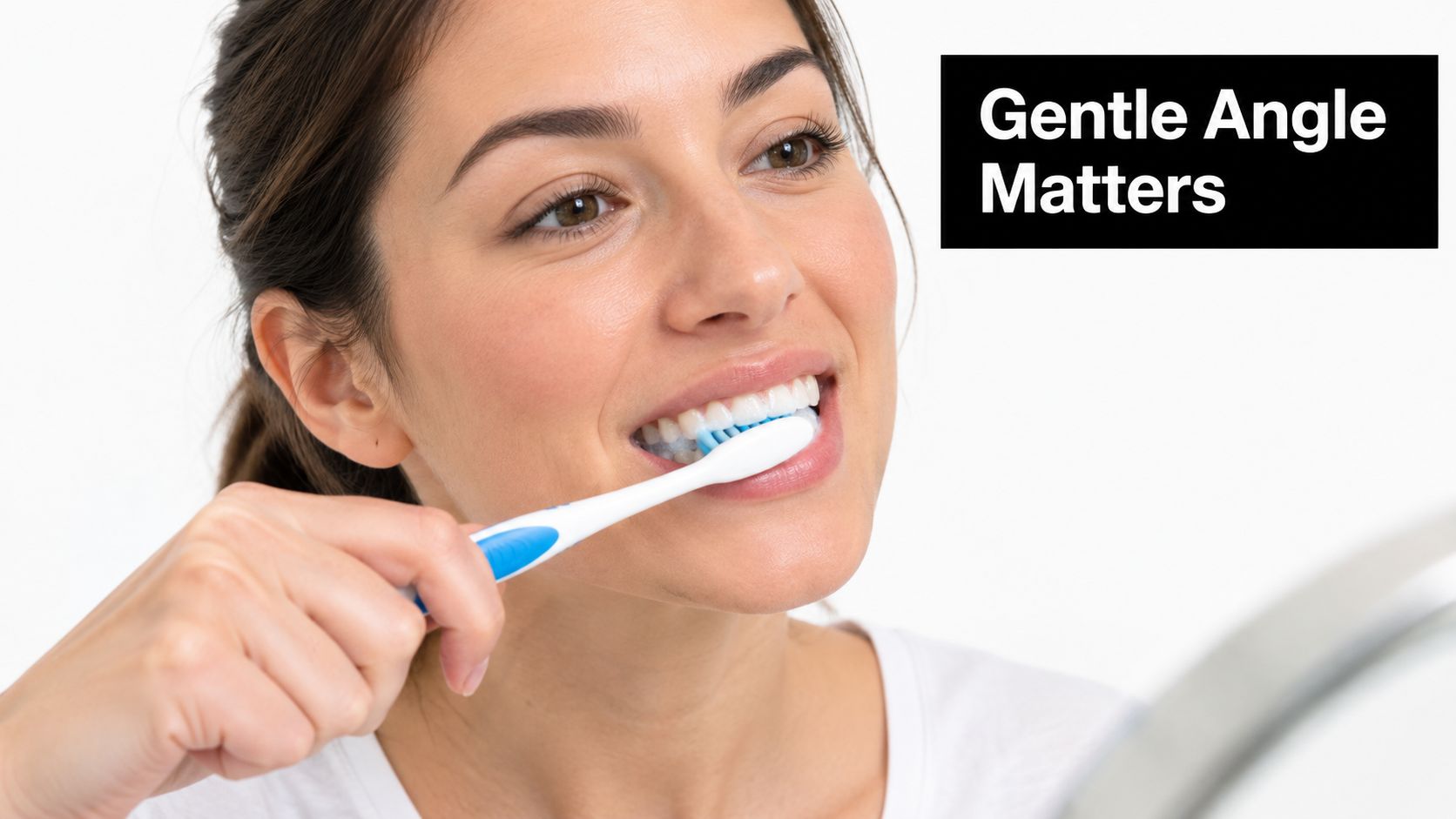
Public oral-health guidance recommends holding the brush at about a 45-degree angle toward the gums and using small circular movements so you clean each area before moving on (NHS oral health technique guidance).
That matters because plaque tends to collect right along the gumline, not just on the flat front of the tooth.
Try this pattern:
- Start on the outer surfaces of one quadrant.
- Keep the bristles angled toward the gumline.
- Make small circles or short sweeping motions.
- Move to the inner surfaces.
- Finish the chewing surfaces with short strokes.
The ADA also advises brushing inner, outer, and chewing surfaces with a soft-bristled toothbrush and gentle pressure for 2 minutes twice a day (ADA toothbrush guidance).
Less force usually works better
A study of adult brushing behavior found that 79.6% reported brushing twice daily, but average brushing time was only 96.6 seconds, average force was 2.3 N, and only 25.2% met all the criteria for appropriate brushing: at least twice daily, 120 seconds, force under 3 N, and circling or vertical sweeping motions (adult brushing behavior study).
The practical takeaway is simple. Don't press harder to clean better. Aim for gentle contact, stay under about 3 N, and avoid horizontal scrubbing.
If the bristles flatten hard against your teeth or your gums look irritated after brushing, you're probably using more pressure than you need.
A quick self-check
Use this table as a mirror test:
| Habit | Better sign | Common mistake |
|---|---|---|
| Brush angle | Bristles tilt toward gums | Brush held straight onto teeth |
| Pressure | Light contact, no bristle splaying | Pushing until bristles bend wide |
| Motion | Small circles or gentle sweeps | Fast back-and-forth scrubbing |
If you want to practice the hand motions more closely, this guide on proper teeth brushing technique can help make the movements feel more natural.
Upgrading Your Tools and Toothpaste Ingredients
Good technique matters most, but your tools still shape the result. If your brush is too harsh, your toothpaste is chosen only for flavor, and you never clean between teeth, even a careful routine can feel incomplete.
A smarter setup doesn't need to be complicated. It just needs to support the way real people brush at home.
Choose tools that make gentle brushing easier
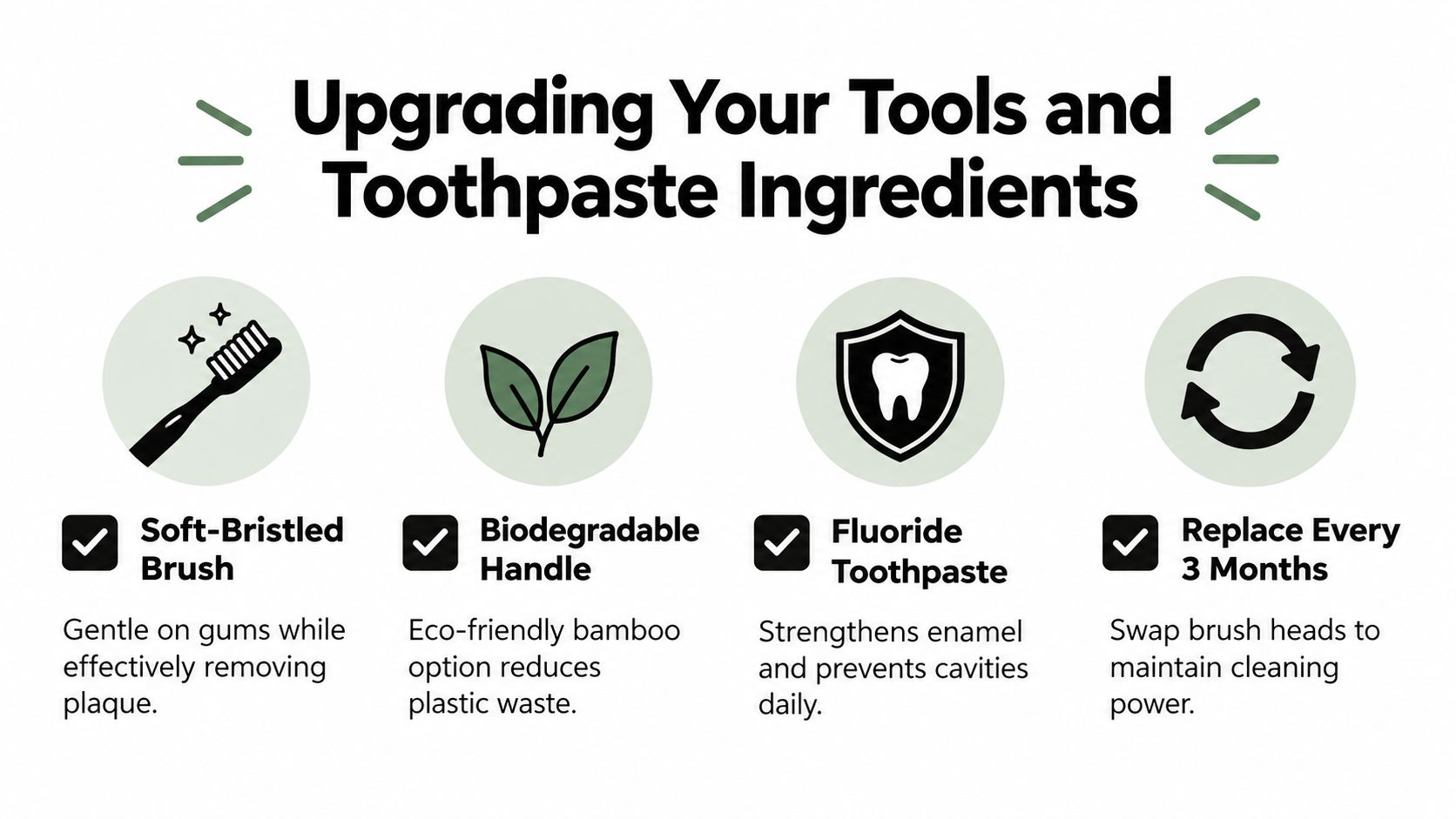
Start with a soft-bristled toothbrush. That fits long-standing guidance and makes it easier to keep pressure under control while still cleaning along the gumline.
Then add tools your toothbrush can't replace:
- Interdental cleaner: Floss, interdental brushes, or floss picks help clean where bristles don't reach.
- Tongue scraper: Useful if your mouth feels coated even after brushing.
- Brush you'll use: Manual or powered can both work when technique and timing are solid.
You don't need a crowded bathroom counter. You need a small set of tools that makes a complete routine easier to repeat.
Think about ingredients, not just mintiness
Many people choose toothpaste based on flavor, foaming, or whether it leaves a strong aftertaste. That's understandable, but it misses the bigger question: what is this formula doing for your enamel and comfort?
For readers who want a modern fluoride-free option, nano-hydroxyapatite has become a popular ingredient because it's enamel-aligned and often chosen by people focused on mineral-based care and sensitivity support. It's one of the reasons some families prefer newer formulations over a basic paste that mainly delivers a clean taste.
Mouthology is one example of that approach. The brand offers a 10% nano-hydroxyapatite toothpaste and related tools as part of a fluoride-free routine for adults and kids. That doesn't replace brushing basics. It gives people another ingredient profile to consider if they want a mineral-focused option.
A good toothpaste should fit your routine, not just your flavor preference.
What a well-rounded setup looks like
Here's a practical comparison:
| Part of routine | Basic version | Upgraded version |
|---|---|---|
| Toothbrush | Any firm brush | Soft-bristled brush that encourages gentle pressure |
| Between-teeth cleaning | Skipped | Daily floss, floss picks, or interdental cleaner |
| Toothpaste choice | Chosen for flavor only | Chosen for ingredient profile and enamel support goals |
| Finish | Brush and rush out | Brush, spit, and let the toothpaste keep working |
If you're comparing formulas, this explainer on toothpaste that strengthens teeth offers a useful ingredient-focused overview.
Post-Brushing Habits That Reduce Brushing Effectiveness
You finish brushing, rinse with water, and head out the door. That last 10 seconds can undo part of the work you just did.
A strong brushing routine does not end when the brush leaves your teeth. What you do right after brushing affects how long your toothpaste ingredients stay in contact with enamel.
Spit, then let the toothpaste sit
Public-health guidance from the FDI and NHS advises people to spit out excess toothpaste without rinsing right away, because rinsing can wash away fluoride and reduce how much remains on the teeth to protect them (FDI oral hygiene fact sheet).
That light coating left behind is useful. It works like leaving skin cream on long enough to do its job, instead of washing it off the moment you apply it.
If you are used to rinsing, the mouth can feel foamy or unfinished at first. That sensation usually reflects habit, not a problem with the routine.
A better finish looks like this:
- Spit out the excess
- Skip the water rinse
- Wait a bit before eating or drinking so the toothpaste can keep working
That point applies whether your toothpaste uses fluoride or a mineral-based ingredient such as nano-hydroxyapatite. In both cases, more contact time supports the purpose of the paste.
A clean-feeling mouth is nice. A protected tooth surface matters more.
Brushing only cleans the easy-to-reach surfaces
Your toothbrush handles the front, back, and chewing surfaces well. It does much less in the narrow spaces where teeth touch. Plaque collects there like dust in the corners of a room. If you only clean the open floor, the room still is not fully clean.
That is why daily between-teeth cleaning belongs after brushing or at another regular time you will stick with. Floss works for many adults. Floss picks help some people with dexterity or speed. Interdental brushes can be especially useful where there is a little more space between teeth.
The best choice is the one you can use calmly and consistently, not the one that looks most impressive in the bathroom drawer.
Adapting Your Routine for Sensitivity and Life Stages
The core routine stays steady, but the feel of that routine can change a lot depending on your age, comfort level, and what your mouth is dealing with right now.
A person with sensitivity doesn't need a more aggressive brush. A child doesn't need a tiny version of an adult's rushed routine. Someone who is pregnant may want simpler, gentler product choices that still feel effective.
If your teeth feel sensitive
Sensitivity often gets worse when people respond by brushing harder, switching to a firmer brush, or overusing “scrub until it feels smooth” logic. A gentler hand usually helps more.
Focus on comfort-first adjustments:
- Softer contact: Let the bristle tips do the work.
- Non-scrubbing motion: Small circles feel calmer on tender areas.
- Simple ingredient choices: Some people prefer mineral-based formulas, including nano-hydroxyapatite, when they want a fluoride-free option that supports a less harsh-feeling routine.
If you also wake up clenching or feel facial tension, that can muddy the picture. Jaw soreness doesn't always come from brushing alone, so a resource on woke up with a sore jaw can help you think through another possible contributor.
For kids and pregnancy
Children usually need supervision, a small amount of toothpaste, and a slower pace, not just reminders shouted down the hallway. The main win is making brushing structured enough that every surface gets attention.
During pregnancy, comfort and consistency matter a lot. If gums feel more reactive, use a soft brush, keep pressure light, and stick with a repeatable routine rather than skipping sessions because your mouth feels off that day.
The right routine is the one your whole household can repeat calmly, not the one that looks perfect on paper.
When life changes, keep the backbone
For almost everyone, the backbone stays the same: brush thoroughly, clean between teeth daily, and finish in a way that lets toothpaste keep doing its job. The details can flex around that framework.
Building a Simple Daily Routine for Lasting Confidence
Knowledge helps, but routines stick when they're easy to follow half-asleep, late for work, or getting kids ready for bed.
Here's a version that removes guesswork.
Morning rhythm
When you wake up, start with your oral-care tools in the same order every day. That cuts down on the “I'll floss tonight instead” pattern.
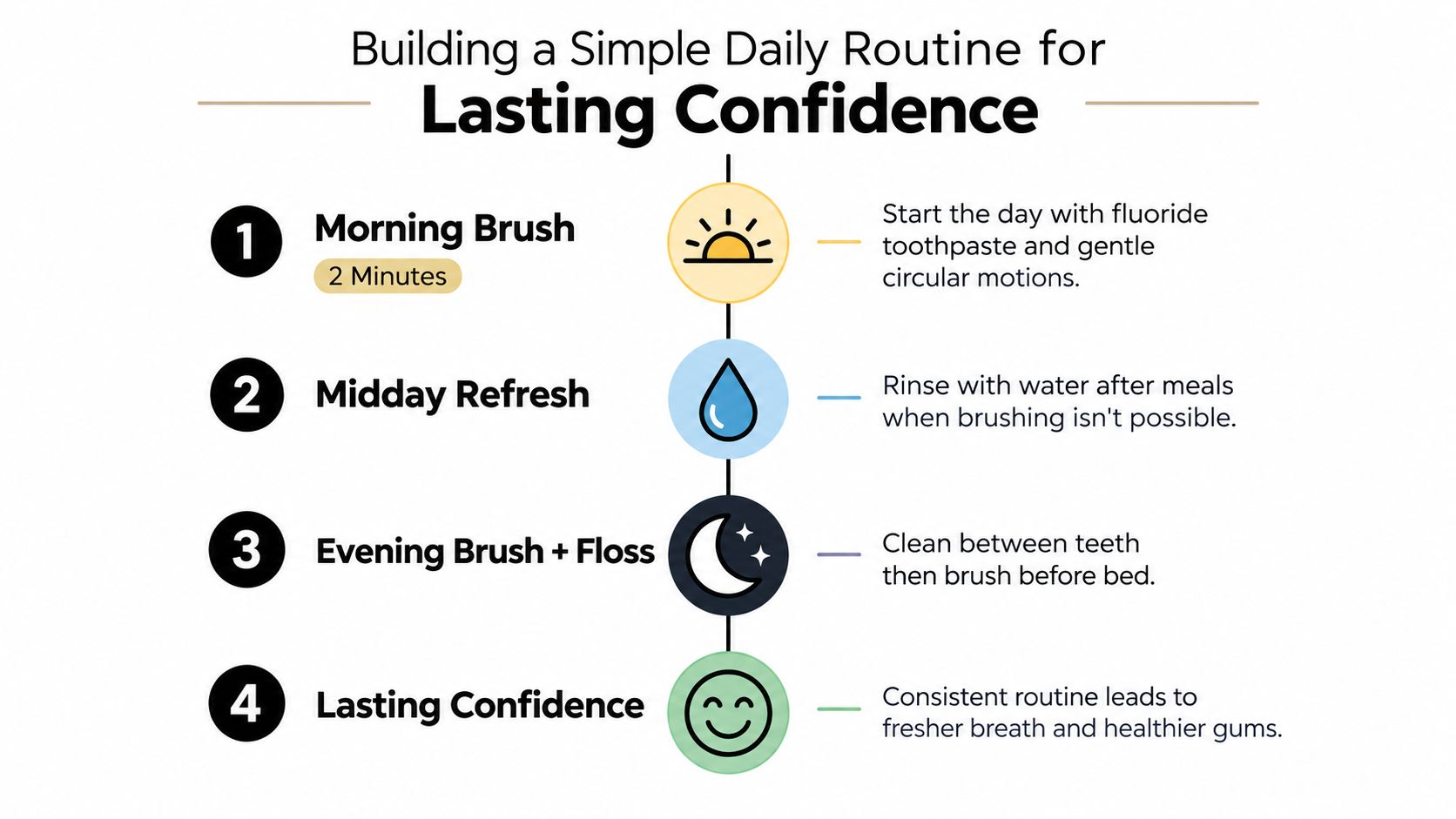
A simple morning flow might look like this:
- Tongue clean first: If you use a tongue scraper, do it before brushing.
- Brush for 2 minutes: Work by quadrant so every area gets time.
- Spit, don't rinse: Let the toothpaste remain on the teeth.
- Move on with your day: No need to overcomplicate it.
Evening rhythm
Night matters because it's your last clean before hours without brushing.
Try this sequence:
- Clean between teeth first: Floss or use another interdental cleaner before you brush.
- Brush your full 2 minutes: Don't race through the back teeth.
- Finish with a spit: Skip the water rinse.
- Put the brush away and be done: Avoid the urge to “freshen up” again with random extra steps.
This is how to brush teeth well in real life. Not by brushing harder, but by making the routine complete enough that each step supports the next.
A steady routine won't feel dramatic. It will just make your mouth feel consistently cleaner, smoother, and easier to trust every day.
