

Posted by Sarah Collins
on August 14, 2026

A parent can stand at the bathroom sink, one hand on a squirmy toddler and the other on a toothpaste tube, and feel stuck between two messages at once. The tube says safe to swallow, but the dentist keeps recommending fluoride, supervised brushing, and a tiny amount on the brush. That's exactly why Coral Kids Toothpaste gets so much attention, it sits in the middle of a real parent problem, not a marketing problem.
What Coral Kids Toothpaste Is and Why Parents Are Curious
A parent standing at the bathroom sink may be trying to solve two problems at once. The child needs teeth cleaned, but the child may also swallow toothpaste, wiggle away, or refuse to keep the tube anywhere near the mouth. That is why Coral Kids Toothpaste draws attention. It sits inside a real parenting decision, where the toothpaste formula has to match the child's brushing habits, not just the label on the front.
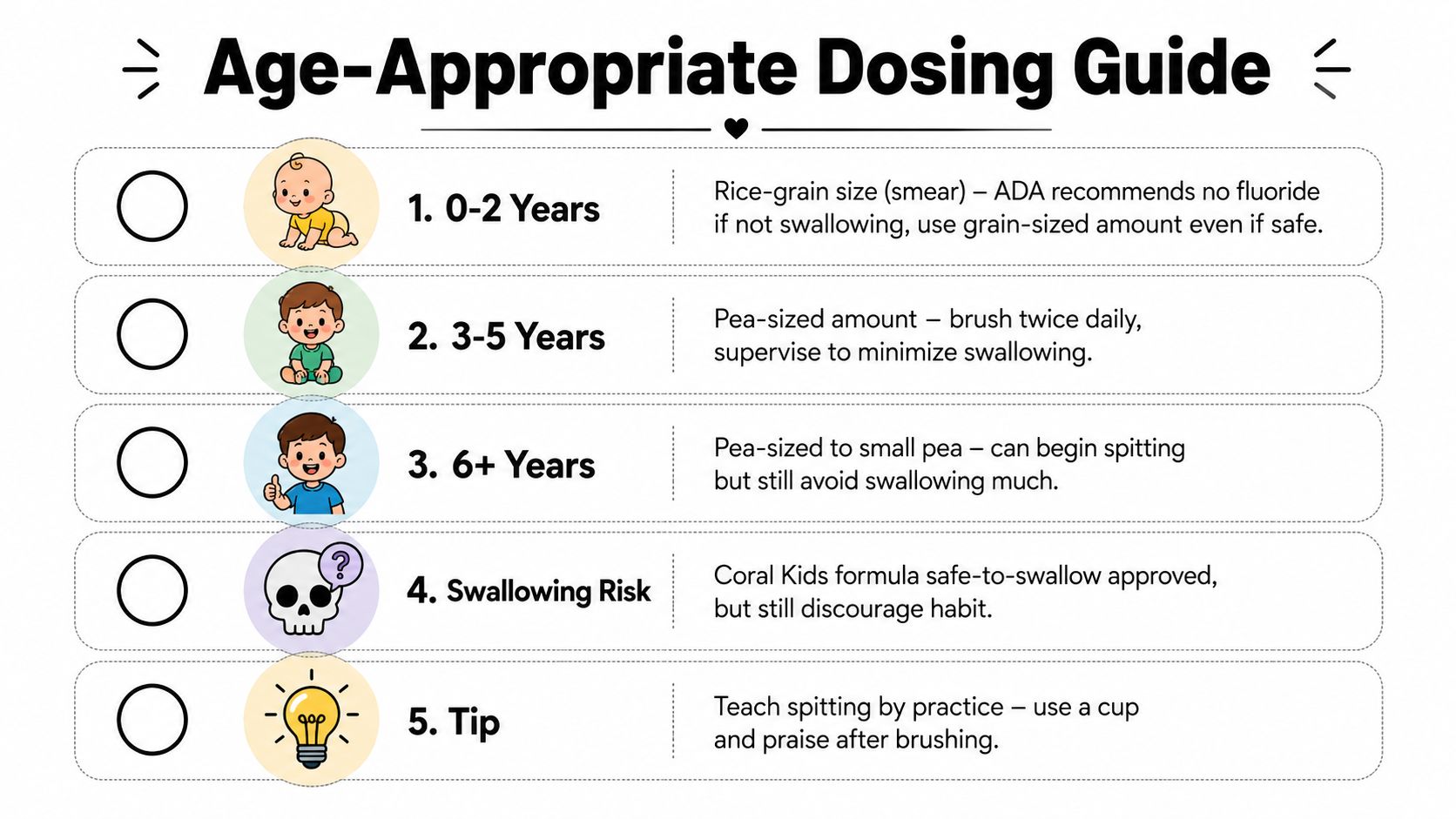
Pediatric guidance treats toothpaste use as a dose issue, especially for young children. The ADA recommends only a rice-grain-sized smear for children under 3 and a pea-sized amount for children ages 3 to 6 (Consumer Reports). That kind of guidance is easy to miss if a family is focused only on flavor or foam, but it matters because the amount on the brush changes how much toothpaste a child may swallow.
A fluoride-free, swallow-safe tube can feel like a better fit for some families. Parents who are still helping with every brush, or who know their child tends to gulp toothpaste, may prefer a formula that is designed with ingestion in mind. A standard fluoride kids toothpaste, such as Colgate Kids Cavity Protection, contains sodium fluoride 0.24% (0.15% w/v fluoride ion) and tells parents to supervise brushing for children 2 to 6 and to get help if more than used for brushing is swallowed (DailyMed). That contrast helps explain why some parents keep comparing fluoride and fluoride-free options instead of choosing by brand name alone.
Coral's kids line answers that concern with a different promise. It is positioned as fluoride-free and safe to swallow, which appeals to families looking for a simpler routine and less worry during brushing. The product story fits a broader shift in kids toothpaste, where parents are paying more attention to swallow-safety, ingredient clarity, and whether the formula matches the child's age and supervision level.
The brand's early presence was already visible by 2019, when Amazon listed the Coral Nano Silver Bubble Berry Kids Toothpaste as first available on June 13, 2019 (Amazon). Earlier coverage described Coral Kids as built around Ionic Calcium from Above Sea Coral and xylitol, with no glycerin, synthetic colors, synthetic flavors, preservatives, or sodium lauryl sulfate. That background helps explain why parents often see it as a family-friendly alternative rather than a standard mint-style kids paste.
Practical rule: if a child still swallows a lot of toothpaste, the brushing habit matters more than the marketing on the tube. The amount used and close supervision still come first.
The Core Ingredients Inside Coral Kids Toothpaste
Before a parent can judge a kids toothpaste, it helps to know what each ingredient is trying to do. In Coral's kids formula, the headline ingredients are coral calcium, xylitol, and in product positioning, nano silver. The supporting cast includes abrasives such as hydrated silica and sodium magnesium silicate, which help lift surface stain during brushing (Coral Toothpaste product page).
Coral calcium and what it's doing
Coral calcium is the mineral base that gives the formula its identity. Coral describes it as a source of minerals that helps neutralize oral acidity and support enamel remineralization through mineral delivery and pH balancing. For parents, the plain-English version is that the toothpaste is trying to create a friendlier mouth environment for teeth, instead of relying on fluoride as the anticavity active.
Xylitol and the sweetness question
Xylitol shows up in many child-oriented oral-care products because it tastes sweet without being sugar. In Coral's positioning, it's part of the formula's cavity-conscious story, helping reduce the conditions that harmful bacteria prefer. That doesn't make it a magic ingredient, but it does help explain why the paste can feel kid-friendly without turning into dessert in the sink.
Nano silver and the cleaning feel
Coral's marketing also points to nano silver, which is usually presented as an antibacterial support ingredient. Parents don't need to turn that into a science project. The practical takeaway is that the brand wants this line to feel like a cleaner, more stripped-down formula that still does the basic daily job of brushing.
One detail that matters for label readers is what's left out. Earlier Coral descriptions emphasized the absence of glycerin, synthetic colors, synthetic flavors, preservatives, and SLS, which appeals to families who want fewer familiar foaming or texture agents. If you're comparing tubes in the aisle, that's a useful distinction, because “natural” on the front usually hides a much longer ingredient conversation on the back.
For a related ingredient perspective, Mouthology has a clear explainer on nano-hydroxyapatite toothpaste safety, which can help parents understand why mineral-based toothpaste has become such a common fluoride-free option.
Reading the Label Claims Without the Marketing Hype
The front of a toothpaste tube often sounds more certain than the science behind it. Words like mineral-rich, natural, and safe to swallow can help a parent feel calmer, but they don't all mean the same thing, and they don't carry the same weight as a fluoride anticavity claim. The smartest way to read Coral Kids Toothpaste is to separate what the formula can realistically do from what the packaging is trying to suggest.
What the claims usually mean
The claim about 73 trace minerals is part of Coral's mineral-forward positioning. In plain language, it signals that the product is built around a broad mineral story rather than a single active like fluoride. That can be appealing to families who prefer ingredient transparency, but it's still a formulation choice, not a guarantee of a specific outcome for every child.
The 15% xylitol claim and the hydrated silica in the formula deserve a more practical read. Xylitol is there to support a kid-friendly brushing experience and help create a less bacteria-friendly environment, while hydrated silica is there for gentle polishing and stain removal. Those are useful jobs, but they're not the same thing as a classic fluoride toothpaste mechanism.
A simple label test helps here, ask yourself whether the tube is promising cleaner brushing, a calmer routine, or actual anticavity performance. Those are not identical claims.
The marketing language worth slowing down for
The “kill 99.99%” language sounds impressive, but parents should treat it as marketing language unless the exact context is clear on the package or listing. Product pages can use bold phrasing to describe intended function, yet that doesn't automatically tell you how a toothbrush routine fits your child's age, swallowing habits, or cavity risk.
The no-glycerin and no-SLS positioning is easier to understand. It usually means the formula is designed to feel simpler, possibly less foamy, and more aligned with families who avoid certain common cosmetic ingredients. For some children, that's a comfort win. For others, it won't matter much at all.
The key is not to read “natural” as a synonym for “better for every child.” It's a preference signal, not a verdict. If your child tolerates brushing well and you're mainly looking for a mild, swallow-safe routine, Coral's label language may feel reassuring. If your child has a higher cavity history, the label should trigger a different question, not just a purchasing one.
How Coral Kids Compares to Standard Fluoride Toothpastes
A parent usually reaches this comparison point after asking a simple question at the sink. Should the toothpaste be the familiar fluoride default, or does a fluoride-free tube like Coral Kids Toothpaste make more sense for this child right now? The answer depends on cavity risk, swallowing habits, and how much supervision the brushing routine needs.
Side by side in plain language
Fluoride kids formulas are usually built around the 489 to 500 ppm fluoride range in kid-specific products, because children may swallow toothpaste and need lower fluoride exposure than adult pastes (Lion Korea). Broader pediatric references also note that children's toothpaste commonly ranges from 500 ppmF to 1,450 ppmF, while adult toothpaste is usually 1,000 ppmF to 1,450 ppmF (The Conversation).
Coral takes a different route because it is fluoride-free. The formula leans on coral calcium, xylitol, and mineral-based positioning instead of the standard fluoride pathway. For parents, that creates a clear split in use cases. If you want the usual pediatric default for cavity prevention, fluoride is still the familiar choice. If you want a swallow-safe option that lowers worry about ingestion, Coral fits that daily routine better.
The tradeoff makes more sense if you compare the ingredients' jobs rather than the label claims. Fluoride is the ingredient most families associate with cavity protection. Coral's mineral approach sits closer to a comfort-first brushing product, with a fluoride-free profile that some families prefer when spitting is still a work in progress. For a broader explanation of how fluoride-free systems are discussed in dentistry, Mouthology's overview of fluoride vs nano-hydroxyapatite is a useful reference point.
What parents usually miss
The supervision rules are part of the comparison too. Children 2 to 6 using fluoride toothpaste should be watched while brushing, and the amount should stay at a pea-sized level. That is not a side note, it is part of how fluoride toothpaste is meant to be used.
Coral's swallow-safe framing is designed to reduce that ingestion anxiety. That can help in homes with younger brushers, children who resist spitting, or caregivers who want a lower-stress routine. A fluoride-free tube does not replace brushing technique, but it can make the routine feel easier while a child is still learning. That is the main reason some families move toward mineral-based alternatives first.
The honest bottom line is simple. This is a choice between a standard fluoride regimen and a fluoride-free formula that may be easier to manage day to day. Both can belong in family oral care, but they serve different priorities.
Age-Appropriate Use, Dosage, and Swallowing Guidance
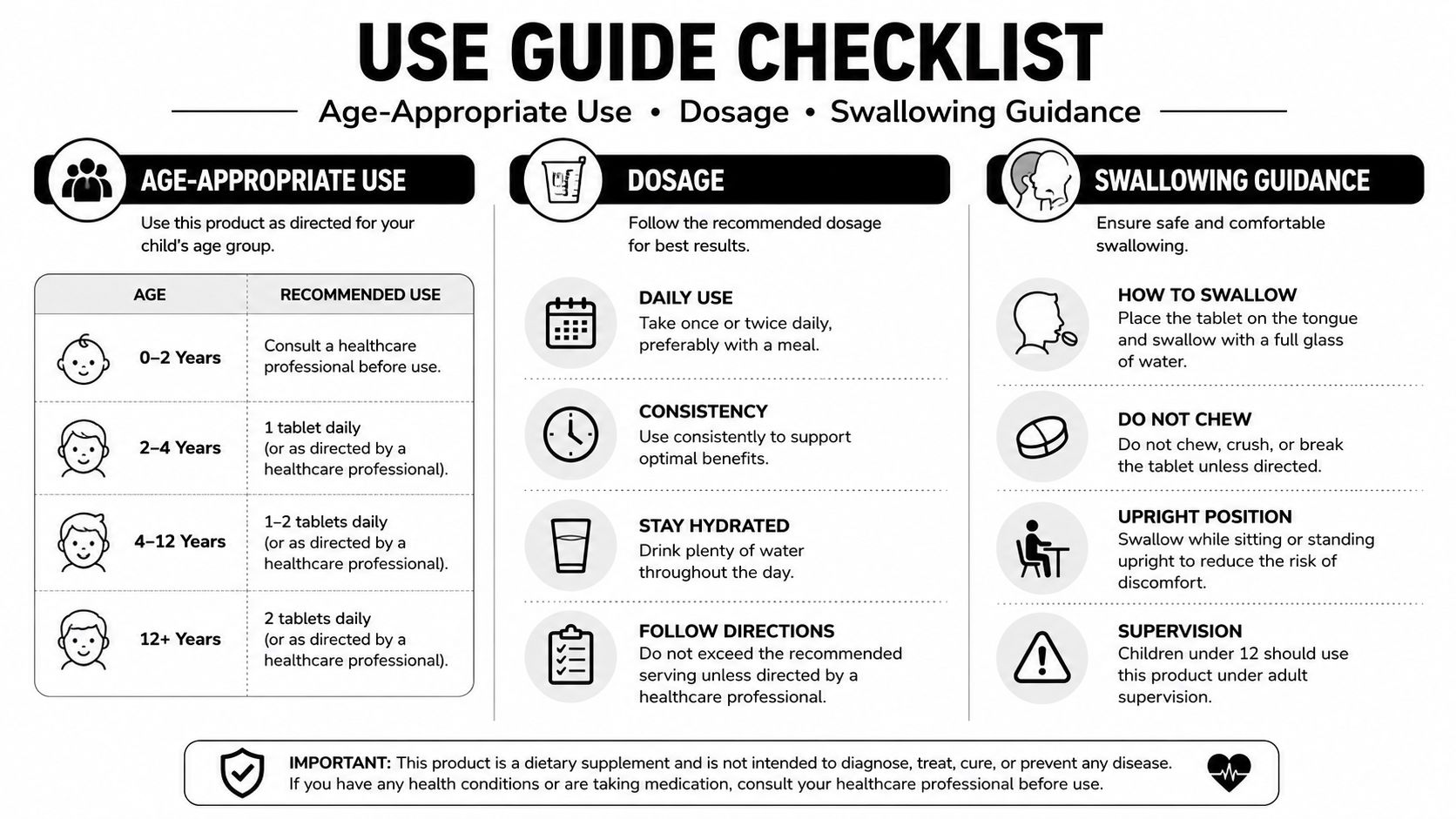
Dose matters more than branding in pediatric oral care. The same tube can fit one child's routine and feel awkward for another, depending on age, coordination, and how well they can spit. For children under 3, the usual guidance centers on a rice-grain-sized smear, and for children 3 to 6, it shifts to a pea-sized amount, as noted in general pediatric toothpaste guidance.
A practical age-by-age rhythm
For under 3, brushing should stay tiny and supervised. The NHS guidance cited for young children recommends 1,000 ppm fluoride for this age group, which shows that even the youngest brushers are not treated as “no fluoride ever” by default (Whittington NHS). That is one reason some parents choose a fluoride-free toothpaste for a period of time, especially if swallowing is still a daily struggle.
For 3 to 6, the routine gets a little easier, but supervision still matters. A pea-sized amount is the usual rule, and children should be helped to spit instead of swishing and swallowing. If a child still cannot manage that, a swallow-safe fluoride-free tube can lower stress for a while. For parents comparing options, safe toothpaste guidance for kids helps explain why the right choice often depends on swallowing habits, not just label claims.
For 7 and up, the amount often stays small, but the brushing habit becomes the bigger issue. Kids who can spit reliably can usually handle more independence, yet they still need reminders not to gulp the toothpaste foam.
Practical rule: choose the toothpaste that matches the child's current brushing behavior, not the age printed on the box.
Some families also like turning brushing into practice, not just cleanup. A playful resource like fun dental health activities for kids can make spitting, timing, and brushing rhythm feel less like a fight and more like a skill.
The key question for switching formulas is risk level. If a child has frequent cavities or a dentist has already talked about higher protection, fluoride toothpaste may be the better default. If the child is very young, swallows a lot, or refuses fluoride paste, a fluoride-free option can be a reasonable short-term fit while you keep the brushing habit strong.
When parents compare Coral Kids Toothpaste with standard fluoride options, this is the part that matters most. The tube is not just a flavor choice, it is part of a brushing plan, and that plan changes with swallowing ability, supervision, and cavity risk.
Practical Benefits Parents Actually Notice
Parents usually don't notice ingredients first. They notice whether brushing turns into a power struggle, whether the child spits without crying, and whether the sink routine ends in a mess. That's where Coral Kids Toothpaste tends to earn attention, not because it performs a miracle, but because it can make the nightly routine feel calmer.
What changes at the sink
A child who hates strong mint often does better with a milder flavor. A gentler flavor profile can make the brush go into the mouth faster and stay there longer, which matters more than most marketing copy admits. If the toothpaste is designed to be safe to swallow, parents also spend less time hovering over every single brush stroke.
The formula's softer feel can matter for newly erupted teeth and sensitive brushers too. Even when a toothpaste isn't making a disease claim, a less aggressive brushing experience can help a child build tolerance for the habit. That's often the true win, a child who stays in the bathroom long enough to brush properly.
The quieter family benefits
Travel gets easier when you're not constantly calculating fluoride ingestion. So does bedtime, because there's less drama about whether the child spit enough, or swallowed too much, or disliked the paste enough to refuse brushing altogether. Those are comfort benefits, not therapeutic guarantees, but they're real.
Mouthology's Kids 5% Hydroxyapatite Toothpaste is another fluoride-free option in this same family-friendly space, and it shows how wide the market has become for parents who want a gentler routine without relying on a standard fluoride paste. That kind of choice is useful because families don't all need the same texture, flavor, or brushing style.
If you're choosing for a child who brushes easily, spits well, and already tolerates fluoride, the practical benefit of Coral may be mostly about preference. If you're choosing for a child who resists brushing, swallows often, or needs a calmer start, the day-to-day convenience can matter a lot more than the front-of-box promise.
Flavors, Dispensing, and Value Options for Families
A toothpaste that a child refuses won't help anyone, no matter how thoughtful the ingredient list is. That's why families look past the label and check the details that affect real-life use, flavor, tube size, how easily the paste comes out, and whether refills or bundles make sense for the household budget.
What parents tend to compare
Bubble Berry is the Coral flavor most families notice first, and that matters because flavor is often the difference between brushing and bargaining. Kids usually care less about mineral language and more about whether the paste tastes friendly enough to keep using every night.
Dispensing matters too. A smaller, easy-squeeze tube helps when the child wants to do it themselves, but it also helps parents control the amount. That's useful across ages because the right amount of toothpaste is part of the brushing routine, not an afterthought.
Value is the last piece, and it's often where families decide whether a product becomes a repeat purchase. Some parents prefer a single tube to test acceptance first. Others want bundle or refill options so they can stop thinking about toothpaste every few weeks.
A good shopping checklist is simple, does the flavor work, does the tube dispense cleanly, and does the price match how often your family actually uses it.
Coral sits in the middle of the fluoride-free kids category rather than at the extreme budget end. It reads as a mineral-focused family toothpaste with a natural-leaning profile, not a bare-bones basic paste. For some homes, that's exactly right. For others, a simpler fluoride-free tube might be enough.
The smartest move is to shop for fit, not branding. If a tube makes brushing smoother and gets used consistently, that's more valuable than a label that looks impressive and sits unopened in the cabinet.
Common Questions and Honest Tradeoffs
Parents usually ask the same three things. Is it safe if swallowed, does it help against cavities, and does “natural” automatically mean safer. Those are fair questions, and the honest answer is that kids toothpaste always involves a tradeoff between comfort, supervision, and cavity protection.
Safety if swallowed
A fluoride-free paste like Coral Kids Toothpaste is appealing because it lowers anxiety around accidental swallowing. That matters in real homes, where toddlers don't always spit on command. But “safe to swallow” should still be read as a brushing convenience, not a license to use more than needed.
Effectiveness and the fluoride question
Fluoride toothpaste remains the pediatric default because public-health guidance keeps returning to the same basic point, small amounts, supervised brushing, and minimizing swallowed toothpaste. For children who are at higher cavity risk, that default matters even more. A fluoride-free paste can be a reasonable temporary choice for a child who swallows a lot or strongly resists fluoride, but it shouldn't be treated as a permanent answer for every child.
Natural doesn't automatically mean better
“Natural” can be a preference, not a proof. A coral calcium and xylitol formula may fit a family that wants a simpler ingredient list, but the better toothpaste still depends on the child's age, brushing habits, and cavity history. That's why pediatric dentists often focus on the habit first, then the formula.
If you're unsure, bring the tube to your child's next visit and ask a direct question. Tell the dentist how much your child swallows, whether spitting is going well, and whether cavities have already shown up. That conversation usually makes the choice much clearer than any front-of-box claim.
Coral Kids Toothpaste makes the most sense for families who want a fluoride-free, swallow-safe option and understand the tradeoff with fluoride-based cavity prevention. If your child has a history of cavities or your dentist already wants a fluoride regimen, ask before switching. If you're trying to build a calmer brushing habit first, start there, then revisit the formula when your child's brushing skills and cavity risk change.
If you're weighing a fluoride-free kids toothpaste for a child who still swallows easily, bring your current tube to the next pediatric dental visit and ask whether your child's brushing habit calls for a temporary fluoride-free option or a fluoride regimen. A short, specific conversation with your dentist can save you a lot of guesswork at the sink.
