

Posted by Sarah Collins
on September 30, 2026

Waking up with a coated tongue and less-than-fresh breath can feel confusing, especially when you brushed carefully the night before. Morning breath isn't necessarily a sign that you neglected your routine. During sleep, the mouth often feels drier, and the tongue's textured surface can hold onto coating and odor-producing debris.
A copper tongue scraper adds a simple mechanical step that brushing alone may not complete. It won't replace brushing, flossing, or professional dental care, but it can help remove buildup directly from the tongue instead of covering odor with a rinse or mint flavor.
Why Your Morning Routine Needs a Tongue Scraper
A toothbrush cleans teeth well but reaches the tongue less effectively. The pale coating toward the back of the tongue is the material a scraper is shaped to lift, making this small addition useful for people who want to improve morning breath.
The tongue's uneven surface can hold coating, food debris, shed cells, and odor-associated bacteria, especially in areas that feel awkward to reach with a toothbrush. Brushing the tongue may loosen some buildup, while a scraper is designed to sweep across a wider area and collect it in one controlled motion.
The missing mechanical step
Mouthwash can leave a fresher taste, yet flavor does not show that the coating has been removed. A scraper makes direct contact with the tongue and gathers material from its surface so you can rinse it away. The result is a cleaning step rather than a temporary change in taste.
Copper scrapers are often promoted for antimicrobial properties. Copper may have material characteristics that appeal to manufacturers, but that marketing should not overshadow the practical mechanism. The edge removes coating through gentle pressure and movement. That mechanical action is the clearest reason a copper scraper may support fresher breath, regardless of whether another material is used.
A closer look at the benefits of tongue scraping can help you decide whether this extra step fits your routine.
Practical rule: A scraper should leave your tongue feeling clean, not sore. If coating does not lift easily, reduce pressure and use a gentle, consistent motion.
Tongue scraping may suit you if you often wake with a coated tongue or find that brushing improves your breath only briefly. It also gives attention to a surface that differs from your teeth and gumline, so it can complement brushing and flossing.
A permanently bacteria-free mouth is neither possible nor necessary. The practical aim is to reduce removable coating and support fresher breath within a balanced oral-care routine.
The Science Behind Mechanical Tongue Cleaning
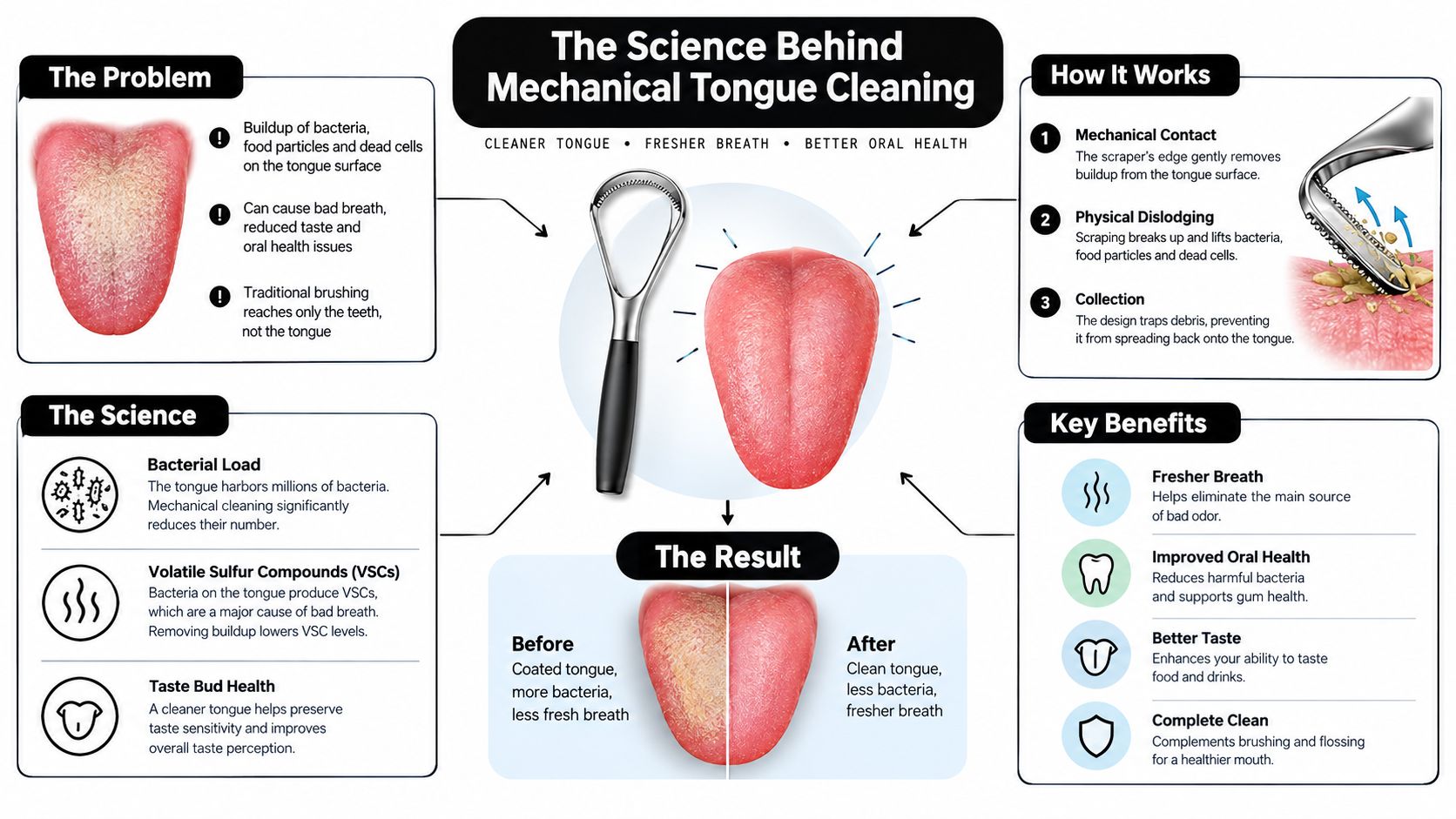
The tongue isn't a smooth surface like a glass countertop. Tiny structures called papillae create texture across the tongue, and that texture can retain coating made up of debris, shed cells, and bacteria. Some of those bacteria are associated with volatile sulfur compounds, or VSCs, which contribute to unpleasant breath odor.
Mechanical cleaning targets that layer directly. Instead of trying to disguise the smell, a scraper lifts coating from the tongue so you can rinse it away. A clinical review explains that tongue coating can act as a reservoir for VSCs and anaerobic bacteria, which helps explain why physical removal can influence breath odor at its source. The review of tongue scraping and oral malodor describes short-term reductions in bad-breath measurements and tongue coating after mechanical cleaning.
Why shape matters
A toothbrush has rounded bristles designed to clean teeth and massage the gums. A tongue scraper has a broad edge designed to make contact with the tongue's surface. That doesn't make brushing useless. It means the two tools perform different jobs.
In one comparative clinical trial, a tongue scraper reduced VSCs by 75%, while a toothbrush reduced them by 45%. Those results come from a specific trial, so they shouldn't be treated as a guarantee for every person, but they offer a useful explanation for why a scraper can outperform a toothbrush for breath-related outcomes in some settings. The comparative trial on tongue scrapers and VSC reduction provides that comparison.
Another evidence summary reported VSC reductions of 42% with a tongue cleaner, 40% with a tongue scraper, and 33% with a toothbrush in an included study. The systematic review of tongue brushing and scraping also cautioned that evidence for chronic halitosis remained insufficient.
These findings support a measured conclusion. Mechanical tongue cleaning can reduce coating and may improve breath, particularly immediately after use. It doesn't prove that every scraper works equally well or that any material provides a permanent solution.
Comparing Copper to Stainless Steel and Plastic
Once the mechanical action is clear, the material becomes a choice about handling, maintenance, and feel. Copper, stainless steel, and plastic can all be made into tongue-cleaning tools, but they don't behave identically in the hand or on the tongue.
Copper has a practical niche because it's a durable, relatively rigid metal. That rigidity can help a scraper retain a consistent edge and maintain broad contact during gentle passes from the back of the tongue toward the front. The Cleveland Clinic explanation of tongue scraping notes that copper is marketed for antimicrobial properties, while also explaining that this specific advantage hasn't been definitively confirmed in human trials.
A realistic material comparison
| Material | Durability | Blade rigidity | Best for |
|---|---|---|---|
| Copper | Durable, though it may develop surface discoloration over time | Firm and consistent | People who prefer a traditional metal tool and broad tongue contact |
| Stainless steel | Durable and resistant to routine moisture exposure | Firm and consistent | People who want a low-maintenance metal scraper |
| Plastic | Can be lightweight and flexible | Varies by design | People who prefer a lighter tool or a softer-feeling edge |
The strongest evidence supports scraping as a mechanical action, not copper as a proven medical treatment. Copper's possible antimicrobial surface activity may sound attractive, but it shouldn't be used to promise prevention of chronic bad breath or other oral conditions.
Stainless steel may appeal to people who want a metal scraper that keeps its appearance with less maintenance. Plastic can be comfortable and accessible, although flexibility varies considerably between designs. The right option is the one you can hold securely, clean properly, and use without pressing too hard.
A copper tool can still be a sensible preference when you value rigidity, longevity, and the feel of a traditional metal scraper. Mouthology's tongue scraper design is one example of how a copper scraper can be positioned as a dedicated tool rather than a replacement for the rest of your routine.
How to Use a Copper Tongue Scraper Safely
A scraper works best when you use light pressure and steady contact. The aim is to lift the surface coating, not scrub the tongue as though you're cleaning a hard object.
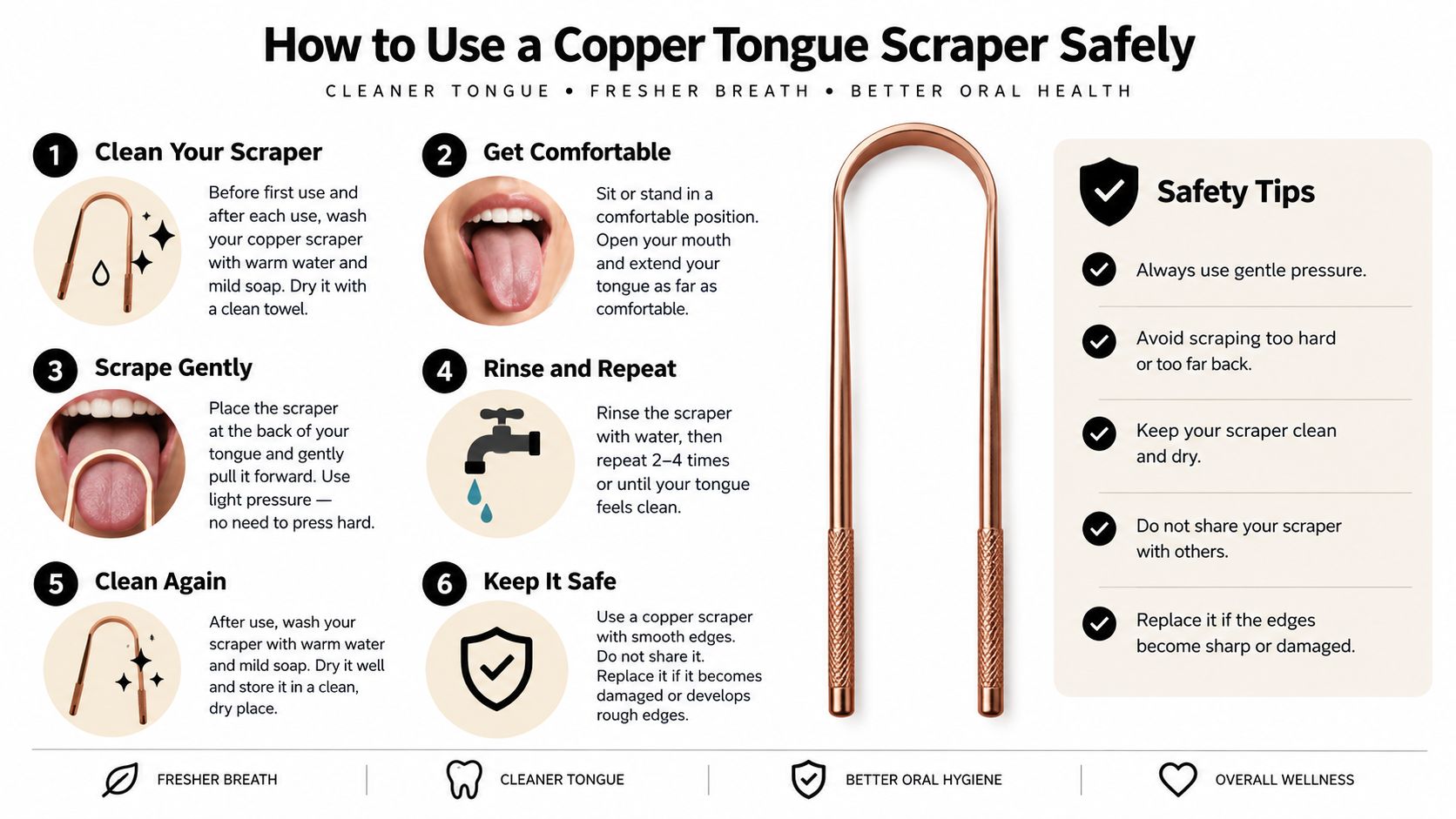
Start with a clean scraper and extend your tongue comfortably. Place the edge toward the back of the tongue, stopping before the point where your gag reflex becomes uncomfortable. Keep the tool level and draw it forward in one smooth motion. Rinse the scraper after each pass so the coating doesn't spread across the surface.
A gentle technique
Repeat the motion across different areas of the tongue, using a few comfortable passes rather than repeatedly scraping one sensitive spot. You shouldn't feel sharp pain, burning, or persistent tenderness, and bleeding is a sign to stop rather than press harder.
If reaching the back makes you gag, begin farther forward and gradually adjust as you become comfortable. Breathing through your nose and keeping your jaw relaxed can make the movement easier. There's no prize for reaching the farthest point. Consistency matters more than intensity.
Caring for the copper
Rinse the scraper thoroughly after use, then wash it with warm water and mild soap. Drying it before storage helps keep the surface clean and limits unnecessary moisture exposure. Copper can change appearance over time, so occasional polishing may help maintain its finish, provided the product instructions allow it.
Don't share a tongue scraper, even within a family. Store it where the edge won't be damaged, and replace it if it becomes rough, bent, or difficult to clean.
For a more detailed walkthrough, see how to use a tongue scraper. The most important takeaway is simple: scraping should feel controlled and comfortable throughout the process.
Common Misconceptions and What the Evidence Says
Copper tongue scrapers are often discussed as if the copper itself is the main reason they work. The evidence supports a more careful interpretation. The scraping action has the clearest rationale because it physically removes tongue coating. Copper may offer useful rigidity and may have antimicrobial surface activity, but the added clinical benefit of the material hasn't been firmly established.
Myth one, scraping permanently solves bad breath
Scraping can improve morning breath and reduce coating, but it isn't a standalone answer for persistent halitosis. Odor can have multiple contributors, including the teeth, gums, saliva flow, oral tissues, and factors outside the mouth. If the smell continues despite a consistent routine, adding more pressure or scraping more often isn't the solution.
A 2021 clinical study found that organoleptic breath scores dropped significantly after mechanical tongue cleaning in groups using a toothbrush, a tongue scraper, or both together. That supports short-term usefulness, but it doesn't establish that scraping prevents chronic halitosis.
Myth two, copper is automatically superior
Material claims need context. A copper scraper may feel firmer and maintain its shape well, but those qualities don't prove that copper is universally more effective than stainless steel or plastic. The tool's edge, fit, cleanliness, and your technique all influence how well it removes coating.
Evidence-based expectation: Scraping may improve breath chemistry and tongue coating, but long-term superiority and copper-specific effects remain uncertain.
A Cochrane review of mechanical tongue cleaning found a small statistically significant reduction in VSCs when tongue scrapers or cleaners were used instead of toothbrushes. It also characterized the evidence as weak and unreliable and noted that evidence for chronic halitosis remains limited.
Myth three, more scraping means better hygiene
The tongue is living tissue, not a surface that benefits from aggressive polishing. Scraping harder can cause discomfort without removing more useful coating. A comfortable routine that you can maintain is more sensible than an intense routine that leaves your tongue irritated.
Building a Complete Modern Oral Care Routine
A tongue scraper supports freshness, but it doesn't clean between teeth or remove plaque from every tooth surface. A modern routine works because each step has a distinct role.
Begin with the tongue if that feels comfortable, then brush all tooth surfaces with a soft-bristled toothbrush and a toothpaste suited to your preferences. Clean between the teeth with floss or another interdental tool, because a scraper can't reach those spaces. Staying hydrated can also support a more comfortable mouth, particularly if you notice that dryness makes morning breath more noticeable.
Think in complementary steps
A fluoride-free, mineral-based toothpaste containing nano-hydroxyapatite is another option some people include in a modern oral care routine. Nano-hydroxyapatite is a mineral related to the composition of tooth enamel, and products containing it are often selected by people looking for a mineral-based approach. It doesn't make tongue scraping unnecessary, because toothpaste and a scraper address different parts of the mouth.
Mouthwash can be useful when it suits your needs, but it shouldn't become a substitute for brushing, interdental cleaning, or tongue care. If a rinse stings or leaves your mouth feeling dry, consider stopping it and discussing alternatives with a dental professional.
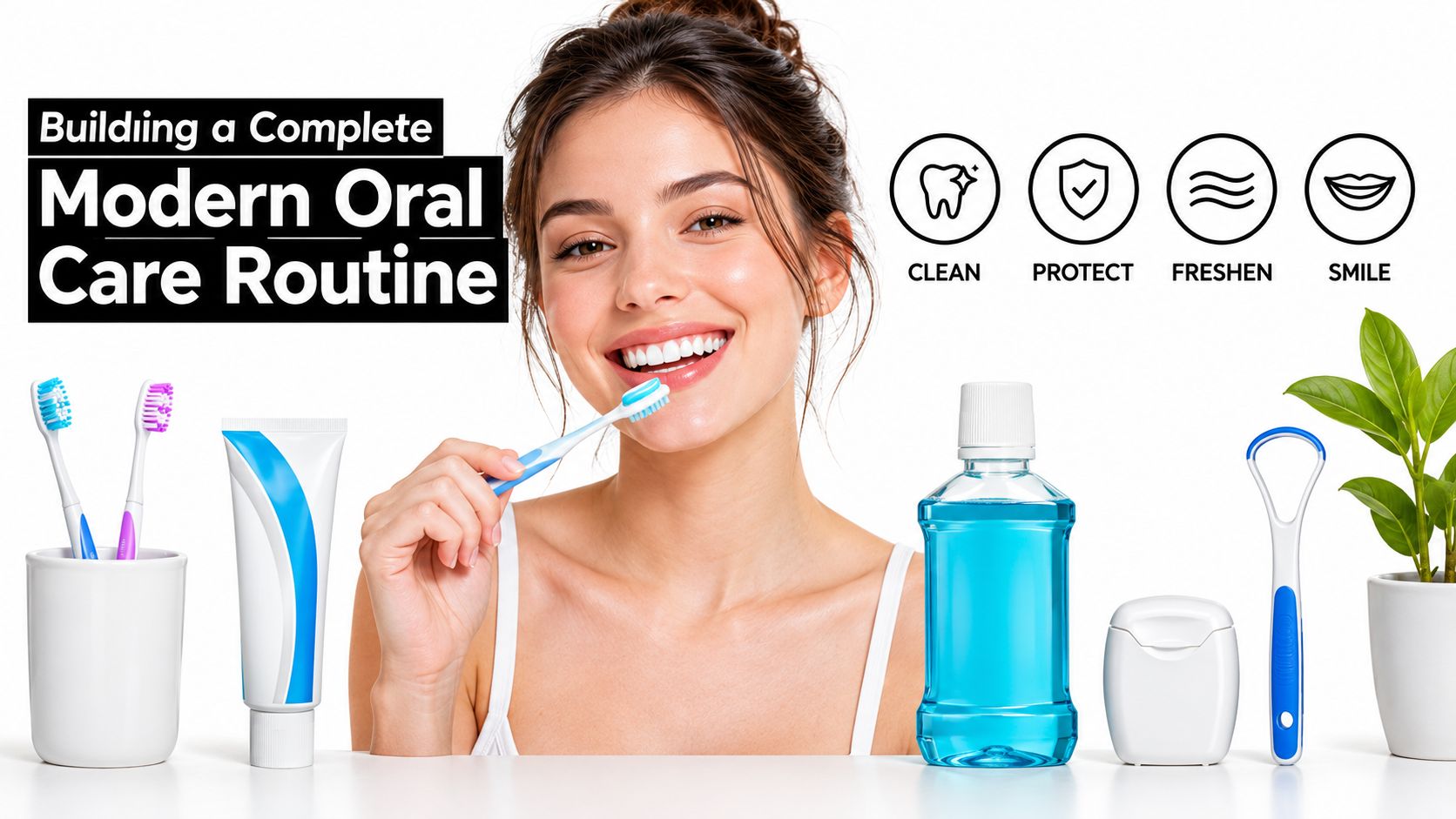
A practical morning sequence might look like this:
- Scrape gently: Remove the coating from the tongue and rinse the tool.
- Clean between teeth: Use floss or an interdental cleaner with controlled movements.
- Brush carefully: Spend enough time covering the outer, inner, and chewing surfaces.
- Rinse thoughtfully: Use mouthwash only if it feels comfortable and fits your dental advice.
- Check your response: A routine should leave your mouth fresh and comfortable, not tender.
This approach keeps the focus on mechanical cleaning, hydration, and purposeful products rather than chasing a single miracle ingredient.
When to Upgrade Your Routine and When to See a Dentist
A copper tongue scraper is a reasonable upgrade if you regularly notice tongue coating or morning breath and want a dedicated mechanical tool. Choose one with a smooth edge, use light pressure, and judge it by comfort and consistent cleaning rather than bold antimicrobial promises.
Persistent odor deserves more attention. See a dentist if bad breath continues despite careful brushing, interdental cleaning, tongue care, and routine maintenance. Professional evaluation is also sensible when you notice ongoing gum bleeding, swelling, soreness, unusual tissue changes, or a dry mouth that doesn't improve.
A scraper can't identify the reason for an oral symptom, and it shouldn't delay dental care. Chronic halitosis may involve concerns that require an examination, including gum-related problems or other oral factors.
A fresh-feeling mouth is a daily habit, not a marketing claim.
Start tomorrow with gentle tongue cleaning, then keep the rest of your routine consistent. If the change is helpful, make it part of your morning. If it isn't enough, or if something feels painful or persistent, book a dental appointment rather than trying to scrape your way through the problem.
Choose a smooth copper, stainless steel, or plastic tongue scraper that feels comfortable in your hand, add gentle tongue cleaning to your morning routine, and track how your breath and tongue coating respond. If freshness doesn't improve or you notice ongoing discomfort, contact your dentist for personalized guidance.
