

Posted by Sarah Collins
on September 25, 2026

You're at the sink, a tiny brush is in one hand, and your 3-year-old is either chewing the bristles or negotiating for “just one more squeeze” of toothpaste. That's usually when parents start searching for the best toothpaste for a 3 year old, hoping the answer is a flavor, a cartoon character, or a clever label on the tube.
The straightforward answer is more practical. At this age, toothpaste choice is about dose, supervision, and the active ingredient, not just taste. A child who brushes well with a plain, age-appropriate paste will usually do better than a child who uses a “fancy” product in the wrong amount or without help.
The Truth About Choosing Kids Toothpaste
A lot of shopping starts with the wrong question. Parents stand in the aisle comparing bubblegum, strawberry, and mint, while the core issue is whether the paste is designed for a toddler who's still learning how to spit, pause, and keep the brush in their mouth for more than five seconds.
The tube matters less than the brushing pattern
For a 3-year-old, the toothpaste itself is only part of the story. What changes cavity risk is how the paste is used, how much goes on the brush, and whether an adult is close enough to guide the process. That's why two children can use the same tube and get very different results.
Practical rule: if the brush is overloaded, even a good toothpaste becomes the wrong choice. If the dose is right and brushing happens twice daily, the routine matters more than the branding.
The label can still help, but mostly as a shortcut. A children's paste with the right concentration and a texture your child will tolerate is usually more useful than a tube that looks playful but doesn't fit the child's stage. Parents often think “kids' toothpaste” means “safer by default,” but the safer choice is really the one matched to the child's age and swallowing ability.
Think like a dosing problem, not a flavor problem
It helps to think of toothpaste like a measured ingredient, not frosting. Too little doesn't do much. Too much creates avoidable swallowing risk.
That's why the best toothpaste for a 3 year old isn't defined by cartoon packaging or an expensive brand name. It's defined by whether the paste can be used in the correct amount, with adult supervision, and in a way the child will accept every day. Once you look at it that way, the aisle gets less confusing very quickly.
What Dental Organizations Recommend for Age 3
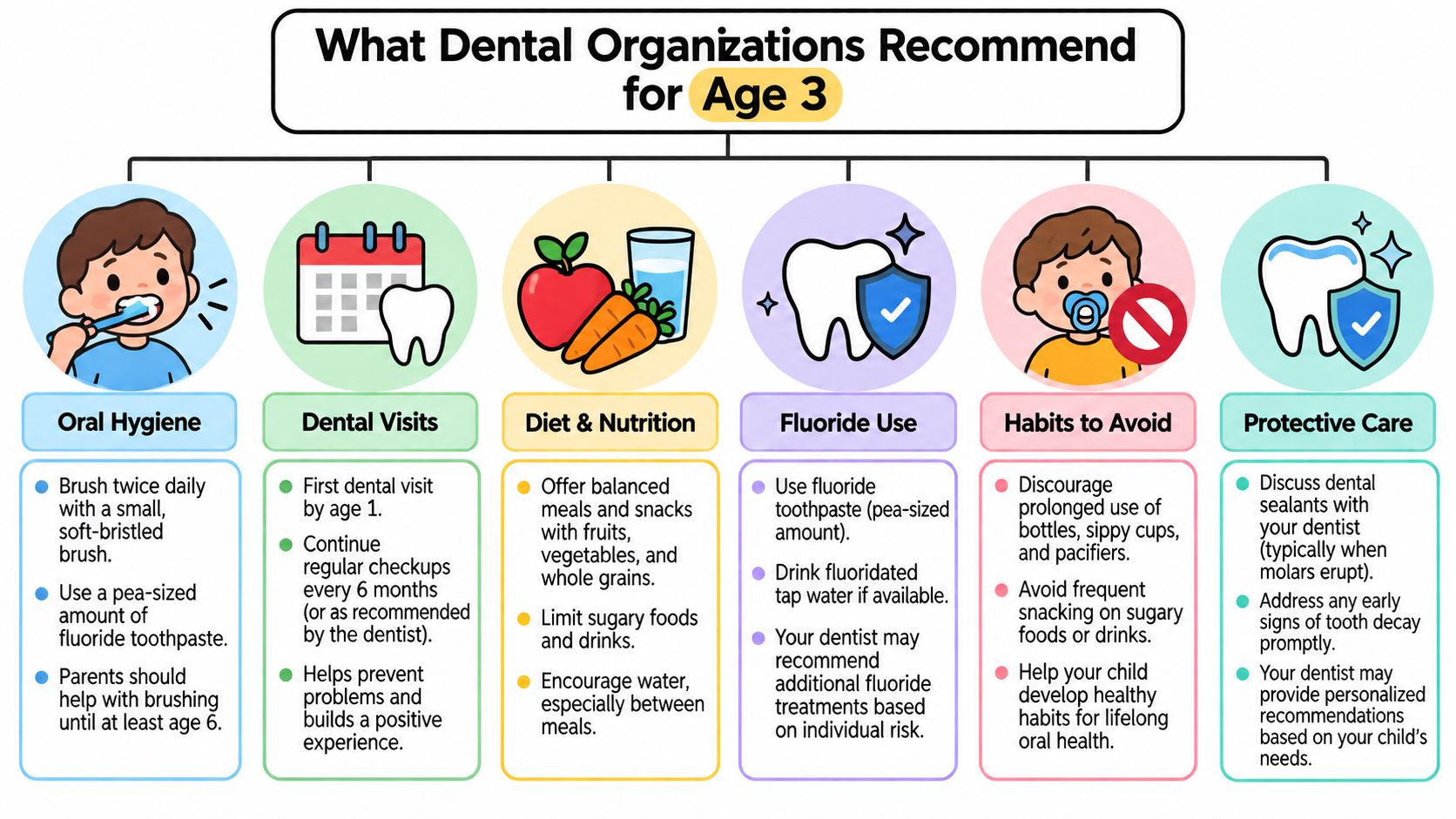
A parent stands in the bathroom with a tube in one hand and a toothbrush in the other. The label shows a cartoon character, several flavor choices, and a fluoride number. The more useful questions are simpler: how much paste belongs on the brush, who supervises, and what the ingredient is meant to do.
Age 3 marks a change in many pediatric oral-care recommendations. Before age 3, organizations advise a smear or rice-grain amount. From ages 3 to 6, children should use a pea-sized amount of fluoridated toothpaste with adult supervision, according to AAPD guidance. The ADA toothpaste guidance explains the upper limit for fluoride exposure associated with these measured amounts.
Why the amount changes at age 3
A 3-year-old can often spit more reliably than a younger toddler, although swallowing can still happen. The recommended dose therefore becomes larger while remaining controlled. The goal is to place enough fluoride on the teeth to support cavity prevention without treating toothpaste like a food.
The CDC advises starting fluoride toothpaste at age 2. For children ages 3 to 6, its oral-health advice recommends brushing twice daily with a pea-sized amount, about 0.25 g of toothpaste CDC oral health advice. The ADA explains that measured doses help keep fluoride exposure below the recommended upper limit of 0.05 mg/kg/day.
What “pea-sized” really means in practice
A pea-sized amount is a small dot, not a strip covering the bristles. Put a compact dab near the center of the brush head. If toothpaste spreads across most of the bristles before brushing begins, remove some.
The NHS advises children to spit and avoid rinsing after brushing, so a thin fluoride film stays on the teeth NHS children's teeth advice. This instruction can feel counterintuitive, especially if your family is used to rinsing, but rinsing immediately washes away some of the toothpaste left behind.
For a quick label check, NHS Start for Life says toothpaste for babies and toddlers up to age 3 should contain at least 1,000 ppm fluoride, and children aged 3 to 6 should use a pea-sized amount with at least 1,000 ppm fluoride. Ppm means "parts per million." On a toothpaste label, it is a concentration measure, similar to counting a tiny ingredient within a much larger mixture. The number helps you compare formulas, while the dose and supervision determine how much a child uses.
Building a Brushing Routine That Sticks
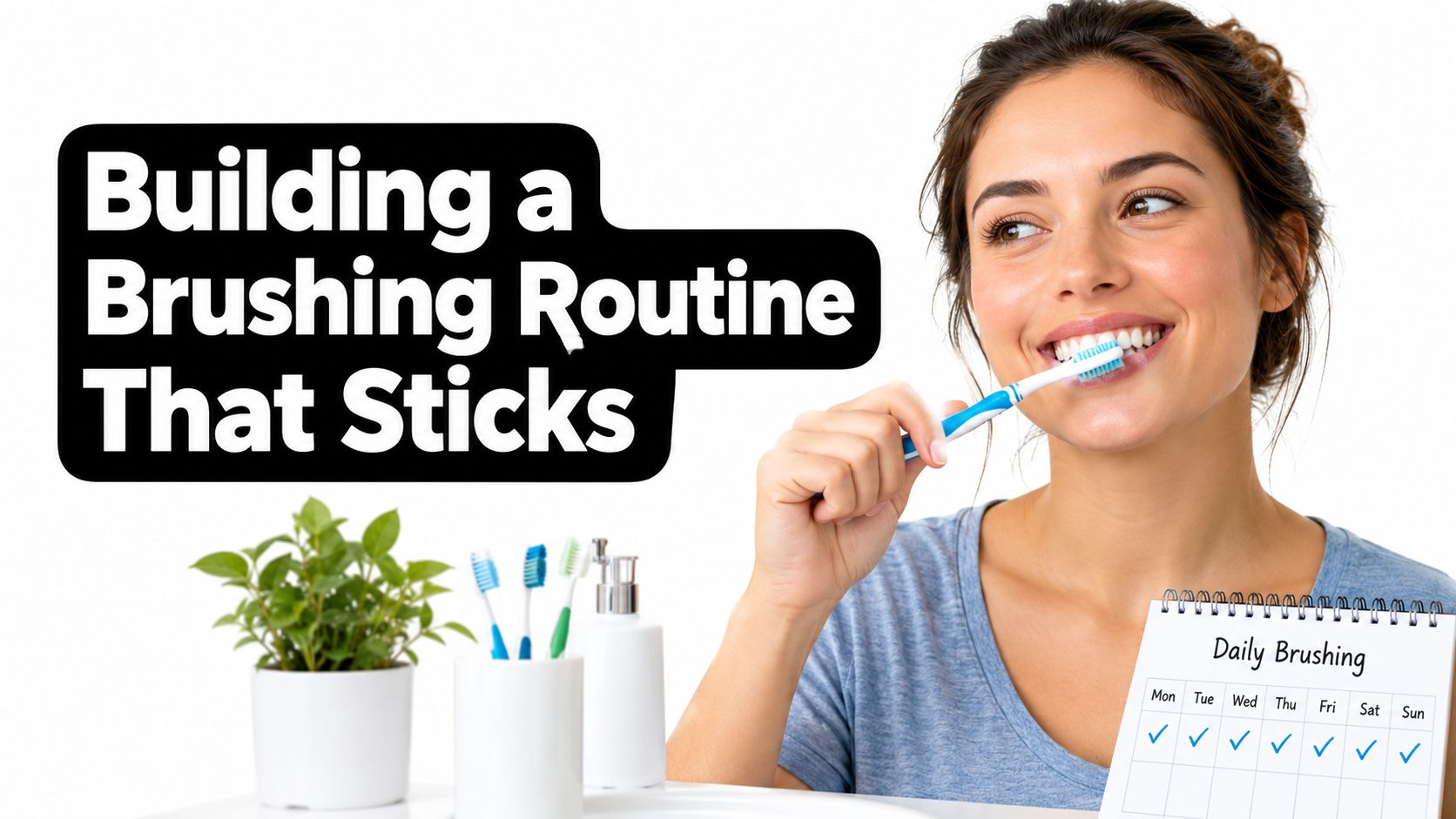
A good tube won't help much if brushing turns into a nightly wrestling match. Three-year-olds are old enough to want control and young enough to need help with the mechanics, which is why the routine needs structure more than persuasion.
Keep the routine predictable
Choose the same time, the same spot, and the same sequence every day. Small children do better when brushing feels familiar, because they don't have to decide what happens next. That lowers resistance before it starts.
The simplest pattern is this: parent applies the paste, child holds the brush if they want to, adult finishes the job. The child gets participation, and the parent keeps control of the amount and coverage. That balance matters more than letting a preschooler “do it themselves” from start to finish.
Use supervision as part of the routine
Supervision isn't hovering, it's active coaching. A 3-year-old can learn the motions, but they usually can't clean every surface well without help. Brushing is one of those habits where enthusiasm isn't the same thing as effectiveness.
Helpful mindset: treat brushing like seat-belt buckling. The child can practice the motion, but the adult still checks that it's done right.
For families who want a broader kid-care framework, oral care for kids can be helpful as a reference point for building age-appropriate habits. The main idea is consistency, not perfection. A calm routine repeated every day usually beats a perfect routine that only happens twice a week.
Fluoride vs Nano-Hydroxyapatite Explained
Parents usually land here when they're deciding between a classic fluoride toothpaste and a fluoride-free alternative that uses nano-hydroxyapatite, often shortened to nHAp. Both are ingredients, not magic labels. They work differently, and understanding that difference helps you choose with more confidence.
How fluoride works
Fluoride is the familiar option in most pediatric guidance. In simple terms, it helps strengthen enamel and supports the tooth surface during the daily cycle of acid exposure and recovery. That's why many dental organizations continue to recommend it for young children when it's used in the right amount.
If you've ever seen a clinic page about fluoride therapy in Dubai, it's the same general principle being discussed in a treatment setting. The format changes, but the underlying idea is consistent, fluoride is used to support tooth structure and help manage cavity risk.
How nano-hydroxyapatite works
Nano-hydroxyapatite is a mineral-based ingredient that mirrors the natural mineral structure of teeth. A useful analogy is building with matching bricks instead of using a coating. The goal is mineral support through a tooth-like material, which is why it appeals to families looking for a fluoride-free path.
For some parents, that makes nHAp a comfortable fit. For others, fluoride remains the default because it's the ingredient most often named in major pediatric guidance. The right choice usually depends on family preference, your child's swallowing habits, and what your dentist has recommended.
| Ingredient | Mechanism | Best For |
|---|---|---|
| Fluoride | Supports enamel by helping teeth resist acid challenge | Families following standard pediatric fluoride guidance |
| Nano-hydroxyapatite | Uses a tooth-like mineral structure to support enamel surface care | Families seeking a fluoride-free option |
A practical way to think about it is this. Fluoride is the widely established route in official pediatric guidance. Nano-hydroxyapatite is the modern mineral-based alternative many families prefer when they want a fluoride-free formula that still feels science-led. For a deeper side-by-side look, fluoride versus nano-hydroxyapatite is a useful comparison.
Navigating Taste, Texture, and Swallowing Safety
A 3-year-old can reject a toothpaste for reasons that have nothing to do with health. Too minty, too foamy, too gritty, too weird, too “spicy”, kids will object to all of it if the sensory experience feels off.
What usually makes toddlers cooperate
Flavor matters because cooperation matters. A child who dislikes the taste may clamp their mouth shut, spit too early, or refuse the routine entirely. A paste that feels mild and familiar often works better than one that looks clinically impressive but triggers a protest.
Texture matters just as much. Some children dislike heavy foam, while others are fine with it. If a toddler has strong preferences, the product choice should match the child's sensory profile rather than a parent's assumption about what “should” work.
Why swallowing safety drives the dose
The pea-sized rule exists because toddlers still swallow toothpaste sometimes. That's normal, and it's exactly why the amount is controlled. Smaller doses lower ingestion risk while still giving the child the benefit of brushing with fluoride when that's the chosen ingredient.
The poison center guidance on toothpaste points out that accidental swallowing of a small recommended amount is usually not toxic, while larger ingestions can cause short-term stomach upset and repeated excess exposure can raise fluorosis risk Poison Control toothpaste guidance. That's a useful reminder, because parents often worry about the wrong thing. They focus on the brand instead of the amount on the brush.
If you're comparing fluoride-free products or want a gentle option for a child who hates strong flavors, what to do if a child eats toothpaste becomes practical reading. One approach some families consider is a fluoride-free toothpaste with nano-hydroxyapatite, which can fit well when the child's main barrier is swallowing fear or sensory aversion. Mouthology's kids toothpaste is one such option, and it uses 5% nano-hydroxyapatite in kid-friendly flavors.
When to Consult Your Pediatric Dentist
A toothpaste question sometimes hides a bigger issue. If brushing is always a struggle, or if a child is already showing signs that make home care feel unreliable, a pediatric dentist can help sort out whether the issue is technique, tolerance, or something that needs a closer look.
Signs that deserve a visit
Visible discoloration, sensitivity to cold or brushing, or repeated trouble keeping the teeth clean are all reasons to check in. So is a child who seems unable to tolerate any toothpaste you try, because that often points to a sensory or technique issue rather than a “bad product.”
A dental visit is also smart if you're unsure whether your child is using the right amount. That question comes up a lot with 3-year-olds, because parents are trying to balance independence with safety. A dentist can look at the brush, the toothpaste, and the child's brushing pattern together instead of guessing from the tube alone.
What the dentist can clarify
A pediatric dentist can help with age-appropriate product selection, brushing technique, and whether your child's current routine matches their stage of development. That's especially helpful if the child has a history of swallowing paste, resists spitting, or needs a more customized approach.
A small home-care problem can become easier once the brushing setup is adjusted.
That's why professional input doesn't mean something is wrong. It usually means the family wants a cleaner plan and less trial-and-error.
Your Family's Oral Care Roadmap
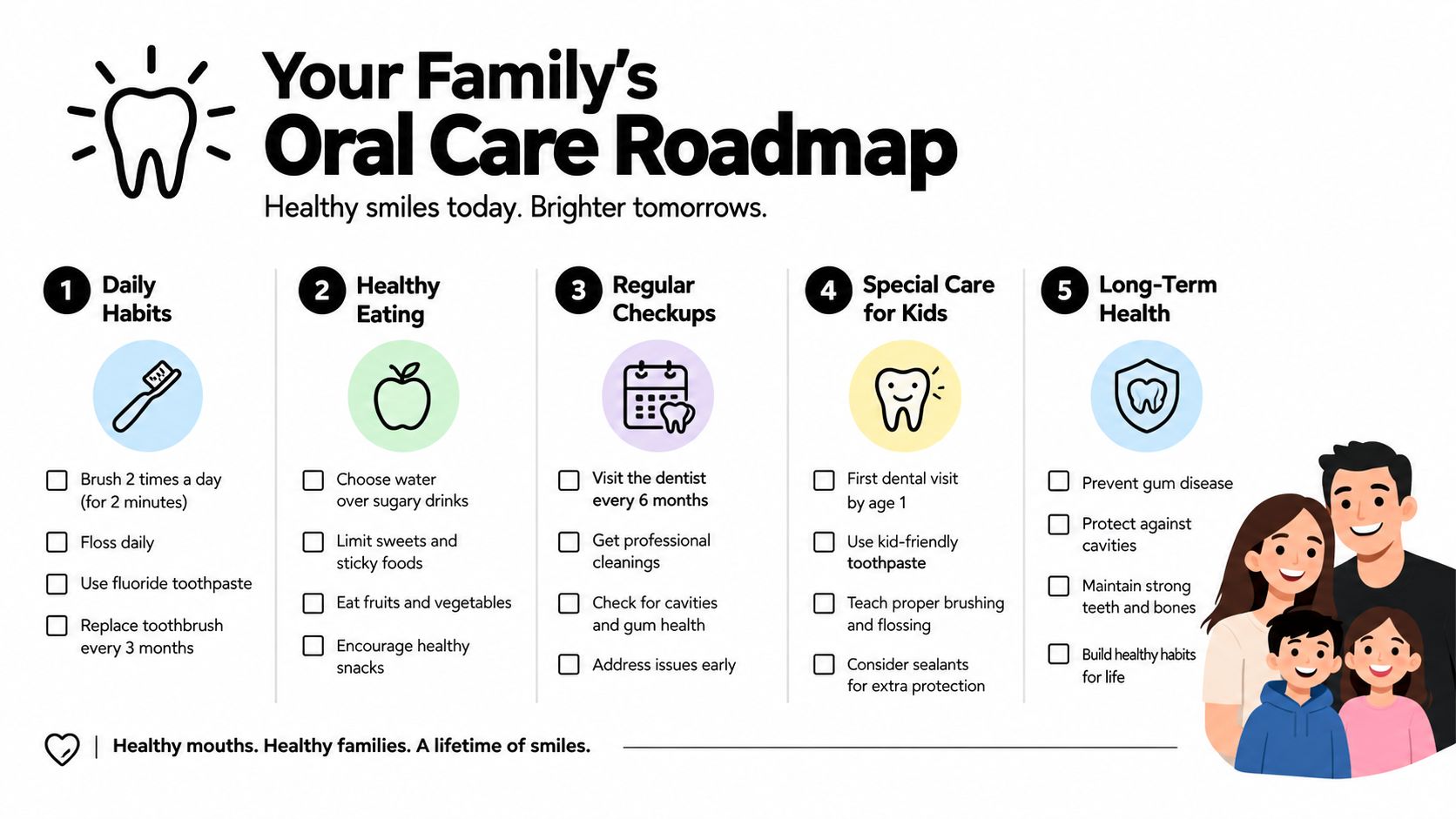
The easiest way to choose the best toothpaste for a 3 year old is to keep the decision simple. Match the paste to the child's age, then make sure the routine is supervised enough that the right amount gets used.
A quick checklist for parents
- Use the right amount: a pea-sized amount is the age-3 standard in major guidance.
- Keep an adult nearby: the child can participate, but the adult should control dose and finish the job.
- Pick a paste the child will accept: mild flavor and tolerable texture matter more than branding.
- Choose the active ingredient intentionally: fluoride fits standard guidance, while nano-hydroxyapatite is a fluoride-free mineral-based option.
- Revisit the routine if things feel messy: if brushing is a daily battle, the solution is often technique, not a different cartoon on the tube.
For a broader practical library, resources from Periodontal Associates can help families who want more context on oral hygiene habits and preventive care. The best plan is the one your child can repeat without a fight, and that you can supervise without stress.
A 3-year-old doesn't need the most complicated toothpaste on the shelf. They need a paste that fits their age, a dose that stays small, and a routine that happens every day. If you want to simplify the whole process, pick one age-appropriate toothpaste, keep the amount pea-sized, and ask your pediatric dentist to fine-tune the rest during your next visit.
