

Posted by Sarah Collins
on August 24, 2026

A toothpaste can leave your mouth feeling icy fresh and still do very little to control the odor that returns later. Strong mint, abundant foam, and a cooling sensation are sensory signals, not proof of lasting breath control. For the best breath toothpaste, the more useful question is whether the formula addresses volatile sulfur compounds, tongue biofilm, saliva flow, and the spaces a toothbrush can't reach.
That distinction matters because halitosis is common and often begins inside the mouth. The right toothpaste can support a better routine, but toothpaste alone isn't always the complete answer. A practical choice combines evidence-informed ingredients with tongue cleaning, interdental care, hydration, and attention to persistent symptoms.
Why Minty Toothpaste Is Not Enough for Fresh Breath
Mint can make your breath seem cleaner without removing the compounds responsible for odor. Ingredients such as menthol and other flavoring agents stimulate a cooling sensation, so your mouth feels refreshed immediately after brushing. That experience can be pleasant, but it doesn't necessarily tell you whether odor-causing gases have been neutralized.
The most important distinction is masking versus management. A masking formula changes what you smell for a short time. A breath-focused formula aims to reduce or neutralize the compounds that create malodor, especially volatile sulfur compounds, or VSCs. Those include gases such as hydrogen sulfide and methanethiol, which have a foul odor even at low concentrations. Clinical research on zinc dentifrices describes VSCs as major biochemical drivers of oral malodor and explains why sulfur-binding ingredients can be more meaningful than flavor alone.
Why foam and flavor can mislead you
Foam helps spread toothpaste and can make brushing feel thorough. However, foam volume doesn't measure tongue-biofilm removal, sulfur neutralization, or the formula's ability to support freshness after brushing. The same applies to a powerful “cooling” effect. It may signal a strong flavor system rather than a stronger breath-care system.
Many shoppers therefore rank toothpaste by the intensity of its mint, its foaming action, or how long the flavor lingers. Those features can influence comfort and consistency, but they shouldn't be your main selection criteria.
Practical rule: Treat mint as a comfort feature. Look to active ingredients and your complete routine for breath control.
A better label audit asks three questions:
- Does the formula contain a breath-focused active? Zinc is especially relevant because it can bind sulfur compounds. Other formulas may use stannous systems or antiseptic ingredients.
- Does your routine clean the tongue? The tongue's surface can hold a dense residue that brushing teeth alone may leave behind.
- Could the formula worsen dryness? A product that leaves your mouth feeling dry may be a poor fit if reduced saliva already contributes to odor.
The best breath toothpaste won't necessarily be the one with the strongest mint. It will be the one that fits your oral environment and supports the actions that address odor at its source.
What Actually Causes Bad Breath
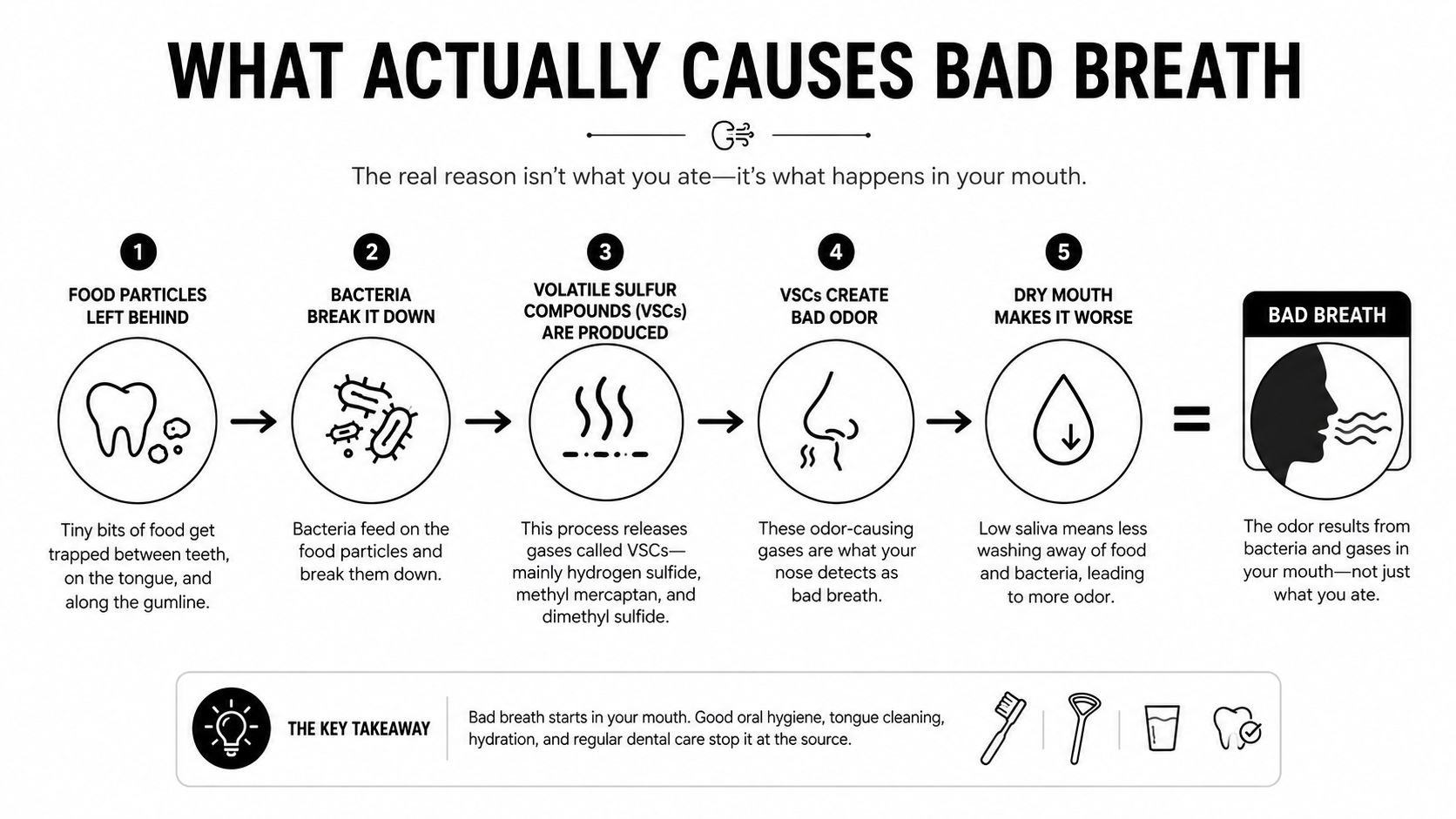
Bad breath is less like a dirty surface and more like a small ecosystem. The tongue, gums, teeth, saliva, and trapped debris create different habitats where microorganisms can grow. On the back portion of the tongue, papillae and grooves provide sheltered areas where residue can accumulate.
A Cochrane review on interventions for managing halitosis reports that estimates of halitosis prevalence have reached 50% to 65% of the world's population, while another systematic review and meta-regression cited in that evidence estimated prevalence at 31.8%, with a 95% confidence interval of 24.6% to 39.0%. The same evidence notes that roughly 85% of halitosis originates in the mouth, and about 50% of oral cases are linked to tongue residues.
The tongue as a biofilm city
Think of the tongue's surface as a biofilm city. Bacteria settle into protected streets and alleys, then use available proteins from food debris, saliva, and shed cells. As they break those materials down, they release sulfur-containing gases. Hydrogen sulfide can smell like rotten eggs, while methanethiol contributes a sharp, unpleasant odor.
This process explains why tooth brushing may not solve every breath concern. A toothbrush cleans tooth surfaces well, but the posterior tongue dorsum has a different texture and can hold residue in places bristles don't reach efficiently. Toothpaste can add useful chemistry, but mechanical tongue cleaning removes part of the environment that supports odor production.
Other contributors deserve attention
Dry mouth, also called xerostomia, can make breath care harder because saliva helps wash away particles and supports the mouth's natural balance. Certain foods can temporarily alter breath, while post-nasal drip may place additional material toward the back of the tongue. Gastrointestinal causes are discussed frequently, but mouth-based causes remain an important starting point for everyday halitosis concerns.
Persistent or unusual odor shouldn't be treated as a flavor problem alone. Gum irritation, heavy plaque, discomfort, bleeding, or a change that doesn't improve with consistent care deserves dental attention. A professional can assess areas you can't inspect easily, including gum pockets and other oral contributors.
Ingredients That Clinically Fight Bad Breath
Mint can make a toothpaste feel effective, but lasting breath control depends more on chemistry and biofilm management. Read the label for breath-active ingredients, then separate them from ingredients that mainly change texture, taste, foam, or brushing feel. Zinc has the clearest breath-focused role in the evidence used here. Zinc ions can bind hydrogen sulfide in the mouth, helping remove an odor-producing gas instead of covering it with fragrance.
In an in vitro biofilm model, a toothpaste slurry removed over 90% of hydrogen sulfide from perfusate gas. The authors connected that mechanism with clinical reductions in volatile sulfur compounds lasting up to 12 hours after brushing. The full zinc dentifrice study helps explain why zinc matters as an active chemical ingredient, not just as a way to make toothpaste taste fresh.
How to read the active system
Zinc compounds may appear as zinc citrate or zinc chloride. Their results depend on the whole formula, including concentration, contact time, and how well the toothpaste reaches the relevant biofilm. A review of zinc-containing oral-care approaches describes zinc's likely role in binding sulfur compounds within oral biofilms. It also identifies tongue scraping as a useful mechanical step, because chemistry and physical removal address different parts of the problem.
Stannous-containing dentifrices offer another evidence-supported option. In the cited clinical comparison, a stannous formula produced significantly greater breath benefits than a negative control at every tested interval. Relative improvement rose from 7.7% at 3 to 4 hours to 24.5% at 27 to 28 hours. In a separate randomized crossover study, a zinc formula achieved a 68% reduction in hydrogen sulfide and a 47% reduction in methanethiol versus the control toothpaste. The clinical evidence summarized by PubMed supports a practical point: zinc products should not be treated as interchangeable, because formulation affects performance.
Chlorine dioxide and cetylpyridinium chloride, or CPC, appear in breath rinses and some broader oral-care systems. Chlorine dioxide can oxidize odor-related compounds, while CPC acts against oral microorganisms. Recent clinical work on CPC, including CPC combined with zinc lactate, reported anti-malodor effects, while questions remain about long-term microbiome effects and durability. The 2025 CPC research supports separating immediate freshness from sustained breath care.
Essential oils such as eucalyptol and thymol can add antibacterial activity, although the complete formula matters more than one aromatic ingredient. Hydrated silica and other mild abrasives help loosen plaque and residue mechanically, but they do not neutralize volatile sulfur compounds on their own. SLS creates foam efficiently. Strongly foaming formulas can feel uncomfortable or drying for some people, which may work against breath care when dry mouth is already a concern.
Nano-hydroxyapatite, or nHa, serves a different purpose. It supports interaction with the enamel surface and can fit a fluoride-free enamel-care routine. It should not be treated as a dedicated sulfur-neutralizing active unless the product also contains an ingredient designed for that job.
| Ingredient | Mechanism of Action | Evidence Strength | Common Concentration |
|---|---|---|---|
| Zinc citrate or zinc chloride | Binds sulfur compounds and helps neutralize odor | Strongest breath-focused signal in the provided evidence, formulation-dependent | Varies by product |
| Stannous compounds | Support antibacterial activity and sustained breath benefits | Supported by clinical comparison evidence | Varies by product |
| CPC | Antimicrobial activity against oral microorganisms | Recent clinical evidence, with long-term questions remaining | Varies by product |
| Chlorine dioxide | Oxidizes odor-related compounds | Used in breath-care systems, with formula-specific evidence | Varies by product |
| Eucalyptol and thymol | Contribute antibacterial essential-oil activity | Ingredient and formulation dependent | Varies by product |
| Nano-hydroxyapatite | Supports enamel surface interaction | Relevant to enamel support, not a standalone VSC neutralizer | Varies by product |
For a closer look at one zinc option, read the clinical evidence on zinc citrate for breath control.
Choosing the Right Toothpaste for Your Needs
The best breath toothpaste depends on what else your mouth needs. Someone with dry mouth may prioritize a gentle, low-irritation formula and saliva-supporting habits. Someone concerned about enamel or sensitivity may want an enamel-supportive base first, then add breath control through tongue cleaning or a separate zinc-focused product.
Fluoride formulas commonly use sodium fluoride or stannous fluoride. Fluoride supports enamel protection, while stannous fluoride can also contribute antibacterial and gum-care functions. Fluoride-free formulas may use nano-hydroxyapatite or other mineral systems to support enamel care. Neither category automatically solves halitosis. The breath result still depends on whether the product and routine address VSCs and tongue residue.
Match the category to the situation
| Toothpaste Type | Key Active Ingredients | Breath Control Mechanism | Best For | Potential Trade-Offs |
|---|---|---|---|---|
| Stannous fluoride | Stannous fluoride | Antibacterial support and breath benefits | People who want fluoride-based enamel care with added breath support | May have a distinct taste or require careful product selection |
| Sodium fluoride | Sodium fluoride | Primarily supports enamel protection | People prioritizing conventional fluoride care | May lack a dedicated VSC-neutralizing system |
| Zinc-based | Zinc citrate or zinc chloride | Binds sulfur compounds | People focused on measurable malodor control | Results vary by formulation |
| Chlorine-dioxide system | Stabilized chlorine dioxide | Oxidizes odor-related compounds | People seeking a targeted breath-care approach | Evidence and tolerability depend on the formula |
| Fluoride-free mineral | Nano-hydroxyapatite | Supports enamel surface care | Families and adults who prefer fluoride-free routines | May need a separate breath active or stronger tongue-care routine |
| Whitening formula | Abrasives and whitening agents | Removes some surface deposits | Cosmetic stain concerns alongside ordinary brushing | Can feel less comfortable for sensitive teeth |
| Natural formula | Plant-derived ingredients, oils, or minerals | Varies widely | People who value ingredient preferences | Some formulas may not contain a proven VSC-neutralizing active |
People with braces need a toothpaste that supports thorough cleaning around brackets and wires without encouraging aggressive scrubbing. An interdental brush becomes especially important because toothpaste can't physically reach every retention area. Those with gum concerns should avoid treating persistent bleeding or swelling as a simple breath issue, since a dental evaluation may be needed.
Dry-mouth users should inspect the full experience after brushing. If a formula leaves tissues feeling parched or irritated, a gentler alternative may improve routine consistency. Whitening products can also create a trade-off for sensitivity sufferers, especially when frequent use encourages harder brushing.
The label should answer two separate questions: what protects the teeth, and what addresses odor?
Complementary Tools That Multiply Your Results
Toothpaste works on the tooth surfaces it contacts. Breath care needs to reach the tongue, gumline, and interdental spaces too. That makes the routine a system, with each tool handling a different source of residue or odor.
Tongue scraping deserves particular attention because the rear tongue surface can hold the biofilm associated with VSC production. A scraper lifts residue with a broad pass, while a toothbrush can provide a familiar alternative. Use light pressure and move from the back toward the front without forcing the scraper so far back that it triggers gagging. The practical guide to tongue scraping can help families introduce the habit gradually.
Give each tool a defined job
- Tongue scraper: Removes surface coating and residue from the tongue dorsum.
- Toothbrush: Disrupts plaque on teeth and along the gumline while distributing toothpaste.
- Floss or interdental brushes: Reach between teeth where trapped food and plaque can remain.
- Water flosser: Flushes around braces, bridges, and other areas where string floss can be difficult.
- Mouthwash: Adds liquid contact across areas that brushing may miss, but doesn't replace mechanical cleaning.
A breath rinse may complement a toothpaste when it contains zinc, chlorine dioxide, or CPC. Alcohol-heavy formulas can be a poor fit for people who already experience dryness because they may make the mouth feel less comfortable. The goal isn't to collect every product. It's to assign each step a purpose and remove anything that makes the routine harder to maintain.
Hydration can support saliva flow, while sugar-free chewing gum or saliva-stimulating habits may help some people with dry mouth. Dietary triggers vary, so notice patterns rather than labeling every strong-smelling food as a long-term cause. If odor continues despite careful tongue and interdental cleaning, ask a dental professional to assess the mouth instead of escalating to stronger flavors.
How to Build a Breath-Freshening Routine for Your Family
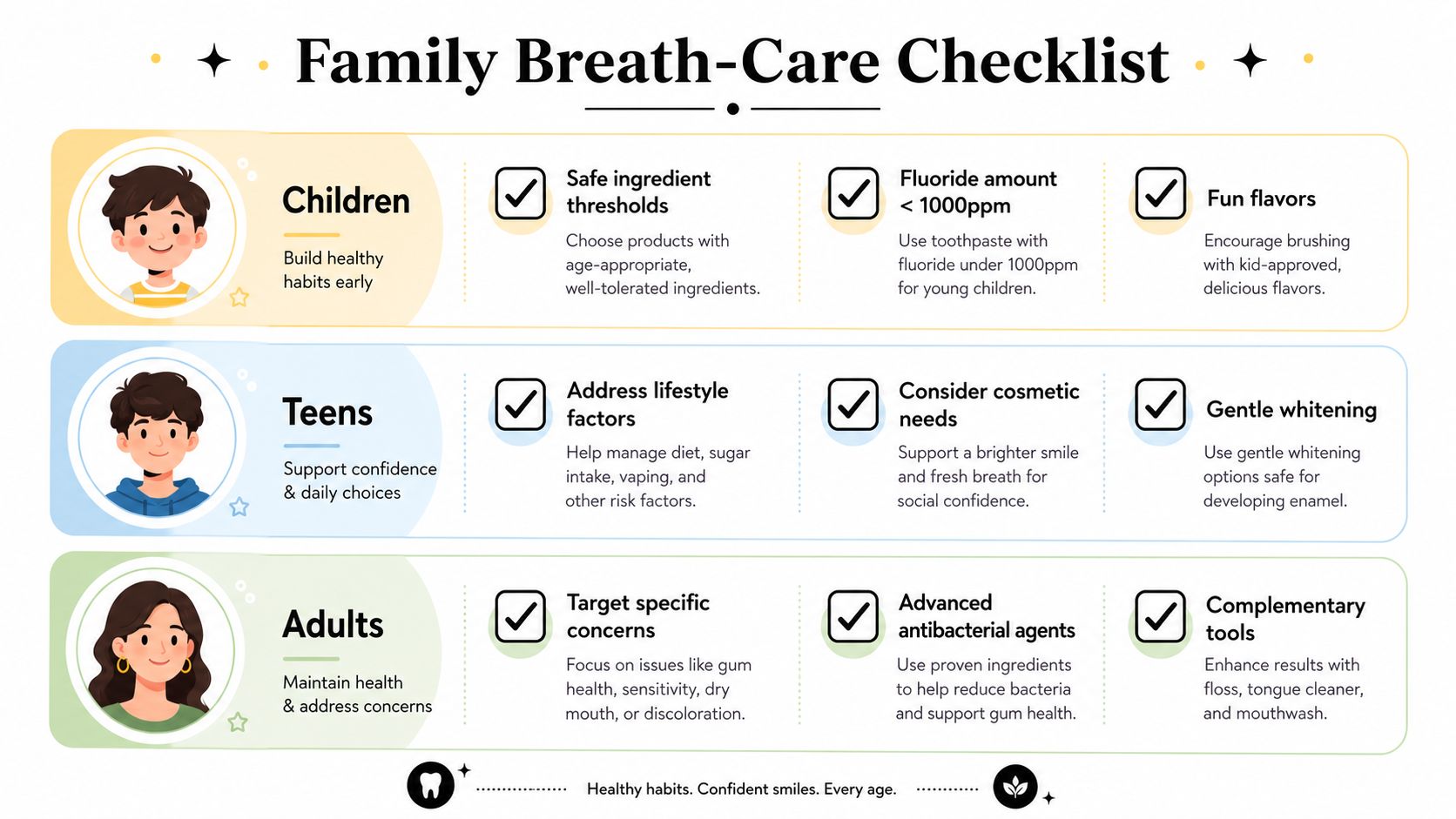
A family routine should be consistent, age-appropriate, and easy enough to repeat on busy days. Children need supervision and a brush that fits their mouth. Teens may need help connecting breath changes with braces, skipped cleaning, mouth breathing, dietary habits, or dry mouth. Adults and older family members may need a more targeted plan, especially if medications reduce saliva.
Adapt the routine to the person
For children, choose a formula and tool that match their age and swallowing habits, and follow the product's directions for fluoride or fluoride-free use. A gentle flavor can make brushing easier, while a short, predictable routine works better than pressure or harsh reminders. Parents should help children clean the tongue lightly rather than pushing a scraper too far back.
Expecting mothers may notice a stronger gag reflex, dry mouth, or changes in brushing comfort. A mild-tasting formula, a soft brush, and careful hydration can make daily care more manageable. Discuss ingredient choices with a dentist or prenatal clinician when pregnancy-specific concerns arise, particularly if nausea, vomiting, or persistent oral symptoms make brushing difficult.
Sensitivity sufferers can look for a formula built around sensitivity support, such as potassium nitrate or nano-hydroxyapatite, while using gentle pressure and avoiding overly abrasive whitening products. The breath component still comes from tongue care and, where appropriate, a formula with a VSC-focused active.
Older adults and people taking drying medications may need frequent water intake, saliva-supporting habits, and extra attention to dentures, bridges, or exposed root surfaces. Persistent dryness warrants professional guidance because toothpaste changes alone may not address the underlying challenge.
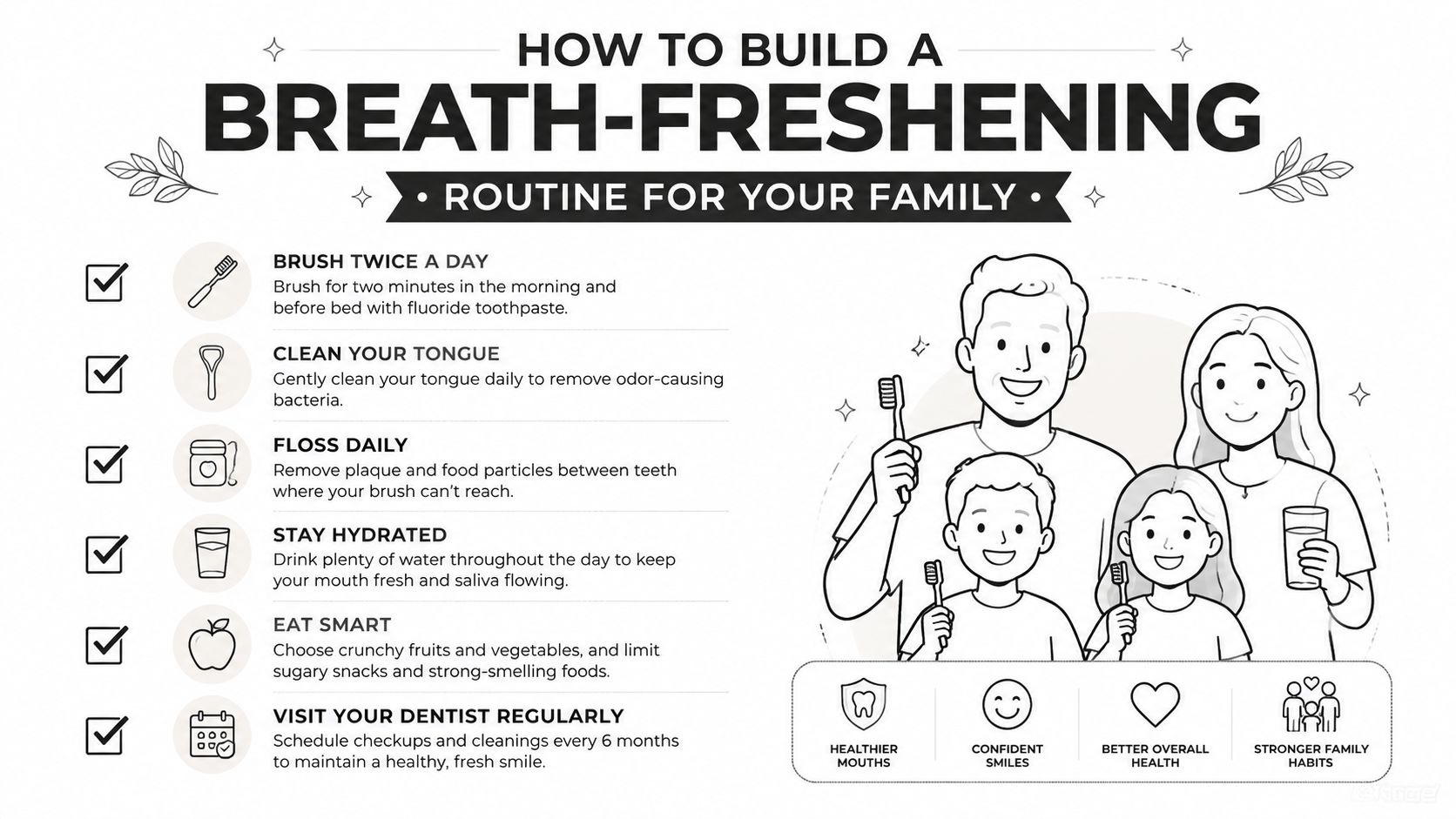
A simple household template can look like this:
- Morning: Brush teeth and tongue gently, then drink water and clean any orthodontic or prosthetic areas.
- Evening: Brush carefully, clean between teeth, and inspect removable appliances before storing them.
- On the go: Carry water, sugar-free gum if suitable, and a compact interdental tool rather than relying on mints alone.
Mouthology's probiotic breath mints are one example of an on-the-go product positioned around xylitol and fresher-breath support, but no mint replaces brushing, tongue cleaning, or interdental care. Consistency with a suitable routine matters more than buying a premium product and using it sporadically.
Upgrading Your Oral Care with Confidence
Lasting freshness starts with the odor source, not the flavor sensation. Look for a routine that manages tongue biofilm, supports removal or neutralization of VSCs, and fits your enamel, sensitivity, gum, and saliva needs.
A sensible toothpaste checklist includes:
- A purposeful active system, such as zinc or a stannous-based formula, when breath control is the priority.
- Enamel support, through fluoride or a well-formulated mineral alternative such as nano-hydroxyapatite.
- A comfortable texture and flavor, because a formula you can use consistently is more valuable than one you avoid.
- Compatibility with complementary care, including tongue scraping, interdental cleaning, and hydration.
Mouthology's 10% nano-hydroxyapatite toothpaste is a fluoride-free mineral option designed for family oral care, including children. Its nHa approach is relevant to enamel support, while breath-focused results still depend on the wider routine, especially tongue cleaning and removal of residue between teeth.
Audit your current toothpaste today. Check whether it offers function beyond mint, add gentle tongue cleaning and interdental care, and address ongoing dryness or odor with a dental professional. Fresh breath becomes far more manageable once you choose products for their purpose and use them as part of a complete, repeatable system.
Choose a breath-care routine based on active ingredients, your mouth's specific needs, and the tools you can use consistently. Start by reviewing your toothpaste label, then build the smallest complete routine that includes brushing, tongue cleaning, interdental care, and hydration.
