

Posted by Sarah Collins
on February 11, 2026

It's often the last step in an oral care routine, but its timing can be a real puzzle: should you use mouthwash before or after brushing? It’s a common question, and the answer can make a big difference for your smile. For most people, especially those using a modern toothpaste with beneficial ingredients like nano-hydroxyapatite, the best approach is clear: use mouthwash a little while after you brush. This simple tweak ensures your toothpaste has enough time to do its important work.
The Great Debate: Mouthwash Before Or After Brushing
Let's settle the debate that happens in front of the bathroom mirror every morning. The general recommendation from most dental professionals is to use mouthwash after brushing. Think of it like washing your car before you wax it. Brushing first clears away plaque and food particles, creating a clean surface.
This allows the helpful ingredients in both your toothpaste and mouthwash to work directly on your teeth and gums without any barriers. It’s a small adjustment that can seriously upgrade your oral health by maximizing the effectiveness of every product in your routine.
Why Timing Is Everything
The order of your routine isn’t just a matter of preference; it’s about making sure your products can work effectively. When you brush with a high-quality toothpaste, such as one formulated with nano-hydroxyapatite (nHA), you're depositing tiny, restorative minerals onto your tooth enamel.
If you immediately follow up with a swish of mouthwash, you risk washing away those crucial ingredients before they have a chance to bond with your teeth. By brushing first and waiting a little while before rinsing, you give these powerful ingredients the time they need to support stronger, healthier enamel.
This simple decision tree lays out the ideal timing for your mouthwash routine.
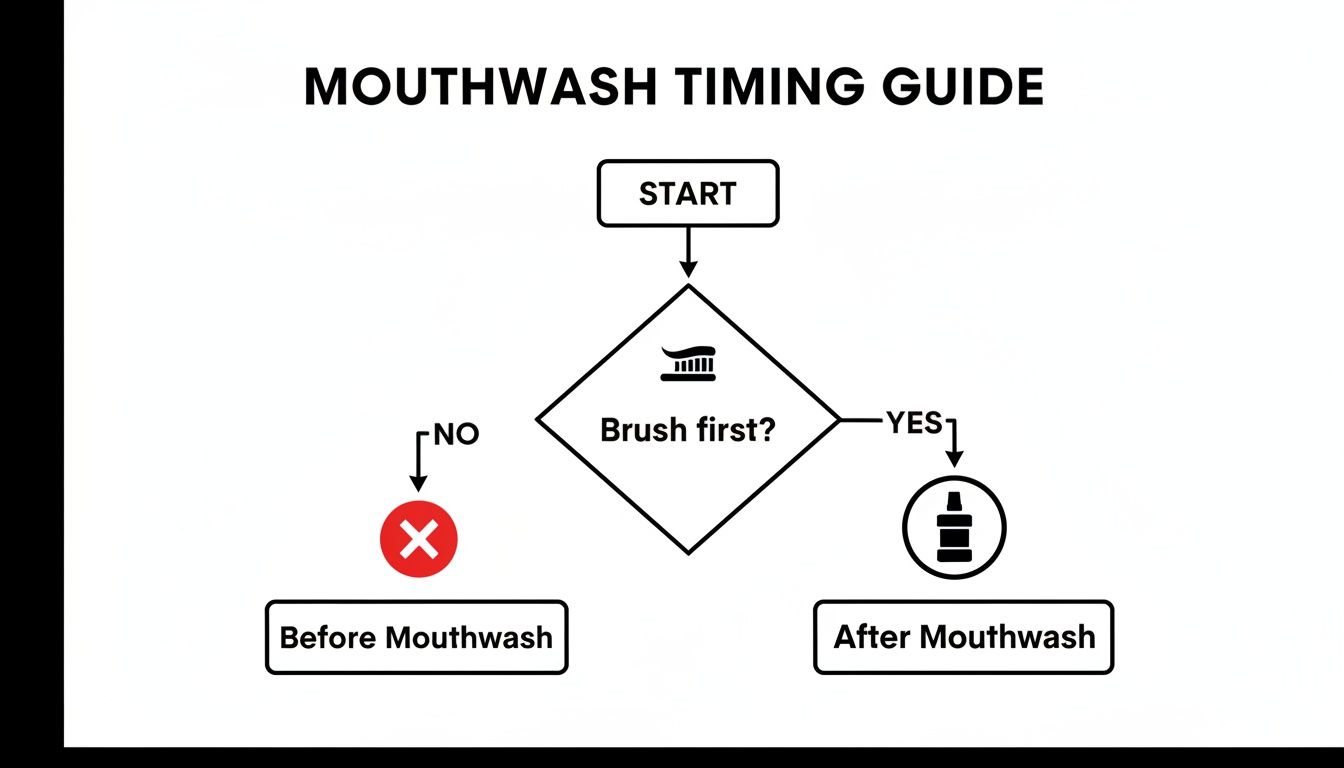
As the chart shows, the recommended path for optimal oral health is to brush your teeth first. This creates the perfect canvas for your mouthwash to provide its final layer of protection and freshness.
How Your Brushing and Rinsing Order Affects Your Teeth
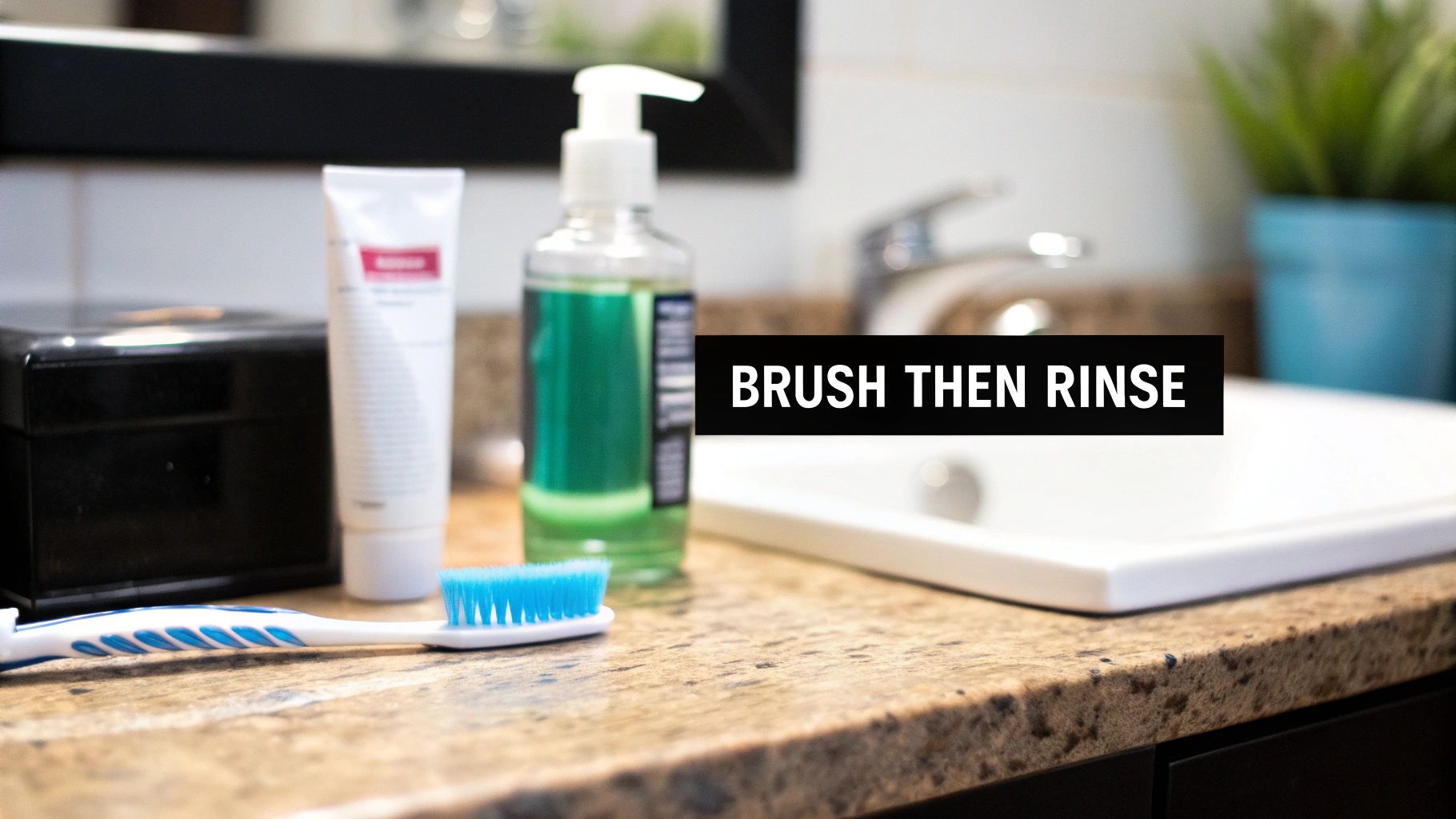
Does the sequence of your oral care routine really matter? It’s a common question, and the answer is a resounding yes. The order isn't just a personal quirk—it directly impacts how well your products work to support your oral health.
Think of it this way: brushing is the main event. It clears away the day's plaque and food debris, creating a perfectly clean slate for the active ingredients in your toothpaste to get to work. When you rinse right after brushing, you're essentially washing all those powerful ingredients down the drain before they have a chance to do their job. This is why getting the timing right is so crucial for your smile’s long-term health.
Protecting Your Toothpaste's Power
Today's toothpastes are much more than just soap for your teeth; they’re advanced formulas designed to protect and strengthen your enamel. This is especially true for toothpastes featuring nano-hydroxyapatite (nHA), a mineral that’s biomimetic, meaning it's identical to the one your own teeth are made of.
When you brush with an nHA toothpaste, you’re delivering tiny, restorative minerals directly onto your tooth surfaces. It’s an incredible process where these particles get to work filling in the microscopic pores and cracks in your enamel. This helps to:
- Support enamel strength by putting back the minerals that acids from foods and drinks can strip away.
- Reduce tooth sensitivity by blocking the tiny pathways that lead to your nerves.
- Create a smoother, brighter-looking smile over time.
Rinsing with mouthwash right after brushing is like wiping off a nourishing face serum moments after applying it. You’re cutting the process short. By simply waiting 20-30 minutes before you rinse, you give the nano-hydroxyapatite enough time to fully bond with your enamel and maximize its supportive benefits. To learn more about how different ingredients compare, check out our deep dive on fluoride in toothpaste.
The key takeaway is that brushing deposits beneficial ingredients onto your teeth. Giving these ingredients time to absorb before introducing a rinse is crucial for getting the most out of your products and supporting a truly healthy smile.
The Science Behind the Sequence
The debate over when to use mouthwash isn't new; it's been a topic of discussion for decades. What's interesting is that the research has consistently leaned toward a post-brushing rinse—just not immediately after.
A landmark study from 1985 found that using mouthwash after brushing was 27% more effective at reducing plaque buildup over a six-month period compared to other routines. You can get a sense of how these findings have shaped the oral care market by looking at market trends at Mordor Intelligence.
This brush-then-rinse approach isn't just an old-school recommendation; it’s a modern, science-backed method. By letting your toothpaste's ingredients, like nHA, fully engage with your teeth, you’re not just cleaning—you’re actively helping your enamel. This simple, mindful timing ensures every step in your routine pulls its weight for the long-term health and strength of your smile.
When Rinsing Before Brushing Makes Sense
While the “brush first, rinse later” approach is the gold standard for most of us, there are a few specific times when a pre-brush rinse can be a surprisingly helpful tool. Think of it as a specialized technique, not the everyday rule. Whether you use mouthwash before or after brushing really depends on what your immediate goal is.
In some cases, starting with a rinse acts as a prep step. It can help loosen stubborn debris and neutralize acids, clearing the way for your toothbrush and toothpaste to do their main job of cleaning and supporting your enamel.
The Food Particle Pre-Rinse
Imagine you've just finished a snack like sticky caramel or a handful of crackers. These foods have a knack for getting lodged in every nook and cranny. If you start brushing right away, you might just end up smearing things around instead of actually removing them.
This is where a quick pre-brush rinse comes in handy. A swish of mouthwash can help dislodge and wash away those larger particles, making your brushing session much more effective. It’s like hosing down a muddy car before you grab the sponge and soap.
Navigating Braces and Orthodontics
Anyone with braces, retainers, or other orthodontic gear knows the daily cleaning struggle. Food gets trapped in that complex network of brackets and wires, making it tough for a toothbrush to do its job properly.
A pre-brush rinse is a fantastic strategy here. It can flush out trapped food from around all that hardware, clearing the path for your brush to get to your enamel. This little trick can be a game-changer for keeping teeth clean during orthodontic treatment.
Remember, a pre-brush rinse is a situational tool. For daily enamel health and supporting remineralization with a nano-hydroxyapatite toothpaste, the post-brush rinse remains the superior method for the vast majority of people.
After Eating Acidic Foods
When you consume acidic foods and drinks—think citrus fruits, soda, or even salad dressing—your tooth enamel temporarily softens. Brushing your teeth while they’re in this vulnerable state can actually wear away bits of enamel over time.
Instead of reaching for your brush right away, reach for a rinse. Swishing with water or an alcohol-free mouthwash helps neutralize the acid in your mouth much faster. Just make sure to wait at least 30 minutes after rinsing before you brush. This gives your enamel time to re-harden, protecting your smile from unintentional damage.
Building Your Perfect Oral Care Routine
Knowing the science behind when to use mouthwash is half the battle. Now, let’s put that knowledge into practice. We’re going to build a simple, effective daily routine that gives your smile the best possible support, making sure every product works as hard as it can.
This isn’t about adding a bunch of complicated steps. It's about optimizing the habits you already have. By getting the order right, you create a system where each step builds on the last, leading to a healthier mouth and a more confident smile.
A Step-by-Step Guide to Your Ideal Routine
Think of your oral care routine like a recipe. When you follow the steps in the right order, you get the best result. Here’s a sequence designed to maximize the benefits of a modern, mineral-based toothpaste like Mouthology.
- Brush with Nano-Hydroxyapatite Toothpaste: Start by brushing for a full two minutes. This crucial first step clears away plaque and food debris while depositing nHA minerals directly onto your enamel to kickstart the remineralization process.
- Scrape Your Tongue: Next, grab a tongue scraper. A few gentle passes will remove the bacteria that can contribute to bad breath. It’s a quick step with a huge impact on overall freshness. You can learn more about why this is such a game-changer by exploring the 7 reasons to add this 1 step to your oral care routine.
- Floss Between Your Teeth: Now, floss to clear out the tight spaces your toothbrush can't reach. Getting between the teeth and along the gumline is essential for preventing plaque buildup in those hidden spots.
Now for the most important part of the sequence.
The Power of the Pause
After you've brushed, scraped, and flossed, it's time for the game-changing step: wait for 20-30 minutes.
This pause isn't just dead time—it's dedicated working time for the nano-hydroxyapatite from your toothpaste. During this window, the nHA minerals are actively bonding with your tooth enamel, filling in microscopic pores and strengthening your teeth from the inside out. Rinsing too soon washes these vital minerals away before they can finish their job.
This waiting period is the single most effective way to maximize the benefits of your toothpaste, supporting stronger enamel and helping to reduce sensitivity over time.
Finally, after the wait, you can wrap things up.
- Finish with Mouthwash: A final swish with an alcohol-free mouthwash will neutralize any remaining bacteria and freshen your breath. You get that incredibly clean feeling without disturbing the important work the nHA has just done.
For anyone seeking fluoride-free alternatives, using mouthwash after an nHA toothpaste (and the waiting period) maximizes nano-hydroxyapatite adhesion and supports enamel health. This approach is gaining traction globally. In fact, in the Asia-Pacific region—the fastest-growing oral care market—school initiatives promoting effective routines have helped cut tooth decay by 25%.
This simple, structured routine turns everyday habits into a powerful system for long-term oral wellness. To make sure you're getting the most out of your efforts, a comprehensive guide on how to maintain oral health can offer even more valuable insights for creating a truly healthier smile.
Choosing the Right Mouthwash for Your Family
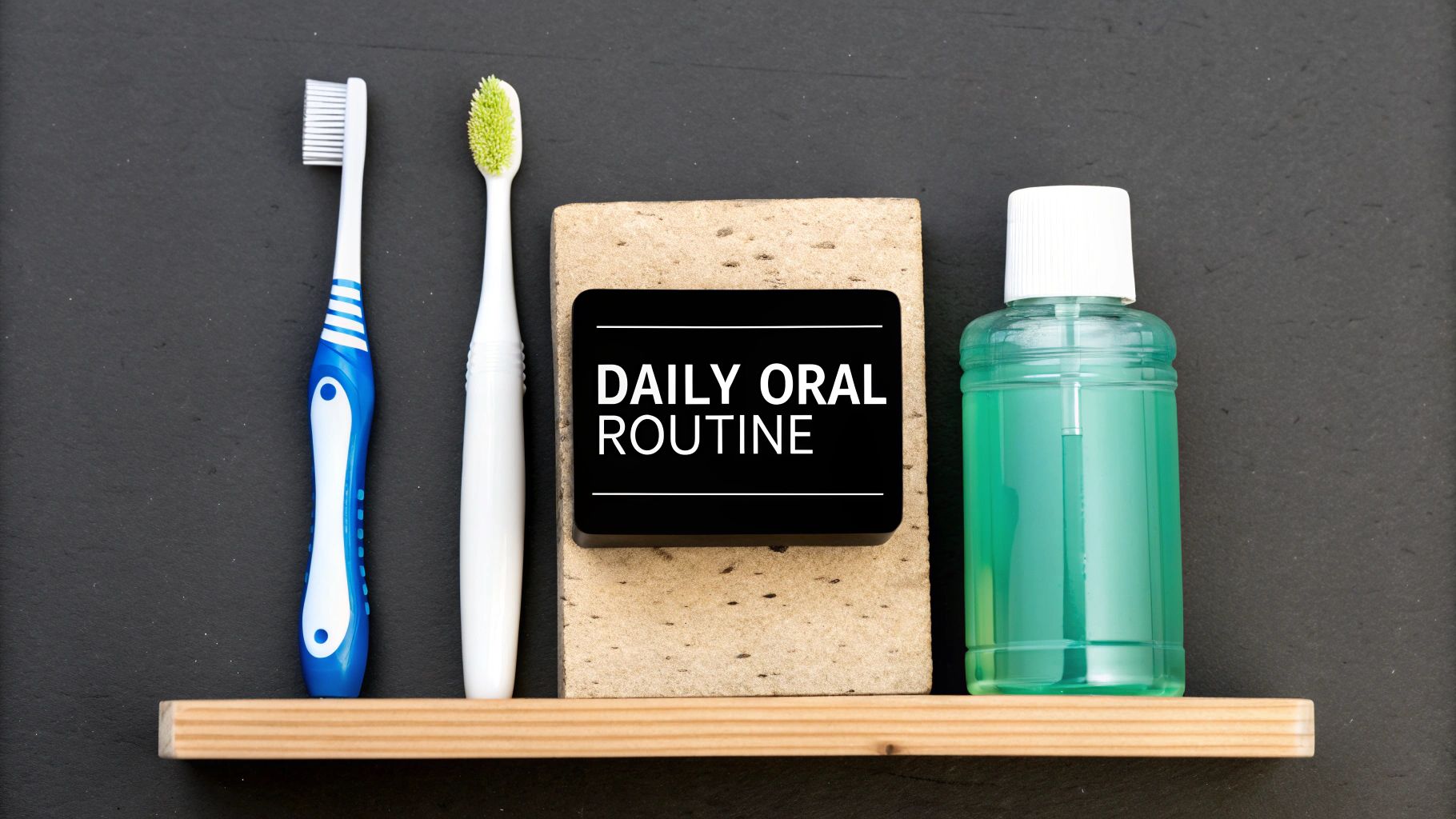
Picking a mouthwash that works well with your toothpaste and supports your family's health is a huge step. The debate over using it before or after brushing is just the beginning—finding the right formula is what truly delivers that fresh, clean feeling without getting in the way of your oral health.
Not all mouthwashes are created equal. When you walk down the oral care aisle, you'll see two main players: cosmetic and therapeutic. Knowing the difference is key to making a smart choice for your household.
- Cosmetic Mouthwash: These are all about a quick fix. They temporarily mask bad breath, giving you a burst of freshness, but they don't do much for the long-term health of your teeth or gums.
- Therapeutic Mouthwash: This is the heavy lifter. It's formulated with active ingredients that tackle specific issues like reducing plaque, supporting gum health, or strengthening your enamel.
What to Look For on the Label
To become the oral care expert for your home, get friendly with the ingredients list. One of the biggest things to steer clear of is alcohol. While it delivers that intense, sharp feeling many of us associate with "clean," alcohol-based formulas can be harsh and actually work against you.
That initial burn from alcohol can dry out your mouth, which, ironically, can make bad breath even worse over time. Your saliva is your mouth's natural defense system, and when there's less of it, odor-causing bacteria can thrive.
Choosing an alcohol-free formula is a simple, effective upgrade for the whole family. It ensures you get the freshening power without the irritation or dryness, making it a much safer and more comfortable option, especially for kids.
Making a Gentle Choice for Everyone
When you're picking out a rinse, think about everyone who'll be using it. For children and expecting mothers, gentleness and safety are everything. Look for formulas free from harsh chemicals and artificial additives.
A great way to round out your routine is by exploring natural approaches. For instance, an option like Mouthology’s Coconut Oil Pulling Mouthwash offers an Ayurvedic-inspired method for supporting gum health and keeping breath fresh.
To help you build the most effective routine, you might also want to explore the best dentist recommended mouthwash options that cater to different needs. By being mindful of the ingredients, you can confidently choose products that are both gentle and powerful, helping your family achieve their healthiest smiles.
Common Questions About Your Oral Hygiene Routine
Even after you’ve settled the great debate over using mouthwash before or after brushing, it's totally normal for a few more questions to pop up. A truly effective oral care routine is all in the details, and getting them right can make a world of difference for your smile.
Let's clear up some of the most common questions we hear. We’ll give you simple, direct answers so you can feel confident in every step, especially when you're using modern, mineral-based products designed for the whole family.
How Long Should I Wait to Use Mouthwash After Brushing?
Great question—the timing here is everything. For the best results, especially when using a nano-hydroxyapatite toothpaste, we recommend waiting about 20-30 minutes after you brush before reaching for your rinse.
This pause gives the nHA minerals enough time to actually absorb into your tooth enamel and kickstart the remineralization process. If you rinse too soon, you're essentially washing all those beneficial minerals away before they've had a chance to work. Think of it like applying a nourishing serum to your face; you let it sink in before moving on to your moisturizer.
Is It Safe for My Kids to Use Mouthwash After Brushing?
When it comes to kids, safety is always priority number one. The short answer is: it depends on the mouthwash formula and your child's age. It's crucial to choose an alcohol-free and, if you prefer, fluoride-free mouthwash for kids, especially if they’re young and might accidentally swallow some.
Most dentists suggest waiting until a child is at least six years old and can reliably spit before introducing mouthwash. Once they're ready, the "brush first, wait, then rinse" method is still the best approach to ensure their toothpaste has enough time to do its job.
Does Using Mouthwash After Brushing Help With Bad Breath?
Absolutely. In fact, using mouthwash after brushing and tongue scraping is the most powerful sequence for keeping bad breath at bay. Brushing and flossing get rid of food particles and plaque, while tongue scraping clears away bacteria from your tongue—which is a primary source of odor.
Following up with a mouthwash is the final knockout punch. It neutralizes any remaining odor-causing bacteria and leaves your mouth feeling fresh for hours. This complete routine tackles the root causes of bad breath, rather than just masking the problem for a few minutes.
The science backs this up. Studies have shown that using mouthwash after brushing can slash harmful Streptococcus mutans bacteria by 52% within just 24 hours. You can dig into the science behind mouthwash timing over at PMC.
Can I Drink Water After Using Mouthwash?
To get the full benefit from your mouthwash, it’s best to avoid eating or drinking anything—including water—for about 30 minutes after you rinse. The active ingredients need time to work on your teeth and gums without being diluted.
Drinking water right away will just wash the formula away, reducing its effectiveness. By waiting, you’re allowing those ingredients to provide their intended benefits, whether that’s freshening your breath or supporting your gum health. This final pause locks in all the hard work from your entire routine.
Ready to build a simple, science-backed routine that delivers a fresh, dentist-clean feeling every day? Discover the Mouthology difference and upgrade your family’s oral care with our nano-hydroxyapatite toothpaste and tools. Shop the collection at Mouthology.com
Drafted with the Outrank tool
